


You Don't Train a Cat to Use the Litter Box. You Just Avoid Ruining It
Cats come pre-wired to bury their waste, so litter box success is rarely about teaching them. It's about not getting in instinct's way, from the box to the litter to the one thing owners always miss.

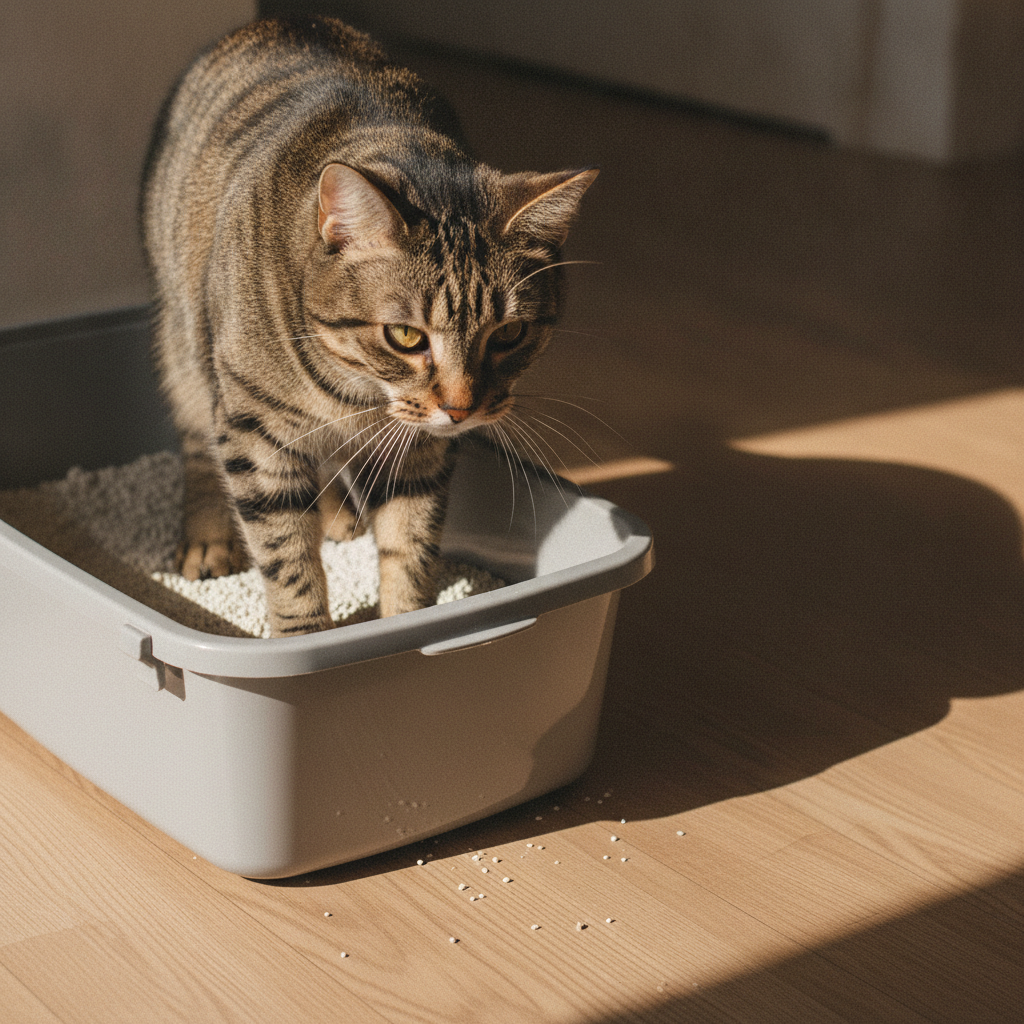
Of all the things that make cats easier than dogs, the litter box might top the list. No dawn walks in the freezing rain, no bags to carry, no waiting by the door. You set down a box, and somehow your cat just knows. It can feel like a small daily miracle, which naturally raises the question: is that instinct, or did somebody teach them?
The honest answer flips how most people think about the whole thing. You are not really teaching a cat where the box is. The wiring is already there, installed long before your cat was born. Your actual job is much smaller and much easier: don’t get in the way of it. Nearly every litter box failure is not a cat who forgot the rules but a setup, a substrate, or a health problem that overrode instinct. Understand what that instinct is, and the whole topic gets simple.
The instinct was millions of years in the making
Your cat’s tidy bathroom habits trace straight back to their wild ancestors. Those wildcats covered up what they left behind in loose soil or sand, and they had good survival reasons for it: hiding their scent from predators, dodging turf conflicts with bigger cats, and keeping their living space clean. That drive to dig and cover did not evaporate when cats moved indoors. It just found a new outlet in a plastic tray.
The box itself, though, is a modern invention. Before commercial litter existed, roughly pre-1940s, people kept indoor cats using makeshift trays filled with dirt, sand, sawdust, ashes, or folded newspaper, sometimes an old roasting pan. The first commercial “cat toilet” arrived in the early 1940s as a paper-lined metal pan. The real breakthrough came in 1947, when a man named Ed Lowe suggested clay granules as a far more absorbent option than the sand people were using. Marketed as Kitty Litter, it transformed cat keeping and made full-time indoor life practical for millions of cats.
So how does a cat “know”?
It looks like magic, but it is a stack of very practical instincts:
- From birth, kittens are driven to scratch, dig, and bury. The loose contents of a litter box mimic natural dirt or sand and switch that behavior on automatically.
- Even an indoor-only cat with zero predators still feels the pull to cover their waste. The instinct doesn’t care that the threat is gone.
- Cats have famously sharp noses, and a used box holds onto its scent, quietly announcing “this is the bathroom.”
- Kittens who stay with mom long enough often watch and copy her, learning by imitation.
Put those together and the “training” a cat needs is usually nothing more than showing them where the box is. Frequently you won’t even have to do that, because their nose leads them right to it.
People brace themselves for a big training project and then feel almost cheated by how little the cat needs from them. When a cat stops using the box, that is the real signal to pay attention, because a cat fighting its own instinct is telling you something is wrong, and more often than not it’s medical.
Kittens rarely need a curriculum
Most kittens who were with their mother at three or four weeks old need no training from you at all. If yours does need a hand, a few gentle nudges cover it: set them in the box after each nap, meal, or play session; give them a shallow tray they can climb in and out of easily; and skip clumping clay litter, which kittens can track onto their paws, lick off, and swallow, risking an intestinal blockage. Stick to unscented litter, keep the box in a quiet spot so they feel safe, and reward success. Most kittens are reliably using the box within days.
The box and the litter do most of the work
Because instinct is doing the heavy lifting, the things that actually make or break litter box success are physical: the box, the litter, and the location. Get these wrong and even a well-adjusted cat may quietly quit.
Cats hate feeling cramped, so pick a box that runs roughly one and a half times your cat’s body length. Covered boxes look nicer to us, but they trap odors and put some cats off entirely. Automatic self-cleaning boxes can startle a nervous cat. As for litter, most cats vote the same way: fine, soft, sand-like texture, unscented, and clumping (again, not for young kittens).
Placement is its own quiet science. Keep boxes away from food and water, away from noisy appliances, and out of tight corners with a single exit, since a cat wants to see an escape route. Spread them out, too. The standard is one box per cat plus one, and in a multi-level home you want a box on every floor. Do not stack all the boxes in one room and call it done.
When instinct fails, look for a reason
Even a perfectly trained cat can abandon the box if something disrupts them, and the causes are usually fixable once you spot them. The big ones:
- Cleanliness. Scoop at least once a day. This is the most common reason cats bail.
- Stress or anxiety. Any household upheaval can throw a sensitive cat off.
- Medical problems. Arthritis, bladder stones, or a urinary tract infection can turn climbing into or staying in the box painful, so the cat avoids it.
- Size and access. A box that’s too small, or sides that are too high for an aging or arthritic cat, leads to avoidance. For a senior, you can cut down one side to lower the step.
- Territorial friction. In multi-cat homes, competition over shared resources causes trouble; spreading boxes out helps.
The single most important rule when a reliable cat stops using the box: think medical first. Rule out a UTI, bladder stones, and other physical causes before you ever label it a behavior problem. Catching these things early keeps a short-term hiccup from hardening into a lasting habit.
The bottom line
Cats really are mystical about the litter box, using it flawlessly with almost no instruction, thanks to a blend of deep instinct and a little copying from mom. Your role is not to teach that drive but to protect it: give them the right box, keep it clean, put it somewhere they feel safe, offer enough of them, and treat any sudden change as a possible health issue. Do that, and the daily miracle keeps right on happening.
References
- Grigg, Emma K., et al. “Litter Box Preference in Domestic Cats: Covered Versus Uncovered.” Journal of Feline Medicine and Surgery, vol. 15, no. 4, 2013, pp. 280–284. Link
- Villeneuve-Beugnet, Virginie, and Frederic Beugnet. “Field Assessment of Cats’ Litter Box Substrate Preferences.” Journal of Veterinary Behavior, vol. 25, 2018, pp. 65–70. Link
- Herron, Meghan E. “Advances in Understanding and Treatment of Feline Inappropriate Elimination.” Topics in Companion Animal Medicine, vol. 25, no. 4, 2010, pp. 195–202. Link
Common questions
Do kittens need to be trained to use a litter box?
Usually no. Kittens that stayed with their mother until three or four weeks old typically arrive already knowing what to do. If a kitten needs a nudge, place them in a shallow box after they wake, eat, or play, and most catch on within days.
How many litter boxes should I have?
The rule is one box per cat, plus one extra, spread across different parts of the home. So one cat means two boxes. This prevents competition, territorial stress, and accidents, and gives a cat options if one box feels off.
My cat suddenly stopped using the box. What now?
Assume it's medical until proven otherwise. Arthritis, bladder stones, or a urinary tract infection can each make the box hurt. See your vet first, and only treat it as a behavior problem once health causes are ruled out.
Dr. Park is a board-certified emergency and critical care specialist. She reviews our health and safety content for clinical accuracy and contributes guides on recognising urgent conditions. Her focus is helping owners act quickly and correctly when it matters most.
Meet our experts ↗Keep reading
 LivingMale-Female Is the 'Safe' Second-Pet Combo. The Experts Disagree.Dr. Nina Kohl · 5 min
 First DaysOne Bad Meeting Can Undo Everything: How to Introduce a Nervous Cat to a DogDr. Lena Park · 9 min
 LivingCat or Dog? Stop Asking Which Is Better and Ask This InsteadClaire Sutton · 7 min
 First DaysYour New Cat Is Going to Vanish. Plan for That, Not the Homecoming PhotoDr. Priya Nair · 10 min
 TrainingYour Kitten Isn't Kissing You. It's Filing You Under 'Family.'Dr. Amara Solis · 7 min
 LivingA Shelter Cage Hides Almost Everything. These 12 Questions Don't.Dr. Amara Solis · 8 min