


It Was Never About the Cucumber: Why Pickles Fail the Dog Test
The vegetable inside a pickle is one of the safest dog snacks there is. Everything the brine adds — salt, garlic, onion — is the problem.

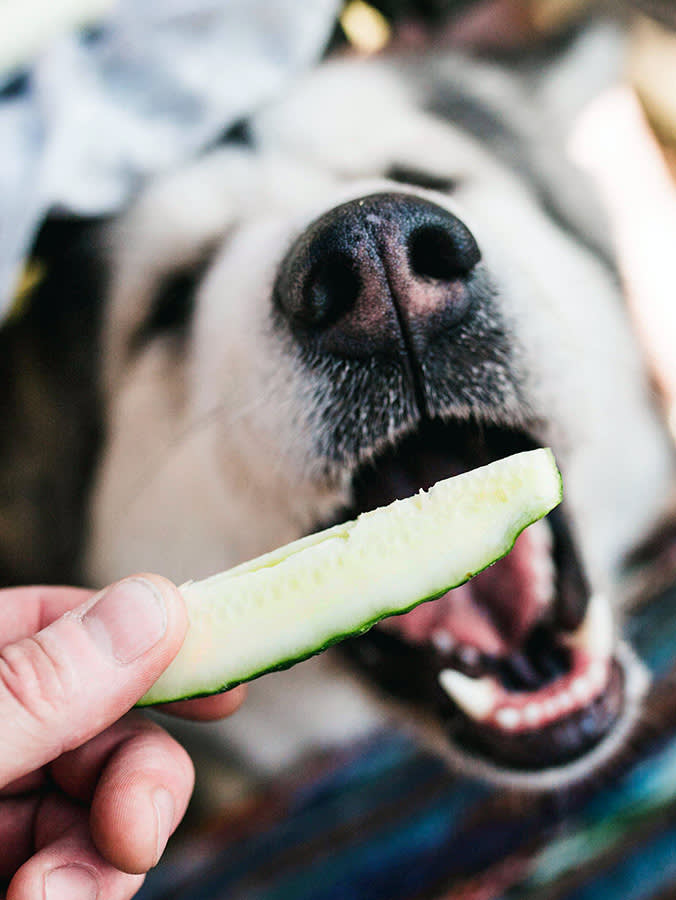
Every pickle starts life as a cucumber, and cucumbers are one of the easiest yeses in the entire “can dogs eat this” genre: low-calorie, hydrating, crunchy, harmless. Which makes the pickle a strange case. Somewhere between the garden and the jar, one of the safest dog snacks in the produce drawer becomes a food vets tell you to skip.
The transformation is the whole story. Nothing about the cucumber changed. It’s what the brine adds, a heavy salt load and, depending on the recipe, seasonings that are genuinely toxic to dogs, that flips the answer. Understand the brine and you’ll never need to look up pickles again.
What the jar adds, part one: salt, and a lot of it
Pickling means soaking cucumbers in brine, water, vinegar, and a serious quantity of salt, which cures, preserves, and flavors them. That’s the point of the process, and it’s also the problem. A single small dill spear can carry around 280 milligrams of sodium, and large spears push toward 900. For context, a dog’s body needs only a modest daily sodium intake, and common veterinary guidance for a mid-size dog sits in the low hundreds of milligrams per day. One pickle can blow through that; a few pickles put a small dog into genuinely risky territory.
Dogs do need some salt, but they’re more sensitive to overload than we are. Excess sodium drives excessive thirst and dehydration, and at high intakes, salt toxicity, with vomiting, diarrhea, tremors, and in severe cases seizures. Veterinary references put the danger zone for acute salt poisoning at roughly 2 to 3 grams of salt per kilogram of body weight, far beyond a stolen pickle, but the direction of travel is the message: this is a food whose defining ingredient is the thing dogs least need more of.
What the jar adds, part two: the seasoning lottery
Salt is guaranteed. The rest depends on the recipe, and that’s what makes pickles unpredictable. Beyond water, vinegar, and salt, pickle brines get their character from seasoning blends, and two common players, onion and garlic, are toxic to dogs, including in their powdered forms, which are more concentrated than fresh. Allium toxicity damages red blood cells and can trigger both stomach upset and, at higher doses, life-threatening anemia.
This is why “can dogs eat pickles” has no single answer: a plain refrigerator pickle and a garlic-dill spear from the deli are different risk profiles wearing the same name. Unless you personally know every ingredient in the brine, the safe assumption is that you don’t.
With pickles, the label matters more than the pickle. A dog who grabs a plain spear mostly just got a salt bomb. A dog who’s been sneaking garlic-dill pickles has been dosing themselves with something that quietly attacks their red blood cells. Those are two very different phone calls to make.
The incident protocol
One or two pickles in a healthy dog usually pass without drama. Your job is label-checking and watching. First, look at the jar: if onion or garlic appear in the ingredients, treat the incident more seriously and loop in your vet, since allium damage can lag days behind ingestion. Either way, offer plenty of fresh water for the rest of the day to help the salt along.
Call your vet if you see vomiting, diarrhea, refusal to eat, belly pain, or lethargy, and move quickly if your dog helped themselves to several pickles or drank brine. Salt toxicity and allium poisoning are both capable of becoming emergencies, and early treatment beats heroic treatment.
And pickle juice deserves its own warning, because the internet periodically rediscovers it as an electrolyte hack: the brine is the most concentrated form of everything wrong with the pickle, salt, seasonings, and stomach-irritating acidity, with none of the redeeming crunch. No dog should drink it.
The better move: share the vegetable, skip the process
If your dog loves the pickle crunch, the fix costs nothing: hand over plain cucumber. Same vegetable, same snap, none of the sodium. If you’re a home fermenter and genuinely want a dog-shareable pickle, leave out the onion and garlic and cut the salt as far as your recipe allows, but at that point you’ve mostly reinvented the cucumber with extra steps.
The wider produce drawer is full of better options: green beans, carrots, apple slices, banana, berries, pumpkin, plus peas and lean cooked meats. Wash produce, remove seeds, pits, and tough peels, introduce new foods gradually, and keep all treats inside the 10 percent share of daily calories, with your vet as tiebreaker for anything new.
One rescue mission while we’re here: dill itself is innocent. Fresh dill is safe for dogs in moderation and carries antioxidants, vitamins, and minerals. The herb just has the misfortune of lending its name to a format that buries it in salt.
What newer research adds
The interesting recent shift is on the human side of the jar, because it changes what’s in your fridge. Fermented foods have boomed, and with them low-sodium, no-garlic, and “clean label” pickle lines that genuinely carry less salt than traditional deli spears. That’s good news with a catch: lower-sodium doesn’t mean dog-appropriate, and some reduced-salt products compensate with seasoning blends, so the label-reading rule hasn’t relaxed, it’s just gotten more worthwhile.
On the veterinary side, sodium science has grown more nuanced: studies indicate healthy dogs tolerate varied salt intake better than once assumed, with kidneys that regulate effectively. The asterisks are the same as ever, though. Dogs with heart or kidney disease still need sodium managed carefully, acute overloads remain dangerous for all dogs, and nothing in the newer research promotes brined foods from “skip it” to “share it.” The cucumber remains the better half of the pickle.
References
- Merck Veterinary Manual: Garlic and Onion (Allium spp) Toxicosis in Animals (Hayes, DVM)
- Merck Veterinary Manual: Salt Toxicosis in Animals
- Thompson, L.J. Sodium chloride (salt). In Gupta RC, ed. Veterinary Toxicology: Basic and Clinical Principles, 3rd ed. Elsevier, 2018
- USDA FoodData Central: Pickles, cucumber, dill
- American College of Veterinary Pharmacists: Salt
Common questions
Can dogs drink pickle juice?
No. The brine is the most concentrated form of everything wrong with pickles: salt, seasonings, and enough acidity to upset a dog's stomach.
Is dill bad for dogs?
Fresh dill is actually fine in moderation and carries antioxidants, vitamins, and minerals. Dill in pickle form comes packaged with the salt and seasonings that make pickles a poor choice.
Will pickles help my dog's upset stomach?
No. The salt and acidity are more likely to make an upset stomach worse. Talk to your vet about what your dog's stomach actually needs.
Can dogs have dill pickle chips?
No. Pickle chips are just cut-up pickles with the same salt and seasoning content, so they carry the same risks.
Not a substitute for your vet. Our guidance is educational. For urgent symptoms, contact a vet or emergency clinic right away. Editorial standards
Dr. Kohl is a board-certified veterinary dentist with a particular interest in preventive oral care. She reviews all dental health content at The Pet Times and contributes practical guides on home dental routines, professional cleaning, and oral disease prevention.
Meet our experts ↗Keep reading
 FoodThe Real Danger of Rib Bones Isn't the Bone. It's Both Ends of ItDr. Mara Chen · 7 min
 FoodBaby Food Is a Sick-Day Tool for Dogs, Not a Treat. Read the Jar Like OneDr. Mara Chen · 6 min
 FoodThe Olive Is Fine for Your Dog. The Brine Is the ProblemDr. Lena Park · 5 min
 FoodThe Real Problem With Ritz Crackers Isn't the Salt. It's the Whole RecipeDr. Priya Nair · 5 min
 FoodGingerbread's Real Danger to Dogs Isn't the SugarDr. Nina Kohl · 6 min
 FoodEggplant Isn't the Nightshade to Fear for Your DogDr. Mara Chen · 6 min