


The Olive Is Fine for Your Dog. The Brine Is the Problem
Olives aren't toxic to dogs, but almost every olive you'd actually share has been sitting in salt. Here's how to tell a safe olive from a risky one at a glance, and why the sodium matters more than the pit.

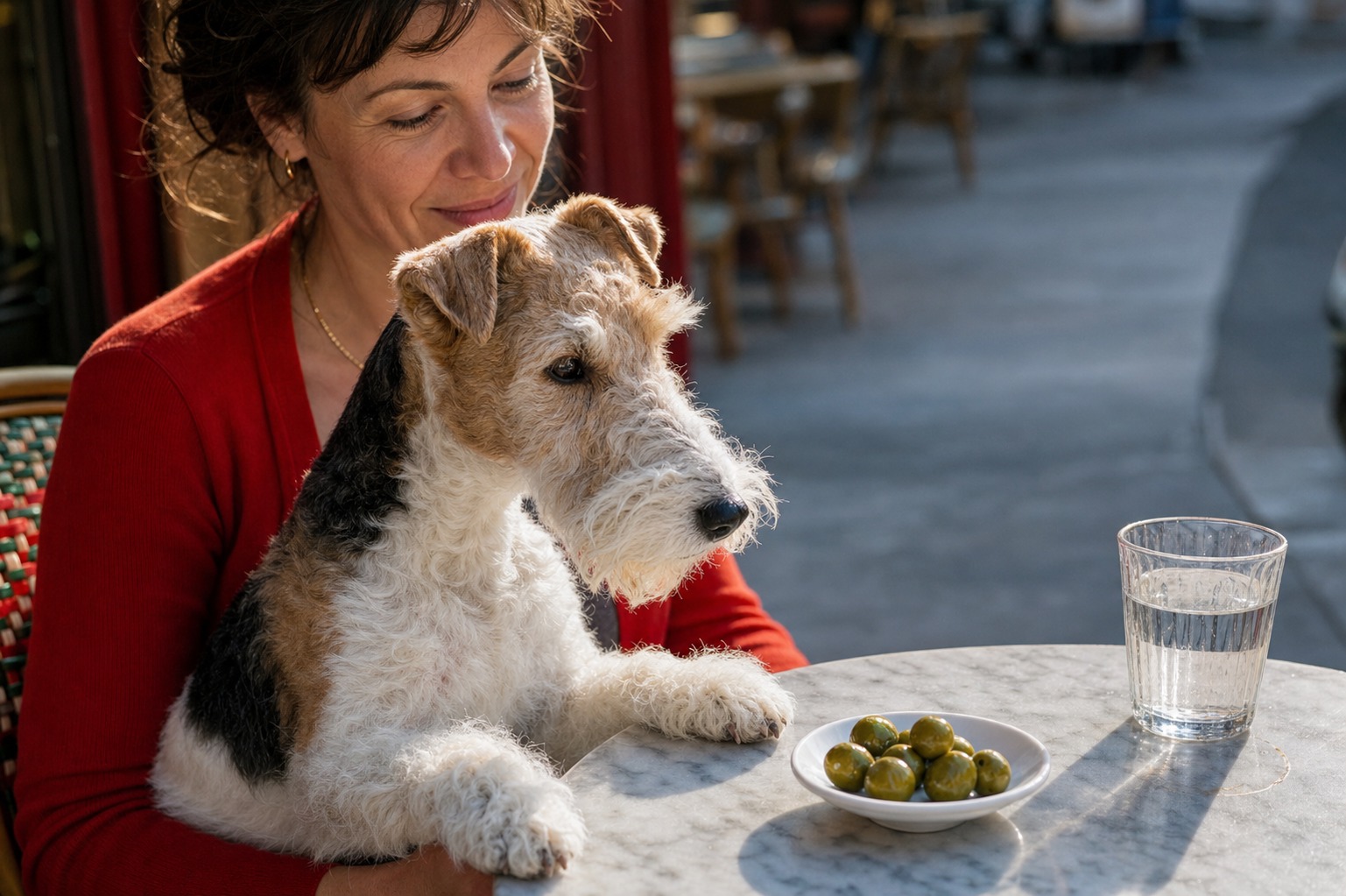
Search whether dogs can eat olives and you will get a shrug of an answer: not toxic, but be careful. That is technically true and practically useless, because it does not tell you the one thing you actually need at the snack board, which is how to look at the olive in your hand and know if it is okay to share.
So here is the sharper version. The olive itself is harmless. What determines the risk is everything humans do to an olive before it reaches a plate, and the single most underrated of those things is not the pit everyone warns about. It is the salt.
Read the olive in three questions
Before you hand one over, run it through this. If any answer is wrong, don’t share it.
- Is there a pit? If yes, remove it. A pit is a choke and blockage hazard and can crack a tooth. This is the risk people know.
- Is it stuffed or seasoned? If yes, skip it. Stuffed olives are the real landmine, more on that below.
- How salty is it? This is the one people wave past, and it is the reason “a few olives” can quietly become a problem.
That third question deserves real weight, because nearly every olive sold has been cured in brine, and brine is salt.
Why the sodium matters more than you’d think
Table olives are preserved in salt, and the amounts are not trivial: a serving of green olives can carry a few hundred milligrams of sodium, sometimes more. A dog’s whole-day sodium needs are small, so a handful of brined olives can represent a meaningful chunk of a small dog’s daily salt in one go.
For most healthy dogs, a stray salty olive means, at worst, extra thirst and maybe a loose stool. But volume and body size change the math fast. Enough salt causes dehydration and, in extreme cases, salt toxicosis, where sodium levels climb high enough to cause vomiting, tremors, and neurological signs. It is uncommon, but it is exactly the kind of thing that sneaks up when a 12-pound dog helps themselves to the antipasto bowl.
The salt load is also why dogs with heart disease, kidney disease, or high blood pressure should not have brined olives at all. For those dogs, the sodium is not a minor footnote.
People fixate on the pit, and the pit does matter. But the pit is a one-olive problem you can see. The salt is a several-olives problem you can’t, and it’s the one that actually sends the small, salt-sensitive dogs to me. If you’re going to share an olive, the low-sodium, plain, pitted kind is the only version worth bothering with.
Green vs. black: a genuine, if small, difference
The color is a rough proxy for salt. Green olives are picked unripe and cured in brine, so they tend to run saltier. Black (ripe) olives are generally milder. Neither is a health food, but if you are choosing between the two to share a bite, the black olive is usually the gentler pick. In all cases: plain, pitted, and rinsed if you can.
Stuffed olives are the actual danger
If there is one olive to treat as off-limits, it is the stuffed one, because the filling is where the genuinely toxic ingredients live.
- Garlic and onion (and their relatives) are toxic to dogs and can damage red blood cells, leading to anemia. Garlic-stuffed or tapenade-style olives are a clear no.
- Blue cheese and other cheeses add fat and lactose that upset many dogs, and blue cheese in particular can contain a compound (roquefortine C) that is best kept away from dogs.
- Pimentos, jalapeños, and peppers are spicy irritants that bring stomach upset.
- Anchovies and marinades pile on even more salt.
A plain olive is a judgment call. A stuffed olive is just a bad idea.
Olive oil is the easy way to get the upside
If what draws you to sharing olives is the “healthy fats” idea, there is a cleaner route: a small drizzle of plain olive oil over your dog’s food. It delivers the monounsaturated fats and antioxidants without the salt, the pit, or the stuffing, and vets often mention it for skin and coat support. Keep it modest, think a fraction of a teaspoon for a small dog up to about a teaspoon for a large one, since too much fat brings loose stools and calories. Recent work has even looked at olive byproducts, like oil-free olive pulp flour, improving markers of oxidative status in dogs, which fits the broader point that the beneficial compounds in olives are real. They just travel better in oil than in a salty whole fruit.
If your dog raids the olive bowl
A plain, pitted olive or two is no cause for alarm. A pile of salted or stuffed ones is different. Do this:
- Figure out what kind they ate: salted, stuffed (with what?), pitted or not.
- Offer fresh water to help counter the salt.
- Watch for vomiting, diarrhea, heavy thirst, restlessness, tremors, or lethargy.
- Call your vet if the olives were stuffed with garlic or onion, if a lot of salt was involved, or if your dog is small, and watch a dog who swallowed a pit for signs of a blockage.
Lower-fuss snacks that skip the whole problem
If the olive feels like more trouble than it is worth, it usually is. Easier shares: carrot sticks, apple slices (no seeds or core), blueberries, cucumber slices, plain cooked pumpkin, or a little plain cooked chicken with no seasoning. All of them deliver something useful without a salt calculation.
The bottom line
Olives are not toxic, but the version that is genuinely safe, plain, pitted, unsalted, and unstuffed, is not the version most of us have in the fridge. Judge the preparation, not the fruit: lose the pit, avoid anything stuffed, respect the salt, and keep it occasional. If you want the health angle, a drizzle of olive oil gets you there with none of the guesswork.
References
- “Salt Toxicity in Animals.” Merck Veterinary Manual. https://www.merckvetmanual.com/toxicology/water-deprivation-sodium-ion-intoxication/salt-toxicity-in-animals
- “People Foods to Avoid Feeding Your Pets.” ASPCA Animal Poison Control. https://www.aspca.org/pet-care/animal-poison-control/people-foods-avoid-feeding-your-pets
- Minieri, S., et al. “A Diet Supplemented with Oil-Free Olive Pulp Flour Improves the Oxidative Status of Dogs.” Animals, 2024. https://www.mdpi.com/journal/animals
- “Garlic and Onion (Allium spp) Toxicosis in Animals.” Merck Veterinary Manual. https://www.merckvetmanual.com/toxicology/food-hazards/garlic-and-onion-allium-spp-toxicosis-in-animals
Not a substitute for your vet. Our guidance is educational. For urgent symptoms, contact a vet or emergency clinic right away. Editorial standards
Dr. Park is a board-certified emergency and critical care specialist. She reviews our health and safety content for clinical accuracy and contributes guides on recognising urgent conditions. Her focus is helping owners act quickly and correctly when it matters most.
Meet our experts ↗Keep reading
 Food"Dogs Are Basically Wolves" Is How Raw Chicken Gets Fed. Here's the Catch.Dr. Lena Park · 7 min
 FoodYour Meatloaf Could Hospitalize Your Dog. This One Won't.Dr. Lena Park · 7 min
 Health & WellnessWhite Chocolate Skips the Poison. It Keeps the Trap.Dr. Mara Chen · 6 min
 FoodThe Potato Is Innocent. It's the Garnish That Hurts Your DogDr. Mara Chen · 6 min
 FoodOne Slim Jim Has as Much Saturated Fat as a Whole Serving of FriesDr. Priya Nair · 6 min
 FoodSkittles Aren't the Candy That'll Send Your Dog to the ERDr. Lena Park · 6 min