


Gingerbread's Real Danger to Dogs Isn't the Sugar
Sugar and fat make gingerbread a bad idea for dogs, but the actual toxin is quieter: the nutmeg baked into it. Here's what makes gingerbread a no, and what on the holiday table your dog can have.

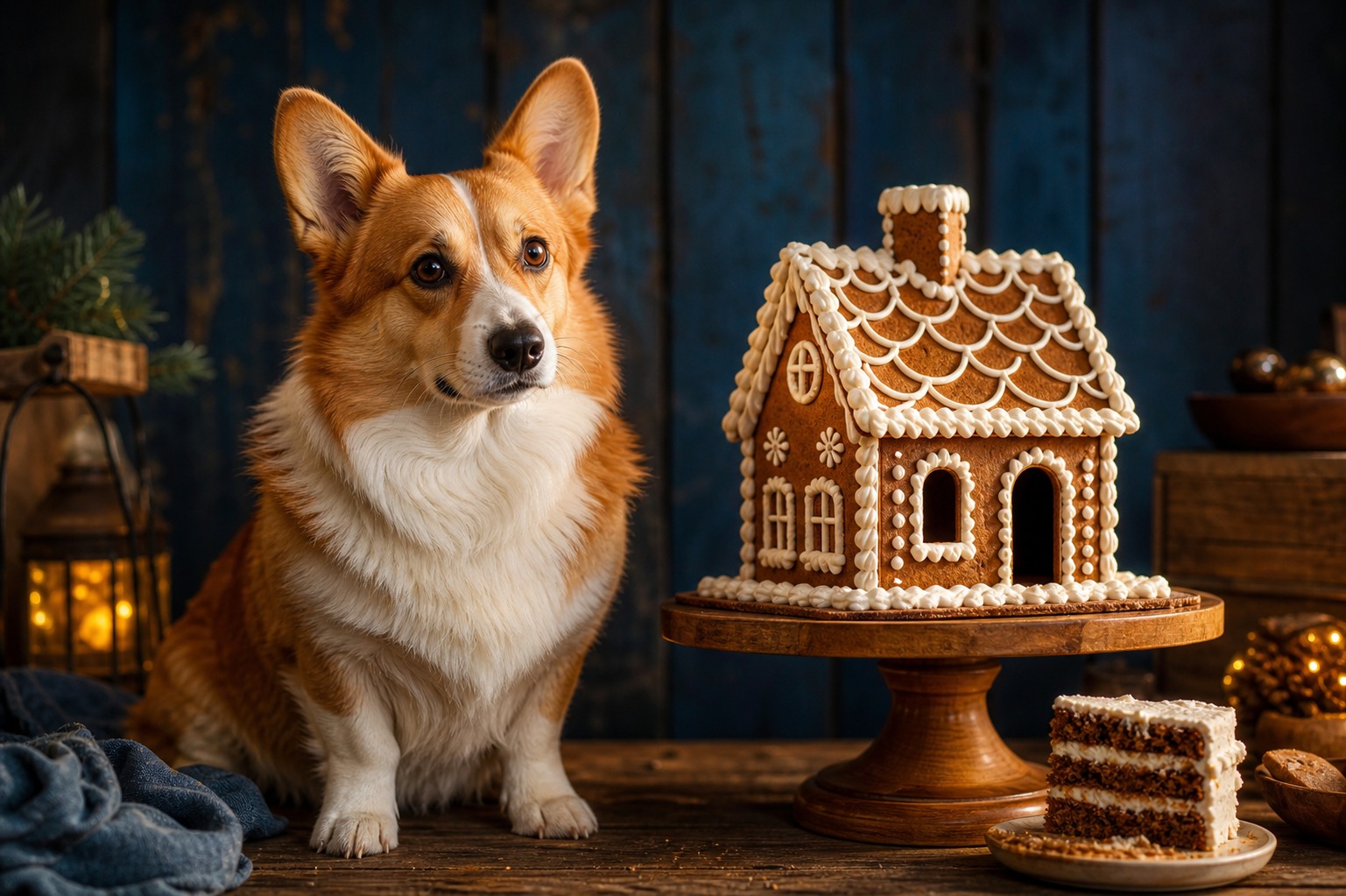
Gingerbread is one of those foods where the reason it is off-limits is not the reason people assume. Ask most owners why a dog shouldn’t have gingerbread and they will say sugar. Sugar is a fair objection, but it is the mild one. The ingredient that actually makes gingerbread dangerous is the warm spice you can barely taste in it: nutmeg. So the short answer is no, dogs should not have gingerbread, and the important part of that answer is why.
Sugar and fat are the ordinary problem
Take the nutmeg out of the picture for a second. Gingerbread is still a poor choice, because it is built on sugar and fat. Neither is toxic, but both are hard on a dog. Sugary, fatty foods can bring on gastrointestinal distress and pancreatitis, an inflamed and painful pancreas, and over time they contribute to dental problems and weight gain. That alone is enough to keep gingerbread off the list. But it is the kind of harm that is slow and dose-dependent, not the kind that turns an evening into an emergency.
Nutmeg is the real hazard
Here is where gingerbread separates itself from a generic sweet treat. Most gingerbread recipes contain nutmeg, and nutmeg is toxic to dogs because of a compound called myristicin.
Myristicin is the part of nutmeg that turns a cookie into a poisoning risk. At high enough doses it can send a dog’s heart racing, leave them disoriented or hallucinating, and in bad cases trigger tremors or seizures. That’s why I tell clients to treat nutmeg, and anything baked with it, as something to keep well out of reach.
The amount matters, and it is smaller than people expect. As little as one to two teaspoons of nutmeg can cause severe symptoms in a medium-sized dog. A single cookie may hold less than that, but the risk climbs with every extra bite, and a dog that gets into the dough or the spice jar can easily cross the line. The safest move during any baking session is to keep dogs in a separate room, especially when kids are involved and crumbs and scraps end up on the floor. If you display decorative gingerbread, put it somewhere a dog cannot reach or jump to.
Raw dough is a second, separate danger
If your dog gets into gingerbread dough before it is baked, that is its own emergency and arguably worse than the finished cookie.
“Raw dough does two bad things at once,” Dr. Kohl explains. “It keeps expanding in the warm stomach, which can distend or even obstruct the gut, and the yeast ferments the sugars into alcohol that the dog absorbs. So you’re looking at a possible blockage and alcohol poisoning from the same mouthful.”
If your dog swallows raw dough, stay calm but act, and watch for these signs of either problem: unproductive vomiting, a distended stomach, weakness, disorientation or unsteadiness, depression, a drop in body temperature, seizures, or collapse. Any of these warrants an immediate call to your vet or emergency line.
How dangerous is a little?
No amount of gingerbread is safe or healthy for a dog, but toxicity runs on a spectrum. The more your dog eats, the more likely and more severe the effects, whether that is nutmeg toxicity or plain gastrointestinal misery. A single crumb is not the same as half a gingerbread house, and knowing roughly how much your dog got will help your vet judge how worried to be.
What your dog can have from the table instead
Plenty of holiday-table foods are genuinely dog-safe if you keep them plain. Carrots are a healthy, nutritious snack, so slip your dog a plain one during meal prep before the salt and seasoning go on. Cooked sweet potato is a superfood for dogs as much as for people, thanks to its digestive benefits; set a plain one aside before you season the rest. Apple is a sweet, safe treat once the seeds and core are removed, though skip the apple pie, since the sugar and fat will upset your dog’s stomach even though cooked apple itself is fine. Moderation applies to all of them.
Just as important is knowing what to keep away. Garlic and onions, woven through so much holiday cooking, are toxic to dogs, onions especially. Grapes and raisins, sometimes hiding in stuffing or on a charcuterie board, are dangerous in even small traces and can cause kidney failure; do not offer dogs anything cooked with them, even after the fruit is picked out. Pecans and walnuts, common in pies, are toxic and contain juglone, which causes vomiting and GI distress; a stray dropped nut is unlikely to harm, but a bag or a whole pie means a vet visit. And rich, high-fat dishes like buttery vegetables or dark meat can cause GI upset or pancreatitis, so even “non-toxic” foods should go to your dog plain, without butter, seasoning, or heavy salt.
What’s new since this was written
The clearest recent development sits next to gingerbread on the danger list: the grape-and-raisin mystery finally has an answer. In 2021 the ASPCA’s poison control experts identified tartaric acid as the toxic agent behind grape and raisin kidney failure in dogs. That matters at holiday baking time because it widens the warning, cream of tartar and tamarind carry the same compound, so a homemade cookie or dough made with cream of tartar deserves the same caution as raisin-studded stuffing.
Nutmeg’s toxicity, by contrast, is old and settled science, which is exactly why it is worth repeating. Myristicin has been a recognized hazard for years, and the practical advice has not budged: keep nutmeg and everything baked with it away from your dog, and reach for a treat made for dogs when you want to include them in the season.
References
- “Nutmeg.” Pet Poison Helpline. https://www.petpoisonhelpline.com/poison/nutmeg/
- Animal Poison Control Center. “Toxic Component in Grapes and Raisins Identified.” ASPCApro, 2021. https://www.aspcapro.org/resource/toxic-component-grapes-and-raisins-identified
- Riley, Elizabeth. “Yeast Dough Dangers in Pets.” Veterinary Partner, 27 May 2021. https://veterinarypartner.vin.com/default.aspx?pid=19239&id=10273298
- “People Foods to Avoid Feeding Your Pets.” ASPCA. https://www.aspca.org/pet-care/animal-poison-control/people-foods-avoid-feeding-your-pets
Common questions
How much nutmeg is poisonous to a dog?
Even small amounts can cause problems. As little as one to two teaspoons of nutmeg can produce severe symptoms in a medium-sized dog. The danger comes from a compound called myristicin.
My dog ate raw gingerbread dough. What should I do?
Treat it as urgent. Raw dough carries the same harmful ingredients as the baked cookie, and it can expand in the stomach and ferment into alcohol. Watch for a swollen belly, unproductive retching, weakness, or disorientation, and call your vet or an emergency clinic right away.
Not a substitute for your vet. Our guidance is educational. For urgent symptoms, contact a vet or emergency clinic right away. Editorial standards
Dr. Kohl is a board-certified veterinary dentist with a particular interest in preventive oral care. She reviews all dental health content at The Pet Times and contributes practical guides on home dental routines, professional cleaning, and oral disease prevention.
Meet our experts ↗Keep reading
 FoodThe Danger Isn't Exotic. It's on Your Counter Right NowDr. Lena Park · 10 min
 FoodBaked Sourdough Is a Fine Dog Snack. Raw Dough Is a 911 Call.Dr. Amara Solis · 6 min
 Health & WellnessThe Sweetener That Kills Dogs Often Isn't Labeled "Xylitol"Dr. Ravi Mehta · 8 min
 FoodTo Your Dog, Spicy Food Isn't a Flavor. It's a Burn AlarmDr. Priya Nair · 9 min
 Health & WellnessThe Carrot in Your Dog's Bowl Was on a Recall List. Here's the Real LessonDr. Ravi Mehta · 5 min
 Health & WellnessWhite Chocolate Skips the Poison. It Keeps the Trap.Dr. Mara Chen · 6 min