


The Secret to Bathing Your Cat: Almost Never Do It
Most cats never need a bath in their lives. The real skill isn't wrangling a soaked, furious cat into a tub — it's knowing the handful of times it's actually warranted, and what to reach for the rest of the time.

Affiliate disclosure. This article contains affiliate links. We may earn a small commission if you buy through a link, at no extra cost to you. How we handle recommendations.
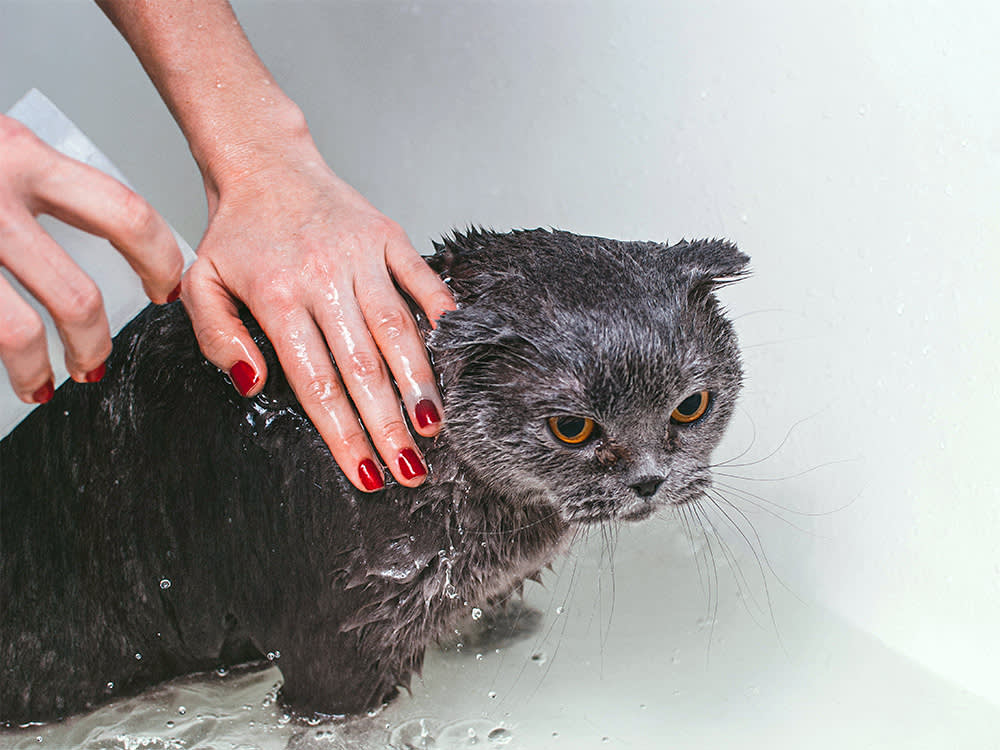
Let’s start with the part that will save you the most stress: most cats never need a bath. Not once. They are among the most fastidious self-groomers in the animal kingdom, and a healthy cat with a normal coat keeps itself cleaner than you could with a tub and a bottle of shampoo. So the genuinely useful skill here is not the wrangling technique. It is judgment, knowing the short list of situations that actually call for a bath, and reaching for a waterless option for everything else.
That reframe spares you and your cat a lot of misery. The image most people have of cat bathing, the soaked furniture, the clawed forearms, the betrayed glare, mostly comes from bathing cats who never needed bathing in the first place.
When a bath is genuinely warranted
Unless you have a hairless breed, you probably do not need to bathe your cat regularly, or ever. Baths are for exceptions: your cat got something dangerous or toxic on their fur, soiled themselves badly in a carrier, is too old, ill, or overweight to reach parts of their own body, or has a skin condition your vet is treating with medicated baths. For ordinary maintenance between those events, waterless shampoo or pet wipes get a cat as clean as they need to be without any water at all.
“Most house cats will go from kitten to old age without a single real bath, and that’s exactly how it should be,” says Sasha Ford, a feline behavior consultant on the Pet Times team. “I tell people to reserve the tub for true emergencies, a chemical on the coat or a genuine mess, and to lean on wipes for the rare touch-up. Every unnecessary bath just teaches a cat that the bathroom is where bad things happen.”
There are real exceptions. Hairless breeds are the clearest one. The Sphynx and other hairless cats need regular bathing, generally every week to every other week, because they have no coat to wick away skin oils. Skip it and those oils build up, leaving brown, greasy stains on your furniture and bedding, and their ears and nail beds need cleaning too, since there is no fur to keep dirt out. Among coated cats, a Persian’s long, matting-prone coat may need occasional help, and a Maine Coon, with water-resistant fur and a taste for the outdoors, sometimes comes home dirty enough to warrant a wash.
How to bathe a cat, if you truly must
If you have a hairless cat or a genuine mess on your hands, here is how to keep the whole thing as calm as possible.
Gather your supplies first. Get everything ready before a drop of water runs: shampoo formulated for cats (human and dog products can irritate feline skin), a towel, and a generous supply of treats. And your cat, who has likely gone into hiding the moment they sensed the plan, coaxed in with a treat.
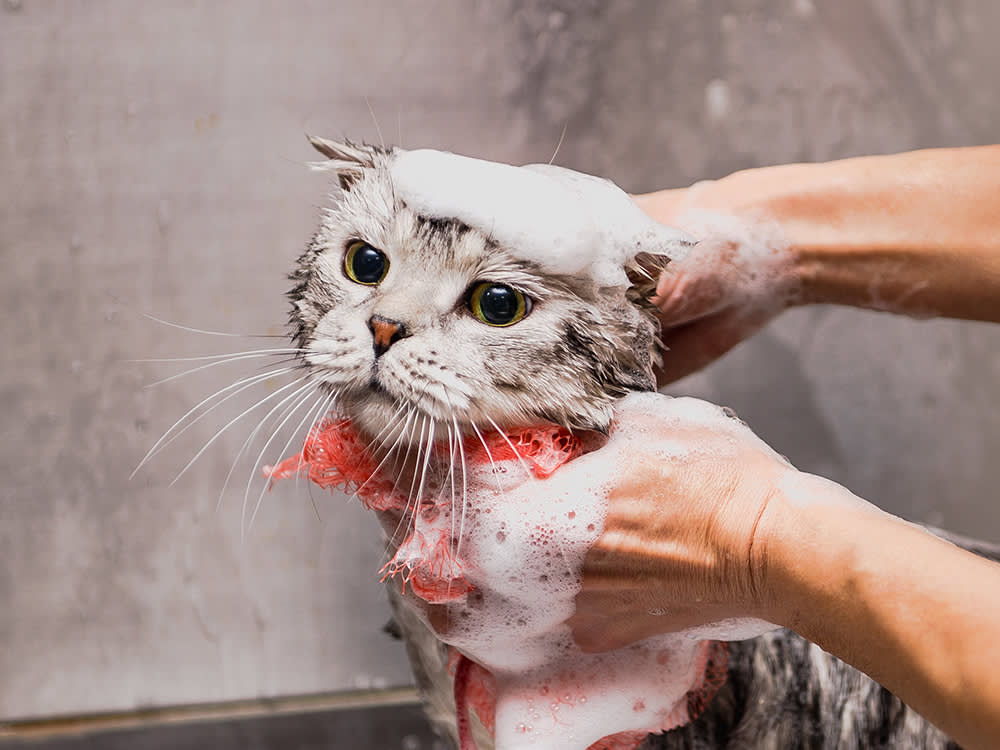
Run a shallow, warm bath. The water should be comfortably warm, the temperature you would run for a baby, tested on your wrist or elbow. A few inches is plenty. Squirting shampoo into the water and swishing it into suds first can make lathering easier than trying to work it into a squirming cat.
Lather and rinse gently. Use a small cup to pour water slowly along the body until your cat is wet, work in the shampoo, then rinse with fresh cupfuls. The single best trick for the whole ordeal: keep a lickable treat going continuously, not as a reward at the end but as a distraction throughout.
Fluff and dry. Pat, do not rub, with a dry towel, since rubbing tangles the coat and adds irritation. If your cat tolerates the noise, a pet-safe dryer on its lowest setting speeds things along. Make sure they are fully dry before they settle into a favorite spot to plot their revenge.
Not getting shredded in the process
Most cats do not enjoy this, so a scratch is always possible, but handling makes the difference between a tense bath and a disaster.
The core principle is minimum restraint. Scruffing and forceful holding backfire: they ramp up fear and aggression and make a cat struggle harder, not less. Use the gentlest control that gets the job done, and bring in a helper if your cat is really not having it. A useful two-person setup is to have one person hold while the other washes, with the cat faced toward the wall and front paws resting on the tub ledge, so teeth and claws point away from you. A non-slip mat on the bottom of the tub helps a cat feel secure instead of scrabbling, and a lickable treat can keep a cooperative cat happily occupied enough that they need almost no restraint at all.
A few more things that lower the temperature:
- Start bathing young if you know your cat will need it lifelong.
- Introduce water gradually rather than all at once.
- Pour on praise and treats throughout.
- Consider clicker training to reward calm behavior.
- Skip forceful restraint entirely.
- Keep the water comfortably warm.
- Recruit a helper.
- Stay calm yourself, because cats read your stress and mirror it.
And no, not every cat hates water
The stereotype is not universal. Some breeds, notably the Maine Coon and the Turkish Van, actually like water, and individual personality matters as much as breed. Plenty of hesitant cats can learn to tolerate, or even enjoy, water with gentle introduction and steady positive reinforcement. The trick is to respect your particular cat’s comfort level rather than forcing the issue, which is really the theme of this entire subject: work with the cat you have, and bathe them only when they truly need it.
References
- Cornell Feline Health Center. “Grooming and Coat Care for Your Cat.” Cornell University College of Veterinary Medicine.
- O’Neill, D. G., et al. “Survey of the Prevalence, Diagnosis and Treatment of Dermatological Conditions in Small Animals in General Practice.” BMC Veterinary Research.
- International Cat Care. “Grooming and Bathing Your Cat.” icatcare.org.
Common questions
Which cats do need regular baths?
Hairless breeds like the Sphynx need bathing every week or two because they have no coat to absorb skin oils. Long-haired breeds such as Persians and outdoor-loving Maine Coons may need the occasional bath to prevent matting or wash off dirt.
How do I bathe a cat without getting scratched?
Use the least restraint that works, never scruff or manhandle, and face the cat toward the wall with front paws on the tub ledge so claws point away from you. A non-slip mat, a helper, and a lickable treat to keep them occupied all help enormously.
What water temperature is right for a cat bath?
Comfortably warm, like bathwater you'd run for a baby. Test it on your wrist or elbow. Avoid extremes in either direction to prevent scalding or chilling.
Not a substitute for your vet. Our guidance is educational. For urgent symptoms, contact a vet or emergency clinic right away. Editorial standards
Leila Torres leads our Living coverage, from home life and travel to the products and rescue stories that come with sharing a life with animals. She edits and writes across the section, with a soft spot for pieces about the bond between people and their pets.
Meet our experts ↗Keep reading
 Health & WellnessYour Cat's Shedding Is Telling You Something. Learn to Read ItClaire Sutton · 5 min
 Product PicksYour Cat Grooms Themselves. These 6 Tools Are the Ones Worth Buying Anyway.Sasha Ford · 6 min
 Health & WellnessYour Cat's Itch Isn't the Problem. Not Knowing Why IsDr. Nina Kohl · 9 min
 LivingLong Hair Is the Least Important Thing About a Long-Haired CatDr. Amara Solis · 10 min
 Health & WellnessA Cat's Tongue Cannot Do This: When Grooming Stops Being OptionalLeila Torres · 6 min
 Health & WellnessThat Mat in Your Cat's Fur Is Hurting Them. Don't Reach for Water.Dr. Priya Nair · 7 min