


Your Cat's Itch Isn't the Problem. Not Knowing Why Is
Slathering something on an itchy cat rarely works, because itch is a symptom, not a diagnosis. Here's how to find the real cause, from fleas to allergies to mites, and treat the right thing.

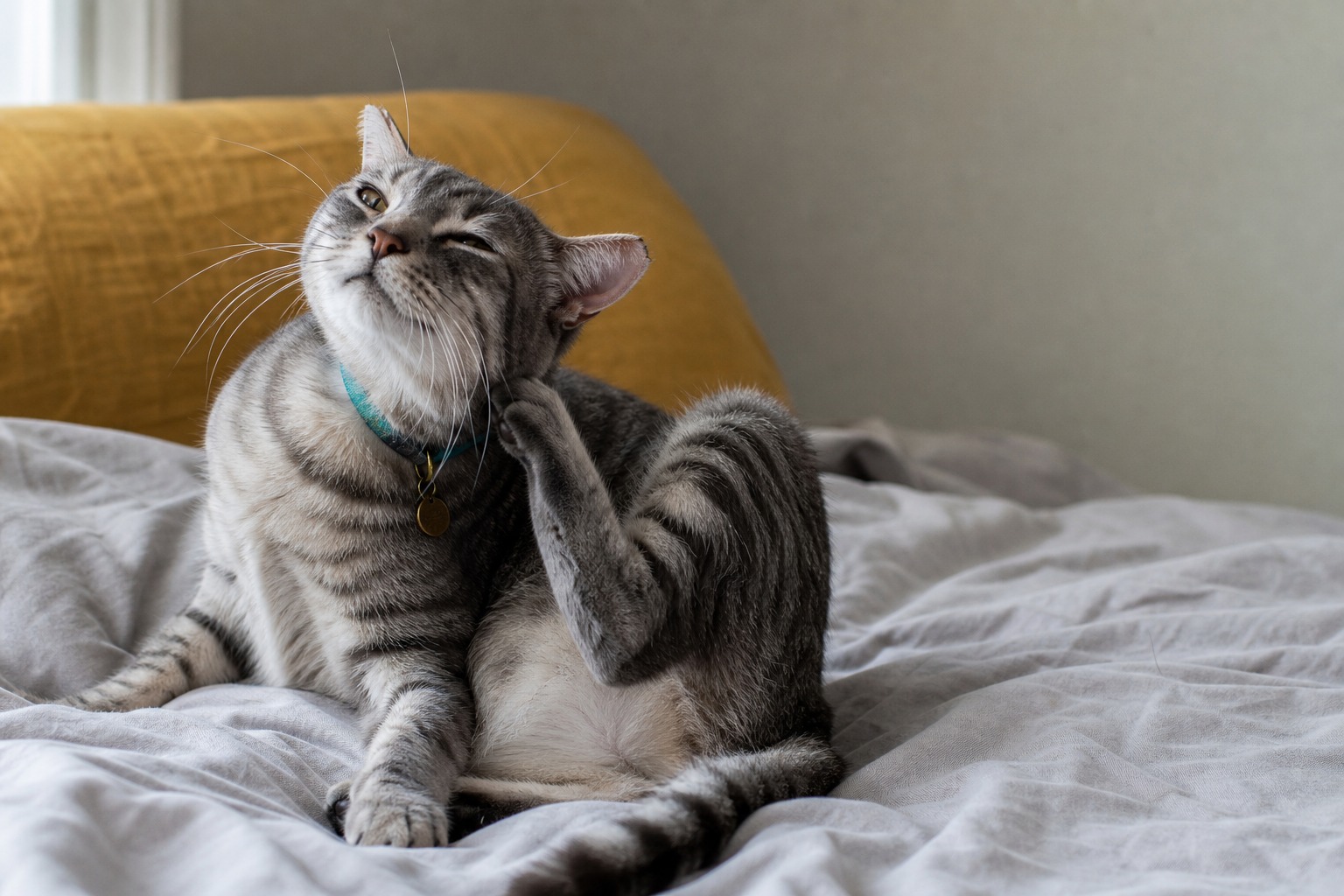
If your cat has been scratching, licking, and thumping a back leg against the same spot for days, your instinct is to find something to put on it and make the misery stop. That instinct is exactly what keeps cats itchy longer than they need to be. Here is the reframe that changes everything: an itch is not a diagnosis. It is a symptom, and it has many possible causes that all look identical from the outside. Reach for a random cream or an oatmeal rinse before you know what you are treating, and you are as likely to waste a week as to help.
The fastest route to relief is boringly logical. Identify the cause, then match the treatment to it. Chase the scratch without knowing the source, and you are guessing. So before we talk about what soothes an itchy cat, we have to talk about what is causing it, roughly in the order a vet works through the list.
The single most common mistake I see is treating the itch instead of the reason for it. A cat can look exactly the same whether it’s fleas, a food allergy, or a skin infection, and the right fix for one does nothing for another. Getting a diagnosis early is how you stop the cycle instead of feeding it.
Start with fleas, because it’s almost always fleas
Fleas are the leading cause of itchy skin in cats, and they punch far above their size. The movement alone drives cats to lick and bite, but the bigger problem is allergy: many cats are hypersensitive to flea saliva, so a single bite can set off wildly out-of-proportion irritation across the body. This is why “but I never see fleas” is not reassurance. One allergic cat plus one bite equals a very miserable animal. Clearing fleas off your cat and out of their environment is step one, every time. Only once fleas are truly ruled out does it make sense to hunt for another culprit.
Ringworm, mange, and the parasites you can’t see
Ringworm is not a worm at all but a fungus, most often Microsporum canis, and it shows up most in kittens. Look for patchy hair loss, broken hairs, and crusting. Not every ringworm cat is itchy, and Persians seem especially prone to it.
Mange is rare in cats in the United States, but it happens, caused by mites such as Notoedres cati or Sarcoptes scabiei. Both trigger intense itching, crusting, and small bald patches, and both can spread to people, with Sarcoptes (the scabies mite) being the bigger human concern. The more common feline offender, thankfully, is Notoedres.
Allergies: the frustrating middle ground
Allergic skin disease is one of the most common and most maddening causes of feline itch, because cats can react to almost anything. Common triggers include foods, fleas, dust mites, mold spores, insects, and pollen. Some allergies are seasonal and ebb and flow with the calendar. Pinning down the exact trigger often means detective work: a strict hypoallergenic food trial, blood-based allergy panels, or intradermal testing done by a veterinary dermatologist.
Allergies also do collateral damage. By weakening the skin’s natural defenses, they open the door to secondary infections, which brings us to the next cause.
Skin infections ride along
A superficial skin infection can make a cat frantic with itch regardless of what started it. Most feline skin infections come down to bacteria and yeast that already live on the skin in small, harmless numbers suddenly blooming once the skin barrier and immune defenses break down. Because allergies are a classic reason those defenses fail, keeping allergies controlled is also how you prevent the infections that pile on top of them.
Now the treatments, matched to the cause
Once you know what you are fighting, the right tool becomes obvious. Here is how vets typically match treatment to problem.
Flea control. Plenty of products exist, and your vet can steer you to the right one for long-term control. Be careful: many dog and cat flea products look alike but contain different ingredients, and cats can suffer dangerous toxicity from insecticides in dog products, so never improvise across species. Very young kittens (under about eight weeks or two pounds) usually can’t use standard products; for them, patient flea-combing and gentle soapy water do the job. And always treat the home and other pets, because an infestation lives mostly off the cat.
Bathing. As unpopular as it is with the cat, washing is frequently part of the plan. Use a shampoo made for cats, ideally with oatmeal, never a human shampoo, which has the wrong pH and can dry the skin and worsen itching. If your vet has diagnosed a skin infection, they may reach for a medicated formula. Most medicated shampoos only work after a full ten minutes of contact, so line up a podcast and settle in.
Prescription medications. Depending on the cause, your vet may reach for antibiotics for serious infections, or drugs that calm the immune system and inflammation for allergies. A short course of steroids relieves itch fast, but vets limit steroid use, especially long-term, because it can unmask conditions like diabetes or heart disease and cause thinning skin, weight gain, muscle loss, and slow healing. Other options include cyclosporine (Atopica) and oclacitinib (Apoquel), though the latter is not formally approved for cats and is used off-label.
Antihistamines. Vets have experimented in cats with the familiar human options: diphenhydramine (Benadryl), chlorpheniramine (Chlor-Trimeton), loratadine (Claritin), and cetirizine (Zyrtec). The evidence that any of them truly relieve feline itch, though, is thin. Any drop in scratching often comes from the drowsiness they cause rather than real allergy control, so they are rarely a first-line fix.
Topicals. Mange and ringworm often call for medicated dips or topical therapy, some of which are done at the vet’s office because they need careful dilution and ventilation. Skip over-the-counter creams unless your vet recommends them: cats are contortionists who will groom almost anything off their fur, and certain ointments can trigger issues anywhere from an upset stomach to zinc toxicity.
Diet changes. A cat with food allergies usually needs a new diet, either one built on a novel protein and carbohydrate the cat has never eaten or a hydrolyzed diet with proteins broken down too small for the immune system to notice. Diet trials are hard: the cat must eat only the trial food for one to two months, and a single cheat can restart the clock.
Supplements. Omega-3 fatty acids are the most common skin supplement for cats. They do little for an acute flare-up but help maintain healthier skin over the long haul. Ask your vet which product is worth trying.
What’s new since this was written
There is a fresh safety warning every cat owner should hear, and it involves a drug mentioned above. Apoquel (oclacitinib), the anti-itch medication sometimes used off-label in cats, was reformulated into a pork-flavored chewable tablet, and in 2025 veterinarians began reporting a spike in accidental overdoses in cats. The problem is that cats find the flavored chews delicious. Some have sought out the tablets and eaten several at once, leading to acute kidney injury and hospital stays. The lesson is simple and important: store every flavored medication like the treat your cat thinks it is, well out of reach, and never adjust a dose on your own. If your cat gets into a bottle, call your vet or an animal poison line right away.
This piece covers a health topic that can point to serious underlying conditions. It is general information, not a substitute for veterinary care. If your cat is persistently itchy, sore, or losing hair, see your veterinarian.
References
- “2023 AAHA Management of Allergic Skin Diseases in Dogs and Cats Guidelines.” American Animal Hospital Association. Link
- Moriello, Karen A., et al. “Diagnosis and Treatment of Dermatophytosis in Dogs and Cats: Clinical Consensus Guidelines of the World Association for Veterinary Dermatology.” Veterinary Dermatology, 2017. Link
- “Successful Treatment of a Multi-Drug-Resistant Severely Pruritic Hypersensitivity Dermatitis in a Cat.” Case Reports in Veterinary Medicine, 2020. Link
Common questions
Can you give cats Benadryl?
Sometimes, but only under a vet's guidance. Benadryl (diphenhydramine) is used off-label in cats for certain situations, but the evidence that antihistamines meaningfully relieve feline itch is weak, and dosing must come from your veterinarian.
How do you get rid of fleas on a cat?
One dose won't do it. Treat every pet in the home monthly with a vet-recommended product, keep your cat indoors to prevent re-exposure, and treat the environment, since most of a flea population lives in your carpet and bedding, not on your cat.
Not a substitute for your vet. Our guidance is educational. For urgent symptoms, contact a vet or emergency clinic right away. Editorial standards
Dr. Kohl is a board-certified veterinary dentist with a particular interest in preventive oral care. She reviews all dental health content at The Pet Times and contributes practical guides on home dental routines, professional cleaning, and oral disease prevention.
Meet our experts ↗Keep reading
 Product PicksProbiotic Dog Shampoo Sounds Like Nonsense. The Idea Behind It Isn't.Dr. Mara Chen · 6 min
 Health & WellnessA Cat's Tongue Cannot Do This: When Grooming Stops Being OptionalLeila Torres · 6 min
 Product PicksYour Cat Grooms Themselves. These 6 Tools Are the Ones Worth Buying Anyway.Sasha Ford · 6 min
 Health & WellnessYour Cat Grooms for Hours, and Cleaning Is the Smallest Reason WhyDr. Priya Nair · 7 min
 Health & WellnessThe Secret to Bathing Your Cat: Almost Never Do ItLeila Torres · 7 min
 Health & WellnessWhy the Cat Pee Smell Keeps Coming Back (and How to Actually Kill It)Sara Lim · 17 min