


Why the Cat Pee Smell Keeps Coming Back (and How to Actually Kill It)
Cat urine odor returns because uric acid crystals reactivate in humidity. Here are the enzymatic cleaners that break those crystals down for good, sorted by surface and budget.

Affiliate disclosure. This article contains affiliate links. We may earn a small commission if you buy through a link, at no extra cost to you. How we handle recommendations.
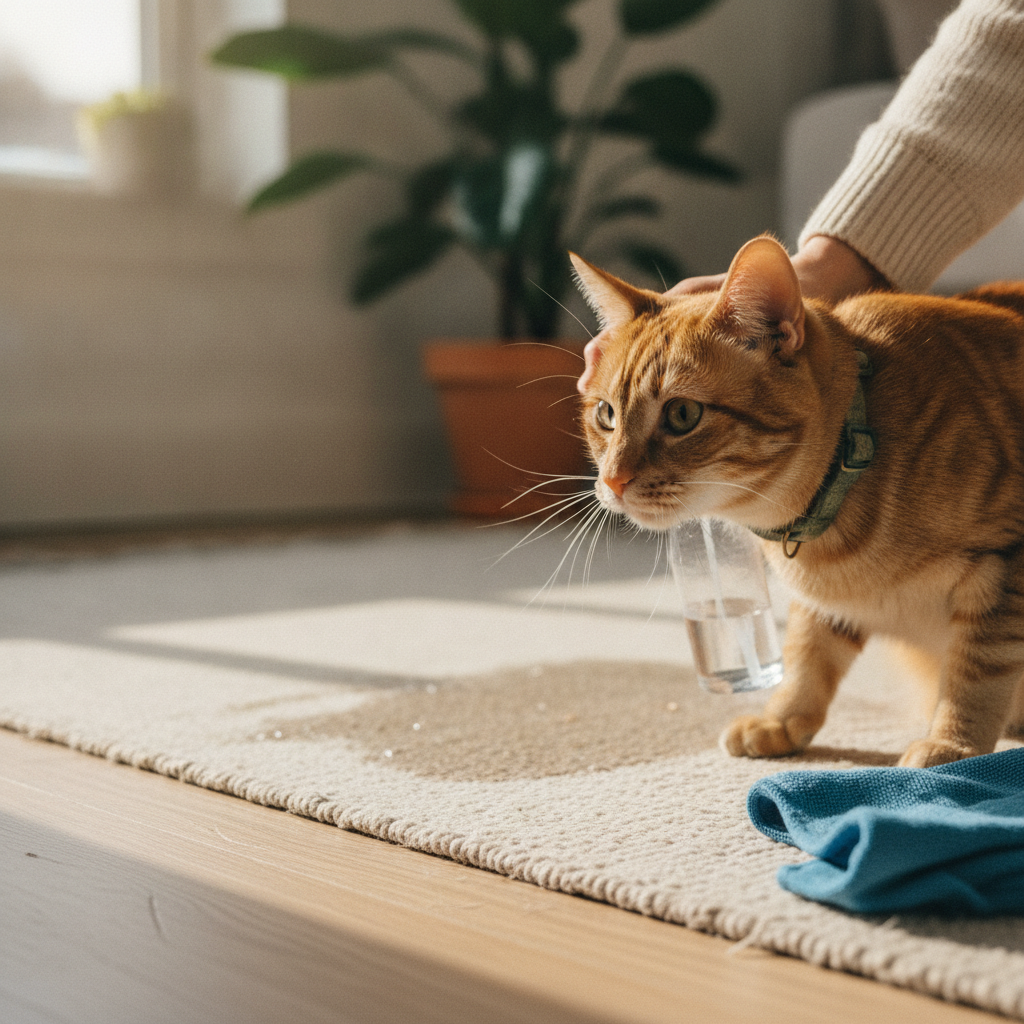
Here is the thing nobody tells you when you scrub a cat-pee spot until your arm aches: the smell is probably coming back. Not because you did a bad job, but because the smell of cat urine is not really an odor problem. It is a chemistry problem, and most of the products people reach for cannot solve it.
Cat urine carries uric acid, and uric acid forms microscopic crystals that bond tightly to porous surfaces, sinking into carpet fibers, wood grain, grout, and the foam inside a couch cushion. Soap, vinegar, and baking soda can cover the smell for a day or two. What they cannot do is take those crystals apart. So the crystals sit there, and the next time the air gets humid, they release ammonia gas all over again. You smell a faint whiff. Your cat, whose nose is vastly more sensitive than yours, smells a clearly marked bathroom and is tempted to use it again.
That single fact reframes the whole shopping decision. The job of a good cleaner is not to make the room smell like lavender. It is to physically destroy the uric acid so it can never reactivate. That is what enzymatic cleaners do, and it is why they are the only category worth buying. The enzymes break the uric acid down into carbon dioxide and ammonia gases that evaporate and do not come back, plus water-soluble compounds you can blot away.
So before we get to the products, the most useful thing to know is this: skip anything that brags about fragrance, and avoid anything ammonia-based entirely. Ammonia smells like urine to a cat, so cleaning pee with an ammonia product is an open invitation to re-mark the spot. Below are the cleaners that actually do the chemistry, sorted the way you will actually shop for them: by where the accident happened, and by how much you want to spend.
The short list
- Best overall: Rocco & Roxie Stain and Odor Eliminator
- Best for carpet: Pooph Pet Odor Eliminator
- Best for hard surfaces: ECOS for Pets Stain and Odor Remover
- Best natural option: Arm & Hammer Baking Soda
- Best fragrance-free: Mister Max Unscented Anti Icky Poo Odor Remover
- Best budget enzymatic: Urine Off Kitten & Cat Odor & Stain Remover
“People assume a cat returns to a spot out of spite, but it’s almost always chemistry,” says Dr. Mara Chen. “There’s still uric acid in that fiber, the cat smells it, and to them the message reads ‘bathroom.’ Neutralize the crystal and the invitation disappears.”
The most versatile pick, for the spot you found too late
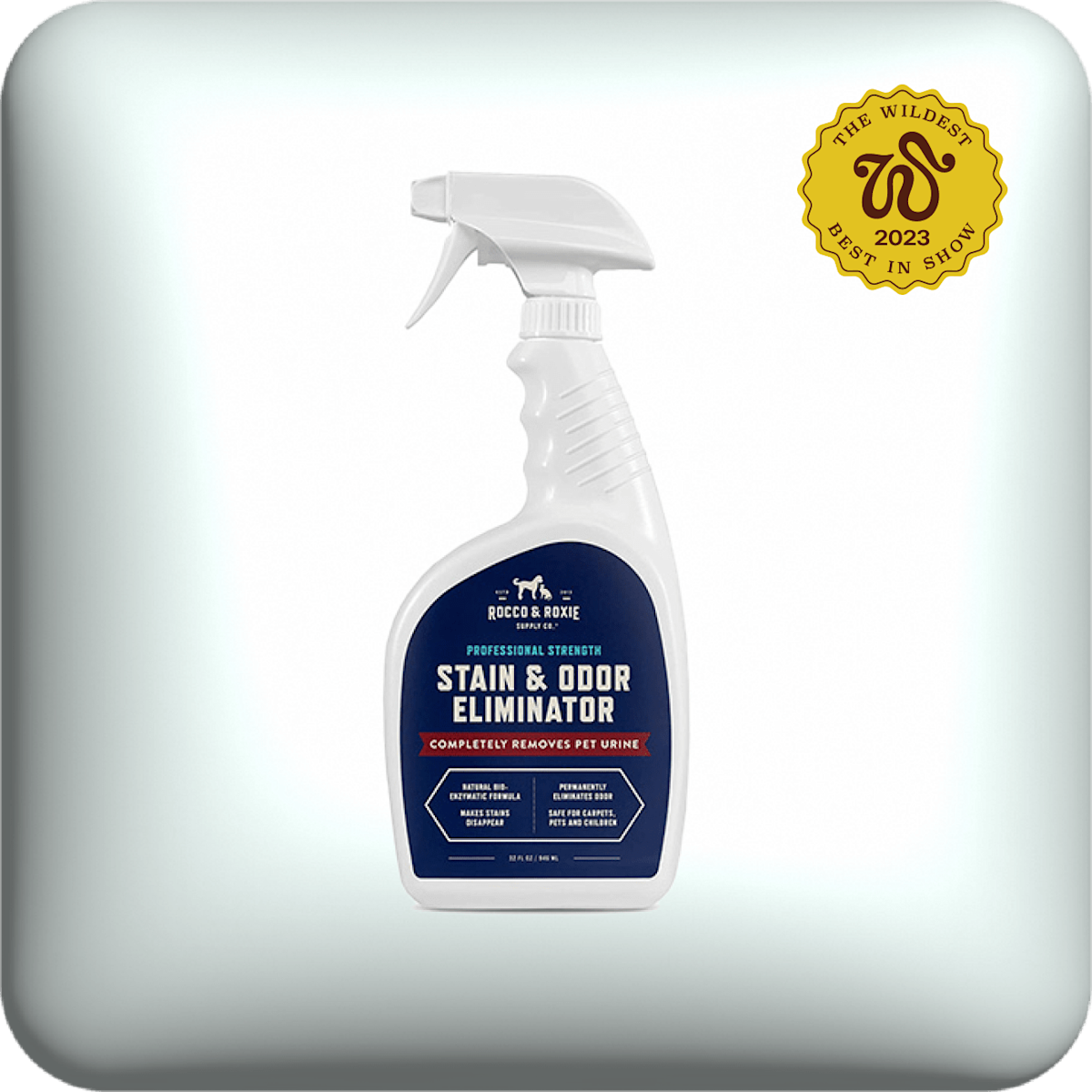
Rocco & Roxie Professional Strength Stain & Odor Eliminator
With more than 77,000 five-star Amazon reviews, this enzymatic spray has earned its reputation. It is the one to keep on hand if you do not know in advance where the next accident will land, because it works across nearly every surface in a home, from carpet and upholstery to clothing, and it lifts the stain along with the smell. Safe for people and pets when used as directed. If you only buy one bottle, buy this one.
Nature’s Miracle Advanced Cat Stain and Odor Eliminator Spray
A perennial bestseller, and the cheaper everyday workhorse to Rocco & Roxie’s premium pick. It carries a mild scent and handles the full menu of cat messes: urine, vomit, feces, and everything in between. Safe on most household surfaces when used to label directions.
When the accident is on carpet (which it usually is)
For reasons known only to cats, the softest, most absorbent surface in the house tends to be the target. Carpet is the hardest case because urine wicks down past the fibers into the pad underneath, so these picks are chosen for their ability to penetrate rather than sit on top.
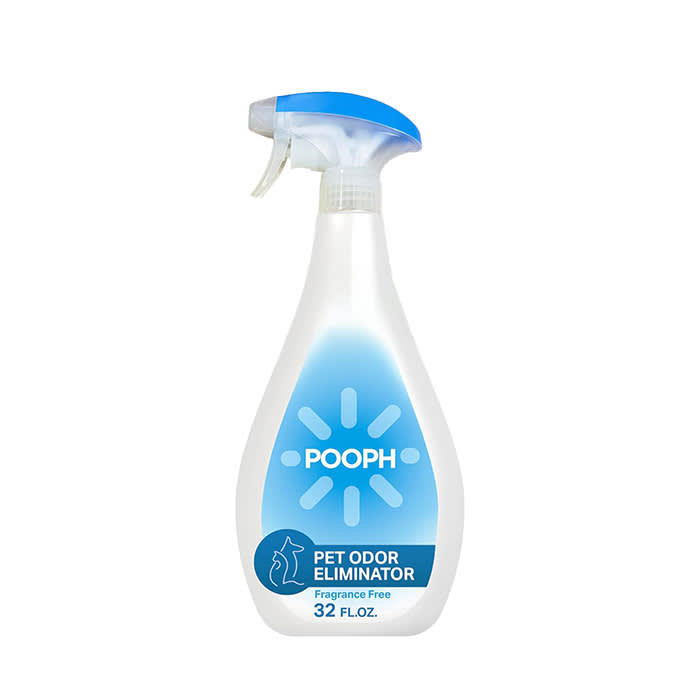
Pooph Pet Odor Eliminator
If strong cleaner smells bother you almost as much as the mess, Pooph is the answer. Its proprietary mineral-based formula looks and smells like plain water, with no masking fragrance, just odor elimination. Safe on carpet, upholstery, and even near litter boxes and chew toys.
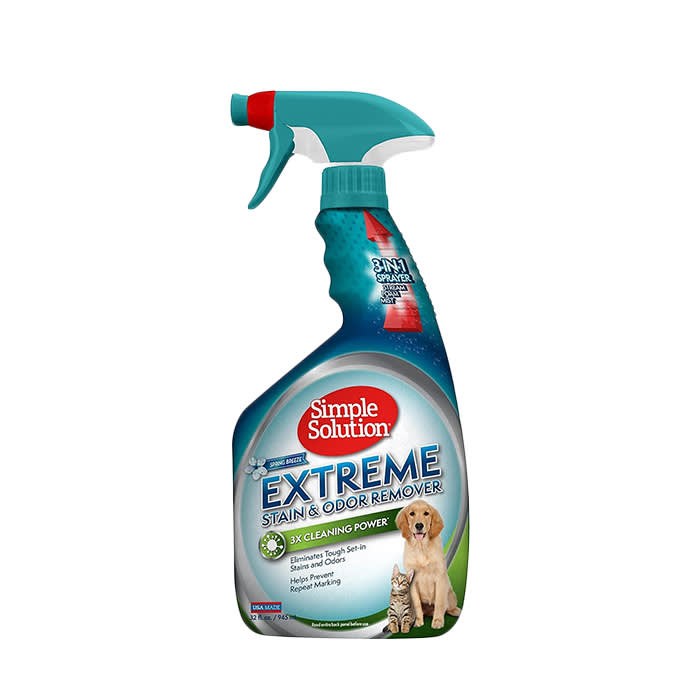
Simple Solution Extreme Pet Stain and Odor Remover
Experienced trainers will tell you that erasing the scent of a past accident matters as much as discouraging the next one, and that is exactly this spray’s strength: it neutralizes odors both you and your cat can detect, which lowers the odds of a repeat visit. The formula is concentrated, so run a 24-hour spot test on a hidden patch of the surface before treating a large or visible area.
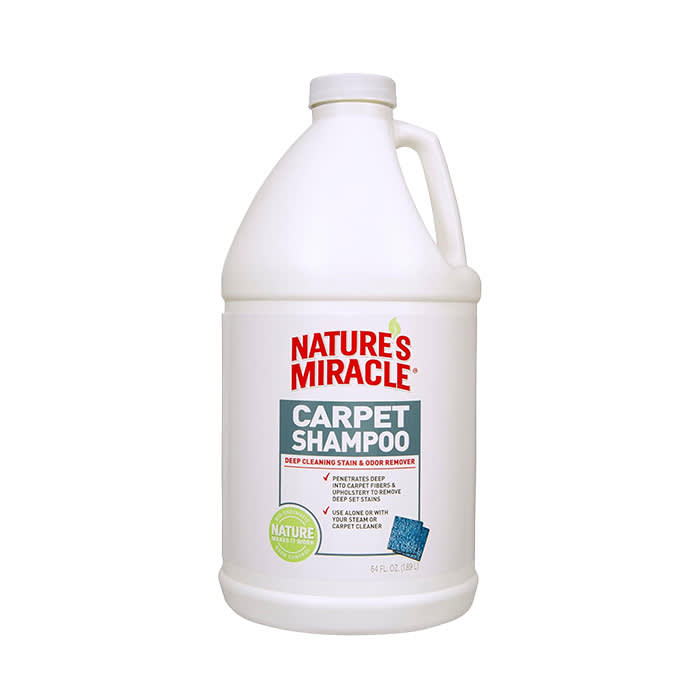
Nature’s Miracle Carpet Shampoo Deep-Cleaning Pet Stain And Odor Remover
For a whole-room reset rather than a single spot, this carpet shampoo handles both fresh accidents and long-set stains. The low-foam formula is compatible with nearly any water-based steam or carpet machine, and it is effective enough to work by hand when you do not have a machine.
When it lands on hard floors
Hard surfaces wipe down more easily than carpet, but do not be fooled: hardwood, stone, and grout are porous, and urine sinks into the grain and pores where a quick wipe never reaches. These options are gentle enough for sealed surfaces while still doing the chemistry.
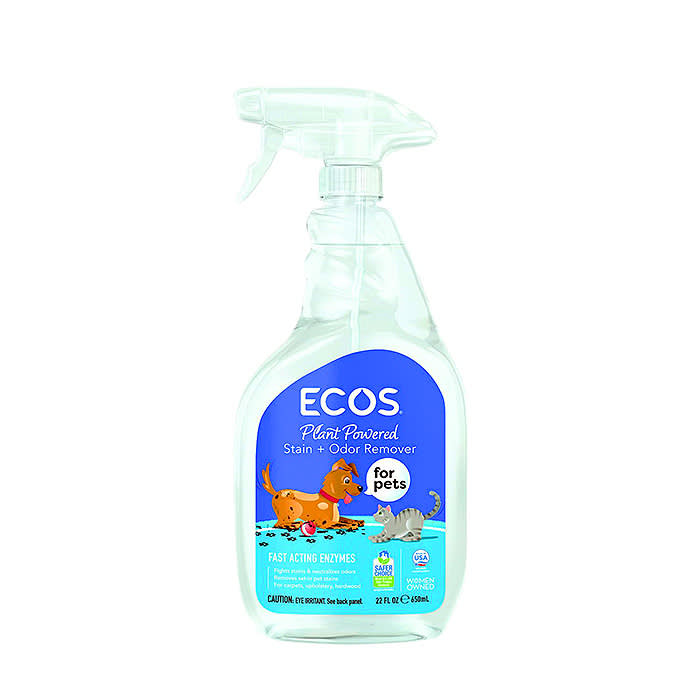
ECOS for Pets Stain & Odor Remover
This plant-based spray uses enzymatic action to neutralize odor without harsh chemicals that could dull or damage sealed hardwood or tile. It is biodegradable and fully vegan, which makes it the natural choice for eco-minded households.
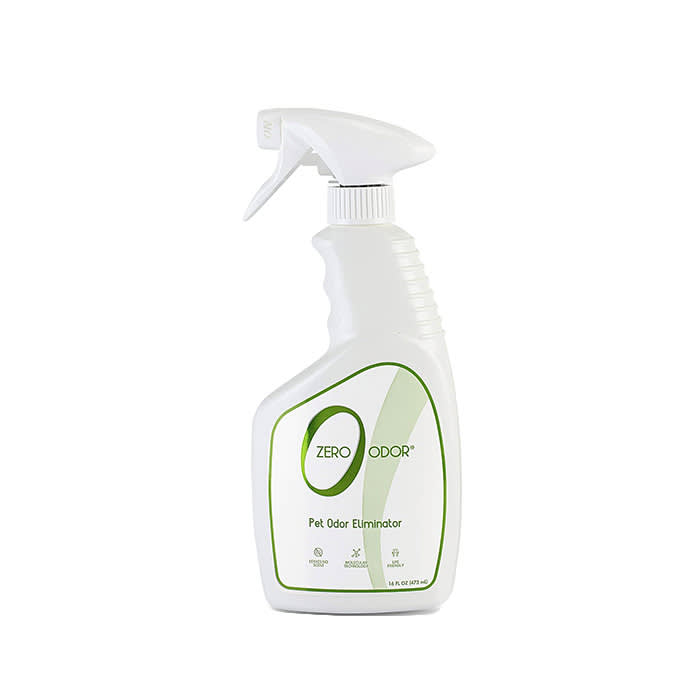
Zero Odor Pet Odor Eliminator
Worth keeping for the worst-case scenario: skunk spray, which is a whole-house emergency rather than a single spot. The maker confirms it works on skunk odor, and reviewers agree. As one writes: “My dog had a run-in with a skunk. As usual, they run into the house before you are aware of the situation. No matter how much you scrub and clean the skunk odor lingers. I used Zero Odor, and it actually seemed to eliminate the odor. I asked several visitors the age-old question, ‘Does the dog smell like a skunk?’ and the answer was ‘no.’ So, I guess it works pretty well.”
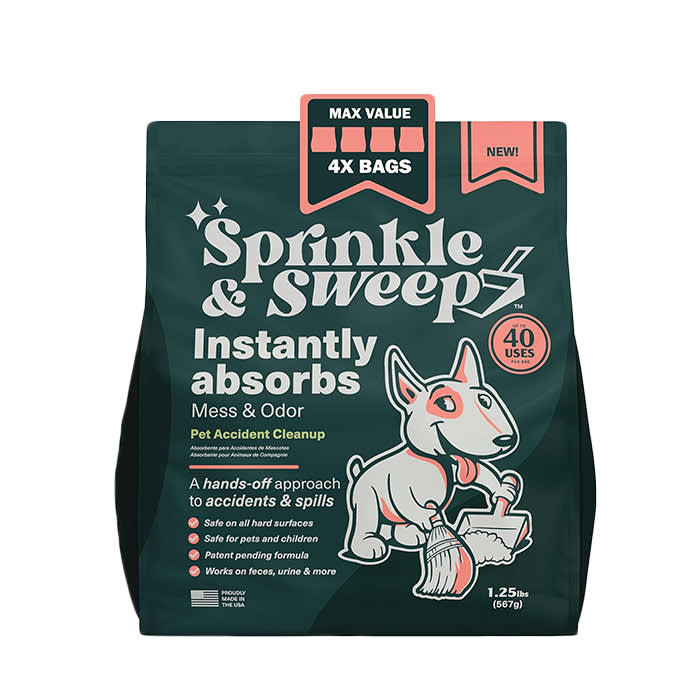
Sprinkle & Sweep Pet Mess & Odor Cleanup
A spray-free option for anyone who would rather not touch the mess at all. Sprinkle it over the accident, let its “Stink-Lock Technology” absorb and bind the liquid, then sweep the dried clump into a dustpan. It genuinely makes cleanup less grim. Because it is an absorber rather than an enzyme treatment, follow up with an enzymatic spray afterward for a complete job.
When you need it fragrance-free
Fragrance is a minefield in a cat home. Many scents are derived from essential oils that are toxic to cats, and even synthetic fragrances can overwhelm a sensitive feline nose. If you are scent-sensitive yourself, or just want to remove the variable, these unscented picks still do the work.
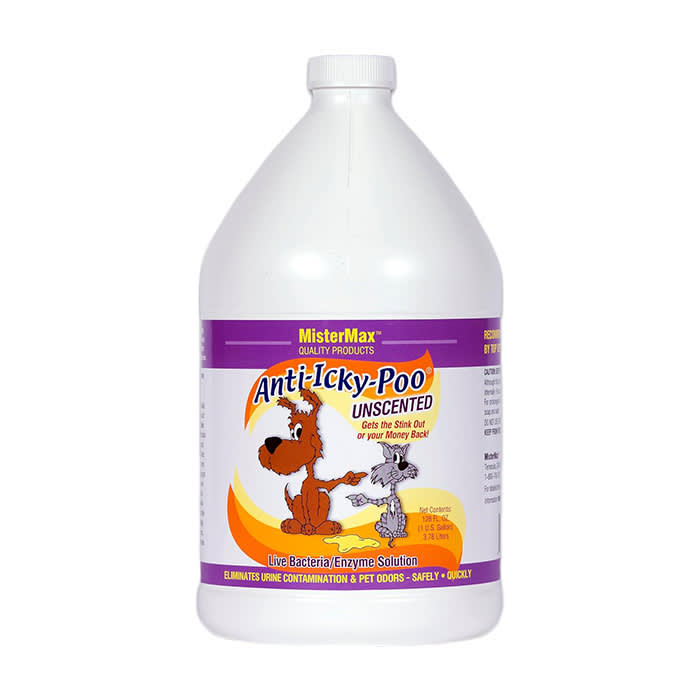
Mister Max Anti Icky Poo Odor Remover
Built for multi-pet households where messes are routine rather than rare. The gallon size handles urine, skunk spray, and most other pet odors across every surface type, with no added fragrance at all.
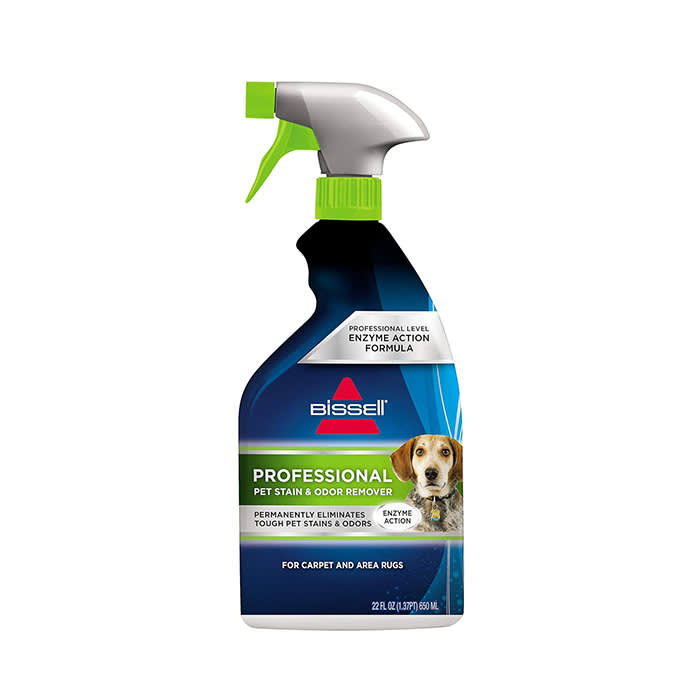
Bissell Professional Stain & Odor Remover
Formulated for deep-cleaning machines, this solution penetrates carpet fibers to break down embedded stains and neutralize odor at the source. Professional-grade strength, still safe for pets when used as directed, and the cheapest entry here.
When you want a natural route (carefully)
Natural and plant-based eliminators can perform as well as conventional ones, but “natural” does not automatically mean cat-safe. Many botanical products contain essential oils that are harmful to cats even in small amounts, so read ingredient lists and stick to options with clearly pet-safe formulas.
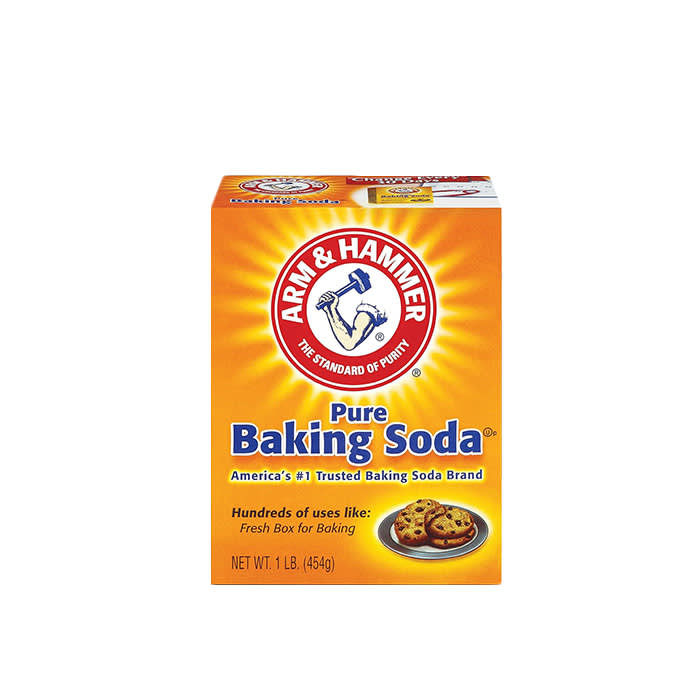
Arm & Hammer Baking Soda
The original odor absorber, and still one of the most versatile. Sprinkle it into carpet, let it sit, and vacuum it up; for hard surfaces, mix it with water and a little vinegar for a simple DIY spray. As single-ingredient as it gets, and gentle enough to use in a dog bath. Just remember its limit: it absorbs and masks, it does not break down uric acid, so use it as a first response and finish with an enzyme cleaner.
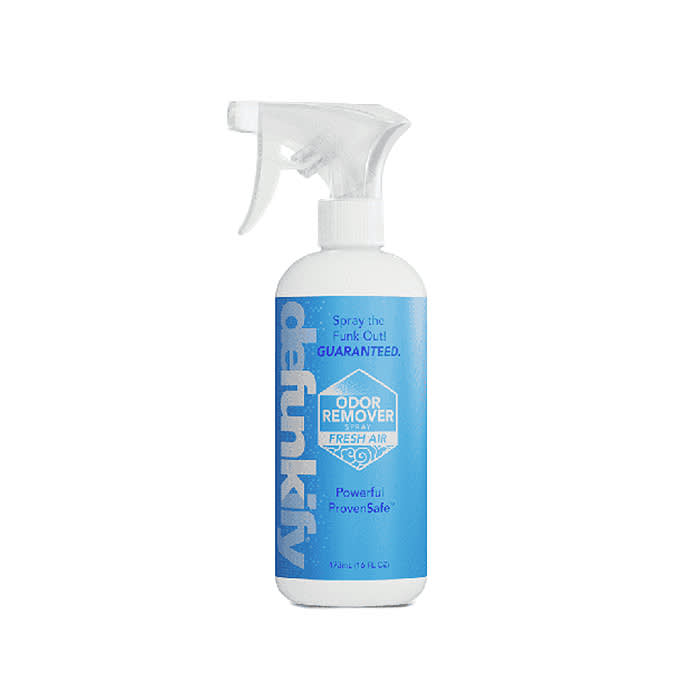
Defunkify Odor Remover Spray
Despite a trace of lavender essential oil, this natural spray is considered pet-safe because the oil concentration is low enough to evaporate quickly without leaving an irritating residue. It works on carpet, upholstery, and bedding. One caution: let any pet bedding dry completely before your cat sleeps on it again.
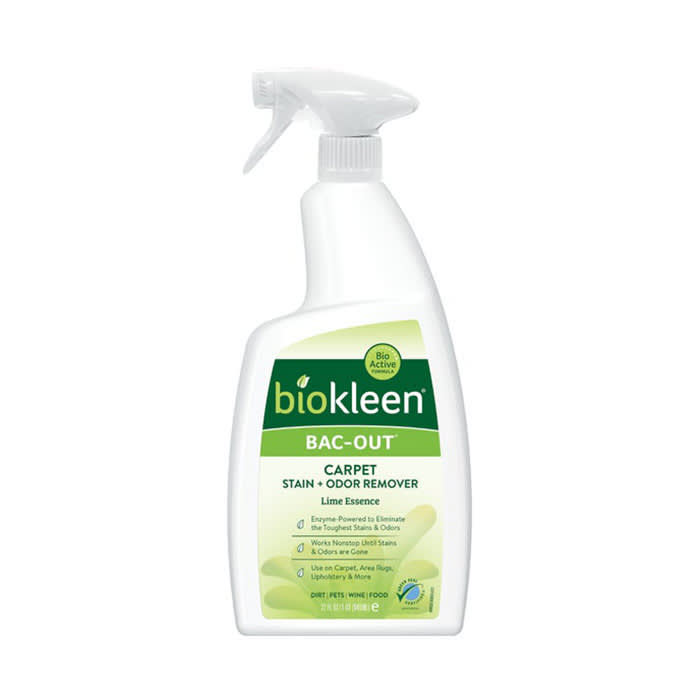
Biokleen Bac-Out Carpet Cleaner Stain and Odor Eliminator Spray
This plant-based formula breaks down organic stains and odors with no phosphates, chlorine, ammonia, or synthetic fragrance. It arrives ready to use in a foaming format, so there is no dilution or machine setup; just spray it on the spot.
When you want enzymes on a budget
Solving the chemistry does not require spending a lot. These are strong starting points, and you can always upgrade if the mess turns out to need something more specialized.
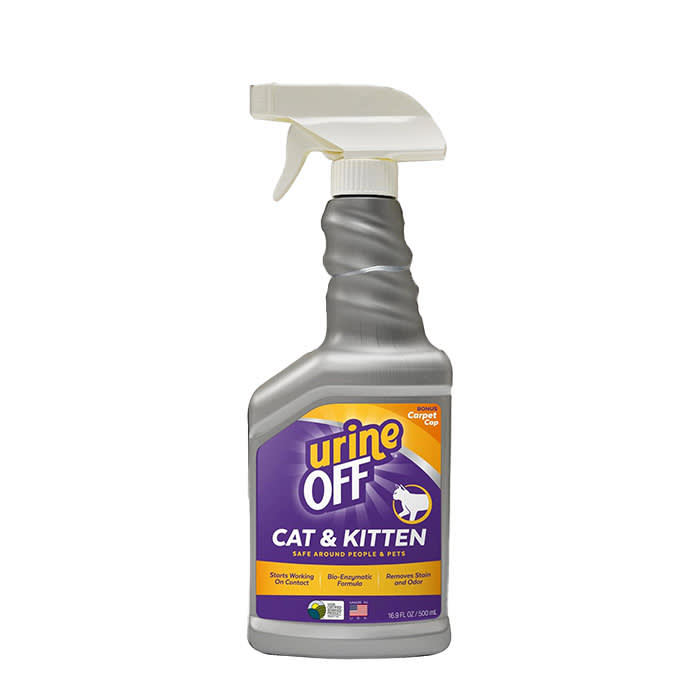
Urine Off Kitten & Cat Odor & Stain Remover
Made without bleach or chloride, so it is safe around even young kittens. The bonus is a separate carpet applicator cap that lets you saturate a deep stain without wearing out your trigger hand, which matters more than it sounds when you are trying to reach urine that soaked below the surface.
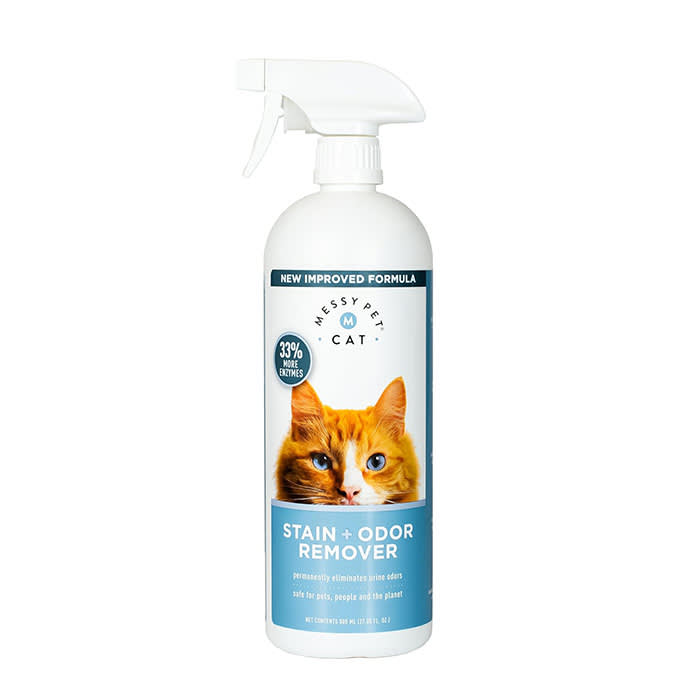
Messy Pet Cat Stain & Odor Remover
The most affordable bottle on this list, ready to use straight away. The trick with a budget enzyme cleaner is to use plenty of it: the enzymes have to physically contact all the urine, including what seeped below the surface, so apply generously instead of misting.
How to clean it so it stays gone
Knowing the chemistry only helps if you apply it right. A few rules turn any enzyme cleaner into a permanent fix instead of a temporary one.
Pick enzymes, skip ammonia. Enzymes target the proteins, urea, and uric acid in urine and convert them into odorless byproducts that evaporate, so there is nothing left to reactivate in humidity. Ammonia-based cleaners do the opposite: they mimic the smell of urine and can actually encourage your cat to re-mark the area.
Treat fragrance as a warning sign, not a feature. A product that smells strongly of perfume out of the bottle is often masking rather than cleaning, and the floral-plus-urine result can be worse than the original. Heavy fragrance can also mean essential oils, which are a risk to cats.
Move fast. The longer urine sits, the deeper it penetrates and the harder it is to fully remove. Even without the perfect cleaner on hand, blot up as much moisture as you can and apply whatever you have, then restrict access until you can do a proper enzyme treatment.
Saturate, do not mist. Enzymes only work on urine they physically reach, including what soaked into the pad or cushion below. Fully saturate the area. For deep stains, cover the spot with plastic wrap for a few hours to keep it moist and give the enzymes time to act. Never use a hair dryer to speed drying; heat degrades the enzymes and makes them less effective.
Expect to repeat it. Depending on the surface, how long the stain sat, and how much urine was involved, one pass may not finish the job. A second application is normal, not a sign of failure.
What newer cleaning science adds
The newest formulas lean on a specific class of enzymes called deaminases, which are the ones that go directly after uric acid crystals and break them into water-soluble compounds rather than just attacking the proteins around them. That distinction is why a modern enzyme cleaner can stop the humidity-driven smell from coming back, while older “odor neutralizers” only quieted it for a while.
It also explains why DIY mixes plateau. Vinegar, baking soda, hydrogen peroxide, and dish soap are not chemically able to break uric acid apart, so the crystals survive and re-release odor whenever the air gets damp, often at a level your cat can detect even when you cannot. Use the homemade route to triage a fresh accident, but plan on a deaminase-based enzyme cleaner for the spot that truly will not quit.
References
- Texas A&M College of Veterinary Medicine, “Pet Talk: Tackling Cat Urine Odor” — on uric acid crystals and surface bonding.
- ASPCA Animal Poison Control Center, “Essential Oils and Cats” — essential-oil toxicity in cats.
- Zoetis Petcare, “How to Get Rid of That Cat Pee Smell” — enzymatic breakdown of uric acid and why ammonia cleaners backfire.
Common questions
Do air purifiers help with pet odors?
An air purifier can cut down on airborne pet smells and dander, and some models are built specifically for pet households. But it does nothing for odor that has already soaked into carpet, upholstery, or flooring. For a set-in spot, you still need an enzymatic cleaner.
How do I get cat urine smell out of a couch?
Most carpet-safe enzymatic sprays are also rated for upholstery. Blot up everything you can first, then saturate the spot rather than misting it, because the enzymes have to physically reach all the urine that soaked into the cushion. Check the label for fabric dwell times, which often differ from hard floors.
How do I remove pet odor from concrete?
Hard-surface enzymatic sprays generally work on concrete, including basement and garage floors. For outdoor concrete near a garden bed, choose a formula specifically labeled safe around plants and soil.
Do homemade cat urine removers actually work?
They help in a pinch, but only halfway. Equal parts white vinegar and water, applied generously and left to dry, will knock down the smell, and baking soda sprinkled over the dried area and vacuumed up adds a little more. The catch is that neither breaks down the uric acid crystals, so your cat can still smell the spot and may return to it. Treat it as a stopgap and follow up with an enzymatic cleaner when you can.
Not a substitute for your vet. Our guidance is educational. For urgent symptoms, contact a vet or emergency clinic right away. Editorial standards
Sara Lim leads our Product Picks coverage, testing and comparing the things pets and their owners actually use. From everyday essentials to home-and-style finds, she focuses on honest, useful recommendations rather than hype.
Meet our experts ↗Keep reading
 Product PicksThe Best Pet Vacuum Isn't the Strongest. It's the One Your Cat Lets You RunTom Hadley · 6 min
 Product Picks'Natural' Pet Care Is a Word Nobody Checks. Read the Back of the Bottle.Dr. Amara Solis · 7 min
 Health & WellnessThe Best-Selling Dog Brush in America Is the Wrong One for Your DogSasha Ford · 7 min
 Product PicksThe At-Home Grooming Kit a Celebrity Dog Groomer Actually UsesSasha Ford · 5 min
 Product PicksThis $59 Board Lets Your Dog File Their Own NailsLeila Torres · 5 min
 Product PicksYour Dog Doesn't Want a Signature Scent. Here's When DedCool's Perfume Is Fine Anyway.Sasha Ford · 4 min