


Your Cat Grooms Themselves. These 6 Tools Are the Ones Worth Buying Anyway.
A cat with a working tongue doesn't need a spa cabinet. But a few grooming tools solve real problems, shedding, claws, the occasional disaster, and knowing which ones earn a place saves you money and saves your cat the indignity.

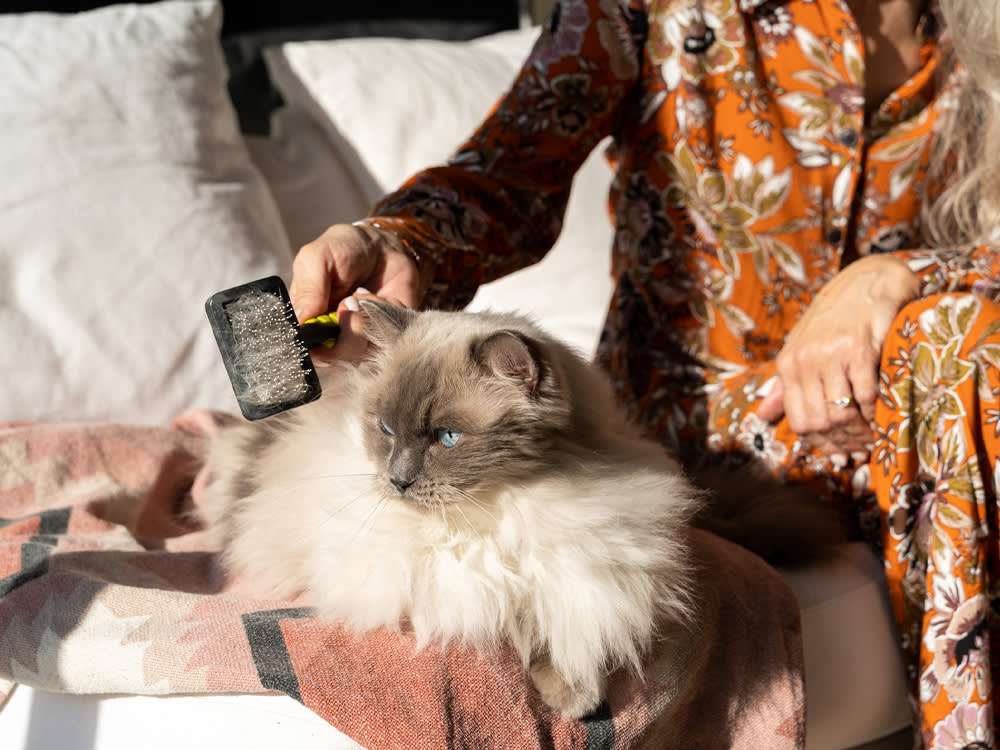
Here’s the thing the grooming-aisle marketing won’t tell you: your cat has this covered. A healthy cat spends a third to a half of their waking life grooming, and a barbed tongue plus flexible spine handles almost everything you’d buy a gadget for. Trying to “help” with most of it is about as welcome as someone joining you in the shower to scrub your hair. Awkward. Unnecessary.
But low-maintenance isn’t no-maintenance, and a small set of tools genuinely earns its place, not because your cat is dirty, but because they solve problems a tongue can’t: loose undercoat that becomes tumbleweeds, claws that need trimming, the rare mess that has to come off, and the reality that some cats turn feral the second you reach for any of it. So we cut the novelties and kept the six that do real work. Buy for the problem in front of you, not the fantasy of a cat who wants a spa day.
First, a gut check: does your cat suddenly need more help than usual?
Before the shopping list, one thing worth knowing. A cat who used to keep themselves immaculate and has started looking greasy, matted, or unkempt isn’t getting lazy, they’re often telling you something. Cats stop grooming well when they’re in pain, overweight, or unwell, because the twisting it takes to reach the back and hindquarters hurts or simply can’t happen. If your cat’s coat quality drops off and stays down, that’s a vet visit, not a bigger brush. The tools below are for maintenance and the occasional job, not for masking a health change.
1. A de-shedding tool, for the fur that’s everywhere and nowhere
If you buy one thing, buy this. A cat’s dense undercoat sheds constantly, and a de-shedding tool pulls that loose fur out before it becomes the drifting tumbleweed under your couch. Look for models sized to your cat’s coat length, since short-haired and long-haired cats need different tools, and a design with a button to eject the collected fur so you’re not picking clumps off the blade by hand. Used a couple of times a week, it cuts shedding around the house dramatically and, as a bonus, means less fur swallowed and fewer hairballs. For long-haired cats especially, this is the tool that changes your week.
2. Plier-style nail clippers, for the operation nobody enjoys
The sweetest kitten becomes a small tiger the instant they sense a nail trim coming. That makes the clipper itself matter: you want speed and a clean cut so you can do as many nails as possible before your cat catches on. Plier-style clippers like the Millers Forge model are the standard for a reason, spring-loaded for a clean snip and often built with a safety stop to keep you from cutting too far. The technique is half the battle: approach when your cat is drowsy, get what you can, and never chase a fight. Two nails today and two tomorrow beats one bloody standoff.
3. Waterless shampoo, for “stinky” without the bath from hell
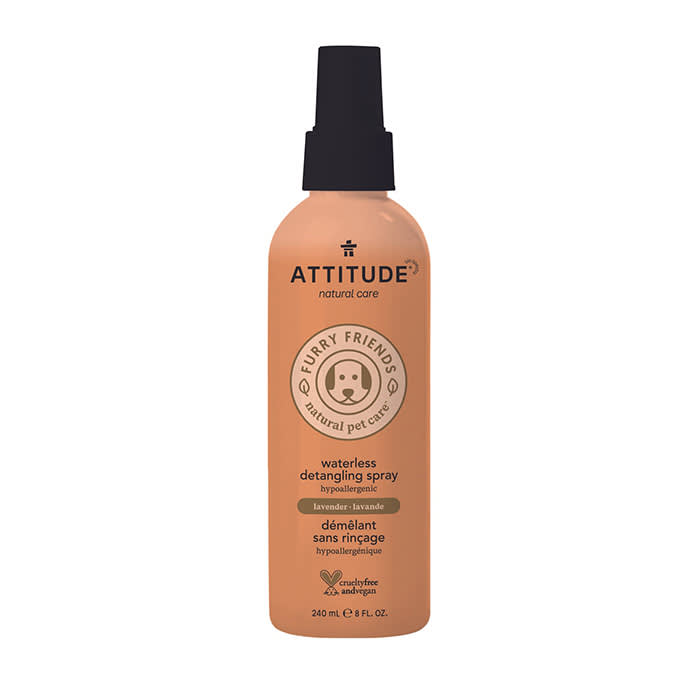
Most cats never need a bath; saliva and that scratchy tongue keep them cleaner than you’d guess. But when a cat gets into something, or an older cat can’t keep up, a waterless shampoo is the sane middle path. A quick-drying spray like Well & Good’s, worked through with a cloth, freshens the coat without the trauma of the tub. It’s the tool that lets you skip an actual bath nine times out of ten, which both you and your cat will consider a win.
4. A self-grooming arch, for the cat who’d rather do it themselves
Not every tool has to involve you holding the cat. A bristled self-grooming arch mounts to a wall or corner and lets a cat brush themselves simply by walking through and rubbing against it. Rub-happy cats take to it immediately, it captures a surprising amount of flyaway fur, and it asks nothing of you beyond installing it. For a cat who bolts at the sight of a brush in your hand, this is often the only “brushing” they’ll accept.
5. A grooming restraint bag, for the ones who fight everything
Some cats treat every grooming task as an ambush, and for them a grooming bag is genuinely humane. You secure your cat in the bag and work one paw at a time through the zippered openings, which keeps both of you safe during a nail trim or a wound check and reads as far less threatening to the cat than a pair of gloved hands coming at them. It looks like a lot; used gently and briefly, it turns a two-person wrestling match into a quick, calm job.
6. A fine-tooth grooming comb, for mats, fleas, and early problems
The overlooked essential. A metal fine-tooth comb catches the mats forming behind the ears and in the armpits before they tighten into something that has to be shaved out, and it doubles as a flea comb, dragging out flea dirt you’d never spot in a dense coat. It’s the tool that turns grooming from cosmetic into diagnostic: run it through weekly and you’ll feel scabs, lumps, and thinning spots early, while they’re still easy to deal with. Cheap, small, and quietly the most useful item in the drawer.
What we cut, and why
The old version of this list padded itself with novelties, a human-mouth “lick” brush and a plush cat bathrobe among them. Cute for a photo, useless as tools. A grooming kit should solve problems, so we dropped the props and kept the six things that actually do. If a tool doesn’t make your cat cleaner, more comfortable, or a health change easier to catch, it doesn’t belong in the drawer.
Sasha Ford is a certified cat behaviour consultant who has worked with shelters, catteries, and private clients across the country. They review all feline behaviour content at The Pet Times, with expertise in multi-cat households, indoor enrichment, and stress-related disorders.
Meet our experts ↗Keep reading
 Product PicksMost Cats Never Need a Bath. Here's the Shampoo for the Ones That Do.Dr. Mara Chen · 3 min
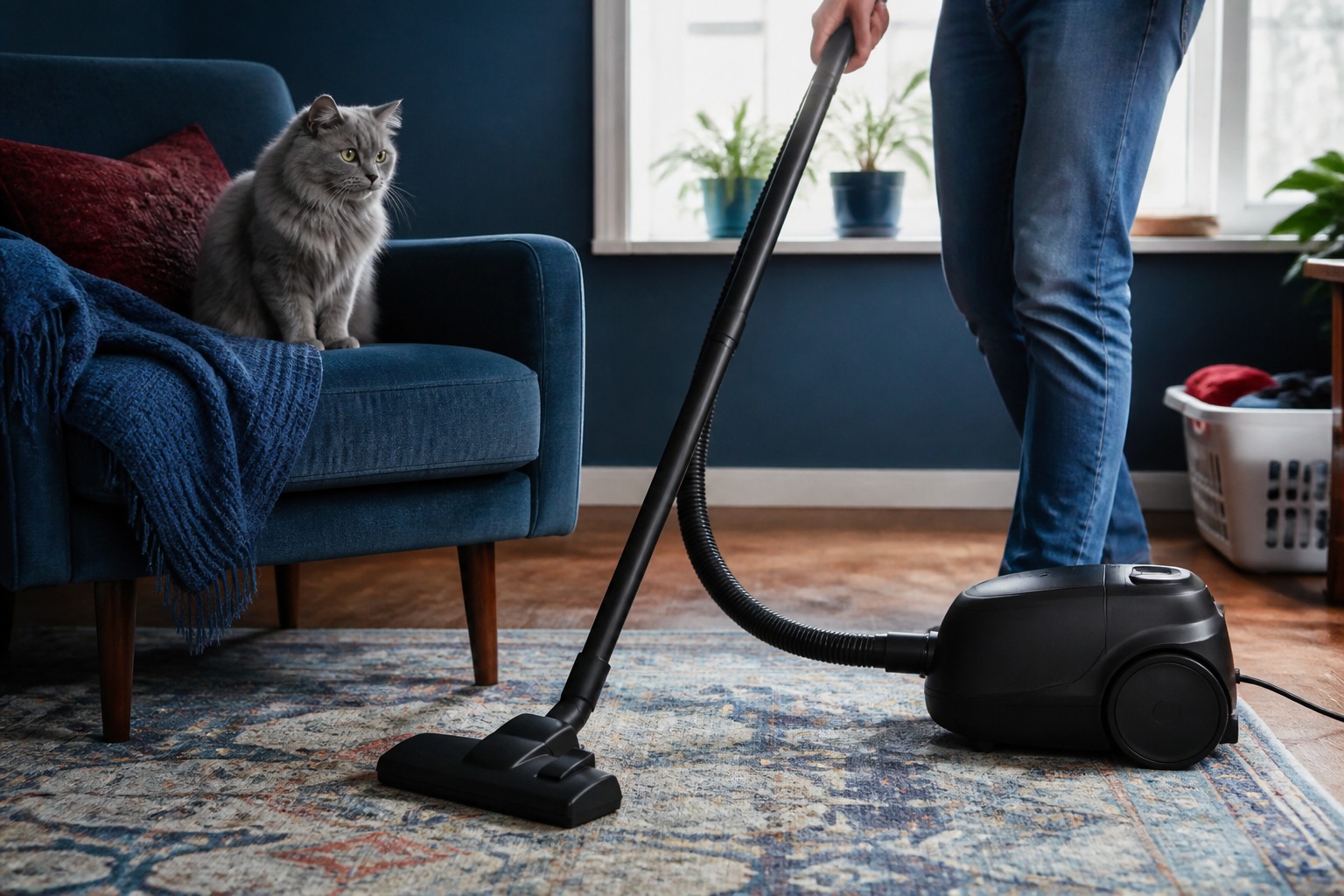 Product PicksThe Best Pet Vacuum Isn't the Strongest. It's the One Your Cat Lets You RunTom Hadley · 6 min
 Product Picks'Natural' Pet Care Is a Word Nobody Checks. Read the Back of the Bottle.Dr. Amara Solis · 7 min
 Health & WellnessThe Best-Selling Dog Brush in America Is the Wrong One for Your DogSasha Ford · 7 min
 Health & WellnessYou'll Never Stop the Shedding. You Can Stop Finding the Hair.Sasha Ford · 7 min
 Product PicksMost 'Eco' Dog Grooming Is Marketing. These 9 Actually DeliverSasha Ford · 7 min