


You'll Never Stop the Shedding. You Can Stop Finding the Hair.
Brushing your dog isn't really about the coat. It's about catching hair before it lands on your couch, your clothes, and your black pants. Here's the interception system that works.

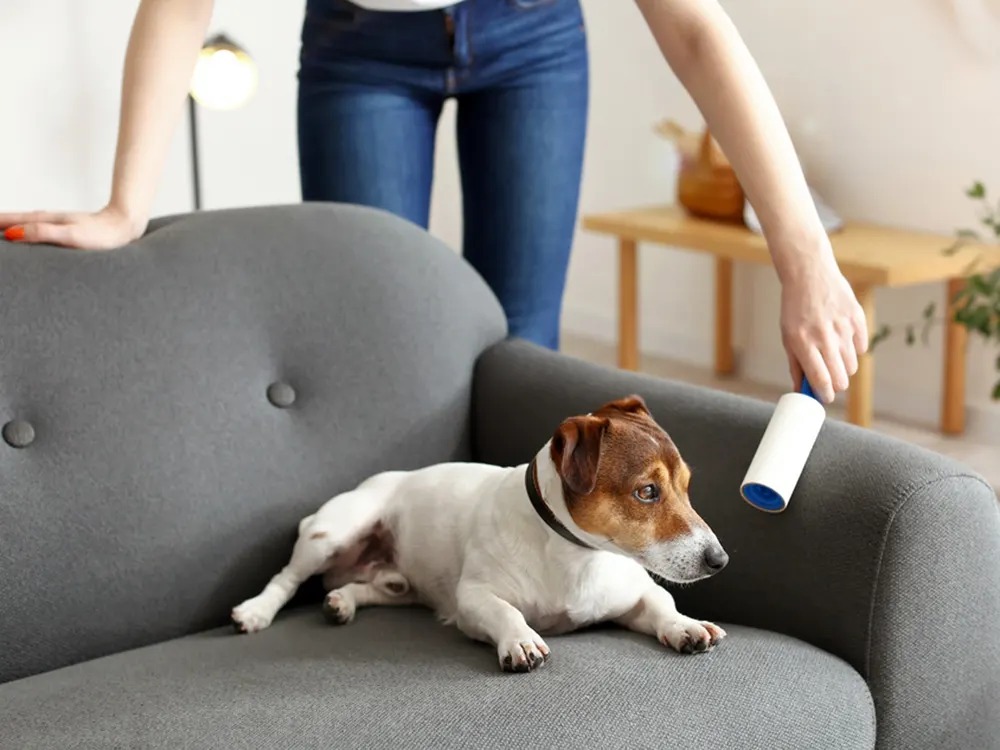
The mistake most of us make with dog hair is treating it as a problem to eliminate. It is not. A healthy dog sheds, full stop, and no brush, diet, or bath will change that. Shedding is how the coat renews itself. The winnable game is different and much more satisfying: catching the hair while it is still on the dog, so it never gets the chance to weave itself into your couch cushions and coat your car seats. Reframe it that way and grooming stops feeling like a losing battle and starts feeling like interception.
That is the whole strategy. Everything below serves it: understand why your dog sheds so you know what is normal, then set up a routine that pulls loose hair before gravity and static do their thing, and finally clean up the fraction that gets past you.
First, know what normal shedding looks like
Dogs shed for a handful of predictable reasons: breed, age, hormonal cycle, and season. Some breeds, Golden Retrievers, Labradors, and German Shepherds among them, are simply heavy shedders, and shedding actually promotes healthy new hair growth, so it is a feature, not a flaw.
The most common surge is seasonal. In spring and fall, many dogs “blow” their coat, dropping the old undercoat to prepare for the warmer or cooler months ahead. Indoor dogs, less exposed to changing daylight and temperature, often shed at a steadier low level year-round instead. And here is the counterintuitive part plenty of owners miss: short-haired dogs frequently shed more than long-haired ones, they just deposit shorter, sneakier hairs that embed everywhere.
“Shedding is normal, but a coat is also one of the first places I see health problems show up,” says Dr. Mara Chen. “If the hair is coming out in patches, the skin underneath looks angry, or the shedding suddenly ramps up out of season, that is worth a vet visit rather than another brush. We want to rule out allergies, parasites, thyroid or hormonal issues, and nutrition before we call it cosmetic.”
That is the line to watch. Normal shedding is even and all over. Thinning coats, bald patches, red or irritated skin, or a sudden change in volume are your cue to see a vet, who will look at allergies (also called atopic dermatitis), diet, ringworm, parasites, and hormonal conditions. Stress can also spike shedding, so if your dog drops a cloud of hair at the vet’s office or after a move, that is a real, if temporary, effect.
Interception, part one: brushing (matched to the coat)
Brushing is where you win or lose the war, because a minute of brushing removes hair that would otherwise become a week of vacuuming. Aim for a quick daily pass on heavy shedders, and every one to two weeks at minimum for most dogs, both to control loose hair and to prevent tangles and mats. Daily brushing also spreads the coat’s natural oils and lifts out dirt and dander.
The right tool depends entirely on the coat. For short-haired dogs, a bristle brush or a grooming mitt does the job. For medium coats, a brush with both bristles and pins works well, and rubber curry brushes, with their short rounded nubs, lift loose fur while massaging the skin without irritation. For long-haired dogs, reach for slicker or pin brushes to stay ahead of tangles and mats. And for double-coated breeds like Huskies and Shepherds, the key tool is an undercoat rake or shedding comb, whose soft-tipped pins reach deep enough to pull out the short, fluffy undercoat before it ends up on your furniture. A slicker brush, versatile and widely available in multiple sizes, is a reasonable all-purpose starting point if you own just one.
Interception, part two: bathing and drying (done right)
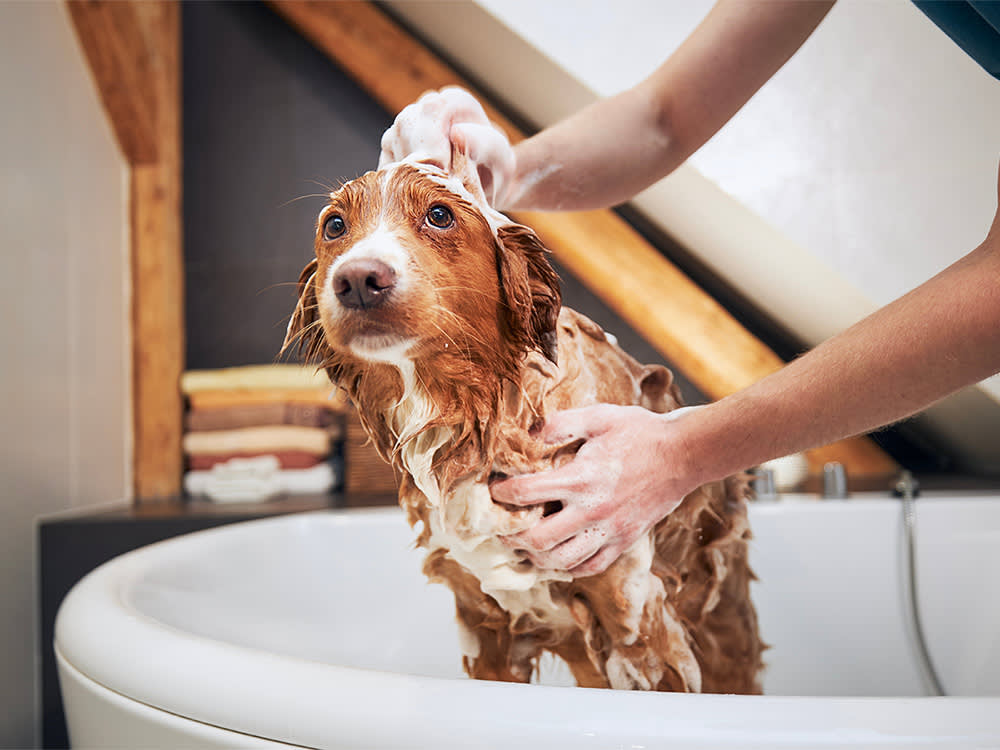
A bath removes a surprising amount of loose hair before it can fall out on its own, so a good wash is part of the interception system, not separate from it. Most dogs do well with a bath every four to six weeks, though a mud-loving retriever may need more and an indoor couch potato can stretch it out.
Two details matter more than people expect. First, use a dog-specific shampoo: human shampoo, even baby shampoo, is too harsh for canine skin, so shop for something mild and moisturizing, the kind of bottle that leads with oatmeal, chamomile, or coconut oil. Second, mind the heat when drying. High-heat blow dryers dry out the skin and make shedding worse, so use a dog dryer or a regular dryer on its lowest setting, or towel-dry thoroughly and let your dog finish air-drying in a warm, draft-free spot. For dogs prone to matting, softer-bristle brushes and detangling tools help, but serious mats belong to a professional groomer or vet, not a home dematting session.
Interception, part three: what gets past you
No system is perfect, so the last layer is cleaning up the hair that lands. The trick is having the right tool for each surface.
For floors and furniture at scale, a dedicated pet-hair vacuum, with strong suction, good filtration, and hair-resistant brush rolls, is the workhorse; many standard vacuums also offer pet attachments, and robot vacuums from brands like Roomba and Roborock handle daily maintenance. Vacuum more often than feels necessary, ideally with a HEPA filter, since that also captures the dander that carries airborne allergens. For fabric and upholstery, ordinary damp rubber dishwashing gloves are shockingly effective: run a gloved hand over the surface and hair balls right up. A shower squeegee dragged across carpet, rugs, or a fabric couch pulls hair out of exactly the spots a vacuum misses, like stair edges and carpet borders. Microfiber cloths and mops attract and hold hair on both hard floors and furniture. And for clothing and quick touch-ups, keep lint rollers, reusable felt hair removers, or a dryer sheet handy, in the car is smart, for couches, curtains, and awkward corners. In households where allergens are a real concern, a HEPA air purifier tackles the dander and hair that stay airborne.
The one upstream fix: food and water
You cannot brush your way out of a nutrition problem, so it is worth closing the loop on diet. Poor-quality food or well-meaning but unbalanced home cooking can leave a coat dull and shedding heavily. Skin and coat run on a short list of inputs: the omega fatty acids in both the 3 and 6 families, protein worth the name, zinc, and a handful of other minerals. The omega-3s in particular, found in fish-oil products, are especially good for keeping hair and skin healthy, which reduces shedding. Fresh, clean water always available matters too, since dehydrated skin sheds more. Just talk to your vet before adding any supplement, so you are fixing an actual deficiency rather than guessing.
Put it together and the picture changes. You are not trying to make a shedding dog stop shedding, which is impossible and beside the point. You are catching most of the hair at the source with a brush, removing more in the bath, and mopping up the rest before it settles in for good. Do that, and the tumbleweeds under the couch turn into an occasional stray hair, which, for anyone who shares a home with a dog, is about as close to victory as it gets.
This article covers grooming and mild health topics. If your dog’s shedding is sudden, patchy, or paired with irritated skin, see your veterinarian.
References
- Watson, Tim D. G. “Diet and Skin Disease in Dogs and Cats.” The Journal of Nutrition, vol. 128, no. 12, Dec. 1998, pp. 2783S–2789S.
- Morris, Daniel O. “Human Allergy to Environmental Pet Danders: A Public Health Perspective.” Veterinary Dermatology, vol. 21, no. 5, 2010, pp. 441–449.
- Green, R., et al. “The Effect of Air Filtration on Airborne Dog Allergen.” Allergy, vol. 54, no. 5, May 1999, pp. 484–488.
Not a substitute for your vet. Our guidance is educational. For urgent symptoms, contact a vet or emergency clinic right away. Editorial standards
Sasha Ford is a certified cat behaviour consultant who has worked with shelters, catteries, and private clients across the country. They review all feline behaviour content at The Pet Times, with expertise in multi-cat households, indoor enrichment, and stress-related disorders.
Meet our experts ↗Keep reading
 Product PicksPick a Golden Retriever Shampoo by What Their Skin Is Actually DoingDr. Nina Kohl · 9 min
 Product PicksThe At-Home Grooming Kit a Celebrity Dog Groomer Actually UsesSasha Ford · 5 min
 Product PicksThe Puppy Shampoo Paradox: "Gentle" and "Scented" Don't Belong on One BottleDr. Amara Solis · 12 min
 Product PicksYour Dog Doesn't Want a Signature Scent. Here's When DedCool's Perfume Is Fine Anyway.Sasha Ford · 4 min
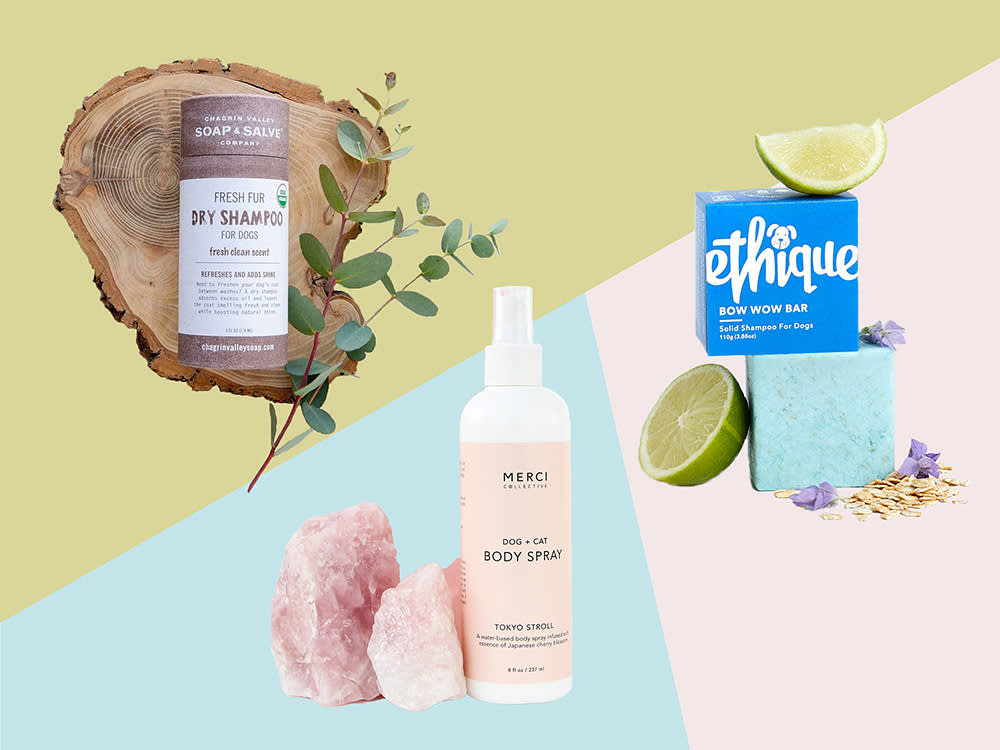 Product PicksMost 'Eco' Dog Grooming Is Marketing. These 9 Actually DeliverSasha Ford · 7 min
 Health & WellnessThe Best-Selling Dog Brush in America Is the Wrong One for Your DogSasha Ford · 7 min