


The Puppy Shampoo Paradox: "Gentle" and "Scented" Don't Belong on One Bottle
Most puppy shampoos sold as gentle are also fragranced, and fragrance is the single most common skin irritant. Here is how to read the label, plus six picks ranked by that rule.
Affiliate disclosure. This article contains affiliate links. We may earn a small commission if you buy through a link, at no extra cost to you. How we handle recommendations.
There is a small, telling pattern buried in almost every “best puppy shampoo” roundup, including the older version of this one. The editors praise a formula as gentle and soothing, and then, two lines later, note with mild surprise that it is also scented, and that fragrance can irritate sensitive skin. They flag it product after product without ever drawing the obvious conclusion.
So let’s draw it. Fragrance is the most common contact irritant in pet grooming products, and a puppy’s skin barrier is thinner, more permeable, and more reactive than an adult dog’s. That makes “gentle, soothing, and scented” something close to a contradiction. The marketing word that should drive your purchase is not gentle, soothing, hypoallergenic, or natural, all of which are unregulated and meaningless on a label. It is fragrance-free. This guide is built around that one rule, because getting it right matters more than any single brand you pick.
The label-reading rules that actually matter
Before the products, here is the framework. Marketing claims on the front of the bottle are noise. The back of the bottle is where the decision gets made.
Fragrance-free beats “naturally scented.” “Rosemary,” “vanilla,” and “coconut” sound wholesome, but a fragrance is a fragrance to a reactive puppy. Essential oils in particular can be outright toxic to small dogs. If your puppy has any history of itch, redness, or allergy, treat fragrance-free as non-negotiable. If their skin is bombproof, a light natural scent is a smaller risk, just know it is a risk, not a feature.
pH-balanced is real, and it is not optional. A dog’s skin sits at a more neutral pH than ours. Human shampoos (yes, including baby shampoo) are formulated more acidic and will throw off a puppy’s skin chemistry, stripping the oils that keep the barrier intact. Look for the phrase “pH balanced” and a product made for dogs, full stop.
Shorter ingredient lists are safer bets. Soothing actives like colloidal oatmeal, aloe, and glycerin earn their place. Sulfates (harsh detergents), parabens, and a long tail of unpronounceable additives give a reactive puppy more to react to. Fewer ingredients, fewer triggers.
Tearless matters for puppies specifically. Puppies wriggle, and shampoo will end up near their eyes. A genuinely tear-free formula spares you a miserable, eye-stinging bath that teaches your puppy to hate the tub for life.
The picks, ranked by the fragrance rule
We narrowed a sprawling field down to six, because a shorter list you can actually act on beats a dozen near-duplicates. They are ordered the way we’d actually recommend them: fragrance-free and skin-first at the top, scented-but-good options clearly labeled as such below.
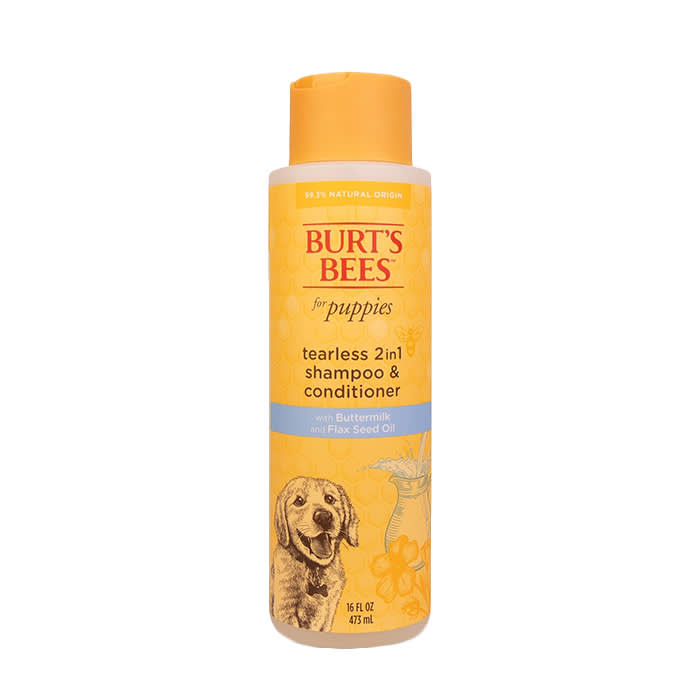
Burt’s Bees Tearless 2-in-1 Puppy Shampoo
This is the rare pick that backs up the “gentle” claim. It is a 2-in-1 shampoo and conditioner built on roughly 95 percent naturally derived ingredients, with buttermilk, linseed oil, and honey to soothe and moisturize, no sulfates or parabens, pH balanced, and tearless. At around $8 to $10 for a 16-ounce bottle, it is also priced like an everyday staple, not a splurge.
- Why it earns the top spot: It hits the whole checklist (tearless, pH balanced, no harsh detergents) at a low price, which is exactly what a first-time puppy owner needs.
- The honest caveat: It is low-lather, so some owners use more than they expect per bath. Dilute it and you’ll stretch the bottle.
- Right for: Almost any puppy, including those with mild dry or itchy skin. Check it on Amazon.
a colloidal-oatmeal, fragrance-free formula
When a puppy is actively itchy or fighting a skin allergy, you want colloidal oatmeal doing the heavy lifting and nothing competing with it. Look for an oatmeal-based formula that pairs it with skin-calmers like aloe and is explicitly fragrance-free; ingredients like baking soda, marshmallow root, and green tea are common helpful extras. These run pricier, often around $20 to $25 a bottle, which is reasonable for a problem-skin formula but adds up if you bathe frequently.
- Why it’s here: Oatmeal is one of the few topical ingredients with real soothing evidence behind it for itchy skin, and removing fragrance removes the most likely thing making the itch worse.
- The honest caveat: Price. Buy it for the sensitive-skin puppy who needs it, not as your default.
- Right for: Puppies and adult dogs with allergies, hot spots, or chronically reactive skin.
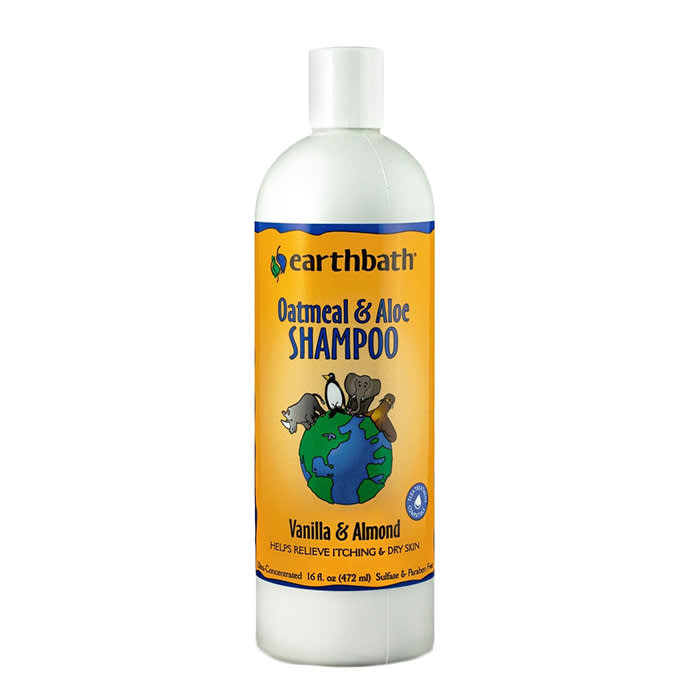
Earthbath Deodorizing Shampoo
If your puppy’s signature move is finding the worst-smelling thing in the yard and wearing it, a deodorizing formula is the right tool. The Earthbath coconut-based option neutralizes odor, is built to soothe rather than strip, and is paraben- and phosphate-free, and notably it won’t undo topical flea-and-tick treatments the way harsher shampoos can.
- Why it’s here: It actually removes odor instead of masking it, and it doesn’t sabotage your parasite prevention.
- The honest caveat, and it’s the whole theme of this article: It’s rosemary-scented. A deodorizing shampoo almost has to carry some fragrance to do its job, so this is the one category where the trade-off is hard to avoid. If your puppy has sensitive skin, deodorize only when truly needed and rinse extra-thoroughly.
- Right for: Stinky puppies (and kittens) over six weeks old with non-reactive skin. Check it on Amazon.
a silk-protein tearless formula
Some puppies simply will not hold still, and shampoo near the eyes is inevitable. A genuinely tearless formula with conditioning silk protein, aloe, honey, and chamomile cleans and softens while sparing the eyes. Many of these are sulfate- and paraben-free.
- Why it’s here: Tearless is a safety and sanity feature, not a luxury, for the squirmiest puppies.
- The honest caveat: Several silk-protein tearless options are fragranced, so check the label if skin sensitivity is a concern.
- Right for: Puppies eight weeks and older who turn bath time into a rodeo.
Arm & Hammer Tearless Puppy Shampoo
A good puppy shampoo does not have to be expensive. The Arm & Hammer tearless formula (water, coconut, olive leaf extract, jojoba seed oil, oat protein extract) is pH balanced, sulfate- and paraben-free, and baking-soda-based for light odor control, typically around $6 to $8.
- Why it’s here: It covers the essentials for the price of a sandwich, which matters when puppies go through product fast.
- The honest caveat: It carries a light scent, so the fragrance-free crowd should size that up against the savings.
- Right for: Budget-minded owners of puppies and adult dogs with reasonably hardy skin. Check it on Amazon.
a gallon-size conditioning formula
If you foster, run a multi-dog household, or simply have a puppy with a coat that needs regular conditioning, buying a gallon of a fur-strengthening, soap-free formula (soy protein with corn and coconut oil is a common, effective blend) beats reordering small bottles. pH balanced and paraben-free options exist at this size.
- Why it’s here: Per-ounce value for anyone bathing dogs often, plus a conditioning finish for rough coats.
- The honest caveat: Reviewers occasionally report shipping spills on gallon jugs, and a few find soap-free formulas slightly drying, so introduce it on one bath first.
- Right for: Foster homes, multi-dog households, and puppies with coats that need extra TLC.
How to actually bathe a puppy (so they don’t learn to hate it)
The product is half the battle; the experience is the other half. A puppy who panics in the tub at 12 weeks becomes a dog who panics in the tub for life.
Set the scene. Clear everything off the tub edge, lay down a non-slip silicone mat, and move anything knockable out of range. A secure footing does more for a puppy’s nerves than any treat.
Water: shallow, lukewarm, low pressure. Cooler beats warmer for the skin barrier, and your puppy should be able to stand comfortably, never swim.
Dilute, then rinse longer than feels necessary. Even puppy shampoo is concentrated. As one professional groomer we trust, Robyn Michaels, puts it, undiluted shampoo never fully rinses out, and the industry-average dilution is around 16 to one. Use just enough suds to see where you’ve been, brush the lather through the coat to catch tangles and loose fur, then rinse until the runoff is completely clear. Residue is one of the most common causes of a post-bath itch that owners mistake for an allergy.
Dry gently and pay up. Introduce a blow-dryer early on the lowest heat and power, or towel-dry thoroughly into the ears and armpits. Praise and treats throughout turn a dreaded chore into a tolerable, even pleasant, routine.
The takeaway is simple enough to carry into any pet aisle: ignore the front of the bottle, read the back, and when your puppy’s skin is at stake, let fragrance-free be the tiebreaker every time.
References
- Puppy and Dog Skin pH and the Case Against Human Shampoos — American Kennel Club
- Colloidal Oatmeal: History, Chemistry and Clinical Properties — Journal of Drugs in Dermatology
- Essential Oils and Pets: Toxicity Concerns — ASPCA Animal Poison Control
- How Often Should You Bathe Your Dog? — American Kennel Club
Common questions
How often should you bathe a puppy?
Less often than people think. A puppy with normal skin can go six to 12 weeks between baths; one prone to mats, oily skin, or messes may need every four to six weeks. Over-bathing strips the skin's natural oils and is a common cause of the dryness owners then try to fix with more product.
Can I use human baby shampoo on my puppy?
No. Human shampoos, including baby formulas, are pH-balanced for human skin (more acidic) and often contain fragrances and essential oils that puppies are too small and sensitive to handle safely. Always use a product formulated for dogs.
Dr. Solis is a board-certified veterinary dermatologist with over twelve years of clinical experience. She advises on skin conditions, allergies, and grooming practices that affect coat and skin health. All dermatology and allergy content at The Pet Times is reviewed by her team before publication.
Meet our experts ↗Keep reading
 Health & WellnessThe Best-Selling Dog Brush in America Is the Wrong One for Your DogSasha Ford · 7 min
 Health & WellnessYou'll Never Stop the Shedding. You Can Stop Finding the Hair.Sasha Ford · 7 min
 Product PicksMost 'Eco' Dog Grooming Is Marketing. These 9 Actually DeliverSasha Ford · 7 min
 Product PicksPick a Golden Retriever Shampoo by What Their Skin Is Actually DoingDr. Nina Kohl · 9 min
 Product PicksThe At-Home Grooming Kit a Celebrity Dog Groomer Actually UsesSasha Ford · 5 min
 Product PicksThis $59 Board Lets Your Dog File Their Own NailsLeila Torres · 5 min