


That Mat in Your Cat's Fur Is Hurting Them. Don't Reach for Water.
A mat isn't just unsightly, it's a small, tightening source of pain that can lead to real skin damage. Here's how to remove one safely, and the instinct that makes it worse.

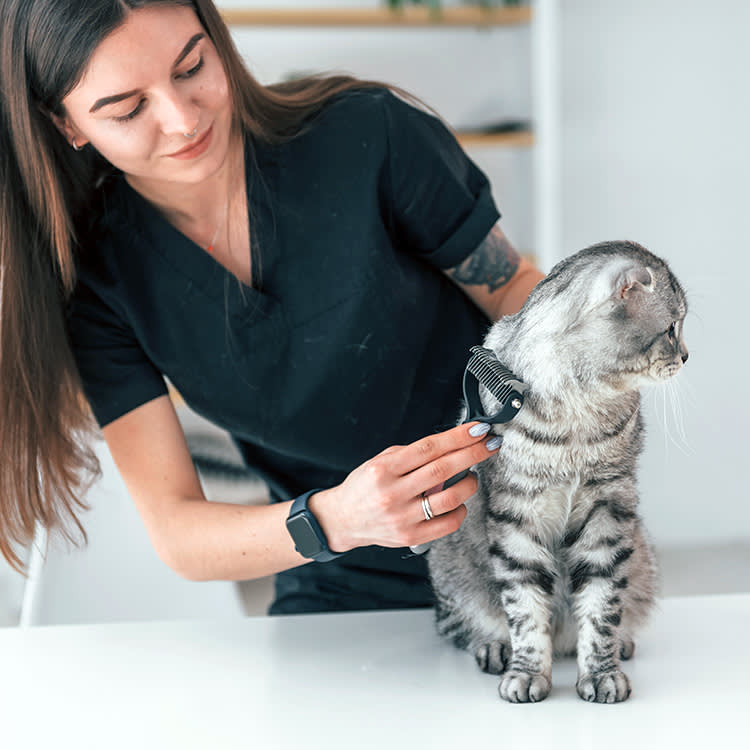
Cats are fastidious groomers, so a mat can feel like a personal insult to them. But no matter how diligently your cat works at their coat, hair can still knot into tight, painful tangles, and once that happens they usually cannot fix it alone. They need you.
The trouble is that most people’s first instinct, reaching for water to loosen the tangle, is exactly the wrong move. A mat is less a cosmetic nuisance than a slow-motion medical problem, and handled carelessly it can go from uncomfortable to genuinely harmful. Here is how to deal with one the right way, with as little pain to your cat as possible.
Why mats form in the first place
Cats shed constantly, swapping old, dead hairs for fresh ones, and that shedding ramps up in spring and fall as their coat turns over for the new season. As those loose hairs work free, they can snag in the fur that is still attached, creating tangles. Add a little moisture, or let it happen in a high-friction spot like the area between the legs, and a tangle tightens into a mat.
Some cats are simply more prone to it. Long-haired cats, your Ragdolls, Himalayans, and Persians, have far more coat to manage, and long hair is never a wash-and-go situation, as anyone with it can confirm. Cats who cannot groom effectively also struggle more, and there are plenty of reasons a cat might fall behind: arthritis, dental disease, or obesity can all make the physical act of grooming difficult, while chronic illnesses like kidney disease or diabetes can simply sap the motivation to bother.
Yes, it actually hurts
Nobody enjoys having their hair pulled, and a mat is a small machine for doing exactly that. As it tightens, it tugs relentlessly on the skin underneath. It also traps heat and creates friction, which can leave the skin beneath inflamed, irritated, and itchy.
And it does not stop at discomfort. That irritation can escalate into real problems: the itch can drive a cat to scratch, opening the door to hot spots, self-inflicted wounds, and skin infections. Mats that form around the anus or genitals bring their own risks, and can contribute to constipation or urinary tract infections. This is why a mat is worth addressing promptly rather than waiting for it to sort itself out, because it will not.
I tell clients to think of a mat like a splinter that keeps growing, it is only going to get more painful and more entrenched the longer it sits. And please, never wet it first. Water shrinks a mat and locks it down tighter against the skin, which is the opposite of what you want. If you can slip a finger flat between the mat and the skin, you can probably work it out gently. If you can’t, that is a job for a groomer or your vet.
Working a mat out, step by step
Your cat needs a patient hand here, so resist the urge to grab the scissors and go.
Gather the right tools. There are detangling tools and mat splitters made specifically for this, but they are not your only options. Useful items include a detangling tool, a mat splitter, other long-toothed combs, and a slicker brush, plus blunt-tipped scissors, clippers, and a detangling spray for the tougher cases.
Calm your cat first. Combs-a-blazing is not the approach. Go slow, open with some petting and affection, and if you can, recruit a helper to offer reassurance and gently hold your cat steady. Watch their body language the whole time and build in breaks and rewards. Working on a squirming, upset cat risks injury and turns the whole thing into a battle.
Brush the area around the mat. Before you touch the mat itself, use your slicker brush on the surrounding fur to free up the looser, easier hairs at the edges.
Break the mat down from the outside in. With your mat splitter, detangling tool, or long-toothed comb, start at the outer tips of the tangled hair and work gradually toward the skin. A spritz of detangling spray lubricates the hairs and makes them slide apart more easily.
Clip as a last resort. Some mats simply will not surrender to a comb. Those may need careful clipping, cutting as near the mat as you can while keeping the blade well away from the skin. When a mat sits so tight to the skin that there is no room for scissors, clippers are the safer tool. And if this step makes you nervous, that is completely reasonable, hand it to a professional.
When to call in help
Not every owner wants to tackle detangling, and that is fine. If your cat is badly tangled or has mats pressed close to the skin, a professional groomer has both the tools and the experience to handle it safely. And if your cat is already showing irritation, inflammation, or worse, skip the groomer and see your veterinarian.
Occasionally a cat needs a little pharmaceutical help. You do not usually medicate a cat for a haircut, but if yours has a history of bad grooming experiences, or is so severely matted that shaving is the only option, sedation may be the kindest route. Talk to your vet about what makes sense.
Prevention beats removal every time
The best way to deal with mats is to never let them set in. Keep your cat’s coat brushed and tangle-free and you spare both of you the ordeal. Work over your cat’s whole body with your preferred brush or comb, paying special attention to the trouble zones: between the legs, around the neck, and under the tail.
How often? Even a cat who grooms beautifully benefits from a weekly brushing, which also cuts down on hairballs and helps you spot external parasites early. Long-haired cats appreciate a session every couple of days, and everyone should get brushed more frequently during peak shedding seasons.
The bottom line
A mat can show up on any cat, of any age, but it favors long-haired coats and heavy shedding seasons. Regular brushing prevents most of them and catches the rest while they are still loose. When one does take hold, gather your tools, get a helper, and dismantle it patiently from the outside in, and if it needs clipping or you are simply not comfortable, let a groomer or your vet step in. Whatever you do, keep the water for after the mat is gone.
References
- Cornell Feline Health Center. “Grooming and Coat Care for Your Cat.” vet.cornell.edu.
- American Association of Feline Practitioners. “Grooming and Skin Care.” catvets.com.
- International Cat Care. “Grooming your cat.” icatcare.org.
Common questions
Should I remove the mats myself?
Small, loose mats can often be gently brushed or teased out at home. Tough mats close to the skin are safer left to a professional.
Will a matted patch just grow out on its own?
No. Unlike human hair, a cat's fur only grows to a set length, so a mat won't grow out. Left alone, it keeps tightening until it hurts or damages the skin.
How do I deal with severe matting?
Start by brushing the hair around the mat, then work the mat itself with a detangling tool or splitter. Severe mats usually need clipping or shaving by a groomer or vet.
Not a substitute for your vet. Our guidance is educational. For urgent symptoms, contact a vet or emergency clinic right away. Editorial standards
Dr. Nair is a veterinarian focused on diet and feeding. She covers everyday nutrition, treats, and the many "can they eat this?" questions owners ask, grounding each answer in what is actually safe and sensible for dogs and cats.
Meet our experts ↗Keep reading
 Product PicksProbiotic Dog Shampoo Sounds Like Nonsense. The Idea Behind It Isn't.Dr. Mara Chen · 6 min
 Health & WellnessWhy the Cat Pee Smell Keeps Coming Back (and How to Actually Kill It)Sara Lim · 17 min
 Health & WellnessA Cat's Tongue Cannot Do This: When Grooming Stops Being OptionalLeila Torres · 6 min
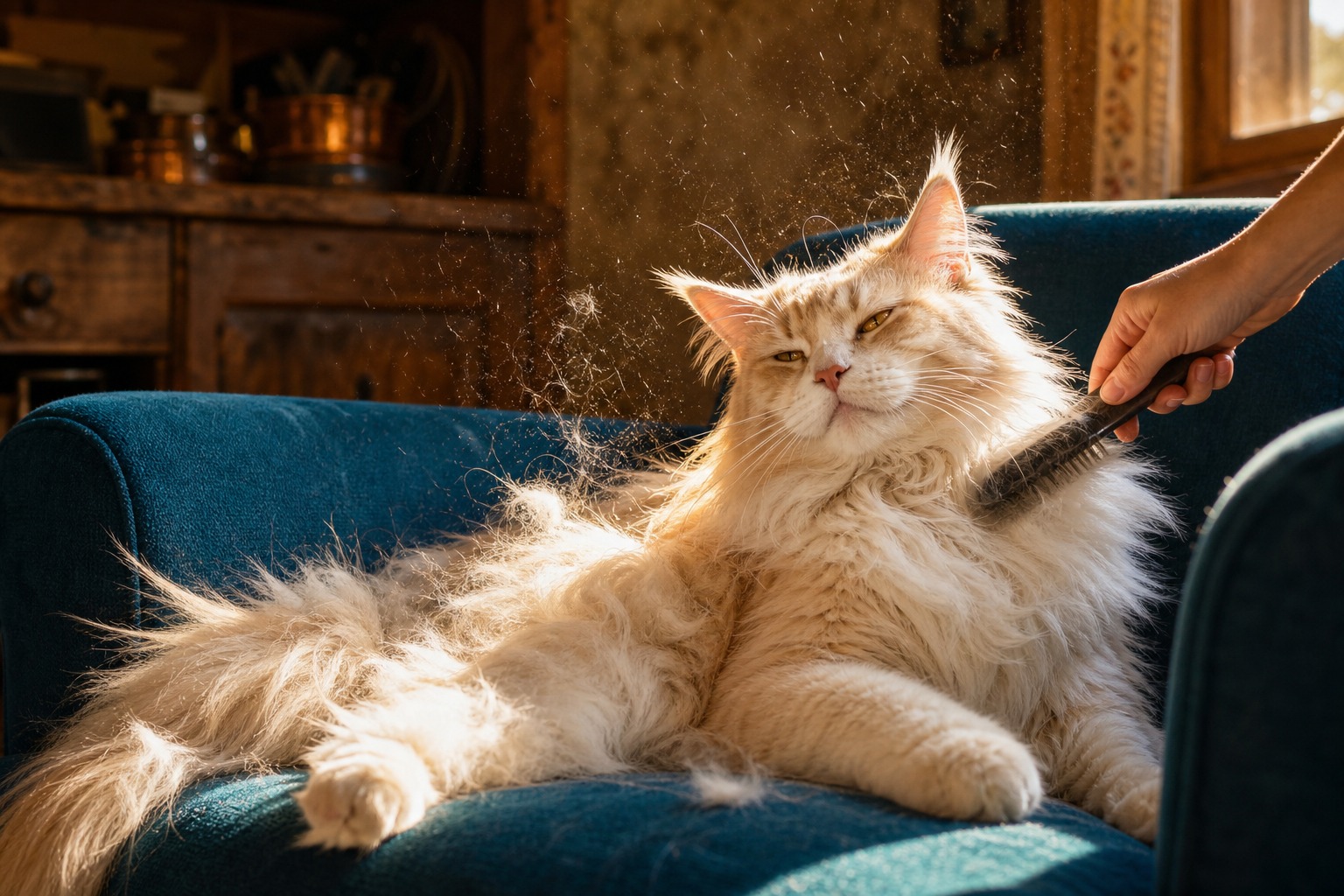 Health & WellnessYour Cat's Shedding Is Telling You Something. Learn to Read ItClaire Sutton · 5 min
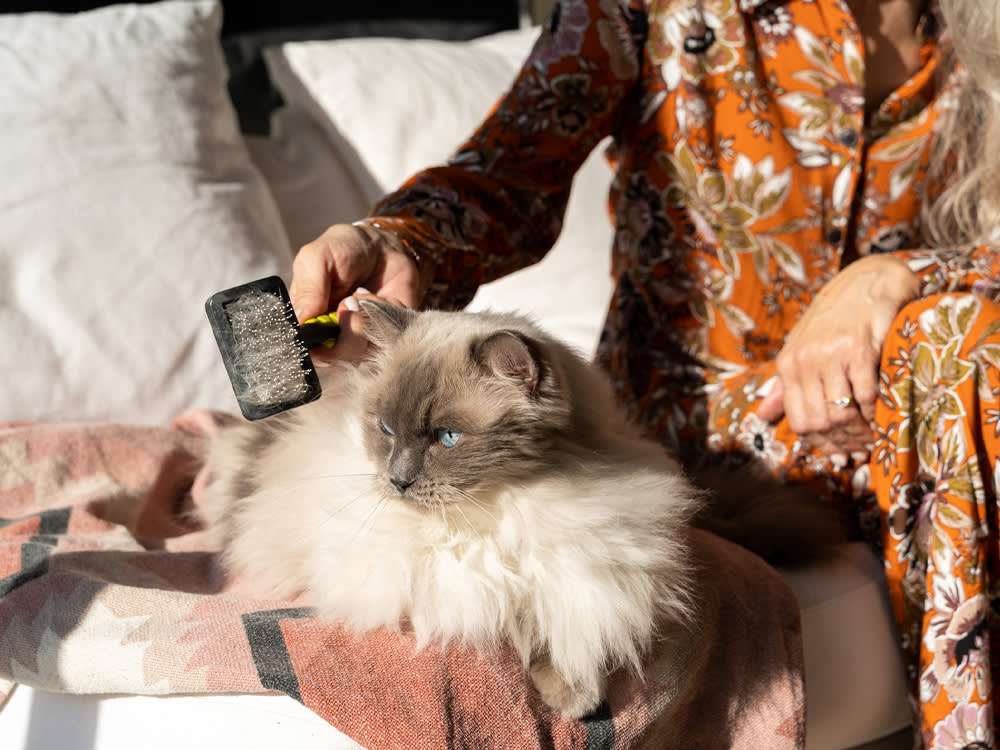 Product PicksYour Cat Grooms Themselves. These 6 Tools Are the Ones Worth Buying Anyway.Sasha Ford · 6 min
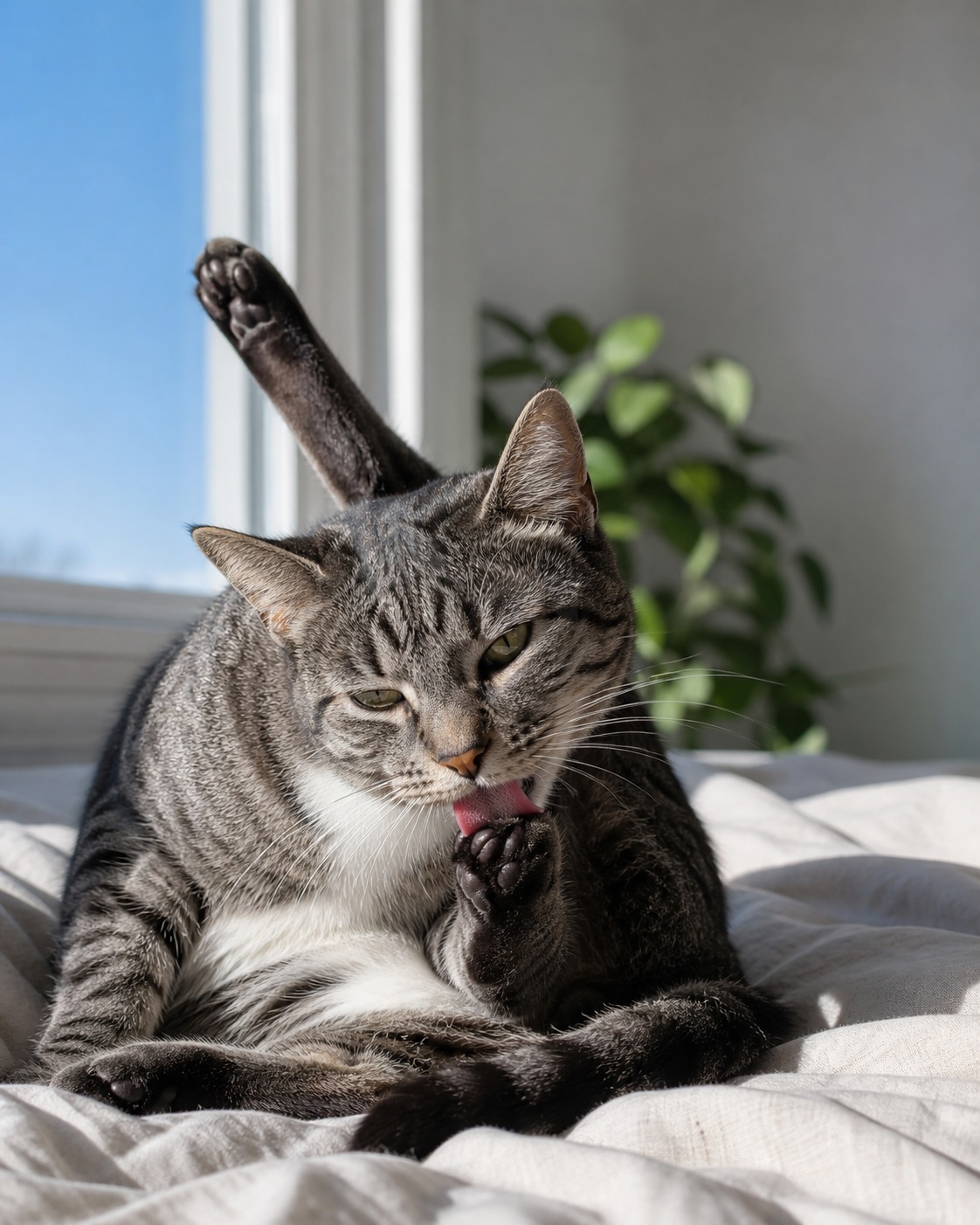 Health & WellnessYour Cat Grooms for Hours, and Cleaning Is the Smallest Reason WhyDr. Priya Nair · 7 min