


A San Diego Judge Redefined 'Abandonment' for Cats. Shelters Everywhere Are Watching.
A lawsuit over the San Diego Humane Society's return-to-field cat program ended in a ruling that friendly cats can't just be released. Here's what the court decided and why it matters.

Affiliate disclosure. This article contains affiliate links. We may earn a small commission if you buy through a link, at no extra cost to you. How we handle recommendations.
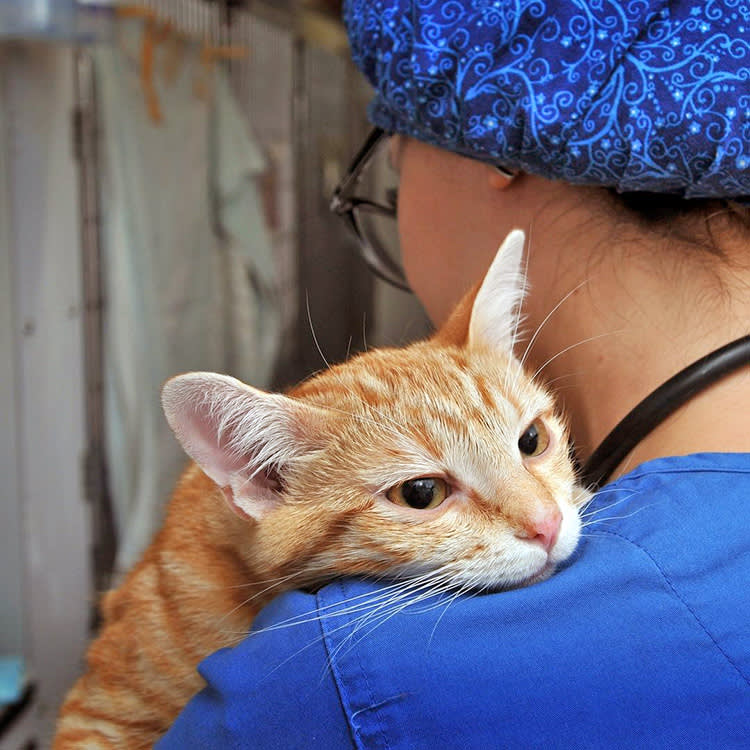
A fight over a few thousand cats in San Diego turned into one of the most closely watched animal-welfare cases in the country, and it ended with a judge redrawing a line that shelters nationwide have long taken for granted. At issue was a deceptively simple question: when a shelter traps a friendly, adoptable cat and puts it back outside, is that a program, or is it abandonment? A California court decided it can be the latter, and the ripple effects are still spreading.
The case centered on the San Diego Humane Society’s Community Cats program, a version of what’s commonly called Trap-Neuter-Return (TNR). In a standard TNR workflow, volunteers and veterinarians trap stray cats, spay or neuter them, vaccinate them, treat any medical problems, and return them to where they were found, the goal being to shrink the outdoor cat population humanely over time rather than warehousing cats in shelters. TNR has broad support in the welfare world precisely because it keeps healthy cats out of crowded shelters, where their odds can be grim.
What the lawsuit actually argued
The plaintiffs, the Pet Assistance Foundation and Paw Protectors, didn’t try to abolish TNR outright. Their complaint targeted a narrower practice: returning friendly, socialized cats, the ones that show signs of once having a home, to the streets instead of admitting them for shelter care and adoption. They framed that as abandonment and dumping.
On the other side stood a coalition of TNR advocates, including Hannah Shaw, the educator widely known as the “Kitten Lady,” and the Feral Cat Coalition, who called the suit misguided and warned that gutting the Community Cats program would put enormous numbers of cats in danger. Shaw argued that the loaded language misrepresented what these community-cat efforts actually involve. Returning a friendly cat to a neighborhood where people already feed and look out for it, she contended, is not the same as dumping an animal; many strays are friendly precisely because they live among people who care for them. She also pushed back on the premise that every cat belongs in an institution, pointing out that California shelters still euthanize tens of thousands of cats each year, and that scooping up every outdoor cat and depositing it in a shelter is not how you maximize lives saved. Socialization, in her framing, is a spectrum, and a cat’s tolerance for humans shouldn’t by itself decide whether it lives outdoors or behind bars.
How the court ruled
The July 2024 hearing didn’t settle it; the matter was continued into August, and the substantive ruling came months later. In December 2024, Judge Katherine Bacal of the San Diego Superior Court found that the San Diego Humane Society had engaged in the unlawful business practice of abandoning social, adoptable, domestic cats onto the streets. The court concluded that the shelter’s insistence on strict, verifiable proof of ownership before admitting a cat was too narrow, and that releasing rather than admitting friendly cats with indications of ownership can violate California law. The ruling also held that kittens under 12 weeks old, and social kittens between 12 weeks and six months, must be taken into the shelter rather than returned.
The dispute didn’t end at the ruling. When the practice continued without changes, Judge Bacal reinforced her decision with a preliminary injunction in early 2025, which was subsequently made permanent. By mid-2025, the court noted that the Humane Society had revised its Community Cat Program policies to comply with state law.
“This ruling forces a harder conversation than the headlines suggest,” says Dr. Priya Nair. “TNR remains one of our best tools for outdoor cat populations, and a shelter bursting past capacity is genuinely dangerous for cats. The court’s line is really about the friendly, clearly-owned animal, and it’s asking shelters to be more careful there. The programs that survive this will be the ones that assess each cat honestly instead of applying one blanket policy.”
Why it reaches far beyond San Diego
The reason animal-welfare organizations across the country paid attention is that the ruling didn’t just critique one shelter’s paperwork. It put a legal definition around “abandonment” that other courts and advocates can now point to, and it landed in California, a state whose animal laws often set the tone elsewhere. Shelters that lean on return-to-field to manage intake are now weighing whether their own policies would survive the same scrutiny, particularly when it comes to sociable cats and young kittens.
For everyday cat lovers, the takeaway isn’t that TNR is bad, it plainly isn’t, and it remains a humane, effective way to keep stray populations in check. The takeaway is that “friendly” and “feral” are not interchangeable, and that a program built to help outdoor cats has to be honest about which cats in front of it actually want, or once had, a home. Shaw explores those cultural and ethical questions at length in her book, Cats of the World, which argues that much of the planet is far more at ease letting neighborhood animals live semi-independently than U.S. shelter policy tends to be.
References
- Times of San Diego. “San Diego Judge Rules Humane Society’s Community Cats Program Unlawful.” December 22, 2024. https://timesofsandiego.com/life/2024/12/22/san-diego-judge-rules-humane-societys-community-cats-program-unlawful/
- Animals 24-7. “Injunction vs. San Diego HS ‘return-to-field’ cat practices made permanent.” June 14, 2025. https://www.animals24-7.org/2025/06/14/injunction-vs-san-diego-hs-return-to-field-cat-practices-made-permanent/
- Alley Cat Allies. “Trap-Neuter-Return: The Humane Approach to Community Cats.” https://www.alleycat.org/our-work/trap-neuter-return/
Marcus Webb writes about the gear, gadgets, and everyday choices that make life with a pet easier. His coverage runs from product picks to training and the causes worth paying attention to, always with an eye on what actually earns a place in your home.
Meet our experts ↗Keep reading
 LivingA Guy Who Mows Lawns for Free Accidentally Saved a Cat SanctuaryNina Vasquez · 4 min
 LivingA $225 Spay Surgery in Brooklyn: Inside the Clinic Flatbush Cats Willed Into ExistenceNina Vasquez · 6 min
 LivingOne Ohio Shelter Turned Your Worst Ex Into Its Best FundraiserSasha Ford · 3 min
 LivingThe Nonprofit Getting Hundreds of Businesses to Bankroll Cat RescuesNina Vasquez · 5 min
 LivingTrapping the Cats Was Never the Hard PartJames Okafor · 8 min
 LivingYou Can't Adopt Your Way Out of a Cat Crisis. This Brooklyn Nonprofit Proved ItLeila Torres · 7 min