


The Farm-Cat Deaths Were the Warning. Raw Food Is How House Cats Now Catch Bird Flu
A 2024 CDC report showed raw milk killing farm cats. What followed proved the danger was not confined to farms: commercial raw pet food has killed indoor cats and infected the first person through a cat.

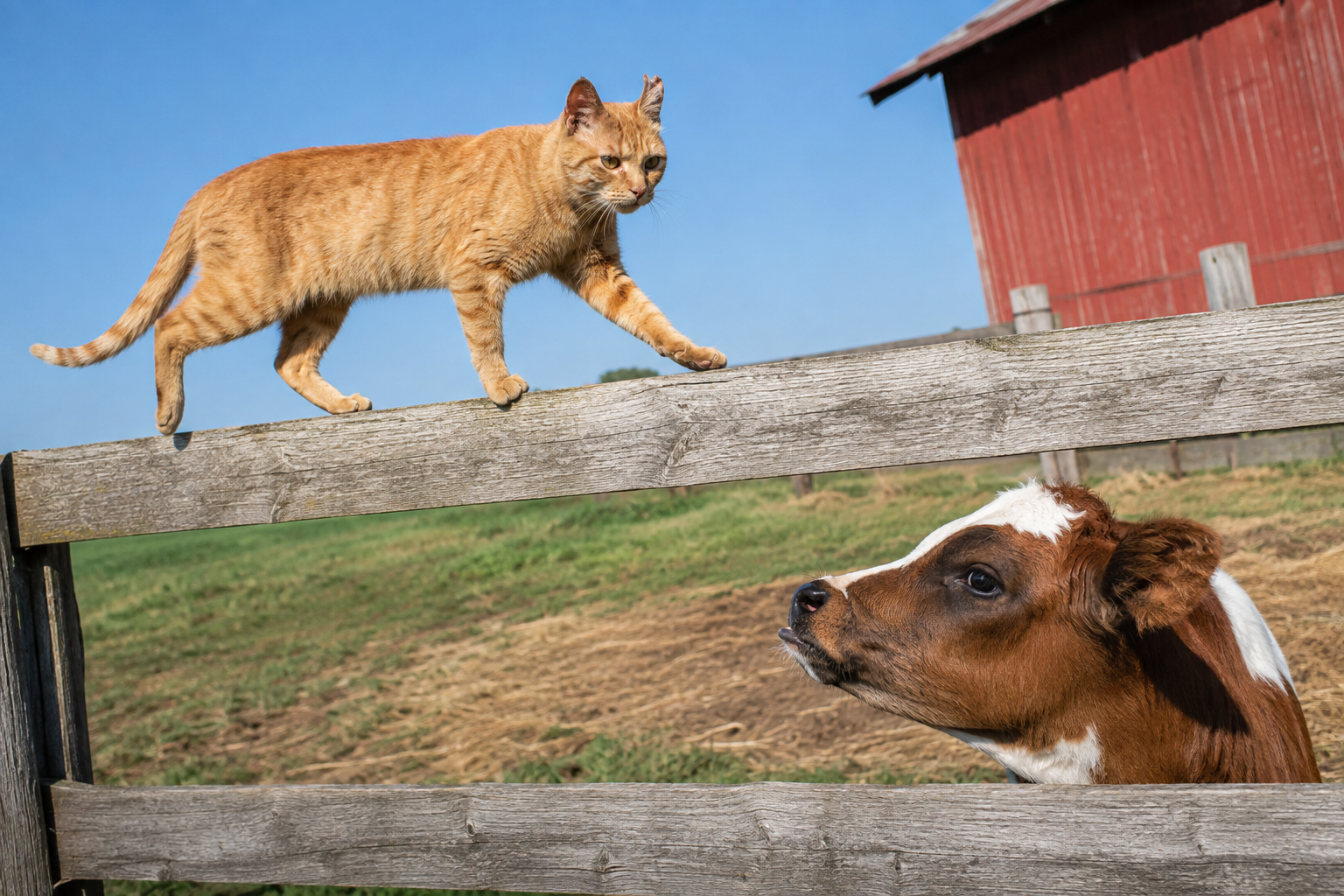
When a 2024 CDC report described farm cats dying within a day of drinking raw milk from H5N1-infected cows, it was tempting to file it under “farm problem.” It was not. In the two years since, the same virus, by the same route, has killed pet cats in living rooms, cats that never went outside, never saw a cow, and simply ate the wrong food from a bag. Raw food is now the leading known way domestic cats catch bird flu, and the story has kept escalating in ways that report only hinted at.
So this is worth reading forward, not backward. The farm cats were the alarm. What matters for your cat is what happened after it.
What the raw-food threat became
By late 2024, the danger had jumped from farms to households. Between roughly November 2024 and January 2025, at least 19 cats fell ill after eating commercially purchased raw milk, raw meat, or raw pet food, concentrated in Los Angeles County, and every cat tested came back positive for H5N1. In December 2024, an indoor cat in Washington County, Oregon, died after eating a recalled batch of Northwest Naturals frozen raw turkey pet food, one of several products pulled over H5N1 contamination.
Then the line to humans, long treated as theoretical, was crossed. Among people exposed to infected cats who volunteered for testing, a Los Angeles County veterinary professional showed serologic evidence of H5N1 infection, the first documented instance associated with a domestic cat. It was a single, asymptomatic case, and cat-to-human transmission remains rare, but it moved the risk from “in principle” to “on record.”
The farm-cat report told us raw milk could kill a cat. What we learned afterward is scarier for the average owner, that a sealed bag of commercial raw food off a store shelf can do the same thing to an indoor cat who never leaves the apartment. That is a different kind of warning.
How the original farm-cat cases unfolded
The origin still matters, because it is where scientists first mapped the route. On a Texas dairy farm, cows began showing signs of illness, eating less and producing thick, yellowed milk, and several died. Within a single day of the cows getting sick, cats fed milk from those infected cows fell ill too. The CDC described the cats’ symptoms as a depressed mental state, stiff movements, loss of coordination, blindness, circling, and heavy discharge from the eyes and nose. Of the roughly 24 cats on the farm who drank the milk, about half died.
What made the report so striking was what it overturned. Until then, the assumption was that cats caught bird flu mainly by eating sick or infected birds. This pointed to a different route entirely. The CDC could not fully rule out exposure to dead wild birds, but the known consumption of unpasteurized milk and colostrum from infected cows made milk the likely source, and the agency’s broader conclusion was sobering: the findings suggested mammal-to-mammal transmission and raised new concerns about the virus spreading within mammal populations. Everything that followed confirmed the warning.
Can your cat pass it to you?
It is possible but still rare for a person to catch bird flu from a mammal. The virus is usually picked up through direct, unprotected contact with sick birds. There has been no human-to-human spread in this outbreak. Part of why the risk to people stays low is biology: mammals other than birds are generally considered less efficient hosts, so they are less likely to pass it along.
Still, out of caution, the CDC advises veterinarians handling potentially infected cats to use goggles, gloves, and N95-style respirators. Sick animals can shed the virus in saliva, feces, and other body fluids, and a person can be infected if the virus is inhaled or gets into the eyes, nose, or mouth. The 2024-2025 serology case is exactly why that guidance exists.
Symptoms to watch for
It is still unlikely your cat will catch bird flu unless they eat raw food or have close contact with cows or birds. But know the signs: fever, lethargy, loss of appetite, difficulty breathing, coughing, a runny nose, and conjunctivitis (red, squinty, or sealed eyes, or greenish-yellow discharge). Neurological signs, stiffness, loss of coordination, circling, and blindness, can also appear, as they did in the farm cats. If your cat seems ill after eating raw food or after exposure to birds or cows, get to a vet quickly and mention the possible exposure.
The bottom line
The advice has only gotten firmer since the farm-cat report, and it is simple: do not feed cats raw milk, raw meat, or commercial raw pet food. Choose cooked or properly processed diets, since pasteurization and thorough cooking both inactivate the virus. Poultry cooked to 165 degrees Fahrenheit is safe; pasteurized milk is safe. The farm cats were the warning shot. Keeping raw food out of your cat’s bowl is how you keep your cat out of the follow-up story.
References
- “Highly Pathogenic Avian Influenza A(H5N1) Virus in Domestic Cats.” CDC Morbidity and Mortality Weekly Report. https://www.cdc.gov/mmwr/volumes/74/wr/mm7405a2.htm
- “Serologic Evidence of H5N1 Infection in a Veterinary Professional Exposed to an Infected Domestic Cat, Los Angeles County, December 2024–January 2025.” CDC MMWR. https://www.cdc.gov/mmwr/volumes/75/wr/mm7517a1.htm
- “Bird Flu (Avian Influenza) and Pets.” American Veterinary Medical Association. https://www.avma.org/resources-tools/animal-health-and-welfare/animal-health/avian-influenza
Common questions
Has a cat ever infected a person with bird flu?
In late 2024 and early 2025, a Los Angeles County veterinary professional showed serologic evidence of H5N1 infection after exposure to an infected cat, the first such documented case. It remains rare, and there has been no human-to-human spread in this outbreak, but it is no longer only theoretical.
What are the symptoms of bird flu in cats?
Watch for fever, lethargy, loss of appetite, difficulty breathing, runny nose, and conjunctivitis (red, squinty, or sealed eyes with greenish-yellow discharge). Neurological signs such as stiffness, loss of coordination, circling, or blindness can also appear. See a vet urgently if your cat shows these signs, especially after eating raw food or exposure to birds or cows.
Not a substitute for your vet. Our guidance is educational. For urgent symptoms, contact a vet or emergency clinic right away. Editorial standards
Dr. Chen is a small-animal veterinarian who leads health and safety coverage at The Pet Times. She writes and reviews the bulk of our illness, condition, and safety content, translating clinical guidance into clear, practical advice owners can act on at home.
Meet our experts ↗Keep reading
 LivingShe Keeps 200 Houseplants and One Curious Cat. The Plants Are Winning.Leila Torres · 5 min
 Health & WellnessHydrangeas and Cats: The Real Risk Is a Stomach Ache, Not CyanideDr. Nina Kohl · 6 min
 LivingHis Cat Vanished in Yellowstone. Two Months Later, a Chip Pinged 900 Miles Away.Dr. Lena Park · 5 min
 TrainingThe Paw on Your Mouth at 4 A.M.? You Trained That.Dr. Amara Solis · 6 min
 Health & WellnessYou're Decorating Your Cat's World With Smells It Can't StandDr. Lena Park · 6 min
 Health & WellnessLavender Won't Hurt Your Cat. The Essential Oil Will.Dr. Ravi Mehta · 7 min