


The Indoor Oregon Cat That Made Bird Flu a Raw-Food Problem
An indoor cat that never went outside died of H5N1 from its dinner. That case was not a one-off recall. It was the first clear proof that raw pet food is a bird flu vector, and the recalls and FDA rules that followed prove it.

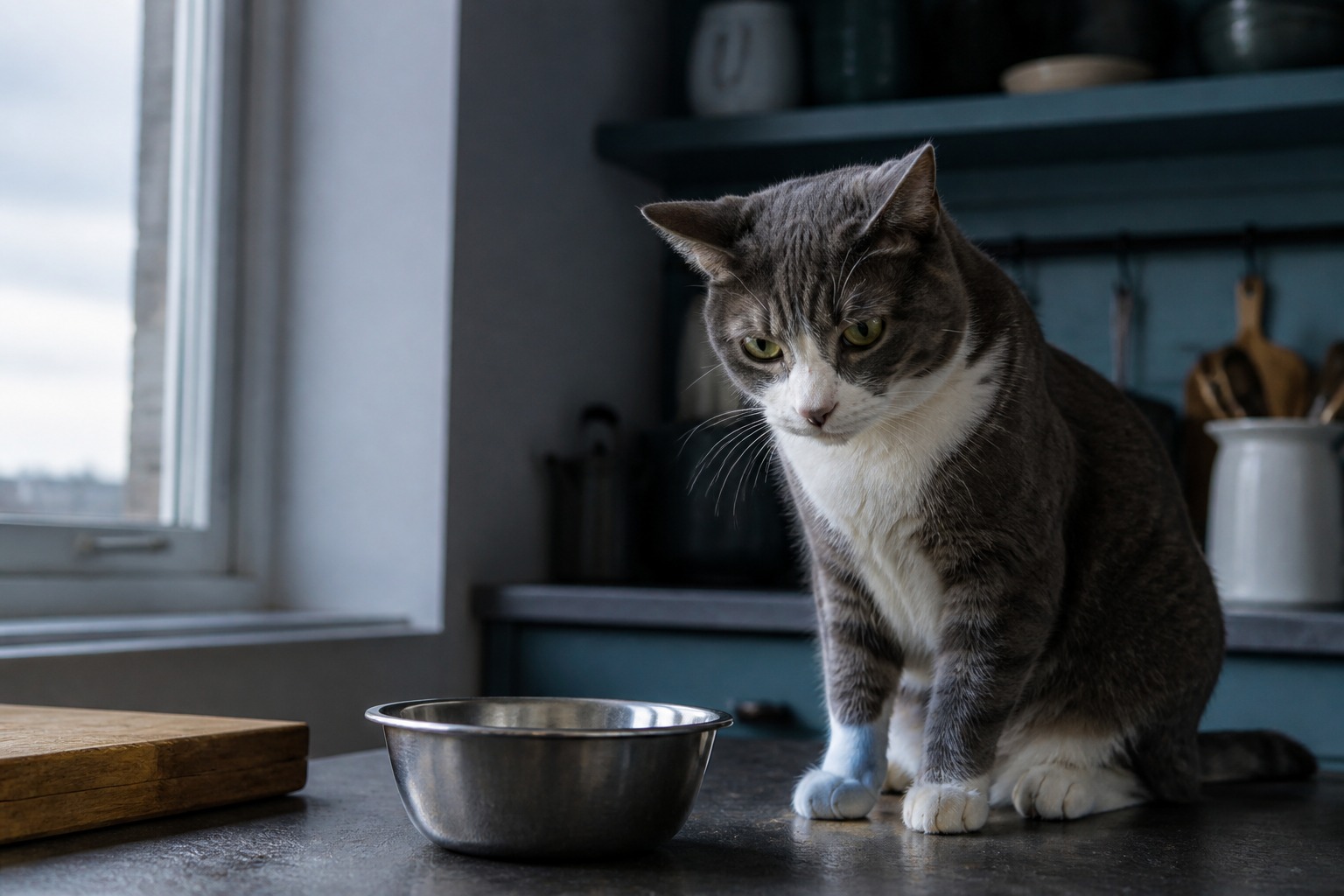
The detail that should stop every cat owner is this: the cat never went outside. It had no contact with wild birds, no environmental exposure, nothing that fits the usual bird flu story. It caught H5N1 and died anyway, and the only possible source was its food bowl. That is what made the Oregon case different from a routine recall. It was the first time the chain of infection was traced, gene for gene, from a bag of raw cat food to a dead indoor cat, and it reframed raw feeding from a diet debate into a disease-transmission question.
This article is not really about one recalled batch of turkey. It is about what that batch demonstrated, and what the year since has confirmed: raw pet food made from poultry can carry live avian influenza straight to your cat.
Why the genetic match mattered so much
When testing links a food to an illness, the evidence is usually circumstantial. Here it was not. The U.S. Department of Agriculture’s National Veterinary Services Laboratories and the Oregon Veterinary Diagnostic Laboratory sequenced the virus from both the cat and the Northwest Naturals raw frozen food and found they were exact matches.
Oregon’s state veterinarian, Dr. Ryan Scholz, put it plainly in the Oregon Department of Agriculture release: the team was confident the cat contracted H5N1 by eating the Northwest Naturals raw and frozen pet food, the cat was strictly indoors with no environmental exposure, and genome sequencing confirmed the virus in the food and the virus in the cat were identical. That is as close to proof as an outbreak investigation gets. The food and the fatal infection carried the same virus.
The batch that was recalled
Working with the Oregon Department of Agriculture, Northwest Naturals recalled one batch of its Feline Turkey Recipe raw frozen pet food, sold in two-pound bags with “best if used by” dates of May 21, 2026, and June 23, 2026, distributed nationwide and in Canada. Owners with that batch were told to discard it immediately and seek a refund. That specific recall has since been closed, but treating it as “resolved” misses the point, because it was the beginning of a pattern, not the end of one.
This was not an isolated case
If the Oregon cat had been a fluke, the story would end there. It was not. Between November 2024 and January 2025, a cluster of 19 domestic cats fell ill after eating commercially purchased raw animal products. Nine tested positive for H5N1, and 14 of the cats died or were euthanized. More raw-food recalls followed the Northwest Naturals one, including products from RAWR, Savage Pet, and Wild Coast Raw, several of them tied to cats that were sickened or euthanized after eating contaminated food.
Regulators responded at the structural level. The Food and Drug Administration determined that manufacturers making cat or dog food from uncooked or unpasteurized poultry or cattle must now reanalyze their food safety plans to treat H5N1 as a known, reasonably foreseeable hazard. In plain terms: the government now formally regards raw poultry pet food as a potential bird flu source, which is exactly the conclusion the Oregon case first forced.
What this means for how you feed your cat
The lesson from these cases is uncomfortable but simple. During an active H5N1 outbreak, raw poultry-based pet food carries a real, documented risk of transmitting avian influenza to cats, and cats can get severely, often fatally, ill. Cooking and commercial heat processing inactivate the virus. If you feed raw, this is the moment to talk to your vet about switching to a cooked or commercially processed diet, especially if you live near reported outbreaks.
The Oregon Department of Agriculture’s broader precautions still hold: do not feed pets, or eat yourself, raw or undercooked meat, and avoid raw dairy, since pasteurization eliminates disease-causing pathogens. Wash your hands after handling raw food or sick animals. Avoid contact with sick or dead animals, and keep your cat away from sick animals, dead animals, and wild birds.
Warning signs to watch for
Human risk from these cases remains low, according to the CDC. The animals to worry about are the cats. If your cat eats raw food, interacts with wild birds or poultry, or lives near an area with reported outbreaks, watch closely.
“Early on, an infected cat usually runs a fever, turns quiet and sluggish, and starts working harder to breathe, sometimes with a cough or a drippy nose,” Dr. Chen explains. “The eyes are a big tell too, they can go red, look pinched or gummed shut, or leak a thick yellow-green discharge. If bird flu is on your radar at all, that’s a same-day trip to the vet, not something you sleep on.”
The bottom line
One indoor cat’s death did more than trigger a single recall. It proved that a cat can catch and die from bird flu without ever leaving the house, purely from raw poultry in its bowl, and the recalls, the cluster of cat deaths, and the new FDA rules that followed all trace back to that finding. Raw feeding is a personal choice, but during an H5N1 outbreak it is a choice worth reconsidering with your vet.
References
- Oregon Department of Agriculture. “Morasch Meats Voluntary Recall of Feline Raw Pet Food (HPAI).” https://apps.oregon.gov/oregon-newsroom/OR/ODA/Posts/Post/morasch-meats-voluntary-recall-feline-raw-pet-food-hpai
- U.S. Food and Drug Administration. “Cat and Dog Food Manufacturers Required to Consider H5N1 in Food Safety Plans.” https://www.fda.gov/animal-veterinary/cvm-updates/cat-and-dog-food-manufacturers-required-consider-h5n1-food-safety-plans
- U.S. Food and Drug Administration. “FDA Notifies Pet Owners That Tests Show H5N1 Contamination in Certain Lots of RAWR Raw Cat Food Chicken Eats.” https://www.fda.gov/animal-veterinary/cvm-updates/fda-notifies-pet-owners-tests-show-h5n1-contamination-certain-lots-rawr-raw-cat-food-chicken-eats
- Centers for Disease Control and Prevention. “H5N1 Bird Flu: Current Situation.” https://www.cdc.gov/bird-flu/
Not a substitute for your vet. Our guidance is educational. For urgent symptoms, contact a vet or emergency clinic right away. Editorial standards
Dr. Chen is a small-animal veterinarian who leads health and safety coverage at The Pet Times. She writes and reviews the bulk of our illness, condition, and safety content, translating clinical guidance into clear, practical advice owners can act on at home.
Meet our experts ↗Keep reading
 Health & WellnessYour Cat Isn't Wrecking the Holidays. The Holidays Are Baiting Your Cat.Dr. Amara Solis · 6 min
 Health & WellnessRingworm Isn't a Worm. It's a Fungus That Can Jump to You.Dr. Priya Nair · 6 min
 Health & WellnessYour Orchid Is Safe for Cats. What's Next to It Might Not Be.Dr. Amara Solis · 5 min
 Health & WellnessHydrangeas and Cats: The Real Risk Is a Stomach Ache, Not CyanideDr. Nina Kohl · 6 min
 FoodWet Cat Food and the 2-Hour Rule: The Clock Starts the Second You Open the CanDr. Amara Solis · 7 min
 Health & WellnessYou're Decorating Your Cat's World With Smells It Can't StandDr. Lena Park · 6 min