


Your Orchid Is Safe for Cats. What's Next to It Might Not Be.
Orchids are non-toxic to cats, so the flower itself is the least of your worries. The real hazards are the vase water, the plant food, and the lily hiding in the same bouquet. Here's what actually sends cats to the vet.

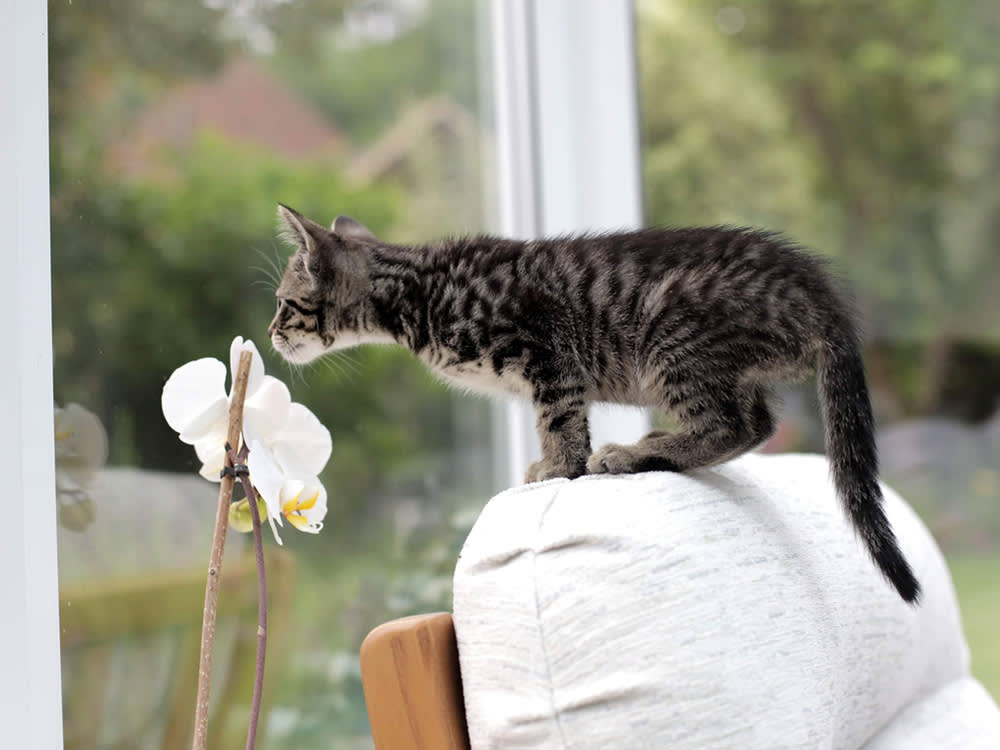
Here is the good news, right up top: orchids won’t poison your cat. If you came home from a wedding and left a corsage on the counter, or you keep a moth orchid on the windowsill, you can stop worrying about the flower. Orchids belong to a huge plant family, and none of the varieties you’ll find in a bouquet or a garden center contains anything toxic to cats.
So why do so many cat parents still end up at the vet after their cat gets into a flower arrangement? Because the orchid is almost never the problem. The danger is the company it keeps: the water it’s standing in, the plant food you mixed into that water, and the flower sitting right beside it that isn’t an orchid at all.
The flower is fine. Here’s the part people miss.
A cat can nibble an orchid petal or leaf and, in the vast majority of cases, walk away completely fine. What actually causes trouble is everything orchids tend to arrive with.
Start with the vase. Cut-flower packets, liquid plant food, and fertilizer all leach into the water, and that water turns into a bacterial soup within a day or two. A cat that ignores the flowers entirely but decides the vase is a fun drinking fountain is the one more likely to get sick. Keep cats away from the water, not just the blooms.
Then there’s the bouquet problem, and this is the one that matters most. Orchids are frequently bundled into mixed arrangements, and one of the most common companions in those arrangements is the lily. True lilies are in a completely different league of danger.
People fixate on whether the pretty flower is toxic, and orchids happen to be one of the safe ones. The mistake I see is a cat parent relaxing because they checked the orchid, without realizing there’s a lily two stems over. That’s the flower that can put a cat in kidney failure, and it doesn’t take much.
The real killer in the vase: lilies
If you take one thing from this article, make it this. All true lilies, including Easter lilies, tiger lilies, and Asiatic lilies, are severely dangerous to cats. Even a trace amount, a few bites of leaf, a lick of pollen off the fur, or a sip of the vase water, can trigger fatal kidney failure. Before any prepared bouquet comes into a home with cats, pull it apart and check for lilies. It’s the single highest-value safety habit a cat parent can build.
A couple of other common flowers to keep away from cats:
- Tulips. They carry compounds that trigger belly pain, vomiting, diarrhea, heart trouble, and seizures. The bulb holds the highest concentration, but every part of the plant is toxic.
- Snake plants. Popular because they’re nearly impossible to kill, but toxic to cats, bringing on drooling, appetite loss, vomiting, and diarrhea.
What to actually watch for if your cat eats an orchid
Because orchids aren’t toxic, a cat that eats a piece usually just needs a watchful eye rather than an emergency run. Any unfamiliar plant can irritate a cat’s stomach, so the signs to look for are the general markers of GI upset:
- Vomiting
- Diarrhea
- Drooling
- Loss of appetite
One or two rounds of vomiting that bring up the plant material, followed by your cat bouncing back to normal, is not a crisis. What warrants a call to the vet is anything that keeps going: repeated vomiting, diarrhea, refusing food, heavy drooling, or a cat that seems flat and depressed. Those can signal an intestinal irritation that needs treatment, or an entirely separate problem the plant just happened to coincide with.
If your vet does treat a lingering upset stomach, they may first rule out other causes with bloodwork or imaging like an X-ray or ultrasound. When nothing else turns up, the fix is usually straightforward: fluids and anti-nausea medication to help your cat feel better faster.
Keeping curious cats out of trouble
Cats investigate the world with their mouths, so the only reliable strategy is limiting access. A few habits that work:
- Keep any new plant or arrangement well out of reach, and remember that “out of reach” for a cat is more ambitious than it sounds. Cats find the gaps.
- Screen every bouquet for lilies before it enters the house, and skip toxic plants entirely rather than relying on placement.
- Don’t let cats drink from vases or flowerpots. Fertilizer and stale water are both worth avoiding.
- If you catch your cat eyeing a plant, redirect to a toy or a game, then reward the pivot with a treat. You’re teaching “the plant is boring, the toy pays off.”
Cat-safe plants you can keep guilt-free
If you want greenery without the anxiety, plenty of options are genuinely safe around cats:
- Spider plant (Chlorophytum comosum): tough, forgiving, and non-toxic.
- Roses (Rosa genus): safe to have around cats, though the thorns can still scratch.
- Calathea (Calathea species): broad, patterned leaves, easy to care for, and cat-safe.
What newer guidance adds
The reference cat parents keep coming back to is the ASPCA’s toxic and non-toxic plant database, and it’s worth bookmarking rather than trusting a half-remembered list. It’s searchable by plant name, covers cats specifically, and gets updated, which matters because “I think that one’s fine” is exactly how a lily ends up in the living room.
The other shift worth knowing: veterinary poison lines now treat lily exposure in cats as a true emergency with a clock on it. Kidney damage is far more survivable when a cat is seen within roughly 18 hours, so if you even suspect your cat contacted a lily, the move is to call rather than wait and watch. For a plain orchid, watchful waiting is fine. For a lily, minutes count.
The bottom line
Orchids are perfectly fine to keep in a home full of cats. Enjoy them. Just remember that the flower is rarely the risk. Keep your cat out of the vase water, discourage chewing so you’re not cleaning up a colorful mess later, and treat every mixed bouquet as guilty until you’ve checked it for lilies. Do that, and the orchid on your windowsill is exactly as harmless as it looks.
This article covers a pet-safety topic. It’s for general information and isn’t a substitute for your veterinarian’s advice. If you think your cat has eaten a toxic plant, especially a lily, contact your vet or an animal poison control line right away.
References
Common questions
Are all types of orchids safe for cats?
Yes. The common Phalaenopsis (moth orchid) and the other orchids sold as houseplants and cut flowers are all non-toxic to cats, and every part of the plant is safe in that sense. That does not mean cats should be allowed to chew on them.
Is the vase water dangerous?
It can be. Cut-flower food, fertilizer runoff, and stagnant, bacteria-heavy water are all reasons to keep a cat from drinking out of a vase, even when the flowers themselves are harmless.
When should I call the vet?
If your cat keeps vomiting, develops diarrhea, stops eating, drools heavily, or seems withdrawn and low, book a visit. Those signs point to something more than a one-off upset stomach.
Not a substitute for your vet. Our guidance is educational. For urgent symptoms, contact a vet or emergency clinic right away. Editorial standards
Dr. Solis is a board-certified veterinary dermatologist with over twelve years of clinical experience. She advises on skin conditions, allergies, and grooming practices that affect coat and skin health. All dermatology and allergy content at The Pet Times is reviewed by her team before publication.
Meet our experts ↗Keep reading
 Health & WellnessNeosporin's Third Ingredient Is the One That Can Kill Your CatDr. Amara Solis · 8 min
 FoodRaw Chicken for Cats Got Measurably More DangerousDr. Mara Chen · 6 min
 Health & WellnessOnly 5% of a Flea Problem Lives on Your Cat. Here's the Other 95%.Dr. Ravi Mehta · 9 min
 Health & WellnessYour Cat Begs to Go Outside. The Honest Case for Keeping Them In.Dr. Priya Nair · 8 min
 Health & WellnessAnother Blue Ridge Beef Recall: Why This Raw Kitten Food Keeps Hitting the FDA's ListDr. Mara Chen · 4 min
 Health & WellnessPothos and Cats: The Burn Is Instant, Which Is Why It Rarely Turns SeriousDr. Nina Kohl · 7 min