


Neosporin's Third Ingredient Is the One That Can Kill Your Cat
Everyone worries about a cat licking the ointment off. The bigger documented danger is the drug itself: in a study of 61 cats who went into anaphylaxis after an antibiotic ointment, one ingredient was present in every single case. It's in the tube in your bathroom.

Your cat has a scrape. It is small, it is superficial, and there is a tube of Neosporin in the bathroom cabinet you have been using on your own cuts for a decade. It is safe, it is gentle, it is the obvious thing to reach for.
Put it down.
The reason is not the one you would guess. Most warnings about Neosporin and cats focus on licking, and licking is a real problem. But the more serious, better-documented danger is not what happens when the ointment goes into the cat. It is what can happen when the drug simply touches her.
What is in the tube
Neosporin is not one antibiotic. It is three: neomycin, polymyxin B, and bacitracin.
Each of those is fine on human skin, and the combination is one of the most-used first-aid products on earth. But cats are not small people. As a species, they are extraordinarily sensitive to drugs that people and even dogs tolerate without a thought, because feline liver metabolism handles a number of compound classes very poorly. The list of common human medications that are dangerous to cats is long and it is full of surprises.
Two of the three ingredients here are the problem.
Neomycin: the allergy
Neomycin is a well-established contact allergen, in humans as well as cats. In a cat, an allergic reaction can look like itching, hives, and swelling, and in the worst cases it can escalate into anaphylaxis, which is a life-threatening, whole-body reaction that needs emergency veterinary care immediately.
That alone is a good reason not to reach for it. But neomycin is not the ingredient that turned this from a caution into a documented pattern.
Polymyxin B: the one that shows up in every case
Here is the study that ought to be better known.
Researchers reviewed 61 cats who suffered anaphylactic events within four hours of having an antibiotic-containing ophthalmic preparation applied. The findings, published in the Journal of Feline Medicine and Surgery:
- Reactions were fast. In 56 percent of cases, anaphylaxis began within ten minutes of the drug being applied.
- The most common preparations involved were bacitracin, neomycin, and polymyxin B combinations, in 44 percent of cases, and oxytetracycline with polymyxin B, in 21 percent.
- Polymyxin B was present in every single case.
- 82 percent of the cats survived. Which means roughly one in five did not.
That study looked at ophthalmic products, ointments applied to the eye, not to skin, and it is important to be precise about that. It is not a study of Neosporin on a scratch. But the common thread across all 61 cats was polymyxin B, and polymyxin B is the second ingredient in the tube in your bathroom.
When a colleague tells me a cat crashed within minutes of a topical antibiotic, I do not have to ask which drug. There is a reason a lot of clinics simply do not keep triple-antibiotic products on the shelf for cats anymore. The upside is a mild scratch heals slightly faster. The downside, rarely but really, is a dead cat.
Polymyxin B is also toxic to cats when swallowed, and a cat will swallow it, because a cat grooms. Ingestion can produce drooling, vomiting, and diarrhea, and in severe cases neurological signs such as tremors and seizures. It can be fatal.
And it may not even help
Set aside the danger for a moment, because there is a smaller, more mundane point that people miss.
Neosporin is not particularly good for a cat’s wound even when nothing goes wrong. A cat’s skin is more sensitive than human skin, and the ointment can produce swelling, redness, and irritation, which is the opposite of the thing you were trying to achieve. You are accepting a real risk in exchange for a benefit that is, at best, marginal.
What to use instead
Plenty of good options exist. Some need a prescription, some do not.
From your vet
Mupirocin, sold as Bactroban, is a topical antibiotic used in veterinary practice for bacterial skin infections and is a common choice for cats.
Silver sulfadiazine is best known for burns, but it has genuine antibacterial properties and is used safely in cats under veterinary supervision.
Animax, a combination of nystatin, neomycin, thiostrepton, and triamcinolone, is a vet-dispensed cream that treats both bacterial and fungal infections. One honest caveat, and it matters given everything above: it contains neomycin, and that ingredient can trigger allergic reactions in some cats. It is prescribed with that trade-off in mind, and that is precisely the kind of judgment call that should be made by a vet who knows your cat rather than by you and a bathroom cabinet.
Over the counter
Sterile saline to flush a wound. This is the boring step that does the most work, and it is the one people skip in favor of an ointment.
Chlorhexidine solution, a gentle, very widely used antiseptic. It must be used at the correct concentration, 0.05 percent, not straight from a bottle intended for other purposes.
Betadine, meaning povidone-iodine, is a mild antiseptic that must be properly diluted before it goes anywhere near a cat’s skin, at roughly 1 part iodine to 10 parts water, a weak-tea colour.
Vetericyn Plus Antimicrobial Hydrogel is not an antibiotic at all. It supports healing and helps prevent infection, it is non-toxic, and it is safe for cats, which is a good deal of why it has become the default recommendation for the exact situation Neosporin used to fill.
The natural options, with a realistic caveat
Pet-safe aloe vera gel can soothe irritated skin. Check the formulation, since some aloe products contain additives that are not safe if ingested.
Manuka honey has genuine, well-documented antibacterial properties and is used in wound care in both human and veterinary medicine.
Coconut oil is mildly antimicrobial and keeps skin hydrated. Use it sparingly, because a cat will absolutely groom it off, and a cat who ingests a lot of oil gets an upset stomach.
None of these is a substitute for veterinary care on a wound that is more than a superficial scratch. They are for the minor stuff.
The cat first-aid kit worth actually assembling
- Sterile saline solution, for flushing wounds
- Gauze pads and bandages
- A pet-safe antiseptic: dilute Betadine or 0.05 percent chlorhexidine
- An antimicrobial wound gel such as Vetericyn
- Pet-specific hydrocortisone cream, for mild skin irritation
- Tweezers, for removing debris
- A digital thermometer
And the item that is worth more than everything above combined: your vet’s number and the number of the nearest emergency clinic, written down somewhere you will find it at 11pm, not saved in a phone you might be holding in one hand while restraining a bleeding cat with the other.
The wounds that need a vet, not a kit
This is the part that matters more than which ointment you pick.
Call your vet if the wound is deep, gaping, or bleeding persistently. Call if it came from another animal’s teeth, because cat bite wounds in particular are puncture injuries that seal over at the surface while bacteria multiply underneath, and they abscess with impressive reliability. They usually need systemic antibiotics, and no topical anything will reach them.
Call if you see swelling, heat, discharge, or a bad smell, all signs of an infection that has already taken hold. Call if your cat is limping, hiding, refusing food, or feverish, since those are the signs of a cat who is sicker than her visible wound suggests. And call if you simply do not know, which is a completely respectable reason to call a vet.
What newer evidence adds
The direction of travel in feline medicine has been steadily away from human topical antibiotics, and the anaphylaxis literature is why.
The case reports began appearing decades ago and were dismissed as rarities. The 61-cat series changed that, because it did something a single case report cannot: it identified a common denominator. Polymyxin B was in every preparation involved. That moved the conversation from “some cats occasionally react badly to some ointments” to “there is a specific ingredient, and we can name it.”
The practical fallout is visible in clinics. Many practices no longer keep triple-antibiotic ophthalmic preparations on hand for cats at all, on the grounds that the marginal benefit does not justify a low-probability catastrophic outcome when perfectly good alternatives exist.
Which is the whole argument in one line, and it is worth applying at home too. The upside of using Neosporin on your cat is small. The downside is rare, and when it arrives, it arrives in ten minutes.
Use something else.
References
- Hume-Smith, K.M., Groth, A.D., Rishniw, M., Walter-Grimm, L.A., Plunkett, S.J., Maggs, D.J. “Anaphylactic events observed within 4 h of ocular application of an antibiotic-containing ophthalmic preparation: 61 cats (1993–2010).” Journal of Feline Medicine and Surgery, vol. 13, no. 10, 2011, pp. 744–751.
- Plunkett, S.J. “Anaphylaxis to Ophthalmic Medication in a Cat.” Journal of Veterinary Emergency and Critical Care, vol. 10, no. 3, 2000, pp. 169–171.
- U.S. Food and Drug Administration. “Neomycin and Polymyxin B Sulfates and Bacitracin Zinc Ophthalmic Ointment: Prescribing Information.” FDA.
- American Society for the Prevention of Cruelty to Animals Animal Poison Control Center. “People Foods and Medications to Avoid Giving Your Pets.” ASPCA.
- Court, M.H. “Feline drug metabolism and disposition: pharmacokinetic evidence for species differences and molecular mechanisms.” Veterinary Clinics of North America: Small Animal Practice, vol. 43, no. 5, 2013, pp. 1039–1054.
Common questions
What happens if my cat licks Neosporin?
Ingestion can cause drooling, vomiting, and diarrhea, and in severe cases neurological signs including tremors or seizures. Because cats groom constantly, assume anything you put on a cat's skin will be eaten. If your cat has ingested it and is showing any symptoms, call your vet or an emergency clinic now.
What can I use on a cat's wound instead of Neosporin?
Over the counter, sterile saline to flush, dilute chlorhexidine at 0.05 percent, dilute Betadine at roughly 1 part iodine to 10 parts water, or a non-antibiotic antimicrobial hydrogel such as Vetericyn Plus. By prescription, your vet may reach for mupirocin or silver sulfadiazine. The most important step for anything beyond a superficial scratch is calling the vet, not choosing an ointment.
How do I know if my cat's wound needs a vet?
Call if the wound is deep, gaping, bleeding persistently, or the result of a bite from another animal, since bite wounds seal over and abscess. Call if there is swelling, heat, discharge, or a bad smell, if your cat is limping, hiding, off her food, or feverish, or if you simply are not sure. Cat bite wounds in particular abscess quickly and almost always need antibiotics.
Not a substitute for your vet. Our guidance is educational. For urgent symptoms, contact a vet or emergency clinic right away. Editorial standards
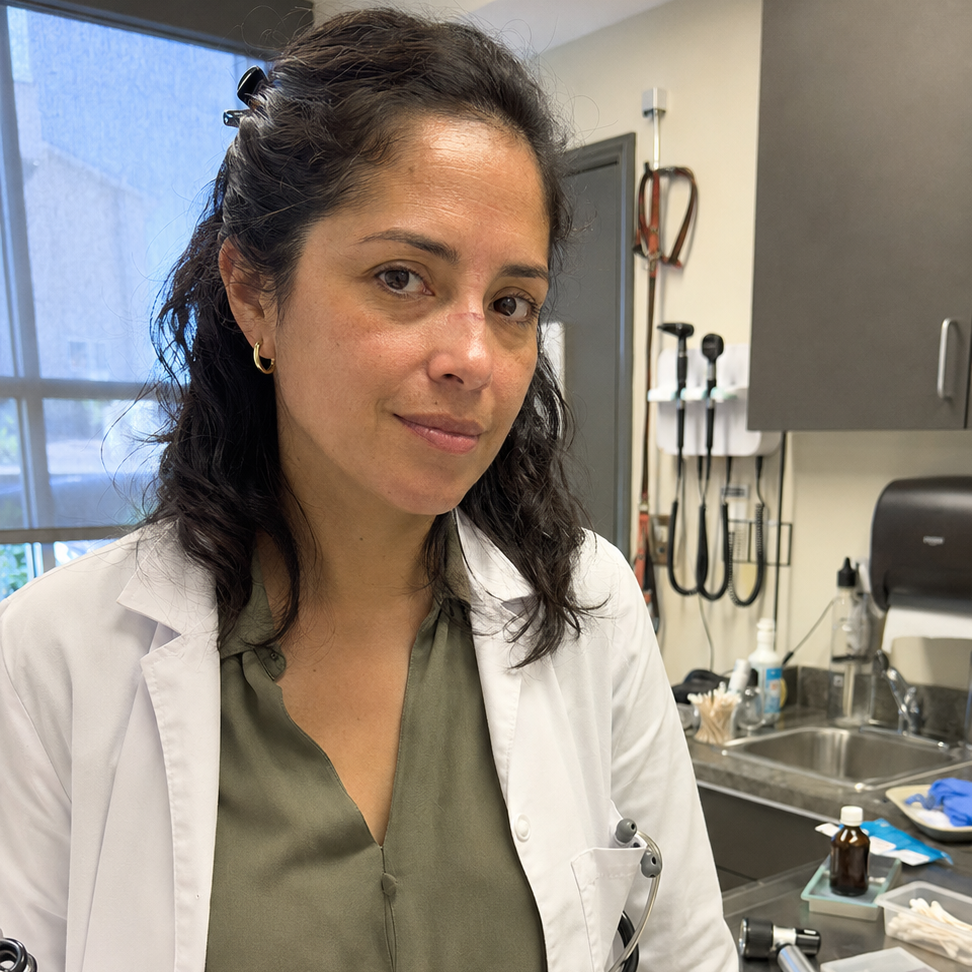
Dr. Solis is a board-certified veterinary dermatologist with over twelve years of clinical experience. She advises on skin conditions, allergies, and grooming practices that affect coat and skin health. All dermatology and allergy content at The Pet Times is reviewed by her team before publication.
Meet our experts ↗Keep reading
 Health & WellnessOnly 5% of a Flea Problem Lives on Your Cat. Here's the Other 95%.Dr. Ravi Mehta · 9 min
 FoodThe Foods That Poison Cats Are Hiding in Plain SightDr. Lena Park · 8 min
 Health & WellnessGarlic and Cats: The Toxin That Hides in Plain Sight on Your PlateDr. Amara Solis · 6 min
 Health & WellnessA Bee Sting Rarely Hurts a Cat. The Reaction to One Can Be DeadlyDr. Mara Chen · 6 min
 Health & WellnessChocolate Hits Cats Harder Than Dogs. One Quirk Is Why You Rarely Hear About ItDr. Lena Park · 6 min
 Health & WellnessMost 'Toxic' Plants Just Make Your Cat Drool. Two Genera Actually Kill.Dr. Nina Kohl · 9 min