


Chocolate Hits Cats Harder Than Dogs. One Quirk Is Why You Rarely Hear About It
Cats are actually more sensitive to chocolate than dogs, but they almost never eat enough to make headlines. Here's the reason, the amounts that matter, and exactly what to do if your cat gets into it.

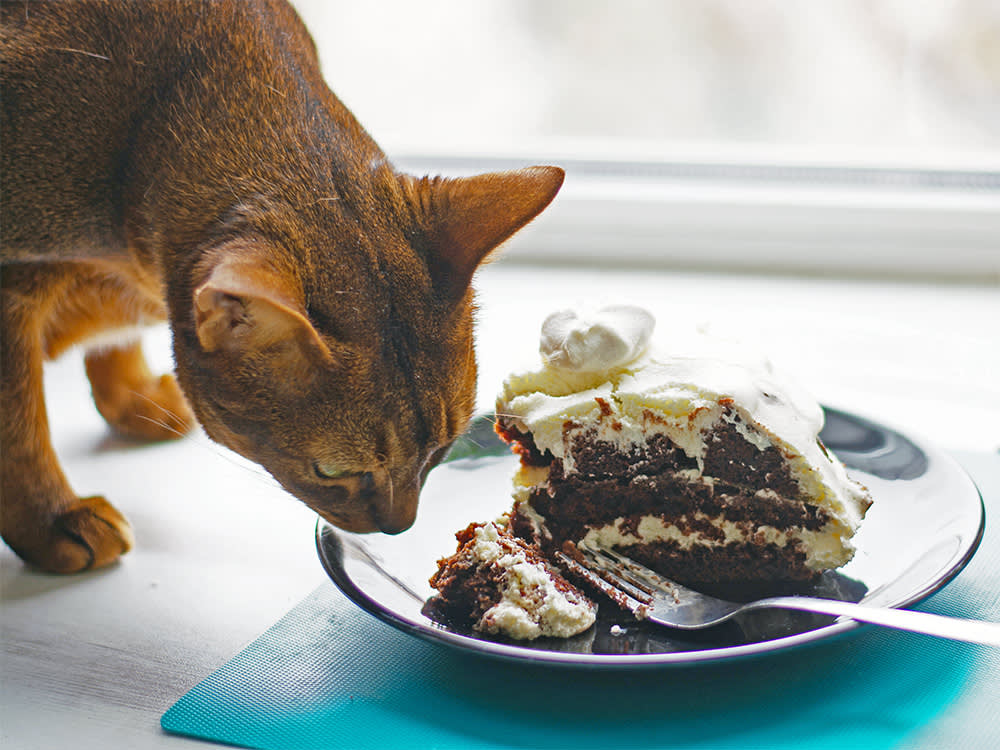
Most people file chocolate under “dog problem.” It is one of the most famous household toxins for dogs, and cats barely come up in the conversation. That framing is backwards in a way worth understanding: cats are actually more sensitive to chocolate than dogs are. The reason you rarely hear about a poisoned cat is not that chocolate is safer for them. It is that cats, unlike dogs, do not have the sweet tooth that drives a Labrador to inhale a birthday cake. This piece is about that gap, why it is thinner than it sounds, and what to do in the moments when a curious cat closes it.
The compounds that make chocolate toxic
Chocolate is a problem for cats for the same chemical reason it is a problem for dogs: it contains methylxanthines, a family of stimulant compounds their bodies cannot clear the way ours can. The two that matter are theobromine and caffeine. Theobromine is the heavier hitter and is present at roughly three to ten times the concentration of caffeine in chocolate, but both push in the same direction, and together they are worse than either alone.
The darker and more concentrated the chocolate, the more methylxanthine it packs. That means a small square of unsweetened baking chocolate or dark chocolate is far more dangerous than the same weight of a milk chocolate bar, and white chocolate, which has almost no cocoa solids, sits at the low end. When you are judging a risk, the type matters as much as the amount.
What those compounds do to a cat
Once absorbed, theobromine and caffeine overstimulate the heart and nervous system. Depending on how much a cat ate and how big the cat is, that can show up as:
- Vomiting
- Diarrhea
- Restlessness or hyperactivity
- An elevated heart rate
- High blood pressure
- Heart rhythm abnormalities
- Muscle tremors
- Seizures
- Coma, in the most severe cases
There is a nasty piece of timing built into this. Caffeine takes hold quickly, often within an hour or two, while theobromine is slower to peak and slower to leave, with effects that can build over the following few hours and, without treatment, drag on for a day or more. So a cat who seems merely jittery early on can get sicker as the theobromine catches up. That delay is exactly why “wait and see” is the wrong instinct.
The mistake I see is people relaxing because the cat seems fine twenty minutes later. Chocolate does not work on that timeline. The stimulant that hits first is not the one that does the real damage, and by the time the heart symptoms show up, you have lost hours you could have used. If a cat ate chocolate, I want the phone call before there are symptoms, not after.
The dose that actually matters
This is where the numbers help, because “some chocolate” is not a useful measure. Toxicity tracks the milligrams of theobromine and caffeine per kilogram of a cat’s body weight. Working from ASPCA poison control data, mild signs tend to begin around 20 mg per kilogram, more serious signs appear well above that, and seizures become a real risk around 60 mg per kilogram. A cat weighs a fraction of a dog, so it takes far less chocolate to reach those thresholds in the first place. That is the whole reason cats are more sensitive: same chemistry, much smaller animal.
You do not need to run this math in a crisis. It is the job of your vet or a poison control center, who will weigh the type of chocolate, the amount, and your cat’s size against these cutoffs and tell you what to do. Knowing the thresholds exist is enough to take a lick of dark chocolate seriously.
The one quirk that keeps cats out of the ER
Here is the reason chocolate poisoning in cats is genuinely rarer than in dogs, and it is not reassuring so much as lucky. Cats are “sweet-blind.” They lack functioning sweet taste receptors, so the sugary pull that makes chocolate irresistible to dogs and people simply is not there for them. A cat is far less likely to seek out a chocolate bunny or a plate of brownies and eat it with abandon.
But “less likely” is not “won’t.” Cats are relentlessly curious and will taste almost anything that looks interesting, bat a wrapped truffle off a counter, or lick frosting out of sheer investigation. That curiosity is enough that chocolate ranks among the more common food-related reasons cats end up in calls to the ASPCA’s poison line. The sweet blindness lowers the odds. It does not close the door.
What treatment looks like
If your vet or a toxicologist decides the amount your cat ate crosses into dangerous territory, they will want to see the cat. Care usually moves through a few stages. First, decontamination: the vet may try to induce vomiting, which is notoriously hard to do in cats on purpose, often followed by anti-nausea medication and then activated charcoal, a thick liquid that binds the toxins in the gut so less gets absorbed. If the dose was high enough that clearing the stomach is not sufficient, the cat is hospitalized for intravenous fluids and monitoring. The fluids help the kidneys flush out the caffeine and theobromine faster, and the monitoring lets the team catch and treat the dangerous heart-rhythm and blood-pressure changes if they appear. The encouraging part is that with prompt treatment, most cats recover fully and go back to normal life.
Keeping snacks safe without cutting them out
Chocolate is a hard no, but the broader lesson is about how any human food fits into a cat’s day. Treats, table scraps, and shared bites should stay under about ten percent of a cat’s daily calories, with the rest coming from a complete and balanced cat food built for their carnivore biology. Plenty of foods are fine in that small window: a lick of peanut butter, a little plain ham without onion or garlic, a mouthful of watermelon. Others are genuinely dangerous and belong in the same locked-away category as chocolate, including garlic and onion, which damage feline red blood cells, and cow’s milk, which most cats cannot digest. The habit that keeps a cat safe is simple: check before you share, not after.
What newer guidance adds
The safety math on chocolate has not changed, but the tools around it have gotten sharper. Veterinary poison resources now lean on the same per-kilogram dose thresholds described above, roughly 20 mg/kg for mild signs and about 60 mg/kg for seizure risk, which lets a clinician give you a real answer instead of a guess when you call with a weight and a wrapper. Online chocolate-toxicity calculators built on that data exist too, but they are a rough triage aid, not a substitute for the phone call.
The number worth saving is the ASPCA Animal Poison Control Center: 888-426-4435, staffed around the clock. Programming it into your phone before you ever need it turns a panicked search into a two-tap call, and with a fast-then-slow toxin like chocolate, the minutes you save there are the ones that matter most.
The bottom line
Cats are more sensitive to chocolate than dogs, not less. What protects them is a quirk of taste, not a quirk of biology, and curiosity can override it any day. Keep chocolate, especially dark and baking chocolate, fully out of reach, treat any amount your cat eats as a reason to call rather than watch, and keep poison control’s number where you can find it in a hurry.
References
- Gwaltney-Brant, Sharon. “Chocolate Intoxication.” ASPCA Animal Poison Control Center Toxicology Brief. https://www.aspcapro.org/
- Merck Veterinary Manual. “Chocolate Toxicosis in Animals.” https://www.merckvetmanual.com/toxicology/food-hazards/chocolate-toxicosis-in-animals
- American Animal Hospital Association. “Chocolate Toxicity in Pets.” https://www.aaha.org/resources/halloween-safety-chocolate-toxicity-in-pets/
- ASPCA Animal Poison Control Center. Emergency line: 888-426-4435. https://www.aspca.org/pet-care/animal-poison-control
Common questions
How much chocolate does it take to hurt a cat?
Less than you would guess, and it depends on the cat's weight and the type of chocolate. Mild signs can start around 20 mg of theobromine and caffeine per kilogram of body weight, with serious signs at higher doses. Dark and baking chocolate carry far more of these compounds than milk chocolate, so a small amount of baking chocolate is more dangerous than the same weight of a milk chocolate bar.
What are the signs of chocolate poisoning in cats?
Vomiting, diarrhea, restlessness or hyperactivity, a racing or irregular heartbeat, high blood pressure, muscle tremors, and in severe cases seizures. Signs can build over hours because the caffeine acts fast and the theobromine lingers.
What should I do if my cat eats chocolate?
Do not wait to see what happens. Call your veterinarian or the ASPCA Animal Poison Control Center at 888-426-4435 right away, and have the type of chocolate, the rough amount, and your cat's weight ready. They will tell you whether your cat needs to be seen.
Not a substitute for your vet. Our guidance is educational. For urgent symptoms, contact a vet or emergency clinic right away. Editorial standards
Dr. Park is a board-certified emergency and critical care specialist. She reviews our health and safety content for clinical accuracy and contributes guides on recognising urgent conditions. Her focus is helping owners act quickly and correctly when it matters most.
Meet our experts ↗Keep reading
 Health & WellnessGarlic and Cats: The Toxin That Hides in Plain Sight on Your PlateDr. Amara Solis · 6 min
 Health & WellnessMost 'Toxic' Plants Just Make Your Cat Drool. Two Genera Actually Kill.Dr. Nina Kohl · 9 min
 Health & WellnessCats Are America's Most Rabid Pet. The Indoor Ones Aren't Exempt.Dr. Ravi Mehta · 8 min
 Health & WellnessYour Cat Hides Pain by Design. These Signs Mean Go NowDr. Ravi Mehta · 7 min
 Health & WellnessThe Toy Brick Your Cat Swallowed Won't Show Up on an X-RayDr. Mara Chen · 7 min
 FoodThe Foods That Poison Cats Are Hiding in Plain SightDr. Lena Park · 8 min