


Your Cat Hides Pain by Design. These Signs Mean Go Now
Cats evolved to mask illness, so the tell is often subtle and the clock is often short. Here is how to sort a true feline emergency from a call-your-vet-first situation.

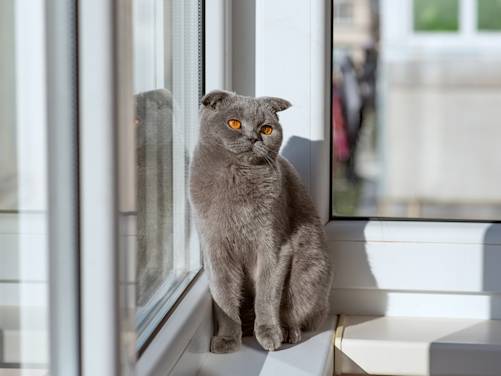
Cats are descended from solitary hunters, and a solitary hunter that looks sick is a target. That instinct never left the house cat curled up on your couch. Your cat will keep grooming, keep sitting upright, keep looking more or less normal well past the point where a dog would be flat on the floor asking for help. It is a beautiful survival trick and a terrible bug for the people who love them, because by the time something is obvious, it is often already urgent.
So the useful skill is not memorizing a textbook of feline diseases. It is learning to sort what you are seeing into one of two buckets fast: this can wait until morning with a phone call, or this is a drop-everything, get-in-the-car situation. Below is how to tell them apart, starting with the one that kills fastest.
The emergency that gives you the least time
If you have a male cat and he is making frequent trips to the litter box, squatting and producing nothing, crying while he tries, or licking at himself and pacing, treat it as an emergency the moment you notice it. A cat who genuinely cannot pass urine has a blocked urethra, and that blockage can turn fatal in a matter of a day or two. Waste and potassium build up with nowhere to go, the bladder keeps filling, and the strain reaches the kidneys and the heart.
A blocked cat is one of the few things in feline medicine where hours genuinely matter. People wait overnight because their cat is still walking around, and the walking around is exactly what fools them. If a cat is straining and nothing is coming out, that is a same-hour trip, not a same-week one.
Straining can also come from a urinary tract infection, bladder inflammation, or stones, and even those deserve a prompt visit for the pain alone. But you do not need to diagnose which one it is. The signal to act is the straining itself.
If you can see your cat breathing, that is the alarm
A healthy cat breathes so quietly and smoothly that you have to look for it. Cats do not pant the way dogs do. So any breathing you can actually notice is worth taking seriously: a belly that heaves with each breath, a neck stretched forward to pull in air, open-mouth breathing, or fast shallow effort while resting. These can come from fluid around the lungs, asthma, infection, or heart disease, and a cat in respiratory trouble can slide from uncomfortable to critical quickly. Open-mouth breathing in a cat who has not just been running around is a go-now sign, full stop.
Vomiting that will not quit
One dramatic hairball on your favorite book is a cat being a cat. Repeated vomiting is different. When your cat throws up again and again, especially paired with diarrhea, they lose fluid fast and dehydration sets in, and the underlying cause can be anything from a swallowed string to an intestinal blockage to organ trouble. A cat who cannot keep water down, is vomiting many times in a few hours, or is also lethargic needs to be seen. Bloodwork and imaging are how the vet sorts “settle the stomach” from “this needs surgery,” and that is not a call to make at home.
After any trauma, assume there is more than you can see
If your cat is hit by a car, falls from a height, gets into a real fight, or has any hard accident, they need a professional exam even if they get up and walk away. Cats are experts at hiding pain, and the injuries that matter most, like internal bleeding, a bruised lung, or a diaphragm tear, often show nothing on the outside at first. Wounds from bites also drive bacteria deep under the skin where they brew into abscesses. It is far better to have a vet confirm your cat is fine than to discover a hidden injury a day later.
Sudden clumsiness usually means sudden blindness
There is a difference between your cat weaving around your ankles for attention and a cat who was moving confidently yesterday and is now bumping into furniture, missing the litter box, or seeming lost in a room they know by heart. Abrupt disorientation like this often means vision loss, and in cats the common driver is high blood pressure that detaches the retina. Severe hypertension does not stop at the eyes either; it strains the kidneys, heart, and brain. Caught early, some vision can be saved, so this is a same-day concern rather than a wait-and-watch one.
”Off” in a way that is new
You know your cat’s particular brand of weird. Trust that. A cat who suddenly refuses food, hides in a way they never do, becomes weak, or vocalizes in a new and insistent way is telling you something. Loss of appetite in particular is never nothing in a cat, because cats who stop eating for even a couple of days can develop a dangerous liver problem on top of whatever started it. When the change is sudden and out of character, a phone call to your vet or the after-hours line costs you nothing and can catch a lot.
The cat-specific poisons where “wait and see” does not apply
A few household items are true feline emergencies from the first bite, and they are worth committing to memory because owners often do not know them. Lilies are the big one: with true lilies, every part of the plant, including the pollen and the water in the vase, can cause fatal kidney failure in cats, and treatment has to start early to work. Antifreeze, human medications like acetaminophen, and concentrated flea products meant for dogs are others where the safe move is to call animal poison control or your vet immediately rather than watching for symptoms. If you suspect your cat ate something toxic, the ASPCA Animal Poison Control Center (888-426-4435) and the Pet Poison Helpline (855-764-7661) are staffed around the clock.
Getting there without making it worse
The hardest instruction in an emergency is also the first: try to stay calm. Your cat reads your energy, and a panicked animal is harder and more dangerous to move. Call ahead so the team is ready, contain your cat in a top-opening carrier or a towel wrap that supports the body, keep movement to a minimum if injury is possible, and bring what you know about when things started and what your cat may have gotten into.
What newer research adds
You do not have to guess about pain as much as owners once did. Researchers at the Université de Montréal developed the Feline Grimace Scale, a simple, validated way to read discomfort from a cat’s face, looking at the ears, the tightness around the eyes, the muzzle, the whiskers, and the head position. It is free to use, including as a phone app, and while it is not a substitute for a vet, it gives you a more objective read than “he seems a little off” when you are trying to decide whether tonight is the night.
The other quiet shift is access. Many practices and standalone services now offer video triage, so before you load the carrier at 2 a.m. you can often get a real clinician to tell you whether this is a go-now or a first-thing-tomorrow. It does not replace hands-on care for the emergencies above, but for the gray-zone moments it can save you a stressful drive or, just as importantly, tell you not to wait.
None of this replaces the simplest rule of all: you know your cat better than anyone, and if your gut says something is wrong, a phone call is always the right first move.
References
- Cornell Feline Health Center. “Feline Lower Urinary Tract Disease.” Cornell University College of Veterinary Medicine. vet.cornell.edu
- ASPCA. “Toxic and Non-Toxic Plants: Lilies.” ASPCA Animal Poison Control Center. aspca.org
- Evangelista, M.C., et al. “Facial expressions of pain in cats: the development and validation of a Feline Grimace Scale.” Scientific Reports, 2019. nature.com
- American Association of Feline Practitioners. “Recognizing and Managing Pain in Cats.” catvets.com
Not a substitute for your vet. Our guidance is educational. For urgent symptoms, contact a vet or emergency clinic right away. Editorial standards
Dr. Mehta is a board-certified veterinary nutritionist who evaluates pet food formulations, ingredient quality, and the science behind dietary trends. He writes and reviews all nutrition content at The Pet Times, including our food rankings and feeding guides.
Meet our experts ↗Keep reading
 Health & WellnessYour Cat Doesn't Have to Eat the Lily. The Vase Water Will Do.Dr. Amara Solis · 9 min
 FoodThe Foods That Poison Cats Are Hiding in Plain SightDr. Lena Park · 8 min
 Health & WellnessA Bee Sting Rarely Hurts a Cat. The Reaction to One Can Be DeadlyDr. Mara Chen · 6 min
 Health & WellnessCats Are America's Most Rabid Pet. The Indoor Ones Aren't Exempt.Dr. Ravi Mehta · 8 min
 Health & WellnessGarlic and Cats: The Toxin That Hides in Plain Sight on Your PlateDr. Amara Solis · 6 min
 Health & WellnessChocolate Hits Cats Harder Than Dogs. One Quirk Is Why You Rarely Hear About ItDr. Lena Park · 6 min