


Your Cat Isn't Wrecking the Holidays. The Holidays Are Baiting Your Cat.
A vet's guide to holiday cat safety that starts with the cat, not the decor. Every hazard of the season is something cats are wired to chase, so cat-proofing works best when you think like the cat.

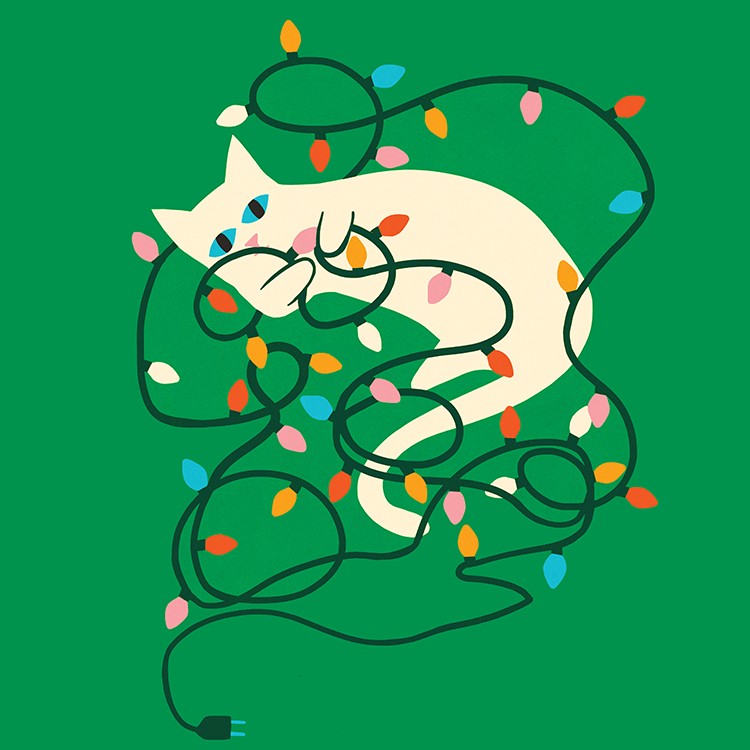
Here is the thing to understand before you hang a single ornament: your cat is not plotting against your holiday. A cat simply goes where it wants, when it wants, and no amount of scolding rewrites that. The trouble is that the season rolls in and hands a curious animal a wish list of exactly the things it is built to investigate. A bowl of standing water. Long dangling strings. Small dropped berries. Warm flickering flames. New smells on every surface. To you it’s a festive living room. To your cat it’s a playground with the safety rails removed.
So the smart way to cat-proof for the holidays is not to memorize a list of banned objects. It’s to look at each new thing through your cat’s eyes and ask what instinct it triggers, then blunt that instinct before it gets your cat into the emergency clinic. Let’s walk the house that way.
The tree is a fountain, a jungle gym, and a chew toy all at once
A cat doesn’t see a Christmas tree. It sees several irresistible things stacked together.
The water bowl at the base. The stand water under a live tree can carry fertilizer or bacteria that upset a cat’s stomach.
Cats are drawn to any fresh source of standing water, and tree-stand water is often the last thing an owner thinks to block off. A snug tree skirt over the stand solves it, and it takes ten seconds.
If your cat keeps finding a way in, you can lean on smells cats tend to dislike. Wrapping the base in aluminum foil works, and so does laying orange peels around it, swapped out every few days so they keep their punch. If you’re still choosing a live tree, a spruce or fir is generally a safer bet than a pine, whose sap can also cause trouble.
The climbing frame. Cats chew and cats climb, and a tree invites both. The needles on a live tree can prick or inflame a cat’s mouth, and if swallowed they can even pierce the stomach; artificial needles are no safer. A cat who reaches the lights can get an electric shock from chewing the wire, so run the light strands toward the center of the tree where they’re harder to grab, and sleeve the main cable in a cord protector.
The tipping hazard. A cat mid-pounce can bring the whole tree down. Anchor the base so there’s no wobble. Shorter trees are steadier than tall ones. Put the tree away from any furniture your cat could use as a launch pad, and if it’s a big cat or a tall tree, tie the top third to the wall with fishing line. If you’d rather sidestep the whole gamble, a wooden decorative tree removes most of it.
Then there’s what hangs on the tree. Keep fragile ornaments up high where they’re less likely to get batted down, and use non-metal ornament hooks, like recycled-paper ties, so a swallowed one does less harm. Stringy decorations are a category of their own, and the worst offenders are tinsel and popcorn-strung garland.
“The one thing I’d leave off the tree completely is anything long and stringy,” Dr. Solis says. “Let a cat swallow a strand of it and the gut can bunch up around it into a blockage that turns life-threatening fast. That’s an operating table, not a wait-and-see.”
The greenery is a salad bar your cat can’t read
A whole category of holiday plants is dangerous, and your cat has no way to know which. Poinsettias get an outsized scary reputation; in reality they’re mostly a mouth irritant when chewed and only become a real problem in large amounts. The plants to genuinely fear are lilies, which are dangerous to cats any time of year, along with amaryllis and azaleas. Holly and mistletoe, both holiday classics, are both toxic to cats; holly’s spiky leaves at least discourage chewing, but its berries can drop and tempt a cat later.
Build one easy habit: spend thirty seconds looking up any flower that comes into your home before you set it down. The ASPCA keeps a toxic-plant list online, and its Animal Poison Control Center app is a handy way to check hazards on the spot. Keep anything you’re unsure about somewhere your cat truly can’t reach, which for a determined cat may mean a terrarium, a high shelf, or a hanging planter. For a cat who likes digging in the potting mix, a layer of foil or a plastic pot grid over the top helps, and offering a plant they are allowed to nibble, like catnip or cat grass, gives them a legal outlet.
If you think your cat has eaten something dangerous, the ASPCA Poison Control hotline is 888-426-4435, though a fee may apply.
Open flames plus a cat who rubs on everything
Christmas, Kwanzaa, and Hanukkah all tend to bring candles into the house, and Hanukkah in particular asks that a menorah burn down on its own, which is a long window for an unsupervised cat to get involved. Given a cat’s habit of jumping onto every surface and rubbing against whatever’s up there, an open flame is an accident waiting for a tail.
The cleanest fix is to switch to electric candles where you can. Modern ones flicker convincingly, and some are even wax-coated so they pass for the real thing. If you insist on a live flame, put it somewhere as cat-inaccessible as your home allows, and fall back on the classic surface deterrents, a border of foil and double-sided tape, to keep your cat off. Set candles on a large flame-proof base like a baking tray, so a knocked-over candle stays a small problem instead of a house fire. Scented candles and potpourri can be used with care and a watchful eye, but essential oil diffusers should never run around cats; if your cat coughs near a candle, put it out.
The dinner that isn’t for them
On a big occasion it’s tempting to slip your cat a bite of whatever smells so good. Resist it, meme culture notwithstanding.
“Our holiday food isn’t balanced for cats and easily upsets their stomachs, and some of the classics are worse than that,” says Dr. Solis. “Onion and garlic are toxic to cats, and they hide in gravies, stuffing, and sauces, so the safest move is simply no table food.”
The quietest hazard is the disruption itself
Cats run on routine, and the holidays torch it. New people, new noise, furniture rearranged, mealtimes off schedule, all of it can leave a cat stressed and on edge. As much as you can, keep their normal rhythm intact: same feeding times, same litter setup, same quiet corners. A synthetic pheromone product like Feliway can take the edge off, and every cat should have a dedicated retreat, a spare room or just a high perch away from the crowd, where they can opt out of the party.
No home is ever perfectly cat-proof, and honestly, no cat wants it to be. What you can do is see the season the way your cat does, take the sharpest hazards off the table, and then decide how much of the rest you can live with. Read the room from cat height, and most of the holiday takes care of itself.
References
- ASPCA. “Toxic and Non-Toxic Plants: Cats.” aspca.org.
- ASPCA Animal Poison Control Center. aspca.org/pet-care/animal-poison-control.
- Pet Poison Helpline. “Cats and Christmas Trees.” petpoisonhelpline.com.
- ASPCA. “People Foods to Avoid Feeding Your Pets” (onion and garlic toxicity). aspca.org.
Not a substitute for your vet. Our guidance is educational. For urgent symptoms, contact a vet or emergency clinic right away. Editorial standards
Dr. Solis is a board-certified veterinary dermatologist with over twelve years of clinical experience. She advises on skin conditions, allergies, and grooming practices that affect coat and skin health. All dermatology and allergy content at The Pet Times is reviewed by her team before publication.
Meet our experts ↗Keep reading
 LivingYour Party's Biggest Risk Isn't the Cat Getting Scared. It's the Front Door.Dr. Amara Solis · 7 min
 Health & WellnessPothos and Cats: The Burn Is Instant, Which Is Why It Rarely Turns SeriousDr. Nina Kohl · 7 min
 Health & WellnessPetunias Are Safe for Cats. The Pot They're Sitting In Might Not BeDr. Amara Solis · 8 min
 Health & WellnessCat Scratch Fever Isn't a Rock Song. It's a Real Infection (You Still Don't Need to Panic).Dr. Nina Kohl · 5 min
 Health & WellnessCats Rarely Get Lyme. They Get Something Far Worse.Dr. Amara Solis · 8 min
 Health & WellnessYour Cat Begs to Go Outside. The Honest Case for Keeping Them In.Dr. Priya Nair · 8 min