


Ringworm Isn't a Worm. It's a Fungus That Can Jump to You.
That crusty little patch on your new kitten's ear could be the start of a household infection. Here's how to actually recognize ringworm in cats, get it diagnosed, and clear it without playing whack-a-mole for months.

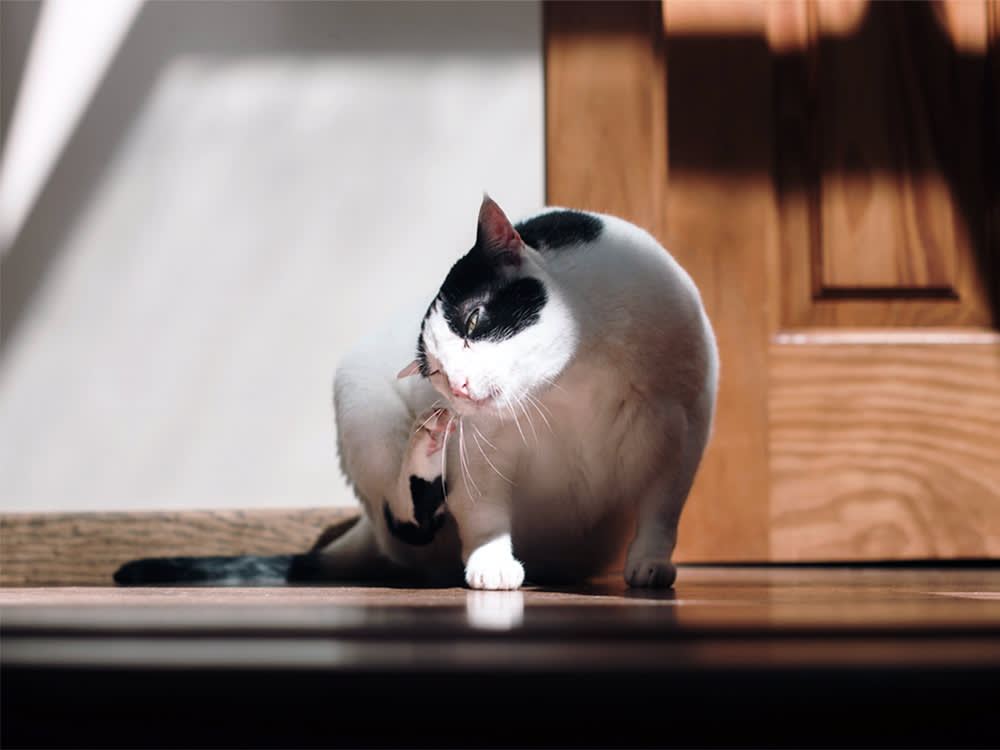
The scenario is almost a rite of passage for cat lovers: you snuggle an adorable new kitten, and a week or so later a couple of scaly, itchy patches show up on your own skin. That is ringworm, and the first thing to know about it is buried in the name, which is a lie. There is no worm. Ringworm is a fungal infection, and understanding that changes everything about how you fight it.
The organism behind most feline cases is a fungus called Microsporum canis, and the clinical name for the infection is dermatophytosis. The “ring” part comes from the classic circular, ring-shaped lesion the fungus tends to leave on skin. Get the mental model right, fungus and spores rather than a burrowing parasite, and the whole treatment plan below suddenly makes sense.
What it looks like on a cat
Ringworm shows up mostly on a cat’s head, face, and front legs, and it ranges from mildly annoying to genuinely nasty. The severity varies a lot from cat to cat, and, frustratingly, some cats carry and spread the fungus while showing no symptoms at all.
The signs to watch for are patchy, roughly circular hair loss, broken-off hairs, redness, crusts and scaly dandruff, scabs, open sores, and itchiness. If you’re seeing a combination of these, especially on a kitten or a new arrival, ringworm belongs on the suspect list.
How cats catch it, and why it lingers
An infected animal sheds fungal spores on its hair and skin, and those spores are the whole transmission story. They spread through direct contact with an infected animal, contaminated bedding, contaminated surfaces, shared grooming tools like brushes and clippers, and even spore-laden soil.
Here’s the detail that makes ringworm such a headache: a shed spore can stay viable in your home for more than a year. That’s why an infection can seem to come out of nowhere, and why simply treating the cat while ignoring the house is a recipe for reinfection.
Not every cat exposed to the fungus gets sick. The higher-risk groups are kittens, cats with weakened immune systems from conditions like FIV or feline leukemia, outdoor roamers, cats in warm and humid environments, and cats with already-damaged skin from scratching at fleas or mites, since broken skin is an open door.
Getting a real diagnosis
Telling your vet “my kitten got crusty and now I’m crusty too” is a useful clue, but it isn’t a diagnosis. Several tests can confirm ringworm, and each has tradeoffs.
A fungal culture, where hair and skin samples are grown on a special plate over two to three weeks, is considered the most accurate method and can identify the exact species, which helps guide treatment. A Wood’s lamp is a quick in-clinic UV screen, since some ringworm fungi glow green under ultraviolet light, but it misses cases that don’t fluoresce, so it’s a screen and not proof. Microscopic examination of plucked hairs can reveal fungal structures but is easy to miss. PCR testing detects fungal DNA and is extremely sensitive, best used to confirm infection before treatment, though it can also flag dead fungus in a cat that’s already been treated. In severe or unusual cases, a skin biopsy may be warranted.
The mistake I see most is people diagnosing ringworm by eyeballing it and then treating the wrong thing for weeks. So many skin problems look alike from across the room. A quick test up front saves you a month of frustration and keeps the fungus from spreading through the whole household while you guess.
Treatment that actually works
Clearing ringworm means hitting it on three fronts at once, and the three-front approach is not optional. A healthy cat’s immune system can sometimes beat the infection alone, but that can take months, during which the fungus keeps spreading to everyone else in the home. Prompt, complete treatment is the humane and practical choice.
Topical antifungals come as shampoos, dips, creams, and sprays, and their job is to wipe out the infectious spores clinging to the coat. Plan on a medicated bath or dip roughly twice weekly. Oral antifungals, most often itraconazole or terbinafine, work from the inside to keep the fungus from reproducing; your vet will set the exact dosing plan.
The third front, environmental cleaning, is the one people neglect and the one that decides whether you win. Think surfaces wiped down with disinfectant, bedding run through a hot wash (twice, with bleach where the fabric allows), thorough vacuuming, carpet cleaning, attention to HVAC filters, and every brush and clipper sanitized. The bar is high: aim to clear your space of stray cat hair the way you would before hosting a guest with a serious cat allergy, and repeat it on a schedule rather than once.
A few home-care cautions: clipping the coat usually isn’t necessary, though some long-haired cats benefit so topical treatments can reach the skin. And skip essential oils, which can inflame irritated skin and carry a real toxicity risk for cats.
Protecting the rest of the household
Because ringworm is contagious to people and other pets, containment is part of the plan. Set your infected cat up in a space that’s easy to clean, like a bathroom, and away from other animals, but don’t turn it into solitary confinement. Even an aloof cat needs company, so keep visiting and playing; you’re balancing isolation with the socialization a new kitten especially needs.
Designate a few “cat clothes” to wear only during handling, then wash and disinfect them regularly, and always wash your hands after contact. Any other pets who’ve been near the infected cat should be checked and watched closely for new lesions.
Don’t stop early
The single most common way ringworm treatment fails is quitting when the cat looks better. A once-crusty kitten who is now soft and fluffy can still be shedding infectious spores. Keep treating until your vet confirms a cure, which usually means a follow-up fungal culture coming back clean. Follow the instructions, keep the check-ups, and finish the job. Ringworm is beatable, and with the full three-front plan, most cats are cured, but only if you outlast the spores.
What newer research adds
The good news from current veterinary dermatology is that treatment protocols have gotten faster and better defined. Recent guideline reviews continue to favor pairing an oral antifungal like itraconazole (often on a practical pulse-therapy schedule) with twice-weekly lime-sulfur dips, an approach that meaningfully shortens the road to a mycological cure compared with older, less aggressive regimens. In monitored settings, that combination has cats testing clear in a matter of weeks rather than dragging on for months.
The other shift is an even heavier emphasis on decontaminating the environment, since spores in the home, not stubbornness in the cat, are now understood to be the main reason infections seem to relapse. If your treatment stalls, the current thinking says look at the house before you second-guess the medication.
References
Common questions
Are there home remedies for ringworm in cats?
There's no reliable home remedy that kills ringworm on its own. The best supportive steps are keeping your cat's environment scrupulously clean and keeping your cat otherwise healthy and low-stress. Skip essential oils entirely, because they can worsen skin irritation and some are toxic to cats. Home care supports veterinary treatment; it doesn't replace it.
Can humans catch ringworm from a cat?
Yes. Ringworm is zoonotic, meaning it passes from cats to people through direct contact or contaminated objects. Children, older adults, and anyone with a weakened immune system are at highest risk, so wash your hands after handling an infected cat and loop in your own doctor if you develop a scaly, ring-shaped patch.
Not a substitute for your vet. Our guidance is educational. For urgent symptoms, contact a vet or emergency clinic right away. Editorial standards
Dr. Nair is a veterinarian focused on diet and feeding. She covers everyday nutrition, treats, and the many "can they eat this?" questions owners ask, grounding each answer in what is actually safe and sensible for dogs and cats.
Meet our experts ↗Keep reading
 Health & WellnessThat Scaly Patch on Your Cat Could Be Yours NextDr. Nina Kohl · 7 min
 Health & WellnessThe Twitchy Back Is Usually Nothing. The One Time It Isn't Has a Name.Dr. Lena Park · 8 min
 Health & WellnessFeline Mange Is Five Different Problems. Only Some Spread to YouDr. Lena Park · 7 min
 Health & WellnessA Scab Is Not a Diagnosis. It's a Map.Dr. Mara Chen · 7 min
 Health & WellnessYour Cat Started Itching After the Dog Arrived. The Dog Is the Least Likely CulpritDr. Lena Park · 8 min
 Health & WellnessPuffy, Bruised 'Toe Beans' Aren't an Injury — They're a WarningDr. Mara Chen · 5 min