


Those "Puppy Dog Eyes" Weren't Invented to Manipulate You. Science Just Proved It.
We loved the story that dogs evolved that heart-melting face just to work us over. A study of wild African dogs quietly dismantles it, and the truth is arguably more flattering to your pup.
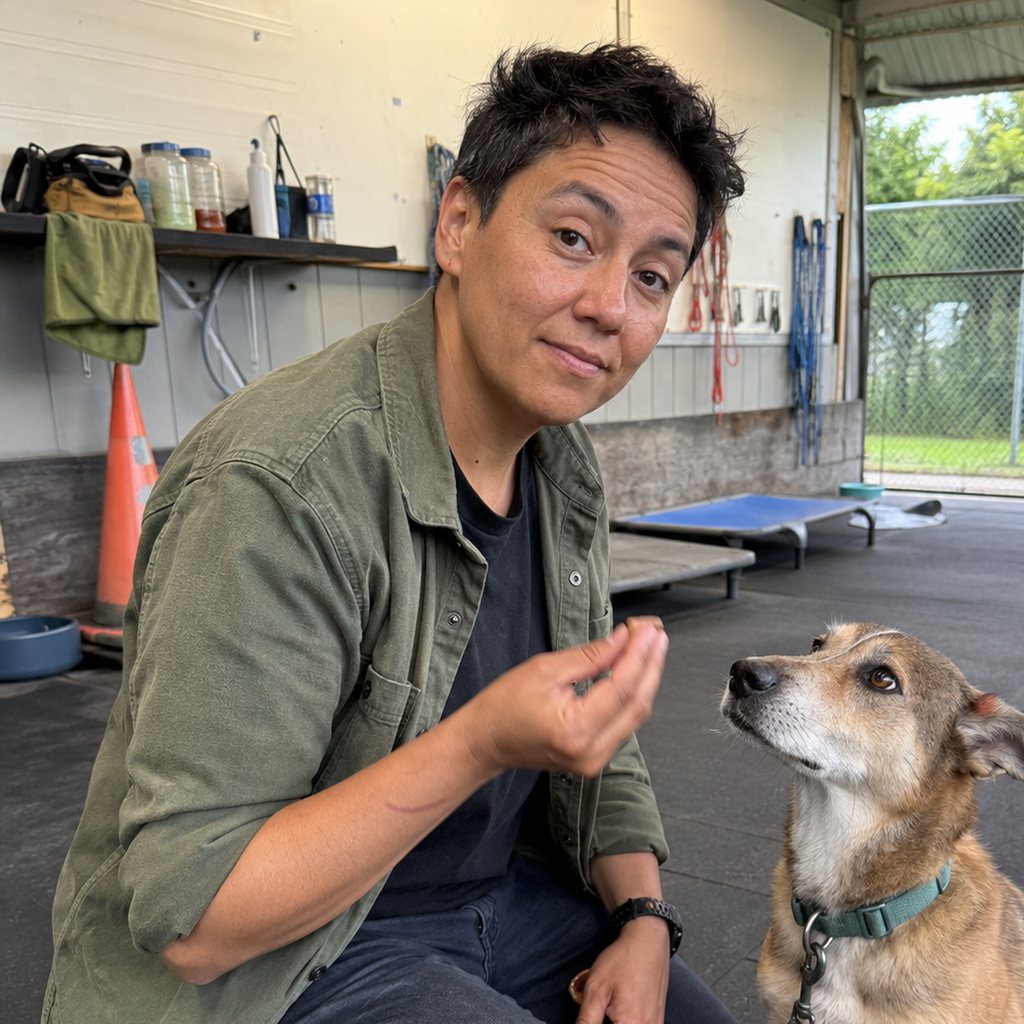
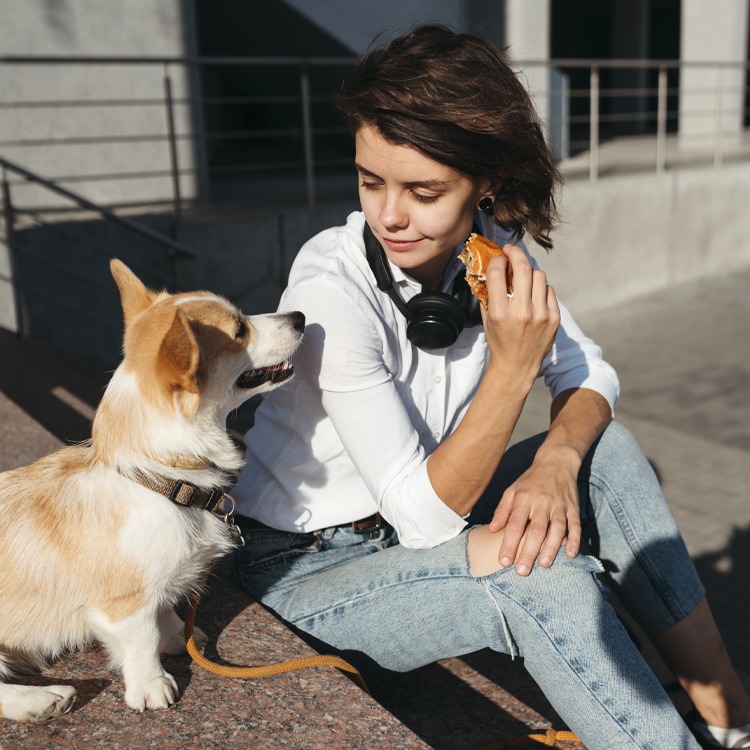
You know the look. Your dog fixes you with it after doing something you should absolutely be annoyed about, and somehow the annoyance just evaporates. The wide, soft, slightly wounded eyes. The brow that lifts like they’re carrying the weight of a small tragedy. It is so effective it feels engineered, and for a few years, science more or less agreed that it was.
The reigning story went like this: dogs evolved that expression specifically to melt human hearts, a cuteness weapon forged over thousands of years of living with us. It’s a great story. It also appears to be wrong, and the correction comes from an unexpected place, a wild dog that never asked a human for anything.
The theory we all fell for
The manipulation narrative traces back to a 2019 study that made a genuinely striking discovery. Dogs, it found, have a small muscle above the inner eye, one that is essentially absent in wolves. That muscle lets a dog raise its inner brow, producing exactly the large-eyed, infant-like expression humans are hopelessly susceptible to. In scientific terms, it increases “paedomorphism”, the retention of baby-like features. In plain terms, one of the study’s authors, Anne Burrows, memorably described it as dogs having evolved a way to hijack our emotions.
The follow-on logic was tidy and irresistible. Wolves don’t have the muscle; domestic dogs do; therefore dogs must have developed it because of us, over generations of selection for the pups that best tugged at human heartstrings. The same research pointed to a “mutual gaze” between people and dogs, a locked-eyes connection we don’t share with most other pets, as further proof of a bond dogs evolved expressly to forge with humans.
The wild dog that broke the story
Here’s the problem with “dogs evolved it just for us”: to test it, you have to check whether canids that didn’t grow up alongside humans have the muscle too. If they don’t, the human-specific story holds. If they do, it falls apart.
So a team led by Heather Smith at Midwestern University went looking. They examined a deceased adult male African wild dog, Lycaon pictus, a species that lives in packs on the savanna and has no domestication history with people. When they dissected its facial muscles, they found the puppy-dog-eye musculature was just as developed as it is in the dogs sleeping on our couches.
That single finding upends the tidy narrative. As Smith summarized it, the finding undercuts the assumption that domesticated dogs are the sole canids with the trait, or that it arose specifically to serve us. Instead, the researchers concluded, these expressive eye muscles likely help wild dogs communicate with each other within their pack. The face isn’t a tool dogs built to work humans. It’s part of how canids talk.
“It’s tempting to read every cute thing a dog does as a trick aimed at us, but this is a good reminder that a lot of dog behavior is just dog behavior,” says Dr. Nina Kohl. “These expressions almost certainly evolved for communication among canids. The remarkable thing isn’t that dogs manipulate us, it’s that we’re so wired to read and respond to a signal that was never originally addressed to us at all.”
Why the correction is actually the better story
If you’re a little disappointed to learn your dog didn’t personally evolve to adore you, reconsider. The revised version is arguably richer.
It means the expressive, communicative face was already there in the canid toolkit, and what domestication did was bring us into a conversation that dogs were already having. The “mutual gaze” is real, and it does contribute to the extraordinary bond between people and dogs. Studies have shown that this kind of eye contact even nudges the “love hormone” oxytocin in both species, the same chemistry that flows between a parent and child. The look works on us not because dogs cracked some code, but because we happened to be exquisitely tuned to receive a signal they were already sending.
So the next time your dog levels that devastating gaze at you and your resolve crumbles, you can enjoy it without feeling played. They aren’t running a con. They’re communicating, in the language their whole family tree speaks, and you, wonderfully, turn out to be fluent.
(One last thought experiment, courtesy of the researchers: if we ran into a wild African dog giving us the same look, we’d probably feel the exact same pull to give it whatever it wanted. Though something tells me a store-bought treat wouldn’t quite satisfy that one.)
What’s new since this was written
This piece is the update to the older, incomplete story, so it’s worth pinning down the details. The wild-dog research was published on April 10, 2024, in the journal The Anatomical Record, and the specimen examined came from the Phoenix Zoo. The authors framed their conclusion carefully: ocular facial expressions appear to contribute to within-pack communication in wild dogs and are not unique to domestic dogs, directly challenging the 2019 assumption that the trait arose through domestication.
It’s a small study, one animal, and science will keep refining the picture. But it’s a clean example of how a single well-placed dissection can overturn a story everyone had already decided was true.
References
- Smith, H. F., et al. “Adaptations to Sociality in the Mimetic and Auricular Musculature of the African Wild Dog (Lycaon pictus).” The Anatomical Record, 2024.
- “Puppy-Dog Eyes in Wild Canines Spark Rethink on Dog Evolution.” Nature, 2024.
- “‘Puppy Eyes’ Didn’t Evolve Just for Humans, Study of Wild Dogs Finds.” Live Science.
- Kaminski, J., et al. “Evolution of Facial Muscle Anatomy in Dogs.” PNAS, 2019.
Jordan Ellis is a certified professional dog trainer with a decade of experience working with rescue organisations and private clients. They specialise in anxiety, reactivity, and positive reinforcement methods, and review all training and behaviour content at The Pet Times.
Meet our experts ↗Keep reading
 LivingYour Dog Isn't Upset When You Argue. They're Trying to Stop You.Jordan Ellis · 6 min
 TrainingYour Dog's Love Language Isn't About Their Breed. Not Really.Sasha Ford · 8 min
 TrainingYour Dog Doesn't Know What 'Family' Means. They Know Exactly Who's in Their Group.Dr. Nina Kohl · 5 min
 TrainingYour Dog Picked the Person Who Ignores It. Here's Why.Dr. Priya Nair · 7 min
 Training5 Reasons Your Dog Follows You Into the Bathroom (One Is Worth Watching)Dr. Nina Kohl · 6 min
 Living'Will My Dog Ever Love Me?' Is the Wrong Question. Watch What They Choose.Dr. Priya Nair · 9 min