


Your Dog's Love Language Isn't About Their Breed. Not Really.
A Golden flops in your lap; a Great Pyrenees just keeps watch. Breed shapes how dogs show affection, but the science says who your dog is matters far more. Here's how to read yours.

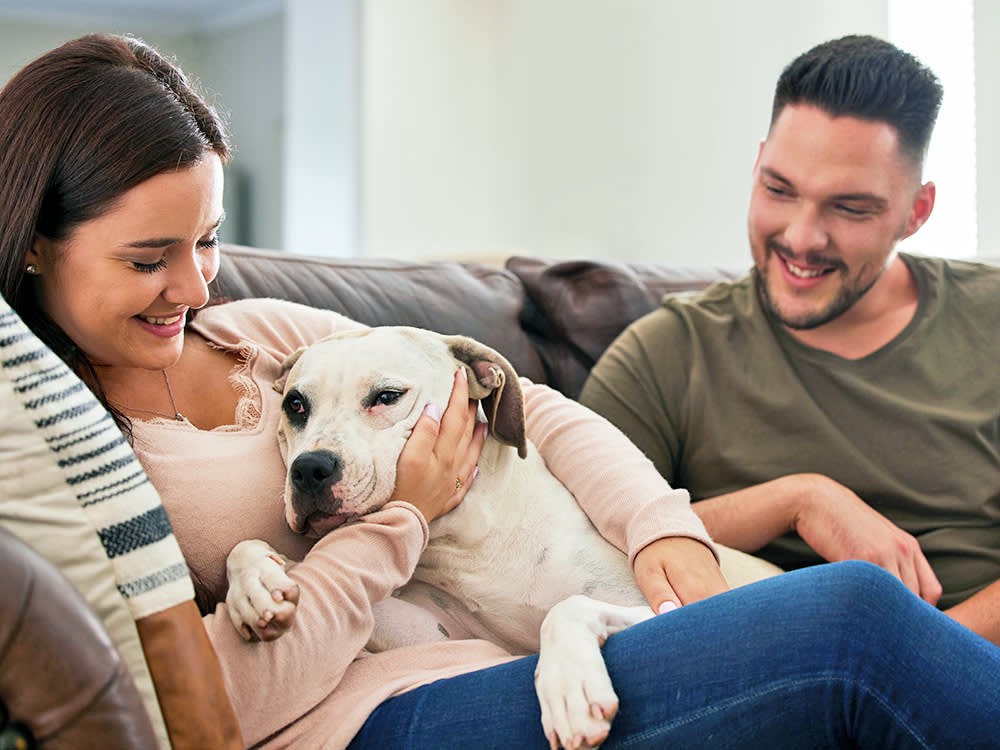
If you have ever quietly worried that your dog does not love you, because they do not do the slobbery, lap-crashing routine you see other dogs do, relax. The science on whether dogs love their people lands firmly on yes. The catch is that “I love you” looks wildly different from one dog to the next. Some wear their hearts on their wagging tails. Others say it by lying three feet away, keeping one ear on the door.
People love to pin those differences on breed, and breed is part of the story. But it is not the whole story, and treating it like a rulebook will lead you to misread your own dog. So here is the frame for this piece: breed is a hint about how your dog might express affection, not a script your dog is required to follow. The single biggest factor in how your dog loves you is not their breed at all. It is them. Learn the breed patterns, then hold them loosely.
First, what love looks like in any dog
Before breed enters the picture, there is a shared vocabulary of canine affection worth knowing. The tells include a big luxurious stretch, a bouncy invitation to play, rising up on the back legs to greet you, a loose wiggly approach with a relaxed tail, a body pressed or leaned into your leg, and a softness around the eyes and ears. Not every sign is obvious, either. A dog who rolls onto their back and sleeps belly-up in your presence is paying you an enormous compliment.
Belly-up sleeping is one of the most underrated signs of love there is. It is a completely defenseless position. A dog only takes it when they feel totally safe, which means they trust the person, and the room, around them.
Whether a dog leans expressive or reserved is shaped, in part, by breed. That is where the patterns come in.
The expressive dogs
Some dogs are all-in, love-out-loud types. This is the territory of Labradors and Golden Retrievers, of Beagles, Boxers, and Pit Bull-type dogs, breeds that are intensely people-oriented and crave contact and interaction. Their affection is loud and social: they bring you a toy as a demand to play, plant themselves against you or directly on top of you, trail you from room to room, and nudge you for attention. If your dog treats your lap as a landing pad and your shadow as a place to live, that is a clear, happy “I love you.”
The reserved dogs
Then there are the dogs whose devotion runs just as deep but far quieter. Akitas, Shiba Inus, Chow Chows, Basenjis, and guardian types like Great Pyrenees and Malamutes often show love without draping themselves over you. They might settle at your feet or at the far end of the bed rather than cuddling close, position themselves between you and a “threat” (even a noisy delivery truck), or check in with brief eye contact and a small wag from across the room. They are not aloof. They are steadfast, loyal, and watchful, which is its own dialect of love.
The point is to read your dog against their own tendencies. An independent breed may crave connection every bit as much as a Golden, just in a lower key. And most dogs, honestly, sit somewhere in the middle, a reserved dog who gets goofy for their favorite person, an exuberant one who also treasures quiet company.
How the job they were bred for shapes the affection
Beyond temperament, the work a breed was developed to do tends to color how it shows love.
Herding breeds, the Border Collies, Australian Shepherds, and Corgis of the world, often express affection through partnership. They want to do things alongside you, tracking your every move and staying mentally clocked into whatever you are up to. Their urge to collaborate is their love letter.
Guardian breeds, among them the Great Pyrenees, the Mastiff, and the Anatolian Shepherd, tend to love by standing watch. They may settle a little apart so they can keep an eye on things, patrol the edges of the yard, or plant themselves between you and anything unfamiliar. That protectiveness grows out of deep attachment, not distance.
Companion and toy breeds, the Cavalier King Charles Spaniel, the Shih Tzu, the Maltese, tend to speak the language of closeness, curling up against you and seeking physical contact as their main way of saying they are yours.
Affection or something else? Read the body, not the breed
One caution matters more than any breed tendency, because getting it wrong is how people get hurt. It is easy to confuse affection with a dog who is actually uneasy or guarding.
“The difference is written in the body, and it is readable once you know the cues,” says Dr. Mara Chen, a veterinary behaviorist with Pet Times. “A threatened dog locks up, the frame turns rigid and frozen, the eyes go hard, the mouth clamps tight. A dog offering love does the reverse: loose muscles, a soft gaze, a curved easygoing wag, fluid movement. So when a dog stiffens and holds still, do not read that as devotion. Back off and end the interaction.”
Excitement can muddy the picture, too. A worked-up dog may grab at a hand or a sleeve, but in play the body stays bouncy rather than rigid and the dog will usually swap the hand for a toy. When the signals are murky, pause, give the dog room, and if you are still unsure, a qualified trainer can help you translate.
How to accept, and return, the love
Reading your dog is half of it. Responding well is the other half, and it deepens the bond. When your dog offers something, a lean, a nudge, a delivered toy, a decision to nap at your feet, meet it. Simply turning toward your dog, speaking to them, and giving them your attention is one of the clearest ways to tell them the gesture landed. From there, study what your dog actually likes, because they are not all the same: some melt at physical touch, some would rather you didn’t. Try varying your voice, the kind of contact you offer, a chest rub, a scratch at the tail base, an ear scratch, and the activity, maybe a round of their favorite game. If you reach in and your dog slides away, shifts, or turns their head, that is a request for a different kind of connection, not a brush-off.
And on the days you cannot stop and reciprocate, a quick acknowledgment covers it, then hand a persistent dog a long-lasting chew or a puzzle toy so they have something rewarding to sink into.
To return the love in a dialect your dog can feel, a few reliable moves:
- Build in daily eye contact, gentle handling, invited belly rubs, and genuine play.
- Hold a steady rhythm around meals, walks, and training, because predictability is what tells a dog the world is safe.
- Meet them where they are: lean into interactive games and lap time for a demonstrative dog, and hang back and let a reserved one come to you.
- Track their yeses and their nos closely, so you are never accidentally overriding a boundary.
- Most of all, show up. Your steady, unhurried presence reassures a dog more than any treat that they are safe and adored.
What’s new since this was written: breed predicts behavior less than you’d think
Here is the research that turns “love language by breed” from a rulebook back into a rough guide. A landmark 2022 study published in Science, drawing on surveys of more than 18,000 dogs and DNA from over 2,000, found that breed explains only about 9 percent of the variation in a dog’s behavior. Physical traits, a Golden’s coat, a Corgi’s legs, are strongly breed-linked. Behavior and temperament are not; they vary enormously from one individual to the next, even within a single breed.
What that means for you is freeing. The patterns above are real and useful as a starting point, but your particular dog is far more of an individual than their breed label suggests. A “reserved” Shiba might be a shameless cuddler; an “expressive” Lab might be a quiet, watchful type. So use breed to form a first guess, then throw the guess out the moment your actual dog tells you something different. Their love language is written in their body, their habits, and their history, not on their pedigree.
References
- Morrill, Kathleen, et al. “Ancestry-Inclusive Dog Genomics Challenges Popular Breed Stereotypes.” Science, vol. 376, no. 6592, 2022. https://doi.org/10.1126/science.abk0639
- MacLean, Evan L., et al. “Highly Heritable and Functionally Relevant Breed Differences in Dog Behaviour.” Proceedings of the Royal Society B, 2019. https://doi.org/10.1098/rspb.2019.0716
Sasha Ford is a certified cat behaviour consultant who has worked with shelters, catteries, and private clients across the country. They review all feline behaviour content at The Pet Times, with expertise in multi-cat households, indoor enrichment, and stress-related disorders.
Meet our experts ↗Keep reading
 LivingYour Dog Outranks Your Best Friend, According to ScienceJordan Ellis · 4 min
 TrainingYour Dog Is Chasing Your Laugh. Science Says It's No Accident.Dr. Nina Kohl · 4 min
 TrainingNo, Your Cat Didn't Secretly Raise Your Dog. But Something Real Is Going On.Dr. Nina Kohl · 5 min
 TrainingThat 'Guilty Look' Isn't Guilt. It's a Read on You.Dr. Nina Kohl · 7 min
 LivingYour 'Dog Type' Is a Mirror, Not a PreferenceDr. Nina Kohl · 6 min
 LivingA Dog With No Nostrils Became Philadelphia's Most Famous RescueLeila Torres · 6 min