


Your Dog Picked the Person Who Ignores It. Here's Why.
Dogs don't choose a favorite by who loves them most. They choose by who speaks dog best, which is why the family member who never wanted a dog often ends up with a furry shadow. The real logic behind canine favoritism.

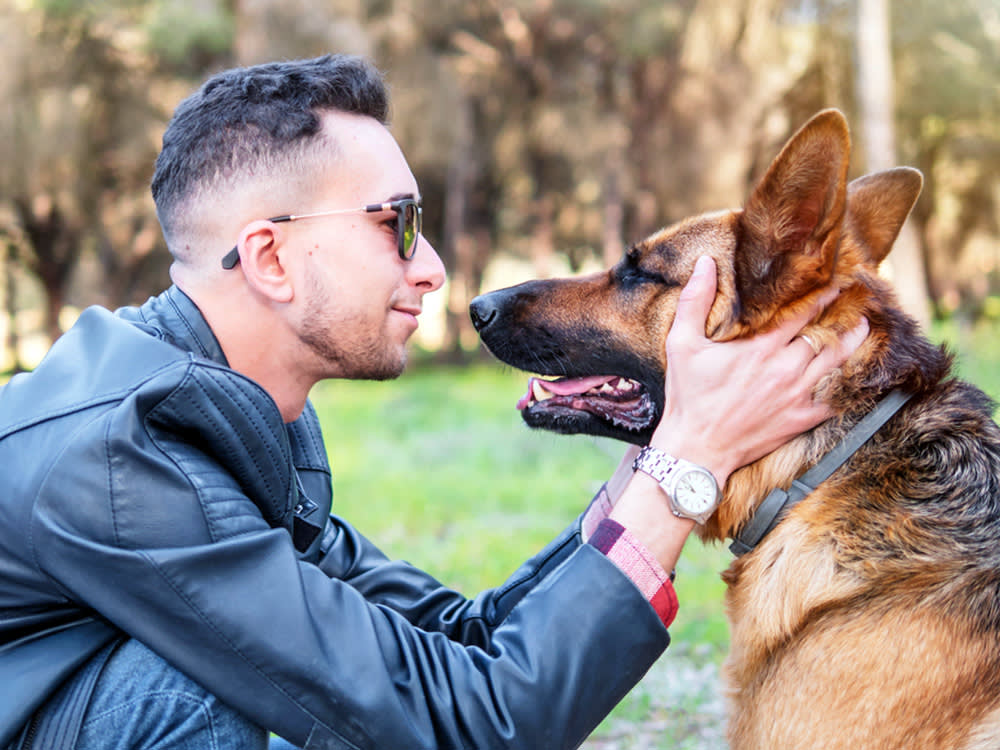
Almost everyone who brings home a dog is secretly auditioning for one role: the favorite. The confidant, the snuggle buddy, the one the dog picks out of the whole household. So it stings when the dog looks around the room and chooses the person who did not even want it. The family member who tried hardest gets the cold shoulder, while the reluctant one collects a devoted shadow.
If that has happened in your house, you were not doing it wrong. You were, in a very specific way, trying too hard. Because dogs do not hand out favorite status based on who loves them the most. They hand it out based on who speaks their language best, and canine and human definitions of affection are almost opposites. Understanding that gap explains both why your dog chose who it chose and how you can tip the odds without groveling.
Favoritism is real, and it usually sticks
Start with the premise, because it is true: dogs do tend to claim a person. Behavior professionals broadly agree that most dogs single out one human in a multi-person household and, once that choice is locked in, rarely reverse it. What people get wrong is not whether favoritism exists but how the selection works.
What dogs are actually choosing for
The deciding factor is closer to economics than romance. Dogs gravitate toward whoever their experience has taught them is the best source of the things they value, a running tally of who reliably delivers the good stuff.
The catch is that different dogs value different currencies. One dog is motivated by food, another by play, another by calm attention. So the person who fills the bowl is not automatically the winner. If one person handles most of the meals but another is the one throwing the ball in the backyard every evening, a play-driven dog may well crown the ball-thrower. Professional trainers often sort the reasons into a few buckets:
- Quality time, meaning sheer hours of engaged attention
- Positive reinforcement, meaning play, treats, toys, and affection delivered in a way the dog enjoys
- Past experience, which weighs especially heavily for adopted dogs
That last one matters more than people expect. A rehomed dog often bonds fastest with whoever resembles the humans it already had good experiences with, which is why background and history, not just present-day effort, shape the choice.
People assume the favorite is whoever loves the dog hardest, but from the dog’s point of view it’s whoever is most reliably rewarding. And ‘rewarding’ is defined by the dog, not by you. Figure out your dog’s actual currency, then become the most consistent source of it.
Why the dog-indifferent person keeps winning
Now the part that frustrates the try-hards. Dogs generally dislike being smothered, especially fast. Charge at a new dog with direct eye contact, big energy, and reaching hands, and you are broadcasting, in dog, something closer to a threat than a welcome.
The person who ignores the dog is accidentally fluent. When humans are not interested in something, they tend not to stare at it. They avoid eye contact, angle away, and generally give it the cold shoulder, and to a dog that reads as polite, unthreatening, wonderfully safe body language. Dogs use those exact appeasement signals, the averted gaze, the turned shoulder, with each other to say “I mean no harm.” So the aloof family member is unwittingly offering the friendliest possible greeting, which is why so many dogs adore the one who acts like they could take or leave the whole arrangement.
The lesson for the rest of us is counterintuitive but usable: to win a dog over, do less. Skip the direct eye contact, do not approach head-on, and let the dog set the pace. For the record, cats reward the same restraint.
Do dogs prefer certain kinds of people?
Anyone who has watched a dog get suspicious of one type of stranger has wondered whether dogs play demographic favorites. The answer is a qualified yes, though which groups depends heavily on the individual dog and its history.
Dogs are often more wary of men than women, a hesitance frequently traced to differences in build, movement, and especially voice. There is science underneath that hunch. A 2023 brain-imaging study published in Communications Biology found that dogs’ brains are more responsive to the exaggerated, sing-song prosody of dog- and infant-directed speech, and that this sensitivity was strongest when the speaker was a woman. The researchers suggested it may be because women tend to slip into that pitched, melodic tone with dogs more often than men do, a tone dogs do not even use with each other, which makes the finding genuinely striking.
Age shapes preferences too. Kids often click with puppies and younger dogs, plausibly because a child’s playfulness lines up with one of the things dogs find most rewarding, play itself. But there are limits: toddlers can read as red flags to dogs because they move unpredictably, make strange sounds, and are frequently sticky, while a lower-energy dog may quietly gravitate toward a lower-key human, right down to the teenager who wants to be left alone. Early socialization is the wildcard. A dog that never met people of a certain build, or in certain clothing, may hesitate the first time it does, and that is skittishness around the unfamiliar rather than judgment.
Can a dog change its favorite?
Usually the bond is for life, but access can rewrite it. If the household’s routine flips, say the person who used to work from home starts leaving for an office while another begins staying in, the dog’s relationships can shift to follow whoever is now most present. Proximity and daily interaction are what built the bond in the first place, so a big change in who is around can move it.
Am I the favorite?
If you are, it is rarely subtle. Your dog trails you from room to room and angles to sleep as close to you as it can. There is also the classic movie test: have two people walk in opposite directions and see who the dog follows. A favorite tends to go with their person nearly every time.
One important caveat, though. The dog that “listens” best to a particular person is not necessarily that person’s favorite. A dog that has learned someone punishes non-compliance quickly will snap to attention for that person out of avoidance, not devotion. Obedience and attachment are not the same signal.
When favoritism turns into a problem
Most of the time, figuring out the family favorite is a harmless parlor game. Occasionally it curdles. Watch for a dog that refuses to let anyone near its chosen person, even other members of the family, because that possessiveness can slide into territorial behavior or outright aggression. Trainers have seen couples who cannot share a bedroom, or even hug, without the dog intervening.
If your dog starts guarding, the fix is to make the non-favorite feel safe and rewarding rather than to force closeness. The most effective move is a kind of casual generosity: the non-favorite becomes a walking treat dispenser who wants nothing in return. Stroll past, let a treat drop as if by accident, and keep going, with no eye contact, no reaching, no name-calling. The more indifferent the non-favorite can act while quietly making good things happen, the better.
Just as important, the non-favorite should never become the reason the dog loses time with its person. If every approach ends with the dog being shooed off the favorite’s lap, the dog starts to see the newcomer as a rival. Instead of banishing the dog, have it shift to share the space, then widen that gap slowly over time. As with people, the healthiest relationships come down to boundaries, patience, and not making anyone choose.
What’s new since this was written
The research on how dogs tune into human voices has kept building. Follow-up work on dog- and infant-directed speech has reinforced that it is not just the high pitch but the variation in pitch, the melodic up-and-down, that lights up a dog’s attention, and that this response is measurable at the level of brain activity, not just behavior. The practical takeaway for anyone trying to become their dog’s person is small but real: how you talk to your dog, the warm, sing-song register, is not baby-talk nonsense. It is one of the levers that actually moves a dog’s sense of connection.
References
- Gergely, Anna, et al. “Dog Brains Are Sensitive to Infant- and Dog-Directed Prosody.” Communications Biology, vol. 6, 2023, doi.org/10.1038/s42003-023-05217-y.
- Eötvös Loránd University, Department of Ethology. “Dog Brains Are Tuned to Dog-Directed Speech Spoken by Women.” 2023, eurekalert.org/news-releases/999194.
Dr. Nair is a veterinarian focused on diet and feeding. She covers everyday nutrition, treats, and the many "can they eat this?" questions owners ask, grounding each answer in what is actually safe and sensible for dogs and cats.
Meet our experts ↗Keep reading
 TrainingLoving People Doesn't Make a Therapy Dog. The Real Bar Is Higher, and KinderDr. Nina Kohl · 11 min
 LivingYour Dog Isn't Predicting Your Pregnancy. They're Reacting to It, and That's UsefulDr. Lena Park · 7 min
 LivingThe ADA Has No Breed List. Your Landlord's Insurance Does.Dr. Priya Nair · 6 min
 TrainingYour Dog Doesn't Know What 'Family' Means. They Know Exactly Who's in Their Group.Dr. Nina Kohl · 5 min
 TrainingAre You Hovering Over Your Dog? The Line Between Caring and Smothering.Dr. Lena Park · 7 min
 Health & WellnessDog Saliva Doesn't Heal Wounds. It Delivers Bacteria.Dr. Priya Nair · 8 min