


Are You Hovering Over Your Dog? The Line Between Caring and Smothering.
There's no test for helicopter dog parenting, but there is a tell: it's when love for your dog curdles into micromanaging the very things that make a dog's life good. A vet on where healthy vigilance ends and hovering begins, and how to walk it back.

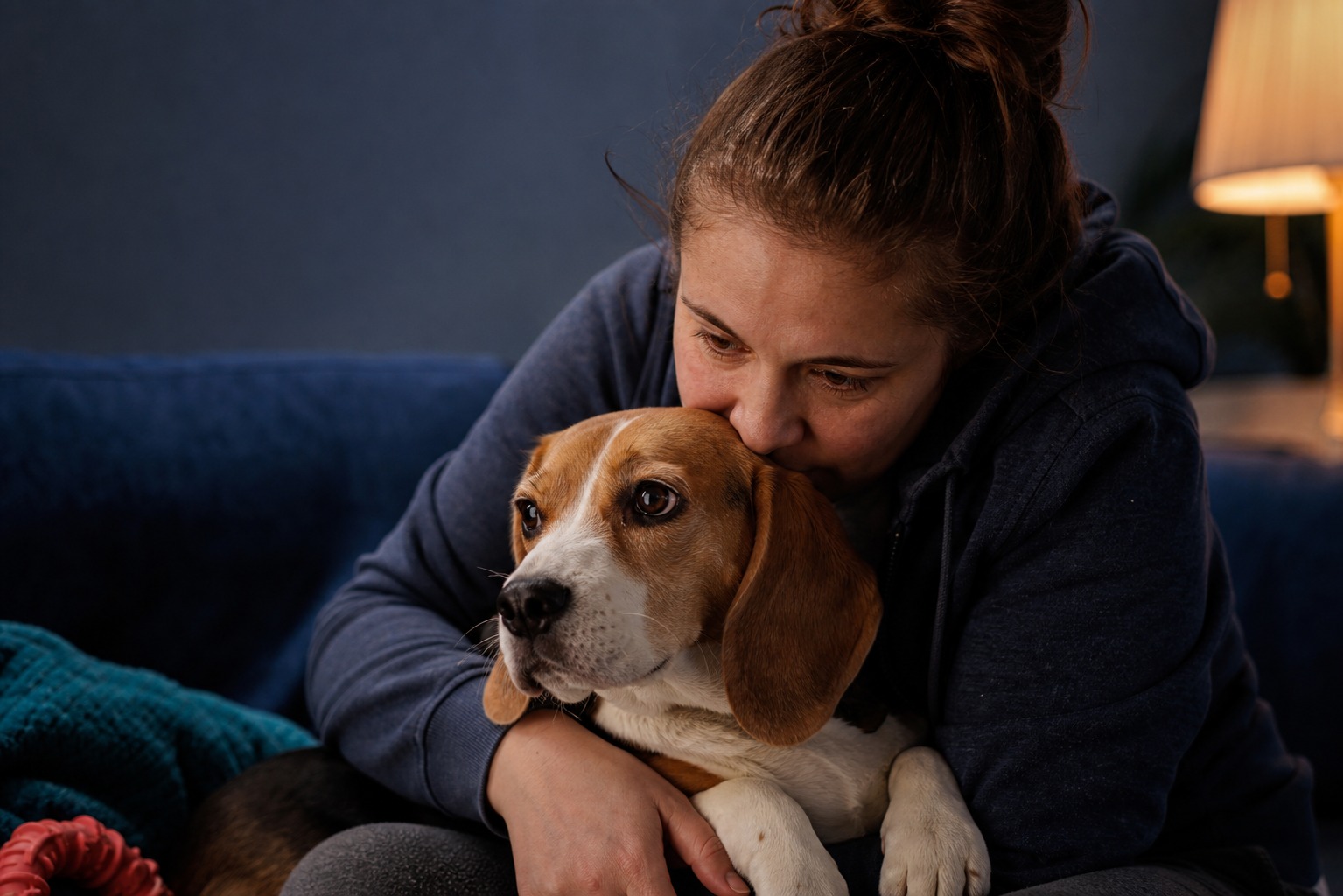
My browser history would raise eyebrows, and the concern would be for me, not the dog. In a single week I had googled whether my dog’s eye discharge was the right shade, whether making her relieve herself in fresh snow might do lasting damage, and whether she files me under “parent” or “roommate.” (Best I can tell: fine, no, and confusingly both.)
Treat a dog like a small child, which plenty of us do, and this is more or less what it looks like to hover at the brink of overparenting: equal parts hyper-attentiveness, catastrophizing, and fussing. That label comes with baggage. So the fair question is whether the baggage should follow us to the dog park, or whether fretting constantly over your dog is actually harmless.
What the research says about hovering
The human evidence is suggestive but hardly settled. In one review, researchers in Norway pooled 38 separate studies that examined overparenting alongside anxiety and depression. Most hinted at a link, but the authors were careful to call the evidence thin and in need of more work. Separately, research published by the American Psychological Association in 2018 followed children over time: those on the receiving end of very controlling parenting as two-year-olds showed weaker emotional and behavioral control by age five, and the kids who managed themselves well at five tended to have fewer social and emotional struggles by ten. The same year, The New York Times examined the gap between helping a child and “helicoptering” one, and whether hovering quietly breeds dependence.
Dogs aren’t children, but the underlying tension rhymes. It almost always grows out of affection. Caring about someone means wanting them safe and content, and the distance from a fair worry to full-blown panic is shorter than anyone admits.
So what does it look like in dogs?
There is no definitive test for helicopter parenting, whether the object is a kid or a Cocker Spaniel, which is either liberating or useless depending on how anxious you already are. But it does have a recognizable shape.
In my experience, helicopter dog parenting shows up as defaulting to the scariest explanation for anything your dog does. A single yawn turns into an ER trip. One growl at one stranger becomes proof the dog can never be out in public again. And I say this as someone who inspects my own dogs for new lumps far more often than any vet would tell me to. Even the professionals do it.
The other classic version is refusing to let a dog be a dog. Dr. Park sees it on nearly every walk:
“So many owners hardly let their dog put its nose down, because they’re scared of what might get swallowed,” she says. “I understand it, especially after you’ve pulled the fourth random tissue out of a dog’s jaws. But nose-work and exploration aren’t extras. They’re core to how a puppy develops and to how an adult dog enjoys being alive.”
Okay, I’m a hoverer. Am I ruining my dog?
Probably not. Some studies suggest that anxious owners tend to end up with anxious dogs, but as with the human research, the findings aren’t conclusive and don’t prove one causes the other. The realistic read is that, as with most things, the goal is balance between your caution and your dog’s curiosity.
And erring toward attentiveness is the safer mistake. Dr. Park is emphatic that engaged owners, the ones who research diet, prioritize exercise, and build in mental stimulation, give their dogs richer lives. The problem only begins when engagement flips into control:
“Where it breaks down is when that engagement hardens into control over how a dog gets to explore or socialize,” she says. “Dogs have to work through the whole subtle grammar of canine social life themselves, you can’t run it for them. Give me the over-involved owner over the checked-out one any day, they’re the person who catches the early illness or intercepts the thing the dog shouldn’t eat. If a relative who was hoping for human grandkids rolls their eyes, let them.”
How to hover a little less
If you’d like to loosen your grip, two practical tools.
First, work with a professional trainer, especially if you’re new to this. Learning what genuinely counts as normal dog behavior, and what actually deserves worry, is the fastest route to no longer treating every yawn as a crisis.
Second, keep a simple check ready for when the worry spikes. Is your dog reliably fed and watered? Do they have a cozy spot to sleep? Room and permission to be a dog, to run, play, and sniff? Are they safe from harm? Are they getting regular vet care? If every answer is yes, your dog is almost certainly content and well cared for, and the spiral is optional. When you do have a real concern, that’s exactly what your vet is for.
Above all, take your cues from your dog. Dogs love doing dog things, and being overly strict or protective just piles stress on both of you. What matters most is a well-loved dog, and sometimes loving them well means loosening the leash a little, or, sure, confirming one more time that blueberries won’t hurt them. (They won’t.)
What newer research adds
There’s now a small but growing body of work putting numbers to why all that sniffing matters. Studies of canine “nosework” and scent games have linked letting dogs use their noses to a more optimistic emotional state, and researchers have measured that sustained sniffing can slow a dog’s pulse, effectively settling them from the inside out. A related line of research argues that giving dogs more agency, more say over where they go and what they investigate, improves their welfare overall.
For the reformed hoverer, that’s oddly comforting. The thing you keep wanting to cut short, the endless sniffing detour on every walk, isn’t your dog dawdling. It’s one of the most calming, enriching things they do all day. Easing off the leash a bit isn’t neglect. On the walk, at least, it’s the move the science backs.
References
- Bhagat, V. et al., A Systematic Review of “Helicopter Parenting” and Its Relationship With Anxiety and Depression, Frontiers in Psychology
- Perry, N.B. et al., Childhood Self-Regulation as a Mechanism Through Which Early Overcontrolling Parenting Is Associated With Adjustment in Preadolescence, Developmental Psychology
- Duranton, C. and Horowitz, A., Let Me Sniff! Nosework Induces Positive Judgement Bias in Pet Dogs, Applied Animal Behaviour Science
Common questions
What is a helicopter dog parent?
Someone whose care for their dog tips into constant hovering and worst-case thinking, an ER trip over a single yawn, or so tightly controlling what a dog sniffs and does that the dog misses out on normal exploration. It grows out of love, which is what makes it hard to spot.
Is helicopter parenting my dog actually bad?
Over-attentiveness beats neglect every time, and vigilance can catch illness early. The downside is when micromanaging strips away a dog's chance to sniff, explore, and socialize, all of which matter to a dog's well-being. The fix is balance, not indifference.
How do I know if I'm worrying too much about my dog?
Run a quick check: is your dog reliably fed and watered, does it have a cozy place to sleep, room to run and play and sniff, safety from harm, and regular vet care? If all yes, your dog is almost certainly fine, and you can ease up.
Dr. Park is a board-certified emergency and critical care specialist. She reviews our health and safety content for clinical accuracy and contributes guides on recognising urgent conditions. Her focus is helping owners act quickly and correctly when it matters most.
Meet our experts ↗Keep reading
 TrainingYour Dog Sniffs You at the Door Because You're the Evening NewsLeila Torres · 5 min
 TrainingYour Dog Already Knows Your Name. This Game Makes Them Prove It.Dr. Mara Chen · 6 min
 LivingIs Your Dog Really Jealous, or Just Afraid of Missing Out? The Science Is Messier Than the Headlines.Dr. Nina Kohl · 5 min
 TrainingYour Husky Isn't Arguing With You. It's Doing the Job It Was Bred For.Dr. Ravi Mehta · 6 min
 TrainingYour Dog Can't Catch You in a Lie. It Can Decide You're Not Worth Trusting.Dr. Priya Nair · 6 min
 LivingYour Dog Probably Doesn't Want to Be in Your WeddingNina Vasquez · 8 min