


The Prison Puppy Program Has One Rule Ghislaine Maxwell Can't Get Around
Maxwell landed at a cushy Texas prison camp with music lessons and language classes. The one perk she can't touch is a puppy, and the reason why says a lot about how these service-dog programs actually work.
When Ghislaine Maxwell was moved to a minimum-security federal prison camp in Bryan, Texas in August 2025, the coverage fixed on the comforts: dormitory housing instead of cells, few fences, language classes, music lessons, a roster of celebrity-adjacent inmates. What got less attention is the one thing on the camp’s menu she will never be handed, and it happens to be the most sought-after perk in the whole place. A puppy.
That detail is worth slowing down on, because it reveals something most people don’t know about prison dog programs: they are not a feel-good extra handed to anyone who wants one. They are a privilege with a bright, non-negotiable line drawn around who qualifies, and the line exists to protect the dog.
What a prison puppy program actually is
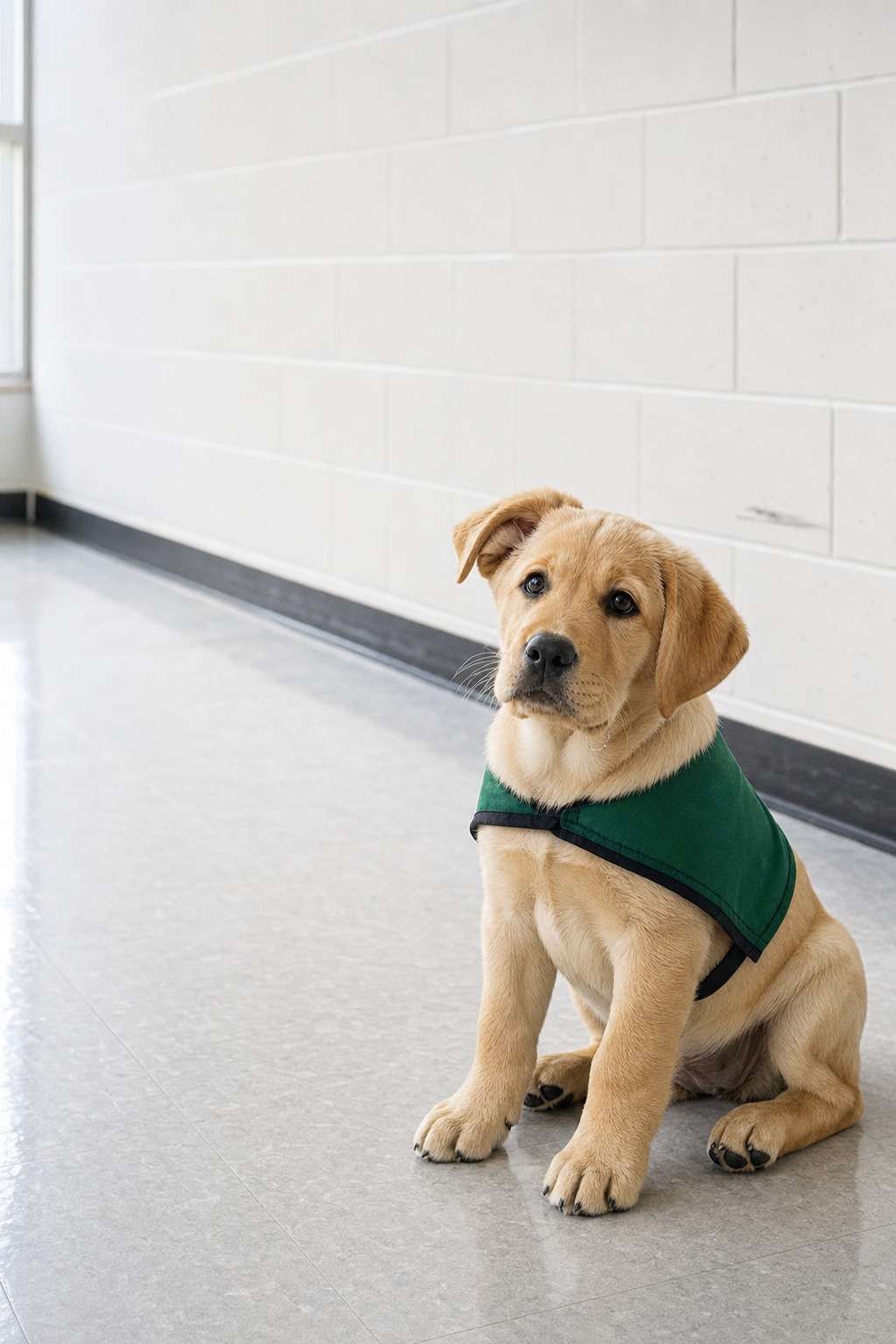
Canine Companions, a national nonprofit that raises and trains service dogs, runs a puppy-raising program inside roughly two dozen correctional facilities. Selected incarcerated people are paired with puppies who live alongside them through daily life, learning their first couple dozen commands before graduating to advanced training and, eventually, placement with a person who has a disability.
At the Bryan camp specifically, the program had several puppies in rotation, cared for by a team of more than a dozen inmate handlers who feed, groom, exercise, and socialize the dogs. Handlers keep a dog for months at a stretch. The setup is deliberately communal, so a handler learns to work as part of a team rather than in isolation.
Getting in is hard. Applicants need a recommendation from their facility, a clean disciplinary record, and they have to clear an interview and training observations. Waitlists can stretch on, with some hopefuls reapplying over several years before a spot opens up.
The rule she runs into
Maxwell, convicted of sex trafficking, hits a wall the application process can’t route around. Canine Companions bars anyone whose crime involved abuse of a minor or an animal, or any offense of a sexual nature. The organization’s CEO, Paige Mazzoni, has framed the reasoning plainly to reporters: offenses that target the vulnerable are exactly why a defenseless puppy can’t be placed with that handler.
It is a hard policy, not a case-by-case judgment call, and that is the point. The dog cannot advocate for itself, so the screening does it instead.
“A puppy in one of these programs is completely dependent on the person raising it, and that dependence is the whole reason the vetting has to be strict,” says Dr. Amara Solis. “A bright line that keeps dogs away from anyone with a history of harming the vulnerable isn’t bureaucratic caution. It is the most basic form of protection you can build into a program like this.”
Why the programs work at all
Strip away the celebrity news hook and what’s left is a genuinely effective model. Canine Companions reports that people who raise service dogs in prison have a recidivism rate under 5 percent, and that puppies raised in these programs graduate to service work at a rate about 10 percent higher than dogs raised in conventional homes. The structure, the accountability, and the round-the-clock attention turn out to be good for the dog and good for the handler.
The emotional side is harder to quantify but shows up constantly in what handlers say. Some describe the first unconditional love they’ve felt. Others treat it as a way to give something back. And there’s a line the organization likes to repeat, one Mazzoni has quoted herself: even a dog who doesn’t make the cut as a service animal has still changed a life along the way.
What newer research adds
The broader picture on prison animal programs keeps getting stronger. Reviews of these programs continue to link participation with fewer disciplinary infractions inside facilities and better emotional regulation among handlers, alongside the vocational skills that carry over after release. None of that changes the eligibility rule. If anything, it sharpens the reason for it: a program only earns those outcomes when the dog at the center of it is safe, which is exactly why the door stays closed to a narrow, clearly defined set of offenses, no matter who is knocking.
References
Nina Vasquez writes about life at home with pets and the relationships at the heart of it. Her work covers day-to-day living, people-and-pet stories, and the products that fit into a real household, with a warm, grounded take on everyday pet ownership.
Meet our experts ↗Keep reading
 LivingA Comment on Instagram Got a Two-Legged Street Dog a Mercedes WheelchairJames Okafor · 5 min
 LivingA TikTok Freed 40 Chained Dogs. The Part That Made It Work Wasn't the Video.James Okafor · 5 min
 LivingItaly's Most Beloved Rescue Dog Was Poisoned. A New Law Now Carries His Name.Nina Vasquez · 4 min
 LivingA Drug Raid Opened a Door. Behind It: a Dogfighting Ring and a 9-Foot Alligator Fed on the EvidenceJames Okafor · 5 min
 LivingA Viral Dog Reunion Rewrote California LawMarcus Webb · 6 min
 LivingHe Left Jail After Five Days. One of His Dogs Was Already Dead.Sasha Ford · 4 min