


A Drug Raid Opened a Door. Behind It: a Dogfighting Ring and a 9-Foot Alligator Fed on the Evidence
Jacksonville officers went in on a narcotics tip and walked out with a cruelty case. The alligator is the shocking detail. The neglected dogs are the story that matters.

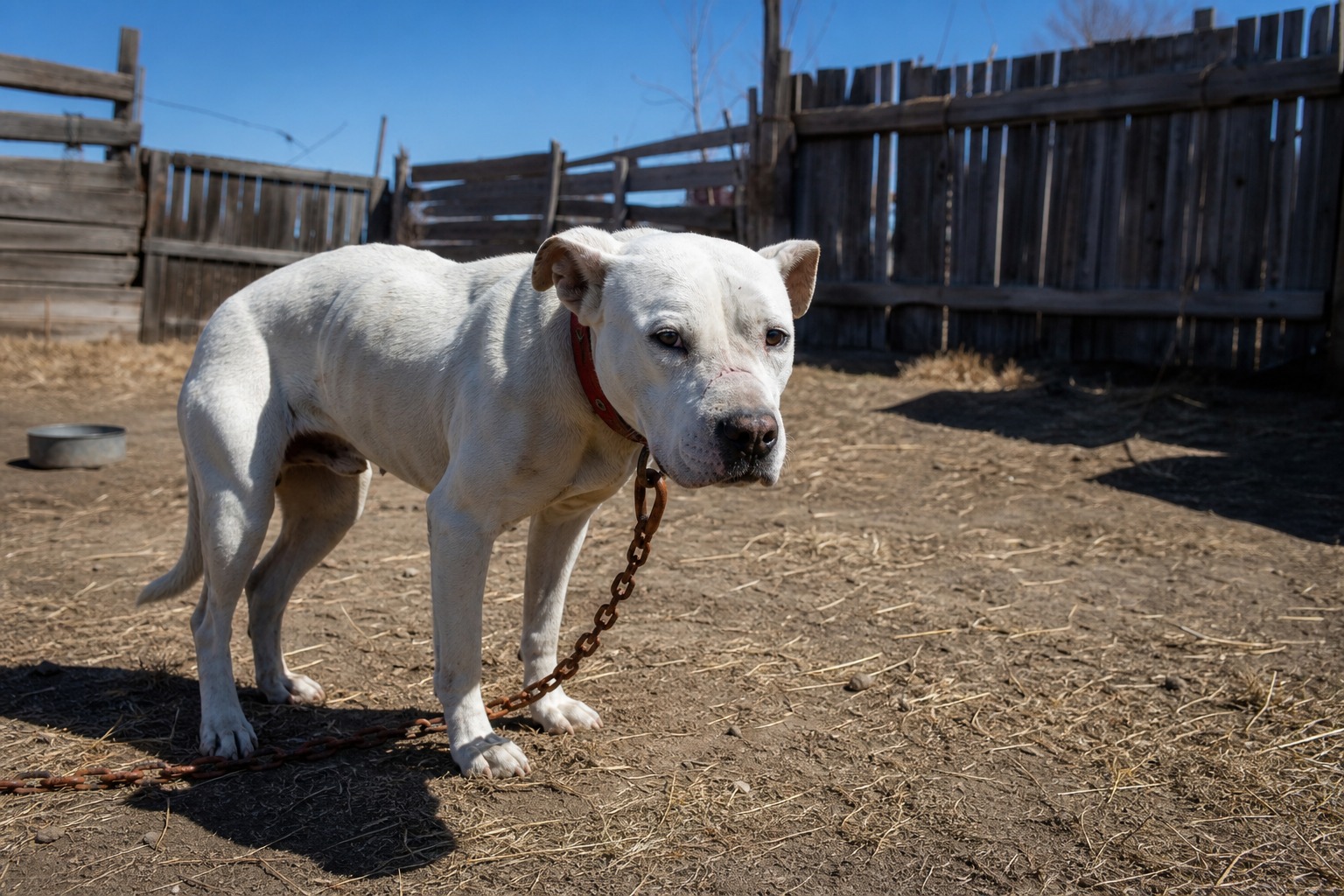
The tip that started it was about drugs. In May 2025, the Jacksonville Sheriff’s Office got word that a house in the northwest part of the city was being used to move narcotics, and a search warrant followed. Officers expected to find product and maybe a weapon or two. They found those. They also found a cruelty scene that had nothing to do with the tip and everything to do with why the raid is still being talked about.
Inside the home were the drugs investigators anticipated: cocaine, oxycodone, marijuana, and several firearms. Outside was a different kind of crime scene. Multiple dogs were staged around the property, some chained, some confined, none with access to water. And in a small fenced enclosure sat a nine-foot alligator, kept without a pool or pond of any kind. Investigators concluded the animal was being fed the other creatures on the property. That is the sentence that made national news. It should not be the one that lingers.
What officers actually found
According to the sheriff’s office, the property held the machinery of an organized dogfighting operation, not just mistreated pets. Alongside the animals, officers recovered fighting equipment, trophies, and instructional material, the kind of paraphernalia that separates a neglect case from a business built on it.
The dogs themselves told the rest of the story. Many were covered in feces and fleas. Several had infections. Some carried open wounds while others bore scars that had partly healed, the pattern investigators associate with animals cycled through fights over time. They were not the only victims. Officers reported finding other animals in similar shape, including young raccoons and turtles, which points to the alligator’s grim food source and to a property where suffering was simply the operating condition.
The arrest and the charges
Officers removed every animal from the property. The homeowner, 49-year-old Marquis Williams, was arrested and charged with more than a dozen counts stacked on top of the original drug and firearm allegations: nine counts of animal cruelty, three counts of promoting dogfighting, and one count of unlawful possession of an alligator. In Florida, promoting or conducting a dogfight and felony animal cruelty are serious charges, not slap-on-the-wrist misdemeanors, which is part of why the case drew the attention it did.
“When we take in fighting-bust survivors, the wounds you can see are rarely the hard part,” says Dr. Priya Nair. “It’s the untreated infections, the chronic pain nobody addressed, and the fear that got baked in. Those dogs can absolutely recover, but it takes patient medical care and even more patient handling, and writing them off because of where they came from is the one thing that guarantees they won’t.”
Why the alligator isn’t the point
It is human nature to fixate on the strangest detail, and a nine-foot alligator in a suburban backyard is undeniably strange. But the alligator was a symptom. The disease was an operation that treated living animals as equipment and as feed. The dogs are the ones who suffered longest, and they are the ones whose outcome we can still influence.
Here is what tends to happen next in cases like this. Dogs seized from a fighting operation usually become evidence, which means they can be held for weeks or months while a case moves through court. During that time, they need medical treatment, behavioral evaluation, and space, all of it expensive and all of it typically shouldered by local shelters and rescue groups rather than the agency that made the arrest. Contrary to a stubborn myth, dogs pulled from fighting rings are frequently rehabilitated and adopted; a fighting background is not an automatic death sentence, and organizations that specialize in these survivors have moved thousands into ordinary homes.
Dogfighting is also a federal felony under the Animal Welfare Act, not merely a state matter, which gives investigators more tools than a local cruelty charge alone. Cases like Jacksonville’s tend to surface exactly the way this one did, as a side door off a drug or weapons warrant, because the same properties often host both. That overlap is a reminder for anyone who notices the signs, such as chained dogs with no water, scarring, or fighting equipment, to report it to local animal control or law enforcement rather than assuming someone else already has.
The alligator will get the headline. The dogs deserve the follow-through.
References
- 9-foot alligator, suspected dog-fighting ring found during drug bust in Northwest Jacksonville — News4JAX
- Police report reveals new details about suspected dog-fighting operation where 9-foot alligator was found — News4JAX
- Florida man accused of dealing drugs, promoting dogfighting kept 9-foot alligator on property — FOX 13 Tampa Bay
- Animal Welfare Act — USDA National Agricultural Library
James Okafor covers rescue, adoption, and the causes shaping animal welfare. His work follows the people and organisations working to give more pets a home, and the issues owners and advocates care about most.
Meet our experts ↗Keep reading
 LivingHe Left Jail After Five Days. One of His Dogs Was Already Dead.Sasha Ford · 4 min
 LivingShelters Are Overflowing. So Where Did All the Fosters Go?James Okafor · 9 min
 LivingOne of the Longest Partnerships in the Service-Dog World Just Got BiggerJames Okafor · 4 min
 LivingOne Sleepover Makes a Shelter Dog 14 Times More Likely to Get AdoptedLeila Torres · 5 min
 LivingA Former Ringling Clown Is Rewriting the Pit Bull's Reputation, One Hoop at a TimeMarcus Webb · 5 min
 LivingSouth Korea Banned the Dog Meat Trade. Nobody Planned for the Dogs.James Okafor · 9 min