


One Sleepover Makes a Shelter Dog 14 Times More Likely to Get Adopted
You can't adopt every dog in the shelter. But research on nearly 28,000 dogs shows that borrowing one for a night, or even a few hours, dramatically raises its odds of finding a home.


Every shelter is full of dogs who need homes, and here is the deflating truth: you cannot take them all. Even the most devoted dog person eventually runs out of couch. So it is genuinely good news that one of the most powerful things you can do for a shelter dog does not require adopting it at all. You just have to get it out of the building for a little while.
By “a little while,” the research means something startlingly small: a few hours, or a single overnight. That is enough to reshape a dog’s entire future. And this isn’t a warm feeling dressed up as a fact. It comes straight out of the data.
The numbers are almost too good
A large study published in late 2023 looked at nearly 28,000 shelter dogs across 51 different shelters. Researchers compared dogs who got a brief break from the kennel, either a short outing of a few hours or a one-to-two-night stay in someone’s home, against thousands of dogs who stayed put as a comparison group.
The gap between them was enormous. Dogs who spent even one or two nights in a foster home were more than 14 times as likely to be adopted as dogs who never left the shelter. Dogs who only got a few-hour outing were still five times as likely to find a home. A single night on a stranger’s floor, and a dog’s odds multiply by fourteen.
Just as telling is who ended up doing the adopting. It was mostly not the foster families. For the short outings, only around four percent of the temporary hosts kept the dog; for overnight stays, about twelve percent did. In other words, the overwhelming majority of these dogs were adopted by someone else entirely. The outing itself was the engine, not the host’s change of heart.
Why a night away works such magic
Two things are happening at once, and both matter for a dog’s welfare.
The first is stress. A shelter is loud, crowded, and relentlessly unpredictable, and it wears on a dog. Time out in the world, with a calm person offering attention and affection, gives that nervous system a real break. Studies measuring the stress hormone cortisol have found it drops considerably when dogs get this kind of relief. The catch, historically, has been that the calm doesn’t survive the return trip: once a dog is back in the kennel, the stress tends to climb back to where it started.
The second is exposure, and this is the part that changes outcomes. A dog on an outing is out in a neighborhood, meeting new people, being seen. Foster hosts snap photos and tell the dog’s story to friends. All of that widens the circle of humans who know this specific dog exists. More eyes means more chances to be noticed, chosen, and brought home. It is almost obvious once you say it out loud, and it is still moving.
“So many things that affect whether a dog gets adopted are out of a shelter’s hands, from age to size to coat type,” says Dr. Lena Park. “What makes this research exciting is that it points to something staff can actually control. A few hours of community exposure is a lever, and it’s one almost any volunteer can pull.”
You don’t have to commit to fostering to help
This is the reassuring part for anyone who has hesitated. A lot of people shy away from fostering because they worry they will get too attached, or because keeping a dog overnight is a genuine lift. The research is a gift to exactly those people, because it shows that even the low-commitment version works. A shelter that offers a menu, from a full foster stint down to a two-hour walk, opens the door to volunteers who could never take on more than an afternoon, and those afternoons still get dogs adopted.
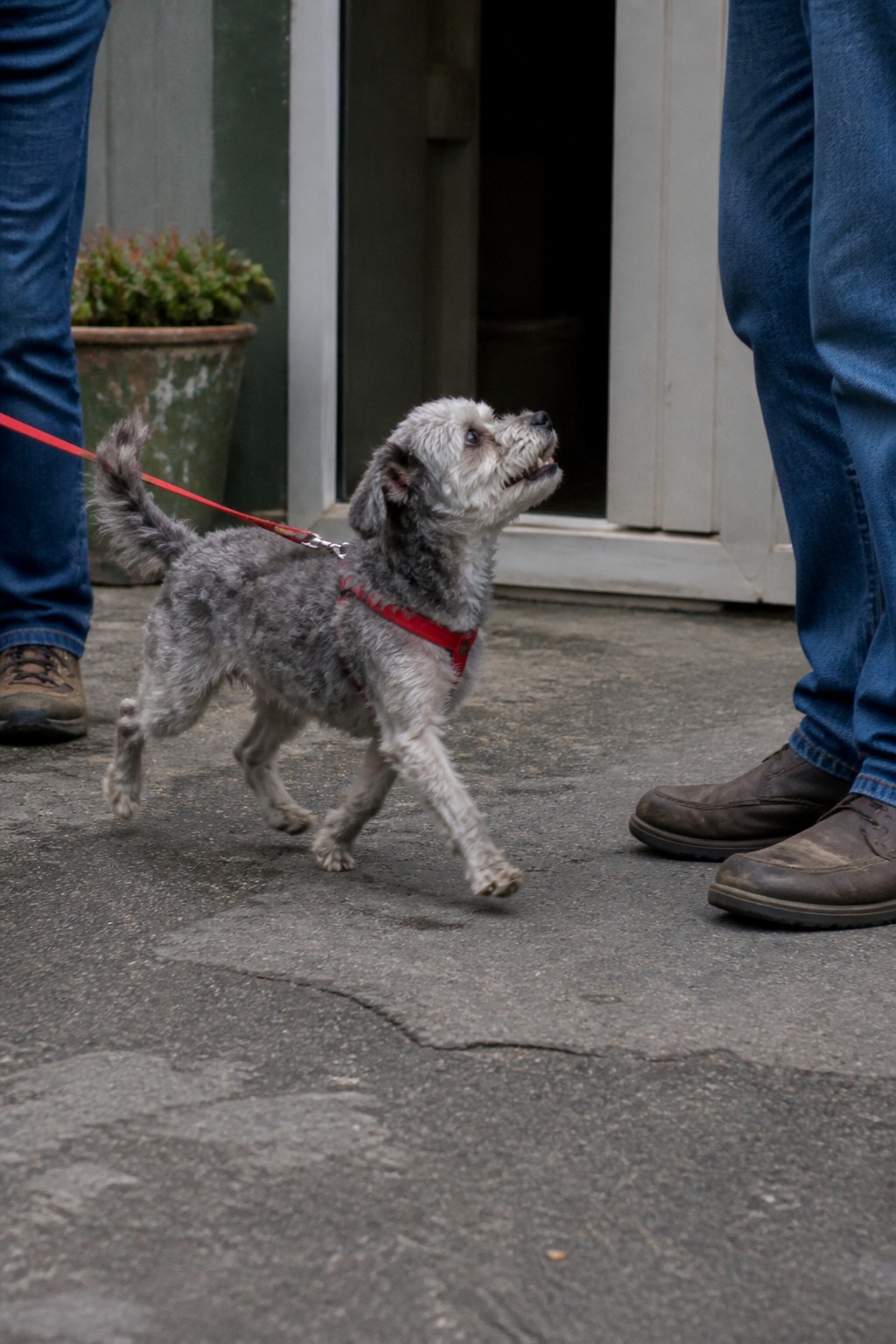
You have probably seen a version of this in the wild: volunteers taking shelter dogs out for a run in bright “Adopt Me” vests, getting stopped constantly by curious strangers asking about the dog on the other end of the leash. Programs like that turn a routine walk into a rolling adoption event. Most of the runners never keep the dog. They just make sure the dog is seen, and someone in the community does the rest.
What newer research adds
The story has only gotten stronger. In January 2026, a study run with Arizona State University and two shelters, one in Arizona and one in Virginia, followed 84 dogs through a stretch of shelter, then a week in a foster home, then a return to the shelter. Using more than 1,300 urine samples to track cortisol and collar sensors to track rest, the team found that a full week away produced a stress drop about twice as large as the shorter stays, and the dogs rested more while fostered.
Two findings stand out for shelters. First, cortisol did not spike back above baseline when the dogs came back, easing an old worry that a comfy break just makes the return harder. Second, when returning dogs were housed with a familiar companion they’d been paired with before, they settled in more calmly, resting more and bouncing off the walls less than dogs put back alone or with a stranger. The practical message keeps getting clearer: time out of the kennel helps, longer helps more, and a familiar friend softens the landing.
The throughline across all of it is simple enough to act on this weekend. You cannot adopt every dog. You can borrow one for an afternoon, and in doing so, meaningfully raise the odds that someone else adopts them for life.
References
- Gunter, L.M., et al. The Influence of Brief Outing and Temporary Fostering Programs on Shelter Dog Welfare. Animals (2023). ncbi.nlm.nih.gov/pmc/articles/PMC10668817
- Virginia Tech / Arizona State University. The implications of weeklong fostering and co-housing on shelter dog welfare (2026). pmc.ncbi.nlm.nih.gov/articles/PMC12857554
- Virginia Tech News. One week in a foster home dramatically improves shelter dogs’ lives (Jan. 2026). news.vt.edu
Leila Torres leads our Living coverage, from home life and travel to the products and rescue stories that come with sharing a life with animals. She edits and writes across the section, with a soft spot for pieces about the bond between people and their pets.
Meet our experts ↗Keep reading
 LivingThe Prison Puppy Program Has One Rule Ghislaine Maxwell Can't Get AroundNina Vasquez · 4 min
 LivingBritain Banned a Dog That Officially Doesn't ExistJames Okafor · 7 min
 LivingThe Blue Dogs of Chernobyl Aren't Radioactive. The Truth Is Grosser.James Okafor · 5 min
 LivingA Former Ringling Clown Is Rewriting the Pit Bull's Reputation, One Hoop at a TimeMarcus Webb · 5 min
 LivingThe CNN Hero of the Year Fosters Dogs for People in Addiction RecoveryClaire Sutton · 3 min
 LivingA Man Cried About His Dog on Live TV. A Shelter's Inbox Exploded.Sara Lim · 5 min