


The Blue Dogs of Chernobyl Aren't Radioactive. The Truth Is Grosser.
Videos of neon-blue stray dogs near the Chernobyl reactor set off a radiation panic online. The real explanation has nothing to do with the 1986 disaster, and it says a lot about how dogs use their noses.

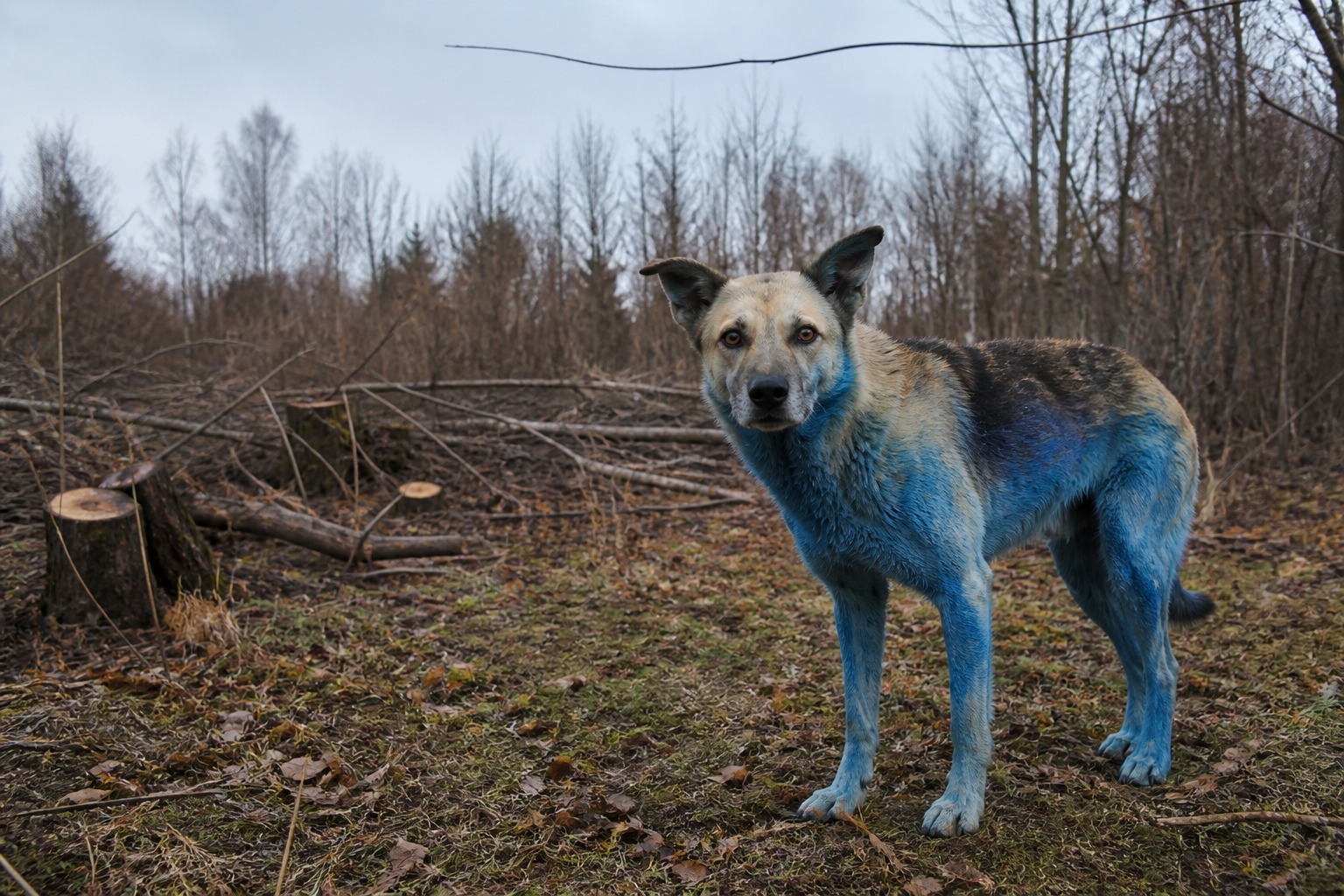
In October 2025, a short clip from the Chernobyl exclusion zone did what Chernobyl clips always do: it went everywhere. A few of the zone’s famous stray dogs had turned a startling, cartoonish blue, from the shoulders down. The comments wrote themselves. Radiation. Mutation. A glitch. An AI filter. Nearly four decades after the reactor exploded, people were ready to believe the ground itself had finally started dyeing the wildlife.
The answer is much dumber, and much more reassuring. The dogs had found a broken porta-potty.
What actually turned the dogs blue
The strays hadn’t absorbed anything from the soil. They had been rolling in a pool of vivid blue liquid that had seeped out of an abandoned portable toilet in the zone. The dye is the same stuff that tints the tank of every construction-site restroom, and it clings to fur beautifully.
Dr. Jennifer Betz, the veterinary director of the Dogs of Chernobyl program, told the science outlet IFLScience that the animals appeared to have picked up a substance that had pooled where they were living, most likely from that old toilet, though the team could not confirm the source with certainty. She was emphatic on the point everyone actually cared about: the color had nothing to do with radiation, and the dogs looked healthy. As long as they didn’t lick a large amount of it off their coats, she expected the staining to be mostly harmless.
The team also ruled out a false alarm of their own making. During spay-and-neuter campaigns, workers dab a temporary crayon marker, green, red, blue, or purple, on the top of a dog’s head to track who has already had surgery. That mark washes out in a couple of days and sits only on the scalp. The blue dogs were a different thing entirely, colored from the neck down like they’d waded through a slushie.
Why a dog would do this on purpose
Here’s the part the viral panic skipped: no one made these dogs blue. They did it to themselves, enthusiastically, because that is what dogs do with a strong, weird smell.
Scent-rolling is one of the oldest items in the canine playbook. A dog that flops shoulder-first into something pungent, a dead worm, fox scat, another dog’s pee, a leaking chemical toilet, is behaving completely normally. The leading explanations are that they’re layering an interesting odor onto themselves the way we might try on a scent, or carrying information about a find back to the group. Whatever the motive, the takeaway for owners is that a dog seeking out a gross substance is not a sign of anything wrong. It’s a sign of a dog being a dog.
“A dog rolling in something foul isn’t confused or sick, it’s doing one of the most hardwired things in the species,” says Dr. Amara Solis, a Pet Times veterinary contributor. “What I watch for isn’t the rolling. It’s what they rolled in, and whether they’re now trying to eat it off their own coat.”
When a color change on your dog should actually worry you
The Chernobyl dogs are a fun story because the dye was cosmetic. But a sudden change in a dog’s coat or skin color at home is worth a second look, because a few of them are not cosmetic at all:
- Rust or pink staining around the mouth, paws, or eyes usually isn’t dye at all. It’s porphyrin, a pigment in saliva and tears, and heavy staining often means a dog is licking or tearing more than usual, which points back to allergies, pain, or anxiety.
- Yellow-tinged skin, gums, or eyes can signal a liver problem and is a same-day vet call, not a bath.
- A chemical you can’t identify is the real hazard. The dye in the porta-potty happened to be low-risk. Antifreeze, some cleaning products, and concentrated garden chemicals are not, and a dog that has rolled in one can absorb it through the skin or poison itself grooming it off.
The safe move with any unknown substance is the one the Chernobyl team recommended in spirit: keep the dog from licking it, rinse with plain water and mild dog shampoo, and call a vet or a poison line if you don’t know what it is.
What’s new since this went viral
The Dogs of Chernobyl team confirmed in late 2025 that the blue dogs were still active, eating normally, and behaving like the rest of the zone’s strays, with no signs of illness tied to the coloring. Follow-up reporting from IFLScience and others reinforced that porta-potty dye is formulated to sit in tanks of human waste and carries no known toxicity for animals at this kind of surface exposure.
The bigger picture hasn’t changed. The Clean Futures Fund, the nonprofit behind the program, estimates that more than 700 dogs and around 100 cats live in and around the exclusion zone at any time, descendants of the pets abandoned during the 1986 evacuation. Volunteer vets and scientists rotate in to feed them, treat them, and spay and neuter them. The blue dogs got the internet’s attention for a week. The animals who need it are there every week.
References
- Blue Dogs Have Been Spotted In Chernobyl Exclusion Zone: What Is Going On? — IFLScience
- Dogs in the Chernobyl exclusion zone — Wikipedia
- Clean Futures Fund: Dogs of Chernobyl — program background and population estimates
James Okafor covers rescue, adoption, and the causes shaping animal welfare. His work follows the people and organisations working to give more pets a home, and the issues owners and advocates care about most.
Meet our experts ↗Keep reading
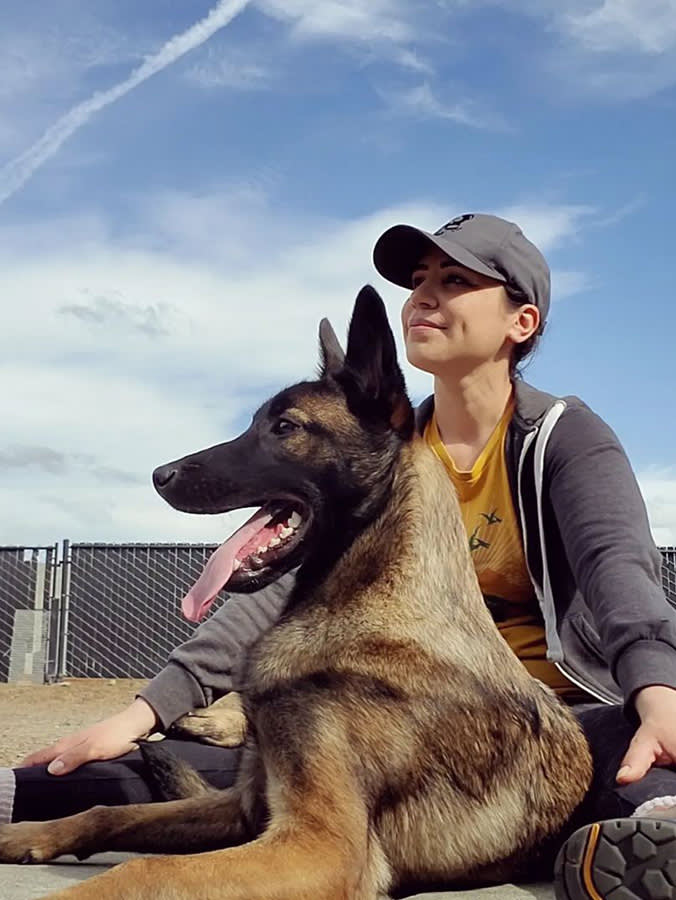 Living'Unadoptable' Is a Description of the Building, Not the DogDr. Amara Solis · 7 min
 LivingRescuers Saw the Starving Dogs and Left. Four Times.Marcus Webb · 6 min
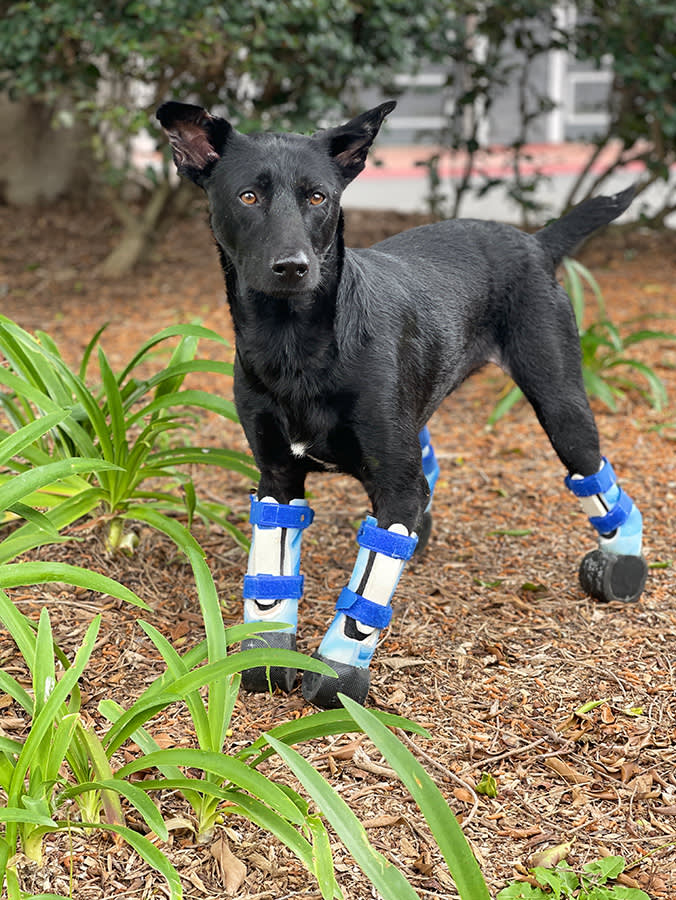 LivingA Cairo Puppy Lost All Four Paws. Then Women Across the World Went to Work.Nina Vasquez · 6 min
 LivingThis Pit Bull Documentary Isn't Really About DogsJames Okafor · 6 min
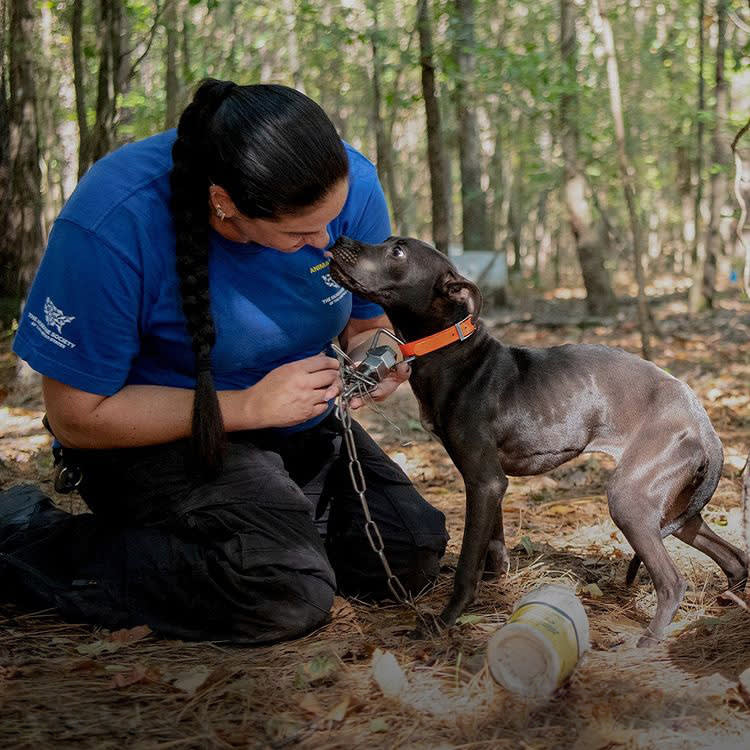 LivingThey Seized 305 Dogs, 30 Guns, and $40,000. The Dogs Were the Easy Part.Nina Vasquez · 6 min
 LivingA TikTok Freed 40 Chained Dogs. The Part That Made It Work Wasn't the Video.James Okafor · 5 min