


Britain Banned a Dog That Officially Doesn't Exist
The UK outlawed the American XL Bully, a 'breed' with no agreed definition, then Scotland followed. Here's how the ban unfolded, what the science says about blaming a breed, and whether any of it made anyone safer.

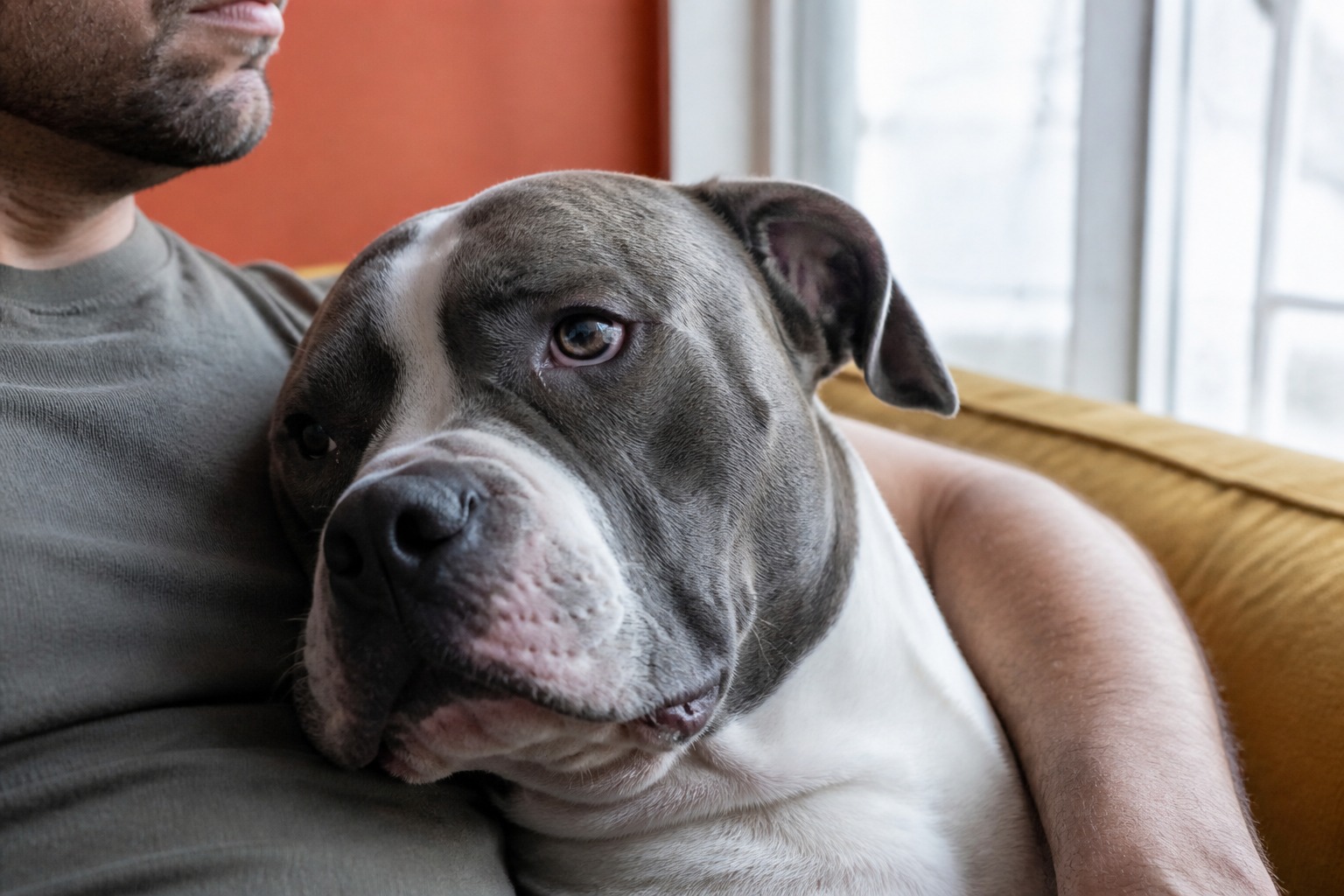
In late 2023, the United Kingdom did something that sounds simple and turns out to be almost impossible: it banned a specific kind of dog. The trouble is that the dog in question, the American XL Bully, has no settled definition. Even the government admitted, at the moment it announced the ban, that no one had yet pinned down exactly what the animal was. Britain set out to outlaw a breed and first had to invent the paperwork to say what the breed even is.
That contradiction sits at the heart of one of the most contentious animal-welfare decisions in recent British history, and it’s worth understanding, because the same logic drives breed bans everywhere.
How the ban happened
The move came fast. In September 2023, then-Prime Minister Rishi Sunak announced plans to outlaw the American XL Bully by year’s end, branding it “a danger to our communities” and singling out the risk to children, while pointing to a string of serious attacks, including a fatal one. He tasked officials with first defining the breed and then banning it, using the country’s existing Dangerous Dogs Act of 1991.
The timeline that followed was strict. From December 31, 2023, restrictions began, and owners who wanted to keep their dogs had a narrow window, until the end of January 2024, to register them on an index of exempted dogs. From February 1, 2024, it became illegal to own an unregistered XL Bully, and exempted dogs came with conditions: they had to be microchipped, neutered, muzzled and leashed in public, and insured.
The definition problem
Here’s why critics called the whole thing incoherent. The American XL Bully isn’t recognized as a breed by the American Kennel Club, though the United Kennel Club does recognize it. It’s generally lumped under the “Pit Bull” umbrella based on looks, a square head, a stocky build, but “Pit Bull” isn’t a single breed either. It’s a loose visual label regularly slapped on dogs involved in attacks, despite there being no precise definition of what a Pit Bull is or any real understanding of what shapes an individual dog’s behavior.
That vagueness has consequences. When a ban targets a “breed” defined mostly by appearance, it inevitably sweeps up dogs that merely look the part. Advocates warned that under such a loose definition, huge numbers of blocky, muscular family dogs, many of them not “XL Bullies” in any meaningful sense, would suddenly be at risk of being torn from their homes or euthanized.
What the science actually says
The core assumption behind any breed ban, that a breed is inherently dangerous, is one that experts and research keep pushing back on. Genetics can nudge a dog toward certain tendencies, but behavior emerges from a tangle of genes and environment, not breed alone. As the ASPCA frames it, a dog’s genes can tilt it toward particular behavior, yet they never act in isolation, temperament grows out of the interplay between an animal’s environment and its DNA.
The data backs this up. A widely reported 2022 study in Science found that breed explains less than 10 percent of the behavioral variation between individual dogs, a striking result for anyone who assumes a dog’s breed is its destiny.
“Blaming a breed feels decisive, but it targets the wrong variable,” says Dr. Amara Solis. “The best predictor of whether a dog becomes dangerous isn’t its silhouette, it’s how it was bred, raised, socialized, and managed. Legislate the appearance and you punish thousands of safe dogs while the actual risk factors go untouched.”
Critics of the UK ban made exactly this point. Trainers and behavior specialists argued that any dog, regardless of breed, can become reactive under the wrong circumstances, and that when a bite happens, an entire breed gets blamed instead of the specific environment and learning history that produced it. Prominent UK dog trainers laid the blame on backyard breeding, irresponsible ownership, and dogs left unmanaged and untrained, warning that banning one type wouldn’t fix any of that. Britain already had four banned breeds, they noted, and dog attacks were still rising. A public petition urged Parliament to hold bad owners accountable rather than the dogs.
What happened next
The ban took effect as scheduled, and the model spread. In early 2024, Scotland announced it would replicate the legislation, with rules phasing in through 2024 and a requirement that exempted dogs be neutered by early 2025. Tens of thousands of XL Bullies were registered onto exemption indexes across Britain rather than surrendered, meaning a large population of these dogs continues to live in homes under the new restrictions. The rules have kept evolving, too, with some exemption requirements set to ease over time.
Whether any of it made people safer remains hotly debated. Supporters point to the specific attacks that prompted the law. Opponents point to the deeper pattern, that previous breed bans hadn’t stopped attacks from climbing, and argue that until the focus shifts to breeders and owners, a new “dangerous breed” will simply take the last one’s place. That argument, more than the fate of any single dog, is the real lesson of the XL Bully ban: you can outlaw a shape, but you can’t outlaw the conditions that actually produce a dangerous dog.
References
- Morrill, K., et al. “Ancestry-inclusive dog genomics challenges popular breed stereotypes.” Science, 2022. https://www.science.org/doi/10.1126/science.abk0639
- ASPCA. “Position Statement on Pit Bulls.” https://www.aspca.org/about-us/aspca-policy-and-position-statements/position-statement-pit-bulls
- UK Government. “Prepare for the ban on XL Bully dogs.” https://www.gov.uk/guidance/prepare-for-the-ban-on-xl-bully-dogs
- Scottish Government. “XL Bully dog rules.” https://www.gov.scot/publications/xl-bully-dog-rules/
James Okafor covers rescue, adoption, and the causes shaping animal welfare. His work follows the people and organisations working to give more pets a home, and the issues owners and advocates care about most.
Meet our experts ↗Keep reading
 LivingHe Lost 90% of His Business. Then He Groomed 1,461 Dogs for Free.Marcus Webb · 5 min
 LivingToo Wild to Keep, Perfect to Save LivesMarcus Webb · 6 min
 LivingShe Was Terrified of Pit Bulls. Then She Put Flower Crowns on Them.Leila Torres · 7 min
 LivingA TikTok Freed 40 Chained Dogs. The Part That Made It Work Wasn't the Video.James Okafor · 5 min
 LivingThe Law to Stop Puppy Mills Already Exists. This Bill Makes the USDA Use It.James Okafor · 7 min
 LivingThe ADA Has No Breed List. Your Landlord's Insurance Does.Dr. Priya Nair · 6 min