


He Ran the Pentagon's Networks and a Dogfighting Ring. He Got 18 Months.
Frederick Moorefield Jr. held a top Defense Department job, killed losing dogs with jumper cables, and ran a fighting operation for two decades. The sentence is the most revealing part of the story.

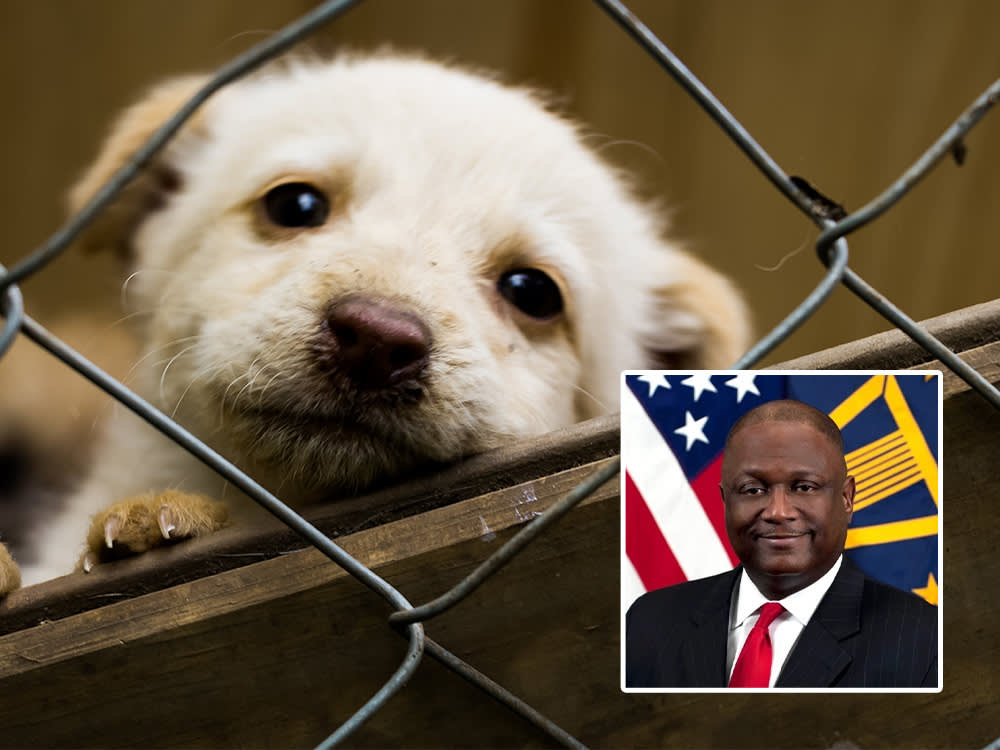
The detail that made the headlines was the jumper cables.
Frederick Douglass Moorefield Jr. was a deputy chief information officer at the Department of Defense, responsible for command, control, and communications. He also, for roughly twenty years, ran a dogfighting operation out of his home in Maryland under the name Geehad Kennels. When one of his dogs lost a fight and survived, he killed it. One method he used was a device made of jumper cables wired to an ordinary household plug, which he pushed into a wall socket and attached to the animal.
That is not an allegation. Moorefield admitted it as part of his guilty plea.
The part of this story that deserves your attention, though, is not the cruelty. It is what happened next.
What the investigation actually found
The case surfaced in October 2023, when the Justice Department unsealed a criminal complaint. Charged alongside Moorefield was Mario Damon Flythe, who cut hair for a living and ran his own kennel operation under the name Razor Sharp. Both faced a charge of conspiring to run an animal fighting venture. Prosecutors said the pair had coordinated on an encrypted messaging app: arranging matches, wagering on them, swapping methods for conditioning the animals, and comparing notes on the ones that had died.
The ring stretched across Maryland, Virginia, and Washington, D.C. Investigators eventually identified a wider network of participants operating in the region.
What officers carried out of the defendants’ properties reads like the inventory of a small industry. Steroids of the kind a vet would stock. Written conditioning regimens. A rug that looked to be soaked with blood. A weighted vest for building a dog’s muscle, patched with the Geehad Kennels name. And the electrical rig, plug and cables both, which the affidavit identified as the sort of apparatus used to put down dogs after a lost fight.
The trail had been there for years. According to court records reported by The New York Times, Anne Arundel County Animal Control had responded in November 2018 to a report of two dead dogs found in a plastic bag, roughly six miles from Moorefield’s house. The bodies carried wounds and scarring consistent with fighting. The bag also held mail addressed to Moorefield.
Twelve dogs were recovered when law enforcement searched the defendants’ homes in September 2023. Five years after the bodies in the bag.
The sentence
Flythe pleaded guilty in July 2024. Moorefield followed on September 13, 2024, pleading guilty to conspiracy to engage in animal fighting and to interstate travel in aid of racketeering.
The statutory maximum was five years.
In December 2024, Moorefield was sentenced to 18 months in federal prison, plus six months of home detention, a $20,000 fine, three years of supervised release, and a forfeiture judgment of $21,576.
Eighteen months. For a two-decade enterprise, for the fights themselves, and for the electrocutions.
That number is worth sitting with, because it is not an anomaly or a lenient judge having an off day. It is roughly what the federal system does with dogfighting. The maximum available is five years per count. Sentences well under that are ordinary. And that gap, between what these cases involve and what they cost the people running them, is the actual scandal buried in this story.
Dogfighting is illegal everywhere and thriving anyway
Fighting dogs is a felony in all fifty states and a federal crime under the Animal Welfare Act. It has been unambiguously outlawed for decades.
The Humane Society of the United States estimates that more than 40,000 people participate in organized dogfighting in this country. The ASPCA describes it as occurring in every part of the country and in every kind of community.
Forty thousand people, and a case this well-documented, this thoroughly evidenced, involving a defendant with a security clearance and a public profile, ends at eighteen months.
This is what people in animal-welfare enforcement mean when they say the problem is not the law on the books. The prohibition exists. What is thin is the investigative capacity to build these cases, and the sentencing weight at the end of them.
Why this case was even findable
Notice what actually broke it open: communications.
Not a neighbor’s tip, not a raid, not a dog found wandering. The case was built on an encrypted messaging thread in which the participants discussed fights, bets, training, and the deaths of specific animals. Dogfighting is a coordination problem, and the people involved have to talk to each other. That is the seam.
The bodies in 2018 were a lead that sat, apparently, for years. The digital trail is what turned it into charges.
That is a genuinely useful lesson, and it points to what this kind of enforcement actually needs: not more statutes, but investigators with the technical resources to work these networks, and prosecutors willing to bring them.
“The thing people misunderstand about these cases is that they are not crimes of impulse,” says Dr. Nina Kohl. “They are organized, they are financed, and they run for years in plain sight. When a case like this ends in a sentence you could serve and be home before the dogs you hurt have finished rehab, you have told everyone in that network exactly what the risk is.”
What newer research adds
Since the sentence came down, the case has become a reference point in the argument over federal animal-fighting penalties, precisely because the defendant’s profile made it impossible to dismiss as a rural or fringe crime. A senior Defense Department official, cleared for sensitive work, running a fighting operation from a suburban house for two decades, with a documented method for killing losing dogs, received eighteen months.
The advocacy case that has followed is straightforward: raise the sentencing exposure for animal-fighting convictions, and fund the digital-forensics work that finds these networks in the first place. Neither of those is a change to what is legal. Both are changes to what is likely.
The twelve dogs
The dogs recovered from those homes are the reason this matters, and they are the part of the story that gets the least coverage.
Dogs seized from fighting operations are not, as the myth goes, automatically dangerous or unsalvageable. Most are individually evaluated, and a large share are rehabilitated and adopted into homes. It is slow, expensive work, and it is paid for by rescue organizations and shelters rather than by the people who created the need for it.
That is the closing arithmetic of this case. Twenty years of fights. Eighteen months of prison. And a rehabilitation bill sent to somebody else.
References
- U.S. Attorney’s Office, District of Maryland. “Arnold Man and Former Department of Defense Deputy Chief Plead Guilty to Conspiracy to Engage in an Animal Fighting Venture.” Department of Justice, September 2024. justice.gov
- ABC News. “Former Defense Department deputy chief sentenced to 18 months in federal prison for role in dogfighting ring,” December 2024. abcnews.go.com
- Stars and Stripes. “Former Pentagon official imprisoned for role in multistate dogfighting ring,” December 2024. stripes.com
- The New York Times. “Pentagon Official Charged in Dogfighting Ring,” October 2023. nytimes.com
- Humane World for Animals (formerly HSUS). “Dogfighting: How to identify and report it.” humaneworld.org
- ASPCA. “Dogfighting.” aspca.org
- Animal Welfare Act, 7 U.S.C. § 2156. congress.gov
Marcus Webb writes about the gear, gadgets, and everyday choices that make life with a pet easier. His coverage runs from product picks to training and the causes worth paying attention to, always with an eye on what actually earns a place in your home.
Meet our experts ↗Keep reading
 Living27 Golden Retrievers, One Backyard: Inside a Rhode Island RescueNina Vasquez · 4 min
 LivingBig Dogs Don't Lose Their Homes Over Behavior. They Lose Them Over Leases.Marcus Webb · 6 min
 LivingThe Cheapest Way to Empty a Shelter Is the One Nobody UsesJames Okafor · 6 min
 LivingHe's Fostered Almost 40 Pit Bulls. The Stigma Is the Only Thing He Can't Rehome.Leila Torres · 8 min
 Living93 Dogs Died in Her Care. A Year Later, the Case May Never See a JailMarcus Webb · 4 min
 LivingOne Sleepover Makes a Shelter Dog 14 Times More Likely to Get AdoptedLeila Torres · 5 min