


27 Golden Retrievers, One Backyard: Inside a Rhode Island Rescue
When police searched a Hopkinton property, they found 27 Golden Retrievers, 20 of them puppies, living in conditions that pointed to an illegal breeding operation. The dogs were surrendered and safe, but a ringworm diagnosis meant their wait for homes was just beginning. The case is a quiet argument for why even purebreds end up in rescue.

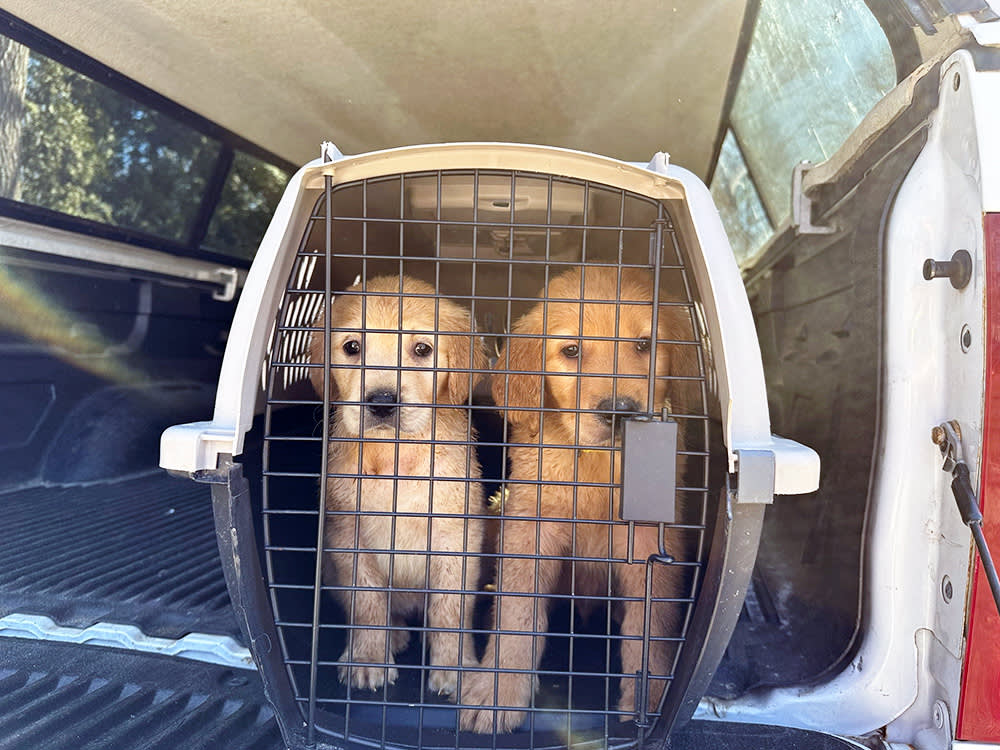
The detail that stops you is the arithmetic. Twenty-seven Golden Retrievers, one property, and twenty of them puppies. That is not a household that loves the breed. That is a business.
In early March 2024, Hopkinton, Rhode Island, police followed up on a tip about a property thought to be running an illegal dog-breeding operation. Officers did not go alone. They arrived with Hopkinton Animal Control, the Rhode Island SPCA (RISPCA), and an environmental scientist. What they found, according to the department’s public Facebook post, were 27 Golden Retrievers kept in conditions the police described as harmful to the animals’ health.
Police did not comment on the property owner’s motive. But the sheer count of same-breed dogs, and the fact that most were puppies, lined up with the original tip: this looked like breeding for profit. The owner cooperated, and all 27 dogs were surrendered, then brought to the RISPCA for wellness exams and care.
The rescue that couldn’t happen right away
Here is where a feel-good story turns complicated. As soon as word spread, would-be adopters flooded in, exactly the outpouring you would hope for. But the dogs could not go anywhere yet. The crowded, neglectful setting they came from had left its mark, and the RISPCA soon announced that the surrendered Goldens had tested positive for ringworm. That put adoption, and even fostering, on hold for several weeks.
Ringworm is not actually a worm. It is a contagious fungal skin infection that spreads easily between animals, and to people, which is exactly why a shelter cannot place infected dogs into homes until it is cleared.
“Ringworm is common in crowded, unsanitary conditions, and it’s one of the reasons a rescue can’t just open the floodgates the day dogs come in,” says Dr. Lena Park. “It’s treatable and the dogs recover well, but it takes weeks of medication and repeat testing to be sure they’re no longer contagious. Waiting protects the next family, and their other pets, too.”
So the RISPCA did the unglamorous work: treating the fungus, running the medical care, and holding off on the flood of applications until the dogs were genuinely ready. The organization told the public it was focused on the dogs’ medical needs and couldn’t weigh adoption requests yet, and thanked people for their patience. Once treatment wrapped, the plan was to list the adoptable dogs on the RISPCA website.
Why even a “desirable” breed ends up in rescue
It is easy to assume shelters are full of hard-luck mutts and that a purebred Golden Retriever would never need saving. Cases like this one say otherwise. When a breed is popular and profitable, it becomes a target for exactly the kind of high-volume operation that treats living animals as inventory. The result is the paradox in that Hopkinton backyard: two dozen of America’s most beloved family dogs, bred in misery, needing rescue precisely because they were in demand.
Judging by the flood of comments on the RISPCA’s posts, these particular Goldens were never going to struggle to find homes. Plenty of people offered to take the older dogs specifically, the ones who had spent their lives being bred, so they could finally just be somebody’s pet. That instinct, to choose the dog who has been used rather than the easy puppy, is the whole point of adoption.
If you want to help in cases like this, the move is the same one those commenters reached for: support the rescues doing the recovery work, and when you are ready for a dog, ask a shelter first. The purebred you are dreaming of may already be waiting, treatment finished, for a backyard that means something different than the one it came from.
Nina Vasquez writes about life at home with pets and the relationships at the heart of it. Her work covers day-to-day living, people-and-pet stories, and the products that fit into a real household, with a warm, grounded take on everyday pet ownership.
Meet our experts ↗Keep reading
 LivingThey Seized 305 Dogs, 30 Guns, and $40,000. The Dogs Were the Easy Part.Nina Vasquez · 6 min
 LivingHundreds of Thousands of Dogs Died Last Year. This Film Blames Us.Marcus Webb · 6 min
 LivingShe's Fostering 23 Dogs. Nobody Posts the Rest of It.Leila Torres · 6 min
 LivingShelters Are Overflowing. So Where Did All the Fosters Go?James Okafor · 9 min
 Living43 Arrests at a Texas Dogfight. Nearly All of Them Bonded Out.Dr. Amara Solis · 7 min
 LivingA Drug Raid Opened a Door. Behind It: a Dogfighting Ring and a 9-Foot Alligator Fed on the EvidenceJames Okafor · 5 min