


43 Arrests at a Texas Dogfight. Nearly All of Them Bonded Out.
Deputies raided a pit in Newton County and found two dogs still fighting. The suspects were free within days, and then the dogs left on the property disappeared. The law, not the sheriff, is what made that possible.

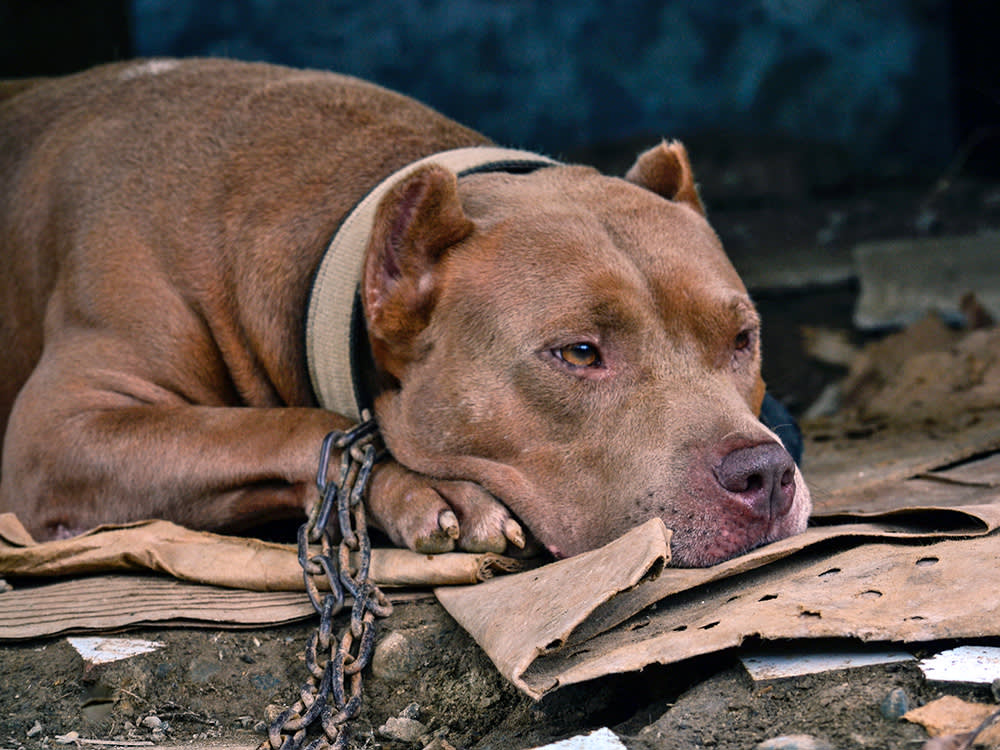
The detail that stops you is the timing. When Newton County deputies moved in on the property off FM 1004 on the night of November 22, 2025, two dogs were still in the makeshift pit, still fighting. Not evidence of a fight. A fight, in progress, with an audience.
Forty-three people were arrested. Sixteen dogs were recovered. Roughly $74,000 in cash was seized, along with weapons and forty vehicles, many of them holding visible cash and illegal drugs. Some of the spectators had driven from as far as San Antonio to be there.
And then, within days, forty-one of the forty-three were back on the street.
That is not a story about a sheriff who failed. Sheriff Colton Havard’s office spent eight months building the case, flew a drone over the property first, and found lookouts posted in the trees. The story is about what the law lets you charge a person with once you have caught them standing around a pit watching two dogs try to kill each other, and the answer is: startlingly little.
What a spectator is actually facing
Under Texas Penal Code § 42.10, attending a dogfight as a spectator is a Class A misdemeanor. Maximum penalty: up to one year in county jail and a fine of up to $4,000. That is the same tier as a first-offense DWI.
Causing a dog to fight another dog, or organizing and profiting from a fight, escalates into felony territory. But most of the people at a pit on a Saturday night are not, on paper, the organizers. They are the crowd. And the crowd is what makes the enterprise viable, because the crowd is where the betting money comes from.
Federal law is somewhat sharper. Under the Animal Welfare Act, sponsoring or exhibiting an animal in a fighting venture, or buying, selling, transporting, or training an animal for one, is a felony carrying up to five years. Knowingly attending a fight was only added as a federal offense in the 2014 Farm Bill, and it carries up to a year. Bringing a child under sixteen to one carries up to three.
The gap between the money in the room and the exposure of the people in it is what makes dogfighting durable. Havard was blunt about the constraint:
“Almost every defendant arrested has the right to have a bail set after being arraigned by a judge, as well as the opportunity to post bond,” he wrote. “Often times, we feel let down by our justice system, but as peace officers, we are restricted to only enforcing laws as they are written by the lawmakers.”
Bonds were set around $5,000. The investigation is still open, and the organizers of the ring have not been arrested.
Then the rest of the dogs disappeared
The sixteen recovered dogs are only part of the count. There were more dogs still on the property, and this is where the case turns genuinely grim.
Newton County has no animal shelter. Its resources are, in the sheriff’s own description, very limited. So his office filed paperwork with a county judge, got authorization to seize the remaining dogs, and then began the actual hard part: calling 501(c)(3) rescues and asking whether anyone had space. State Representative Trent Ashby’s office got involved. Legislators and members of Congress made calls, trying to place animals not just in Texas but anywhere in the country.
While all of that was happening, someone drove onto the property and took the dogs.
“While efforts were actively underway to locate placement, the dogs were removed from the property by unknown individuals,” Havard wrote in a statement on November 26. “We are saddened that the animals were removed before we could secure the appropriate placement to provide them with care.” He said he suspected some of the people his office had arrested were involved in the removal, and asked the Texas Department of Public Safety and the Governor’s office to look into it.
Read that sequence again, because it is the whole problem in miniature. The people who allegedly ran a dogfighting operation were released on bond. The county could not immediately house the animals because rural Texas counties are not built to house forty seized dogs. During the days that gap stayed open, the evidence, which is also the victims, walked.
The two dogs from the pit
The pair pulled out of the ring, a black-and-white pit bull and a brown one, went to the Nederland Neighborhood Veterinary Center, a 24-hour clinic that had never before treated a dogfighting victim. The sheriff’s office covered the bills.
Their injuries turned out to be relatively superficial. The damage that took longer to see was the other kind.
“Emotionally, they were pretty shut down,” Jessica Desormeaux, the clinic’s assistant practice manager, told 12 News. The dogs would not make eye contact and stayed curled in the backs of their kennels. Within a week or so they had started to shift: coming forward, engaging with technicians, doing the ordinary dog things that had not been available to them.
The black-and-white male, in particular, turned out to be strikingly friendly with people. He is going to need more time with other dogs. That combination, warm with humans and wary of dogs, is the single most common profile among fight-bust survivors, and it is exactly the profile the public gets wrong.
A dog who came out of a fighting operation is not a dangerous dog wearing a disguise. What they usually are is a dog with a specific, treatable problem around other dogs and, very often, an unusual amount of affection for people. Behavior evaluation is done individually, animal by animal, because the pit is the thing they came from, not the thing they are.
That approach, individual evaluation instead of blanket euthanasia, has been standard in large fight-bust cases since the Michael Vick seizure in 2007, when dozens of dogs written off as unsalvageable went on to be placed in homes, and some became certified therapy animals.
What to do with the anger
The useful response to a case like this is not another argument about pit bulls on the internet. It is much more boring, and it works:
Report it. Dogfighting rings are found because neighbors get tired of the sounds and the traffic. Newton County’s investigation opened in March 2025 on the strength of tips and complaints from the community. Havard’s office says it has since forwarded a stack of tips about other counties to the appropriate jurisdictions. Those tips are the whole pipeline.
Give rescues capacity, not just cash after the fact. The bottleneck in this case was not money or willingness. It was kennel space, on a specific weekend, in a county with none. The sheriff’s office says it now hopes to use some of the seized cash to build kennels for the next time.
Adopt the survivors, and do it clear-eyed. A fight-bust dog often needs a home with no other dogs, a slow decompression period, and an owner who will do management rather than hope. That is a real ask, and the dogs who get it tend to do remarkably well.
Push on the statute. The reason forty-one people walked out within days is written down, in plain language, in the penal code, and legislators are the ones who write it.
The dogs that got taken off that property are still out there somewhere, and nobody knows what happened to them. That is the part of this that should be hardest to put down.
References
- Texas Penal Code § 42.10, Dog Fighting. https://statutes.capitol.texas.gov/Docs/PE/htm/PE.42.htm
- 7 U.S. Code § 2156, Animal fighting venture prohibition. Legal Information Institute, Cornell Law School. https://www.law.cornell.edu/uscode/text/7/2156
- Animal Legal Defense Fund. “Animal Fighting: Federal Law.” https://aldf.org/article/animal-fighting-facts/animal-fighting-federal-law/
- Lawrence, Scott. “Sheriff Colton Havard says some dogs removed from property after raid.” KFDM, November 26, 2025. https://kfdm.com/news/local/sheriff-colton-havard-provides-update-on-operation-pit-bull
- 12 News Now. “Newton County dogfighting raid leads to 45 arrests; injured dogs begin recovery.” https://www.12newsnow.com/article/news/crime/newton-county-dogfighting-raid-leads-to-45-arrests/502-ac7f111a-fca5-442b-af2d-f86c54cfc744
- 12 News Now. “Dogs vanish from property amid Newton County’s ‘Operation Pitbull’ investigation.” https://www.12newsnow.com/article/news/local/dogs-vanish-from-property-amid-newton-countys-operation-pitbull/502-a17d47f1-973f-443e-9be7-280346fbe849
Dr. Solis is a board-certified veterinary dermatologist with over twelve years of clinical experience. She advises on skin conditions, allergies, and grooming practices that affect coat and skin health. All dermatology and allergy content at The Pet Times is reviewed by her team before publication.
Meet our experts ↗Keep reading
 LivingHe Lost 90% of His Business. Then He Groomed 1,461 Dogs for Free.Marcus Webb · 5 min
 LivingTwo Years, Two Best in Show Winners, Two Sets of Cut-Off Ears. That's Not a Coincidence.Dr. Ravi Mehta · 11 min
 LivingYour Dog Slips the Yard. A Cop Shows Up. What the Data Says Happens Next.Marcus Webb · 6 min
 Health & WellnessA Man Shot a Dog for Running at Him. He Was Never Charged.Marcus Webb · 8 min
 Health & WellnessLeaving Your Dog Out in the Cold Isn't Just Cruel. In These States, It's a Felony.Dr. Priya Nair · 5 min
 LivingHow the Animal-Rescue Network Beat Helene's FloodwatersNina Vasquez · 5 min