


A Man Shot a Dog for Running at Him. He Was Never Charged.
Duke chased a squirrel and died for it. The case closed with nobody held responsible, which makes your dog's recall a safety device, not a party trick.

The most useful thing about Duke’s death is also the bleakest: it tells you exactly how much the law will do for your dog if a stranger decides he feels threatened.
The answer is nothing.
What happened
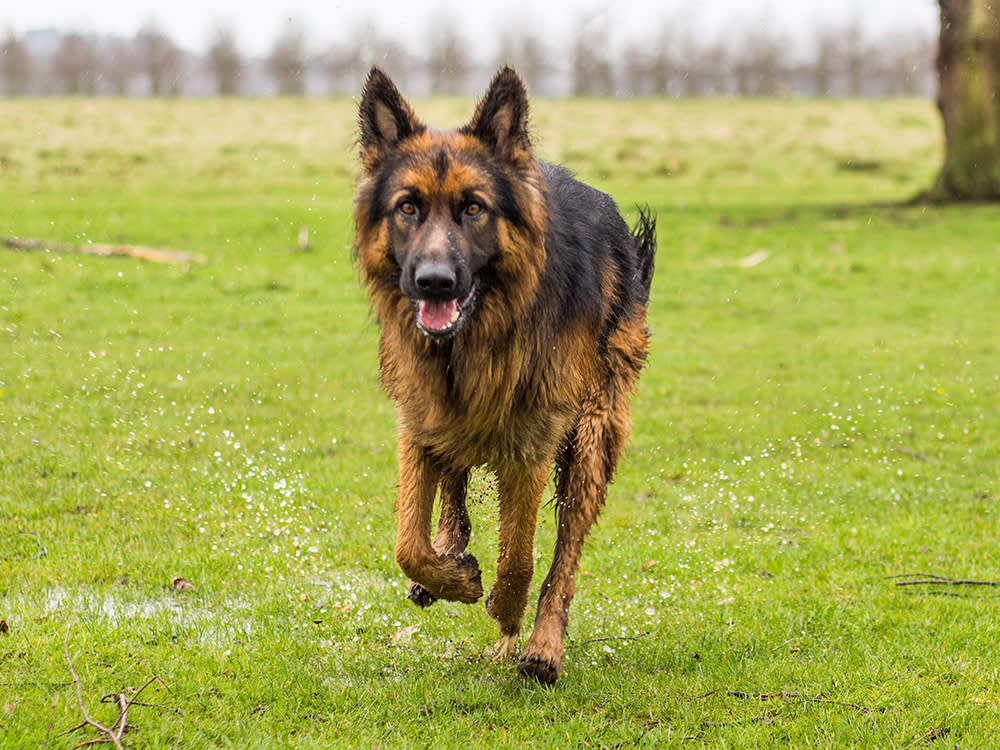
On September 13, 2023, at Nashville’s Percy Warner Park, a six-year-old German Shepherd named Duke was shot and killed.
Police in Nashville reported that the man who fired, aged 31, said he had felt threatened as the loose dog came toward him. He told officers the dog was roughly three feet away and that he believed he was about to be attacked.
Duke’s 61-year-old owner told police his dog was indeed off-leash, and wearing an electric shock collar. By his account, Duke caught sight of a squirrel roughly twenty feet off and gave chase, and the collar did nothing when he pressed the button. His dog, he said, was not an aggressive animal.
Other people in the park who saw the shooting said Duke had posed no serious threat and was friendly.
No charges were brought. The Davidson County District Attorney’s office reviewed the case, interviewed the known witnesses, examined the scene, and announced in December 2023 that under the applicable law, no charges would be filed.
The rules that were in play, and the rule that wasn’t
The legal geometry here is worth understanding, because it is not what most people assume.
Tennessee state parks do not require dogs to be leashed on the grounds, provided they are leashed entering and exiting. Owners must have a leash on hand, and by all accounts Duke’s owner did.
Firearms and weapons of any kind are strictly prohibited in the park.
Read those two sentences again. The dog was, arguably, within the rules. The gun was not. And the dog is the one who died, and the shooting produced no charge.
Tennessee is an open-carry state. Which means the practical rule, the one that actually governs what happens to your dog in a public space, is not written in any park regulation. It is this: a stranger’s subjective sense of threat can be the last word, and the law may well agree with him.
The response
In the days after, a memorial appeared at Percy Warner. Park visitors spelled Duke’s name out in sticks. Someone left a painting bearing the line: “Of all the sights I love in this world — near the top of the list is this one: dogs without leashes.”
The Asher House, an Oregon-based animal rescue, posted a video calling for legal consequences under the hashtag #JusticeForDuke, and its founder Lee Asher made the point that a carry permit is not a license to shoot a dog for no reason. The video passed a quarter of a million views within five days. A change.org petition demanding charges gathered close to 15,000 signatures, citing eyewitnesses who described a calm, friendly dog and said they had felt no fear in his presence.
None of it changed the outcome. Three months later, the DA declined to charge.
The uncomfortable conclusion
If you are waiting for the law to protect your off-leash dog from a frightened armed stranger, you are waiting for something that did not arrive for Duke and will probably not arrive for you.
That is not a reason to keep every dog leashed forever. It is a reason to be clear-eyed that your dog’s recall is not a nice-to-have. It is the safety equipment. It is the only thing standing between a squirrel and a stranger’s judgment call, and it is entirely within your control.
So here is the honest standard.
When your dog is actually ready to be off-leash
Not “when he usually comes back.” The bar, per the American Kennel Club and every trainer who has watched this go wrong, is:
Your dog comes when called, consistently, in the face of any and all distraction.
Any and all. Not “in the yard.” Not “when nothing interesting is happening.” A recall that fails around a squirrel is a recall that fails at exactly the moment it is needed, because the squirrel is the whole point.
Test it first in a secure location, a fenced yard or a gated dog run, before you take it anywhere you cannot control. If your dog’s recall is not yet perfect, he should not be loose in an open space. Full stop.
And note the detail in Duke’s case that everyone glosses over: his owner had a shock collar on him, activated it, and the dog kept running. Whatever you think of the tool, it did not stop the behavior at the only moment that mattered. An aversive collar is not a recall. It is a punishment delivered after the decision has already been made, and a dog in high prey drive will run straight through it.
Breed and drive change the math
The AKC’s specific caution is worth restating: breeds with high prey drive, like terriers and sighthounds, need extra scrutiny before running loose in public. These dogs can be genuinely unreliable off-leash anywhere they might see or smell a small animal, and no amount of goodwill overrides a hardwired chase.
This is also why many parks require leashes near wooded areas regardless of a dog’s training, to protect wildlife rather than the dog. Tennessee’s parks outright forbid pets on certain trails, and Duke was reported to have been near one.
Even with a flawless recall, take these precautions
A perfect recall solves the “will he come back” problem. It does not solve the human problem.
Distance is the enemy. Not even the best recall works if your dog cannot hear it. A dog two hundred yards ahead of you, out of earshot and out of sight, is not off-leash, he is unsupervised.
Some dogs carry other people’s baggage. If your dog is a breed or breed type that people discriminate against, pit bull types most obviously, strangers may be quicker to read him as a threat when he is loose. This is unjust and it is also the operating environment. Plan for the world you have.
Do not let your dog greet strangers without asking. Your dog may be friendly. The person is a variable you cannot assess from thirty feet, and you are asking them to make a snap judgment about an animal running at them. Ask first, every time.
Premeditate the dog-to-dog meetings, too. Trainers have been sounding this note for years: uncontrolled dog-park introductions frequently create behavior problems and anxieties rather than resolving them. Play styles differ enormously, and what one dog experiences as fun another experiences as a boundary being trampled, which is where reactivity gets manufactured.
What newer research adds
The most useful update since Duke is not legal, it is technical, and it changes what a responsible off-leash walk looks like.
A long line, meaning a 20-to-50-foot lead attached to a well-fitted harness, has become the standard bridge between “on-leash” and “off-leash” in reward-based training, and it is now widely recommended precisely because it gives a dog real freedom without gambling on a recall that is not finished yet. It is not a compromise. It is the tool you use for the many months while the recall is being built, and it is the tool experienced trainers still use in unfenced spaces with dogs whose drive is high.
The research on the alternative has also settled. Controlled work, including a trial whose trainers were nominated by the electronic collar industry’s own association, has found e-collars no more effective than reward-based training at achieving the same outcomes, while producing measurably more stress. Duke’s collar is a datapoint in that literature, and a heartbreaking one.
Tragedies like this cannot be predicted. The opportunities for them can be reduced, and every one of those reductions is something you do rather than something a law does for you. That is not a satisfying place to end. It is where the case actually ended.
References
- Metropolitan Nashville Police Department, “Investigation Continues into the Fatal Shooting of a German Shepherd Dog in Percy Warner Park.” https://www.nashville.gov/departments/police/news/investigation-continues-fatal-shooting-german-shepherd-dog-percy-warner-park
- WSMV, “No charges filed after dog shot, killed at Percy Warner Park,” December 21, 2023. https://www.wsmv.com/2023/12/21/no-charges-filed-after-dog-shot-killed-percy-warner-park/
- American Kennel Club, “Is Your Dog Ready to Be Off Leash?” https://www.akc.org/expert-advice/training/dog-ready-to-be-off-leash/
- China, L., Mills, D. S., & Cooper, J. J. “Efficacy of Dog Training With and Without Remote Electronic Collars vs. a Focus on Positive Reinforcement.” Frontiers in Veterinary Science, 2020. https://www.frontiersin.org/articles/10.3389/fvets.2020.00508/full
- American Veterinary Society of Animal Behavior, “Position Statement on Humane Dog Training.” https://avsab.org/wp-content/uploads/2021/08/AVSAB-Humane-Dog-Training-Position-Statement-2021.pdf
Not a substitute for your vet. Our guidance is educational. For urgent symptoms, contact a vet or emergency clinic right away. Editorial standards
Marcus Webb writes about the gear, gadgets, and everyday choices that make life with a pet easier. His coverage runs from product picks to training and the causes worth paying attention to, always with an eye on what actually earns a place in your home.
Meet our experts ↗Keep reading
 LivingThe Kayak Isn't What Hurts Dogs. The Water Is.Dr. Ravi Mehta · 8 min
 LivingYou Raise the Puppy for a Year, Then Hand It Back. On Purpose.Jordan Ellis · 7 min
 LivingThe 'Trainer' Who Starved 133 Dogs Is Finally Going to Prison for 15 YearsNina Vasquez · 5 min
 LivingTwo Years, Two Best in Show Winners, Two Sets of Cut-Off Ears. That's Not a Coincidence.Dr. Ravi Mehta · 11 min
 TrainingThat Bootie Wobble Isn't Funny. You Just Blindfolded Their Feet.Dr. Nina Kohl · 8 min
 Training'Drop It' Is the One Cue That Might Save Your Dog's LifeDr. Nina Kohl · 8 min