


How the Animal-Rescue Network Beat Helene's Floodwaters
When Hurricane Helene tore across six states, a loose web of foundations, shelters, and transport rescues moved dogs and cats out of harm's way within days. Here's who did what, and how you could help them keep going.
Hurricane Helene made landfall in Florida in late September 2024 and did not stop there. It carved a path across five more states, cutting roads, knocking out power for millions, and stranding people and animals in fast-rising water. By the end of the month, more than 100 people had died and hundreds were reported missing, with those numbers still climbing.
In the middle of that, a scattered network of animal groups did something quietly remarkable: it mobilized fast. Foundations wrote emergency checks, shelters in the storm’s path emptied out ahead of the water, and transport rescues drove and flew displaced pets hundreds of miles to safety. None of it was centrally coordinated, and all of it happened within a couple of days. Here is a look at who moved, and how quickly.
The foundations that funded the response
Bissell Pet Foundation got to Asheville, North Carolina, one of the hardest-hit areas, and put two planes in the air, flying animals from the Asheville Humane Society over to the Forsyth Humane Society. All told, that airlift moved 100 pets and delivered more than 1,000 pounds of supplies. Asheville Humane’s director of operations, Jennifer Walter, told local news the help arrived at exactly the right moment, and that the team was holding onto the bright spot of lives saved.
Pedigree Foundation deployed alongside American Humane’s rescue team in Georgia. The foundation had prepared for hurricane season in advance, granting American Humane $125,000 to support its disaster work, and it opened a separate relief channel offering up to $5,000 apiece to 501(c)(3) shelters and rescues that applied.
The shelters that took the hit and kept going
Some organizations were victims and responders at once.
Brother Wolf Animal Rescue in Asheville was, in its own words, devastated. Floodwater reached the top of the facility and submerged its vehicles. Staff managed to evacuate every animal in time, and no pets were hurt, but the shelter faced a long rebuild to keep serving the thousands of animals it takes in each year.
Home for Good Dogs watched its Almost Home Wellness Center in Aiken, South Carolina, get badly damaged, left without water, electricity, or air conditioning, its outdoor facilities destroyed, and many staff unable to reach it through downed trees and power lines. Seventy dogs needed immediate placement with fosters.
The transporters that made room
The other half of disaster response is logistics: opening beds by moving animals who were already homeless before the storm out of the region, so local shelters could absorb the newly displaced.
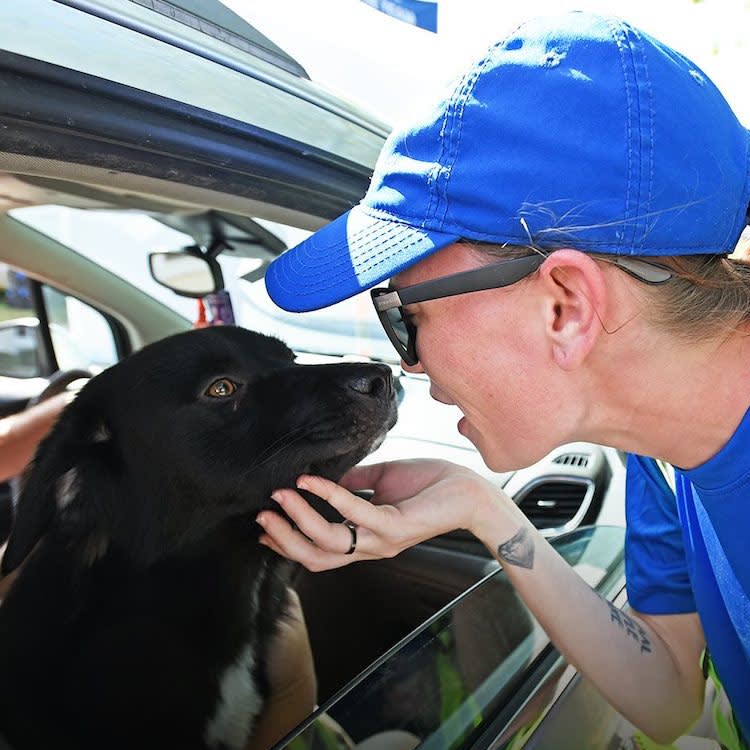
The Humane Society of the United States worked the ground in multiple states, moving about 45 animals up to a Maryland rehabilitation center from three overwhelmed facilities, City of Newport Animal Control, Cocke County Animal Control, and Smoky Mountain Humane Society. Down in Florida, the group ran a drive-through handing out free pet food and supplies and stood up a free veterinary clinic for owners suddenly cut off from care.
North Shore Animal League America answered a call from the Albany Humane Society in Georgia, which sat directly in the storm’s path, hauling in supplies and moving shelter animals up to New York to clear space.
Waldo’s Rescue Pen, based in New York City and Southern California, pulled pets north out of the storm’s path and, across a single frantic week, saved more than 100 dogs, then put out an urgent call for fosters.
The shelters that opened their doors
Several Florida organizations simply made room and took animals in.
SPCA of Brevard took in pets pulled out ahead of Helene and wound up with a group available for adoption in Brevard County: ten dogs, four kittens, and seven puppies. Executive director Susan Naylor told a local outlet that the more people adopted or fostered, the more animals the shelter could keep helping.
Florida Urgent Rescue, a Jacksonville nonprofit, had gotten ahead of the storm, pulling more than 93 dogs and cats out of rural shelters, many of which kept animals in open-air spaces, before Helene arrived. Most of those pets became available for adoption.
The Humane Society of Broward County absorbed 32 animals brought out ahead of the storm from North Florida shelters with no safe indoor space, planning to place them with fosters and adopters once they cleared a veterinary check.
What the response asked of everyone else
The through-line across every one of these groups was the same short list of needs: donations to fund transport, fuel, and rebuilding; foster homes to open beds; and adopters to make those beds permanent. A disaster like Helene does not just create newly homeless pets, it strands the ones who were already waiting. Every dog fostered or adopted from a shelter far from the flood zone freed up space for an animal pulled out of it.
That is the part worth remembering after the water recedes and the headlines move on. The rescue network that moved so fast in those first days runs almost entirely on the same fuel year-round, and it is quietly stretched thin long after a storm stops trending.
References
- CNN reporting on Hurricane Helene’s landfall, path, and casualties, late September 2024.
- ASPCA, “ASPCA Continues Hurricane Helene Recovery & Relief Efforts.” https://www.aspca.org/news/aspca-deploys-assist-aftermath-hurricane-helene
- Humane World for Animals (HSUS), “We’re on the ground to help animals in the aftermath of Hurricane Helene.” https://www.humaneworld.org/en/blog/animal-rescue-team-hurricane-helene-relief
Nina Vasquez writes about life at home with pets and the relationships at the heart of it. Her work covers day-to-day living, people-and-pet stories, and the products that fit into a real household, with a warm, grounded take on everyday pet ownership.
Meet our experts ↗Keep reading
 LivingA Viral Dog Reunion Rewrote California LawMarcus Webb · 6 min
 LivingUkraine's Animals Are Still in the War. Here's How to Actually Help.James Okafor · 5 min
 LivingNearly Half of Abuse Survivors Stay Because of a Pet. These Groups Exist to End That Trap.Nina Vasquez · 7 min
 LivingShe Was Convicted of Torturing Animals. The Law Still Called Them Hers.James Okafor · 6 min
 LivingOne in Three Pets Has No Home. The Top Reason People Give Theirs Up Isn't Cruelty.Nina Vasquez · 7 min
 Living10 Free Ways to Help Animal Shelters, Ranked by What They Need MostNina Vasquez · 5 min