


She Was Convicted of Torturing Animals. The Law Still Called Them Hers.
A Maryland woman faced 328 counts of animal cruelty, 80 of them felony torture charges. Then a court asked her to help rehome the animals she'd been convicted of abusing. She sent friends to collect them.

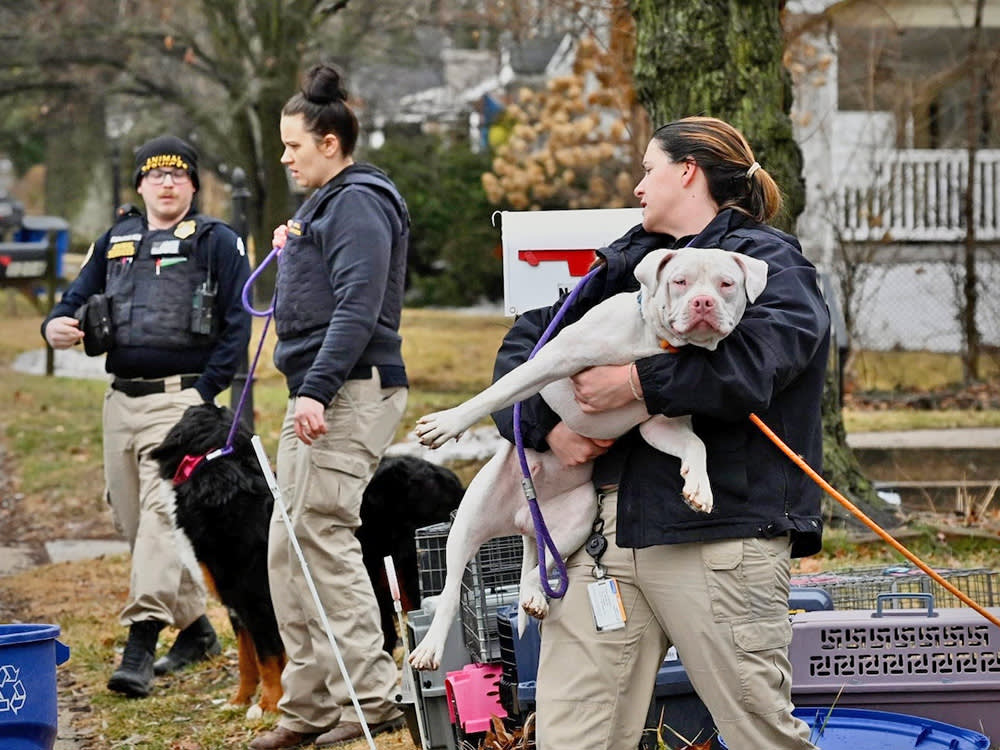
The detail that makes the Kimberly Klein case so hard to shake is not the number of charges, though the number is staggering. It is the sentence, buried in a February court order, that asked a woman convicted of animal cruelty to make a good-faith effort to rehome the animals she had been convicted of abusing.
She made an effort. It was not the one the court had in mind.
What happened
In early 2025, authorities removed 82 animals from Klein’s home in Halethorpe, Maryland. The inventory reads like a small, badly run zoo: 27 birds, 16 dogs, 11 geckos, eight fish, six tortoises, three cats, two pigs, an iguana, a bearded dragon, a snake, a ferret, a hamster, and a rabbit. They were distributed to foster homes and shelters across the region.
Prosecutors charged Klein with 328 counts of animal cruelty, including 80 felony counts for intentional torture.
On September 10, an assistant state’s attorney permitted her to take a plea, on an understanding of the case that now looks generous to the point of naïveté: that this was a woman who had simply accumulated more animals than any one person could reasonably look after. She was sentenced to a year of probation. Under its terms she was barred from owning animals, with four exceptions the court allowed her to keep: one dog, two birds, and a reptile.
Then, on February 3, Baltimore County Circuit Judge Wendy Epstein ordered Klein to cooperate with Baltimore County Animal Services and to make a good-faith effort to rehome the rest.
The loophole
To understand how that instruction could possibly have made sense to anyone, you have to accept an uncomfortable premise that sits underneath nearly all American animal law.
The animals were still legally hers.
Klein’s attorney, Larry Greenberg, made the point directly to the Baltimore Banner: the animals were her property, not the county’s. The reasoning behind letting her participate in their disposition was, in part, financial. She could sell some of them and use the proceeds. Greenberg told the paper that the intention was never for Klein to end up with the animals back, and that if that happened she would return to jail.
That is exactly what happened.
Instructed to take an active role in rehoming her own victims, Klein sent family and friends to collect them, and a substantial number of them came straight back to the house they had been rescued from.
The people who had spent a year fostering these animals were not surprised. One foster parent asked the Banner the obvious question: why was a woman arrested for harming these animals given any say in what happened to them? A local rescuer, Leah Biddiniger of Bring ‘Em Home Animal Rescue & Trapping, said she had expected this outcome all along, and that the justice system had failed. Katie Flory of the Maryland SPCA said she had never seen anything like it, and had yet to meet a single person who thought it was anything other than an injustice.
The second seizure
On February 20, Baltimore County Police and animal control returned to Klein’s home with a warrant, which they had to present at the door before she would open it. They removed 13 dogs, along with multiple reptiles and birds. According to the Banner’s reporting, it took five vans to carry them out.
The tip that brought officers back came from Klein’s neighbors, a fact that Baltimore County Animal Services Director René A. Varela was emphatic about: the case existed in the first place, he said, only because concerned residents got involved.
Maryland State Delegate Sheila Ruth wrote on Facebook that the situation was outrageous, arguing that animals are neither bargaining chips nor property to be liquidated against debts, but sentient beings, and that a person who caused them that much suffering should have no voice in their fate. Baltimore County Executive Kathy Klausmeier, who has signaled she wants county law changed so this cannot recur, posted that animal welfare rests on a network of people willing to step up.
A hearing to consider modifying Klein’s sentence had been scheduled for February 27. It was postponed.
The part that isn’t unique to Maryland
It is tempting to file this as a story about one bad prosecutor, one lenient judge, and one woman who worked the system. That reading is comforting and it is wrong.
The mechanism that let this happen is not a Maryland quirk. It is the foundational fact of animal law almost everywhere in the United States: animals are property. They can be owned, bought, sold, inherited, and used as collateral. Cruelty statutes are, in effect, restrictions on what an owner may do with their own property, and a conviction under them does not automatically extinguish the title.
Which produces the grotesque logic on display here. Klein was convicted of torturing beings the law still classified as her assets. So when the court needed those assets disposed of, it asked the owner.
There is a fix, and a good many states already have some version of it. Cost-of-care and bond statutes require a person whose animals have been seized to post money for their upkeep while a case proceeds, or forfeit ownership. The animals are then free to be adopted immediately rather than warehoused in foster care for a year while the courts grind. It removes the abuser’s leverage, and it removes the perverse incentive to drag proceedings out.
Maryland’s protections in this area are weaker than they should be, and the Klein case is the argument for strengthening them, written in unusually large letters.
“The animals in a case like this arrive traumatized twice: once by the abuse, and again by being moved, re-moved, and moved back,” says Dr. Amara Solis. “Every month a case spends in limbo is a month those animals spend in limbo with it. That’s not a legal technicality. That’s their life.”
What happened next
The story did not end with the February seizure. In April 2026, a grand jury indicted Klein again, this time on roughly 170 additional animal cruelty charges, including aggravated cruelty, torture, and failure to provide necessary veterinary care, all stemming from the animals found at the home after the court had barred her from having more than four. Those charges are on top of the 328 counts she already faced.
The pattern that the plea deal was meant to resolve, in other words, simply resumed.
What you can actually do
The single most consequential act in this entire story was performed by a neighbor who made a phone call.
- If you see it, report it. Animal control, local police, or your state’s cruelty hotline. Cases like this begin with someone deciding it is not their business, and end with someone deciding that it is.
- Push at the state level. Cost-of-care bond laws, mandatory forfeiture on conviction, and ownership bans with actual teeth are all state legislation, which means they are unusually reachable. Your state legislator will read a letter about this.
- Support the fosters. The organizations that absorbed 82 animals for a year, and then watched them go back, run on donations and on volunteers. They are the reason there was anything to save.
References
- Baltimore Banner. “Halethorpe Woman Charged with Abusing Animals Helps Decide Where the Animals Go.” https://www.thebanner.com/community/local-news/baltimore-county-animal-abuse-recop-kimberly-klein-YE7GIPJHRNF2DPRV3ILMDYVYTA/
- Baltimore Banner. “Animal Control Officers Seize 13 Dogs, Multiple Birds and Reptiles from Halethorpe Home.” https://www.thebanner.com/community/local-news/animal-cruelty-raid-halethorpe-kimberly-klein-O4TCZJCHXVAALAVBWTFATDYHCA/
- Baltimore Banner. “Halethorpe Woman Faces More Charges in Animal Cruelty Case.” https://www.thebanner.com/community/local-news/halethorpe-hoarding-more-charges-H5EV762DNJERHKI4XDVUWHL6QA/
- WMAR-2 News. “Halethorpe Woman Faces 168 Charges Related to Animal Cruelty.” https://www.wmar2news.com/news/region/baltimore-county/halethorpe-woman-faces-168-charges-related-to-animal-cruelty
- Animal Legal Defense Fund. “Animal Protection Laws Rankings Report.” https://aldf.org/project/us-state-rankings/
- Animal Legal Defense Fund. “Cost of Care Laws.” https://aldf.org/issue/animal-fighting-cruelty/
- Maryland Code, Criminal Law § 10-604 and § 10-606 (Abuse or Neglect of Animals; Aggravated Cruelty). https://law.justia.com/codes/maryland/criminal-law/title-10/subtitle-6/
James Okafor covers rescue, adoption, and the causes shaping animal welfare. His work follows the people and organisations working to give more pets a home, and the issues owners and advocates care about most.
Meet our experts ↗Keep reading
 LivingThe Pledges Were the Easy Part: Animal Welfare's Diversity Promises, Five Years OnNina Vasquez · 9 min
 LivingThe Texas Flood Pet Rescue You're Picturing Is the Wrong OneNina Vasquez · 5 min
 LivingOne in Three Pets Has No Home. The Top Reason People Give Theirs Up Isn't Cruelty.Nina Vasquez · 7 min
 LivingOne Shelter Took In 800 Animals While LA Burned. Here's How to Repay Them.Nina Vasquez · 5 min
 LivingOne Fake Email Nearly Shut Down This Animal ShelterMarcus Webb · 5 min
 LivingYou Can Write Off Your Foster Pet's Food. Most Fosters Never Do.James Okafor · 5 min