


One Shelter Took In 800 Animals While LA Burned. Here's How to Repay Them.
As the Eaton and Palisades fires tore through Southern California, Pasadena Humane became a lifeline for pets, wildlife, and the families forced to leave them behind.
When a wildfire moves faster than a car, people grab what they can and go. For thousands of Southern California families in January 2025, that meant an impossible choice at the front door: the neighborhood was already barricaded, or no motel within driving distance would take a dog. So the pets stayed, or the pets went to strangers, and one of those strangers was Pasadena Humane.
The Eaton and Palisades fires became two of the most destructive blazes in California history. At the peak, close to 200,000 residents were living under evacuation orders. Amid that, a single Pasadena shelter absorbed a wave of frightened, injured, and lost animals that would have overwhelmed most organizations three times its size. Within weeks, it had taken in roughly 800 animals. This is what that looked like from the inside, and what the shelter still needs.
A line around the block
The first crisis was simply volume. Families who could not bring their animals to a friend’s couch or a crowded hotel room drove them to the shelter instead, and the intake area could not empty fast enough.
A staffer described the intake line to People as running almost the length of a city block. Cats were parked in staff offices. Dogs waited in pop-up crates in the training room. A pony spent its evacuation in one of the garages, and a 200-pound tortoise became, briefly, a resident.
While the kennels filled, the shelter also ran its pet food pantry at full tilt, handing out food, litter, and supplies to owners who still had their animals but had lost everything else. Teams coordinated with wildlife groups to take in singed birds, rabbits, and pigs. The mission kept widening because the disaster kept widening.
The burns changed everything
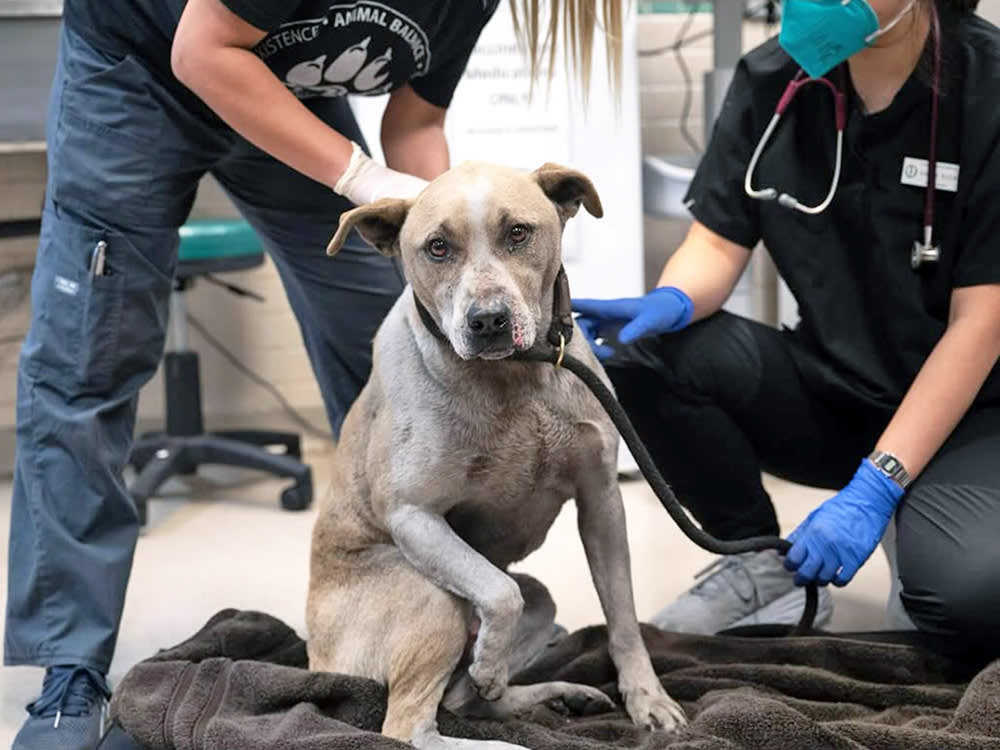
What started as a logistics problem turned into a medical one. Animals arriving at the shelter were not just scared; many were hurt, carrying burns and the aftermath of heavy smoke.
The veterinary team worked in shifts to stabilize them. One cat, found wandering by a resident and rushed in, arrived with burns across his face and body and eyes irritated from smoke. Staff cleaned his wounds, treated his eyes, and settled him into an oxygen kennel in the ICU to breathe easier while he healed. He was one of many.
“Smoke does the damage you can’t see,” says Dr. Amara Solis, a Pet Times veterinary contributor. “A pet can walk in looking shaken but basically fine, and then their airways start to swell hours later. In a fire, the animals that need us most urgently are often the quiet ones in the back of the crate, not the ones crying at the front.”
Getting pets back home
For every animal that needed medicine, another needed an address. Pasadena Humane held stray animals for 30 days rather than the usual shorter window, buying displaced families time to find the pet they had been separated from before that pet became available for adoption.
The reunions added up fast. In the weeks after the Eaton Fire, the shelter reported returning more than 1,000 pets to their people, some at the shelter itself and hundreds more out in the field, where officers were still working the burn zones.
Those field teams got their clearance on January 10, when the shelter received permission from CAL FIRE to enter the burn areas directly. Animal control officers carried survivors out, treated them, and set humane traps for the animals still hiding in neighborhoods that no longer looked like neighborhoods.
The community carried some of the weight
None of it would have held without the people outside the building. When Pasadena Humane posted that it needed supplies, the response buried them in the best way.
Donated goods, the same staffer told People, overflowed the shelter’s parking lot within hours. Volunteers lined up to sort supplies and walk dogs. Other shelters took the overflow so Pasadena Humane could keep saying yes to new intakes, among them the San Diego Humane Society, Santa Barbara Humane, the Sacramento SPCA, and Humane Society Ventura County. Several of those groups were running their own rescues at the same time.
What newer research adds
A year on, the scale of that January is easier to see. Pasadena Humane ended up helping more than 1,500 pets and wild animals connected to the fires, sheltering over 1,100 companion animals and hundreds of emergency boardings, and giving away well over 100,000 pounds of pet food.
The long tail was long. The shelter kept caring for displaced animals for months, and the very last pet from the Eaton Fire response, a white German Shepherd named Artemis, was not adopted until the spring of 2026, more than a year after the smoke cleared. Recovery, it turns out, does not end when the news trucks leave.
How to help now
Pasadena Humane’s most useful ask during an active crisis is almost always money, not stuff, because cash lets the team cover exactly what the moment demands: emergency medical care, facility upkeep, and the programs that keep animals alive. Financial gifts also flex in a way that a garage full of donated blankets cannot.
If you want to help the next family who has to make that impossible choice at the front door, a donation to a frontline shelter like Pasadena Humane is the most direct way to do it.
References
- Pasadena Humane. “Eaton Fire — Programs & Services Update.” pasadenahumane.org
- CBS Los Angeles. “After Eaton Fire, over 400 pets reunited with owners, but more than 100 still awaiting reunion.” cbsnews.com
- LAist. “One year later, Pasadena Humane is still caring for animals displaced by the Eaton Fire.” laist.com
- KTLA. “Pasadena shelter says its last Eaton Fire pet has been adopted.” ktla.com
Nina Vasquez writes about life at home with pets and the relationships at the heart of it. Her work covers day-to-day living, people-and-pet stories, and the products that fit into a real household, with a warm, grounded take on everyday pet ownership.
Meet our experts ↗Keep reading
 LivingOne in Three Pets Has No Home. The Top Reason People Give Theirs Up Isn't Cruelty.Nina Vasquez · 7 min
 LivingSkip the Donation Bin. Here's What Shelters Actually Run Out Of.Jordan Ellis · 5 min
 LivingNearly Half of Abuse Survivors Stay Because of a Pet. These Groups Exist to End That Trap.Nina Vasquez · 7 min
 LivingNew York Is Handing Shelters $10 Million. The Real Story Is the Deadline Next Month.Nina Vasquez · 4 min
 LivingThe Texas Flood Pet Rescue You're Picturing Is the Wrong OneNina Vasquez · 5 min
 LivingPeople Don't Surrender Pets Because They Stopped Loving ThemLeila Torres · 8 min