


Leaving Your Dog Out in the Cold Isn't Just Cruel. In These States, It's a Felony.
After two dogs froze to death in Detroit, a reminder that cold-weather neglect is a crime everywhere, and in a growing list of states it can carry felony charges and years in prison.

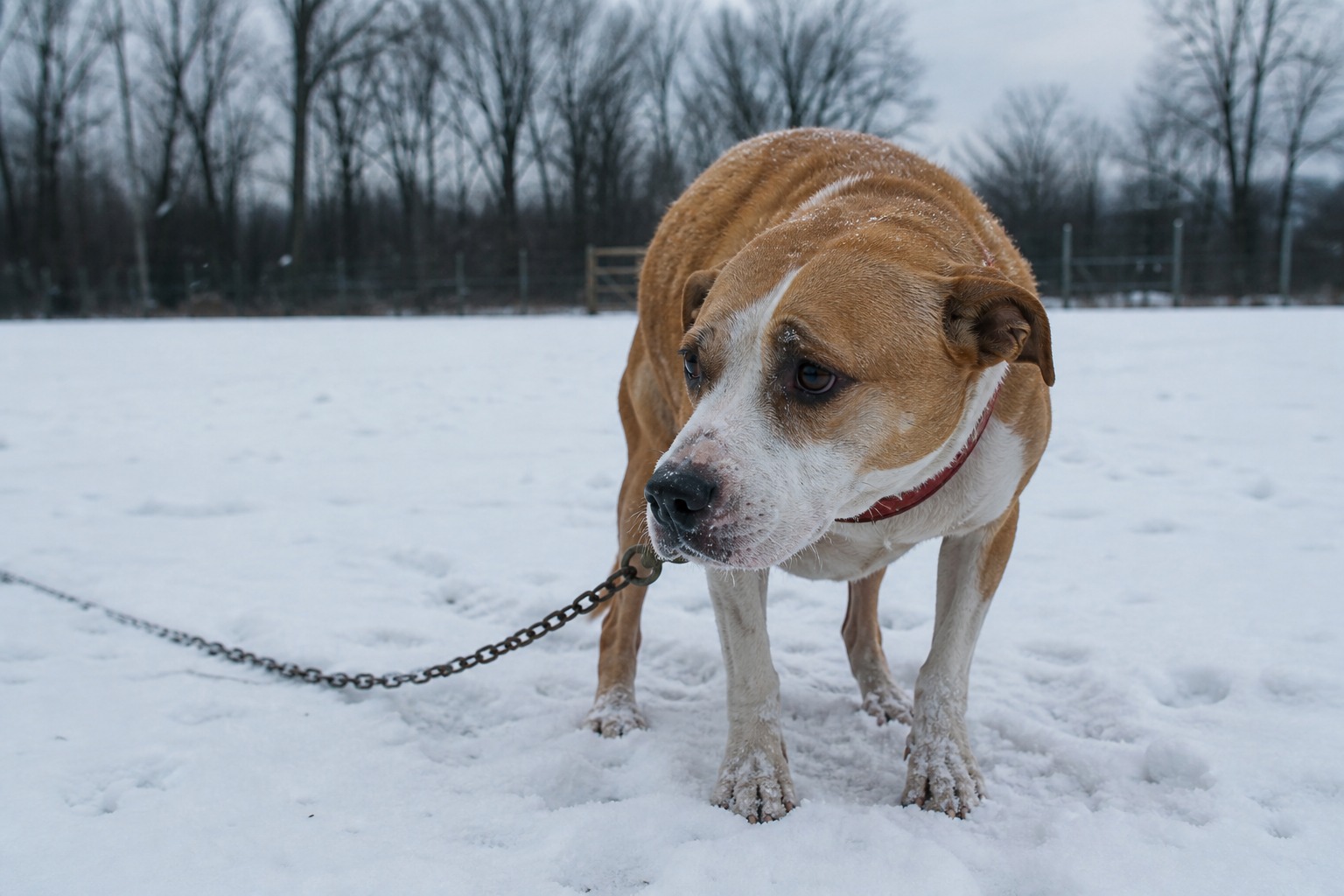
In December, three dogs were left outside a home in Detroit in brutal cold. Two of them froze to death. The dogs’ guardian was charged with a stack of counts, three for killing or torturing an animal, two for abandonment and cruelty resulting in death, and one more for abandonment and cruelty; the potential sentence runs to seven years.
The case was gutting, and it was not unusual. The founder of a volunteer-run rescue network in the area, who spends winters checking on dogs left out in the cold, described the season as the worst she’d seen, with case after case piling up. Most people know, in the abstract, not to leave a dog outside in freezing weather for long. What far fewer realize is how fast the cold turns deadly, and that leaving a dog out in it isn’t just heartless. It’s illegal, and in some states it’s a felony.
Why the cold is so dangerous
The first threat is frostbite, and it doesn’t require an arctic blast to set in.
People assume it has to be well below freezing to be dangerous, and it doesn’t. A soaked coat or a hard wind can trigger frostbite even when the thermometer reads above 32 degrees. And hypothermia creeps in quietly, a dog just gets slow, weak, and mentally dull, and by the time it looks obvious you’re already in an emergency.
Here’s the mechanism. When tissue loses its steady blood supply in the cold, the cells begin to die, and water inside the exposed tissue can freeze and rupture them outright. The result is extreme pain, blisters, swelling, and stretches of dead skin. Hypothermia is the second, and often more lethal, danger. It advances in stages, each one further eroding the body’s ability to hold its temperature, keep the brain and heart working, and maintain blood flow. As it deepens, a dog grows progressively lethargic and weak, its heart rate and breathing slow, and the endpoint can be cardiac failure, coma, or death.
The legal consequences are real, and they vary a lot
Because of that risk of serious harm, leaving a dog unattended in the cold is treated as neglect, which the Animal Legal Defense Fund defines as failing to provide the basic care an animal needs to thrive. Abandonment, hoarding, and failure to provide adequate shelter all fall under it. In all 50 states, neglect is at minimum a misdemeanor, but the charges climb steeply from there depending on the state and the circumstances.
A handful of states are especially strict. In Massachusetts, any neglect case can be charged as a felony carrying up to seven years. Oklahoma likewise allows a felony charge for neglect, with up to five years and a $5,000 fine. In California, Connecticut, Delaware, Florida, Pennsylvania, and Washington, D.C., neglect can rise to a felony when it kills the animal. Georgia treats neglect as a misdemeanor by default but escalates to a felony for aggravated cruelty or repeat offenses.
Some states have written cold-weather rules specifically. Pennsylvania’s Libre’s Law, passed in 2017, made it a misdemeanor to tether a dog outdoors for more than 30 minutes in temperatures above 90 or below 32 degrees, and a potential felony if the dog dies or is seriously hurt. Others, including California, Illinois, and Texas, have their own anti-tethering statutes. This is far from an exhaustive map, though. Many states elevate a second cruelty conviction to a felony, or apply felony charges when the conditions are especially torturous or malice can be shown. Because the details shift from state to state and get updated over time, the most reliable way to check your own is Michigan State University’s Animal Legal and Historical Center, which maintains a state-by-state database of animal-protection laws.
What to do about it
Set the legal stakes aside and the bottom line is simple: leaving an animal out in the cold is dangerous and cruel, full stop. The meme is a meme because it’s true, if you’re cold, they’re cold, so bring them in.
If you come across an animal left outside in dangerous temperatures, the Humane Society’s advice is to document it: note the date, time, and exact location, the type of animal, and as many specific details as you can. Then report it to your local animal control agency. Depending on where you live, there may be another channel too, in New York City, for instance, you can dial 311 to report neglect. A few minutes of paperwork from a bystander is sometimes the only thing standing between a dog and a night it won’t survive.
References
- Animal Legal Defense Fund, “Animal Neglect Facts.” aldf.org
- Michigan State University College of Law, Animal Legal & Historical Center, state cruelty law maps. animallaw.info
- Pennsylvania General Assembly, Act 10 of 2017 (Libre’s Law). legis.state.pa.us
- The Humane Society of the United States, “How to report animal cruelty.” humanesociety.org
Not a substitute for your vet. Our guidance is educational. For urgent symptoms, contact a vet or emergency clinic right away. Editorial standards
Dr. Nair is a veterinarian focused on diet and feeding. She covers everyday nutrition, treats, and the many "can they eat this?" questions owners ask, grounding each answer in what is actually safe and sensible for dogs and cats.
Meet our experts ↗Keep reading
 LivingYour Dog Slips the Yard. A Cop Shows Up. What the Data Says Happens Next.Marcus Webb · 6 min
 Health & WellnessA Man Shot a Dog for Running at Him. He Was Never Charged.Marcus Webb · 8 min
 Living43 Arrests at a Texas Dogfight. Nearly All of Them Bonded Out.Dr. Amara Solis · 7 min
 Health & WellnessThe Cutest Thing About Your Flat-Faced Dog Is the Thing That's Suffocating ItDr. Ravi Mehta · 7 min
 LivingDon't Be a Hero. Be a Witness.Leila Torres · 7 min
 LivingThe Cruelest Thing in Your Makeup Bag Is Still Perfectly LegalLeila Torres · 5 min