


Male vs. Female Is the Wrong Question About Cat Affection. Here's the Right One
People argue endlessly over whether male or female cats are cuddlier. Research points to a better predictor than sex, and to one variable you actually control: you.

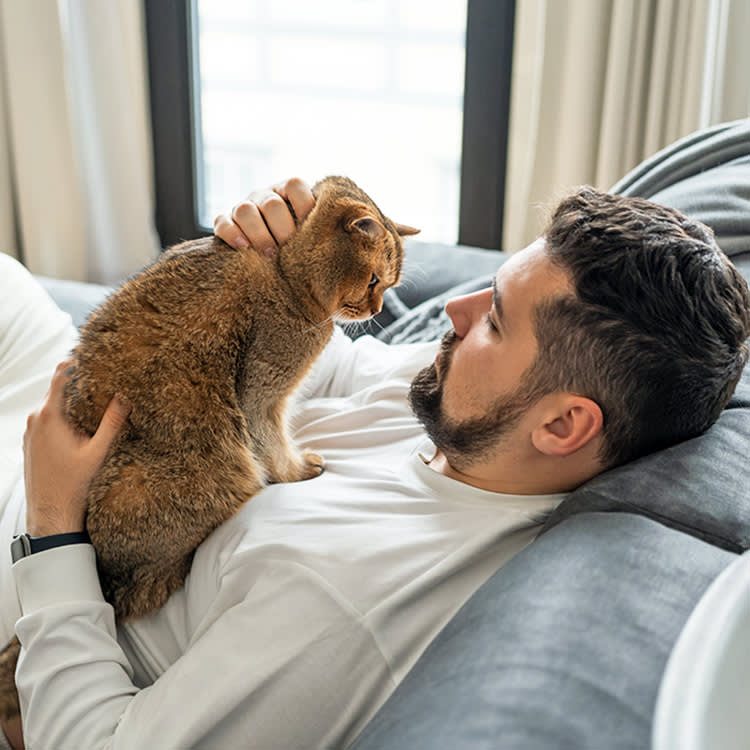
Ask a room full of cat people whether males or females are cuddlier and you will get a fight, not an answer. Everyone is certain, everyone is drawing on the four or five cats they have personally lived with, and everyone is sure their experience is the representative one. It is a great bar argument and a useless way to pick a cat.
So let’s retire the question. “Male or female” is not where cat affection is decided, and the research that exists makes that fairly clear. The more honest and more useful question is: what does predict whether a cat curls up on your chest? The answer has three parts, and one of them is you.
Why “male or female” keeps losing
Start with what the science does not support: there is no broad, replicated finding that one sex is more affectionate than the other. When researchers look past the obvious hormone-driven behaviors, they do not find males loving in one style and females in another. Both sexes are equally capable of the full range of feline affection, from headbutts to lap-sitting to the slow blink.
The reason the myth survives anyway is sampling. You have lived with a handful of cats in your life, and whichever sex happened to include your cuddliest one becomes, in your memory, “the affectionate sex.” Multiply that by every cat owner’s anecdote pointing in a different direction and you get a debate that can never resolve, because it was never about the cats. It was about each person’s tiny, accidental sample.
There is one real exception, and it is worth naming precisely because it is the grain of truth the myth is built around.
The one place sex genuinely matters: hormones
Intact cats are a different story, and this is where sex-linked behavior is real.
An unneutered male is wired to patrol and seek mates. He roams more, marks more, and stays on alert, all of which can read as aloof or restless rather than affectionate. An intact female swings the other way in heat, often becoming dramatically more affectionate and vocal, rubbing on everything and yowling for attention, then returning to baseline when the cycle passes.
Both of those are hormones talking, not personality. Spay or neuter the cat and those sex-specific behaviors largely switch off. What you are left with afterward is the cat’s actual temperament, which is shaped by things that have nothing to do with whether they are male or female. So even the real sex difference is temporary and surgically reversible, which is a strange foundation for a lifelong stereotype.
The better predictor #1: your cat’s sociability trait
Here is the upgrade the old “it’s just personality” hand-wave never made concrete. Feline behavior researchers have shown that cat personality is not vague vibes; it breaks into measurable traits. A widely used framework identifies seven of them, and one is “sociability toward humans,” tracked separately from sociability toward other cats.
That distinction matters. A cat can be a confident, playful, outgoing animal who is still not especially interested in lap time, and another cat can be shy with strangers but deeply bonded and affectionate with their one person. “Affectionate” is its own dial, and it is set largely by genetics and early life, not by sex. Some of this is heritable: certain breeds skew more sociable toward humans, and affectionate parents can pass along the tendency, though never as a guarantee.
So when you are trying to read a cat, stop asking their sex and start watching their sociability. The cat who approaches, solicits contact, and relaxes when handled is telling you what their affection dial is set to far more reliably than their anatomy ever could.
The better predictor #2: history and socialization
If sociability is the dial’s factory setting, history is what nudges it up or down. A kitten who met people gently and often in their first weeks, and who has a track record of good experiences with humans, has every reason to let their guard down. A cat with a rough history may need you to earn it.
That cuts both ways, which is the part people forget. A poorly socialized cat is not doomed to be standoffish, you may just have to work harder and slower to show them they are safe, and plenty of formerly feral cats become devoted lap cats. And a cat with a textbook-perfect kittenhood is not guaranteed to be cuddly either. History stacks the odds; it does not write the outcome.
There is even suggestive evidence that stress can echo across a generation. Kittens born to mothers who scrounged for food sometimes show food anxiety they never personally earned, as if the mother’s hard experience left a mark. Whether a mother’s opportunities for affection ripple down the same way is unproven, but it is a reasonable question, and a reminder of how many inputs feed a single cat’s temperament. Sex is just one small input among many.
The better predictor #3: you
This is the finding that should change how you read the whole debate. When researchers asked cat owners about their bond, they found that a cat’s affection toward their person and that person’s affection toward the cat are positively correlated. They rise and fall together.
The arrow can point both ways, and probably does. An affectionate cat invites affection back; an affectionate, attentive owner helps a cat feel safe enough to give it. But the practical message is the same: the one variable in this entire conversation you have real control over is your own behavior. Not the cat’s sex, not their genes, not their kittenhood, you. The calm, consistent, boundary-respecting version of you tends to be living with the more affectionate version of your cat.
How to nurture affection from any cat
None of this is fixed, and you can tilt the odds toward the cuddle puddle no matter what sex or history your cat brings. Three habits do most of the work:
- Don’t force it. Cats give the most when they get to choose. Scoop up a cat who is not asking for it and you teach them to stay out of reach. Let affection be their decision and you remove the main reason cats keep their distance.
- Reward the overtures. Rewarded behavior repeats. When your cat rubs your leg, hops up beside you, or offers a slow blink, meet it with the thing they like, a chin scratch, a treat, soft praise. For a nervous cat, the first reward-worthy overture might just be approaching you. Build from there.
- Learn their dialect. We default to the affection we want to give, the belly rub, the squeeze, the face kiss, and then feel rejected when the cat bolts. Find out what your specific cat actually enjoys. Plenty of cats adore a cheek rub and hate being held; honoring that is how you get more closeness, not less.
The best thing you can do is accept the cat in front of you. Set the stage, respect the boundaries, and stop waiting for affection to arrive in the exact shape you pictured. The cuddliest relationships tend to belong to the people who stopped grading their cat against a stereotype, whether that stereotype was about sex, breed, or anything else.
The bottom line
Whether male or female cats are more affectionate is the wrong question, and that is good news, because the right questions point at things that actually help. Watch the individual cat’s sociability, honor their history, get them spayed or neutered so hormones stop muddying the picture, and pay attention to your own behavior, the one input you fully control. Do that and the sex of your cat becomes exactly as relevant as it should be: barely at all.
References
- Mikkola, Salla, et al. “Reliability and Validity of Seven Feline Behavior and Personality Traits.” Animals, vol. 11, no. 7, 2021, p. 1991. https://doi.org/10.3390/ani11071991
- Bouma, Esther M. C., et al. “My Cat and Me—A Study of Cat Owner Perceptions of Their Bond and Relationship.” Animals, vol. 11, no. 6, 2021, p. 1602. https://doi.org/10.3390/ani11061602
- Wedl, Manuela, et al. “Factors Influencing the Temporal Patterns of Dyadic Behaviours and Interactions Between Domestic Cats and Their Owners.” Behavioural Processes, vol. 86, no. 1, 2011, pp. 58–67. https://doi.org/10.1016/j.beproc.2010.09.001
Common questions
Are male cats more affectionate than female cats?
There is no scientific evidence that one sex is more affectionate across the board. The strong opinions people hold usually trace back to their own small sample of cats. Beyond the temporary effects of mating hormones, sex is a weak predictor of how cuddly a cat will be. An individual cat's sociability trait and history matter far more.
What actually predicts whether a cat is affectionate?
Three things outrank sex: the cat's individual 'sociability toward humans,' which behavior researchers measure as a distinct personality trait; the cat's early socialization and history; and, notably, the owner's own behavior. Studies find that how affectionate a cat is toward their person and how affectionate that person is toward the cat rise and fall together.
Does neutering or spaying change how affectionate a cat is?
It can, and this is the one place sex genuinely matters. Intact males roam and patrol for mates, which can make them less settled and less affectionate at home. Intact females often become extra affectionate and vocal in heat. Once a cat is spayed or neutered, those hormone-driven, sex-specific behaviors largely fade, and personality does the rest.
Can I make my cat more affectionate?
You can make affection more likely by never forcing it, rewarding the small overtures your cat does offer, and learning the specific kind of contact your individual cat enjoys. Because cat and owner affection are linked, the calmest, most consistent, most respectful version of you tends to produce the more affectionate version of your cat.
Leila Torres leads our Living coverage, from home life and travel to the products and rescue stories that come with sharing a life with animals. She edits and writes across the section, with a soft spot for pieces about the bond between people and their pets.
Meet our experts ↗Keep reading
 TrainingThe Study Says Your Cat Is a Psychopath. Read the Questions.Dr. Ravi Mehta · 6 min
 TrainingYour Shoes Are the Most Interesting Thing You Own. Just Ask Your CatSasha Ford · 6 min
 TrainingYour Cat Isn't Getting 'Brain Rot' From That Video. It Thinks It's HuntingDr. Ravi Mehta · 5 min
 TrainingYou Can't Train a Cat Off the Counter. You Can Outbid Her.Dr. Mara Chen · 8 min
 LivingYour Cat's Eight Nap Spots Are a Map. The Cat Who Stops Moving Is the Worry.Sara Lim · 7 min
 TrainingYour Cat Isn't Sorry. It's Reading the Room.Dr. Priya Nair · 5 min