


The Study Says Your Cat Is a Psychopath. Read the Questions.
A 2022 survey of 549 cat owners produced a feline psychopathy scale, and the internet had a field day. The trouble is what counts as evidence on it: your cat is loud, your cat gets the zoomies, your cat ignores you. That isn't psychopathy. That's a cat.

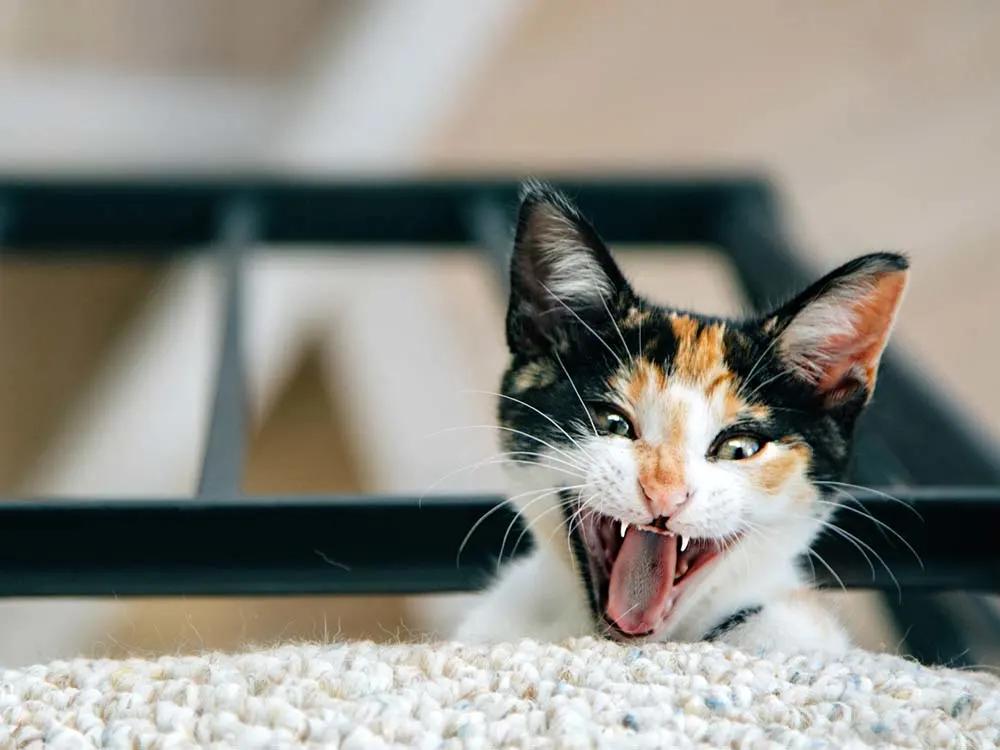
Every so often a study escapes containment and becomes a headline that outlives it. “Your cat is probably a psychopath” is one of those.
The research is real. The scale exists. And the finding, once you read the actual items on it, is a good deal less dramatic and a good deal more interesting than the headline suggests. Because what the study really demonstrates is not that cats are menacing. It is that when you build a psychopathy scale out of ordinary cat behavior, every cat scores.
What was actually done
In 2022, researchers at the University of Liverpool and Liverpool John Moores University surveyed 549 cat owners to build a measure of psychopathic traits in cats. The instrument they produced is called the CAT-Tri+, and it runs to 46 questions about a cat’s behavior.
The framing was evolutionary, and this part is legitimate. Writing in the Journal of Research in Personality, the authors proposed that “in an ancestral environment that demanded self-sufficiency, wild cats that had higher levels of psychopathic traits may have been more successful in acquiring resources (food, territory, mating opportunities).”
That is a reasonable hypothesis. Boldness, disinhibition, and a certain indifference to other animals’ preferences are genuinely useful if you are a small solitary predator competing for territory and food. Nobody should object to that.
The trouble starts with the questionnaire.
Look at what counts as evidence
The scale asks whether your cat vocalizes loudly and often. Whether your cat gets the zoomies at strange hours, occasionally sliding into the furniture on the way. Whether your cat provokes other pets or people in the household. Whether your cat “demands attention.” Whether your cat disobeys house rules.
Read that list again and ask yourself an honest question: which cat, anywhere, does none of those things?
The answer is none of them, which is precisely the result. The study concluded that all cats have some degree of psychopathy, varying only in amount. That sounds like a bombshell. It is closer to a tautology. If your measuring instrument treats “meows a lot” and “runs around at night” as evidence of a trait, then every member of a species that meows and runs around at night will test positive for it.
Run the same instrument on dogs, and dogs would score. Run something similar on humans and you would find that most of us are quite loud, ignore rules we dislike, and have on at least one occasion demanded attention.
The word is doing the work
Here is the real problem, and it is a problem of language rather than of data.
“Psychopathy” carries an enormous amount of freight. In human psychology it describes a serious constellation of traits: a lack of empathy, an absence of remorse, manipulativeness, callousness. When it is applied to your cat, all of that freight comes along for the ride, and suddenly the animal asleep on your chest is being framed as something sinister.
But cats do not have the thing the word is meant to describe. Your cat is not failing to feel remorse for knocking the glass off the table. Remorse is not an option she is declining. She is a small predator with a nervous system built for a life you are not asking her to live, and the behaviors that read as menacing to us, the staring, the sudden violence at 4am, the total indifference to your Zoom call, are simply what that nervous system produces indoors.
Cat advocate Jackson Galaxy pushed back on exactly this point when the study went viral, arguing that the behaviors being scored are, in his words, “100 percent normal cat behaviors.”
He is right, and it is worth being precise about what that means. It does not mean the researchers did bad work. It means the label was always going to swamp the finding.
A cat staring at you across a dark room is not plotting. She is an ambush predator with excellent low-light vision doing the single most natural thing available to her. We are the ones who decided that looked like malice, and then we went looking for a word to prove it.
What the scale is actually good for
Set the headline aside and there is something genuinely useful buried in here.
Any tool that gets an owner to sit down and systematically assess their cat’s behavior, across 46 items, is doing something valuable, because most owners have never once looked at their cat that carefully. A cat scoring very high on boldness and disinhibition is telling you something real about the animal you live with, even if the label attached to it is overheated. That is a cat who probably needs more outlets, more space, more enrichment, and more predictable structure than the average cat.
Which is the practical translation of the whole study: the traits are on a spectrum, they vary by individual, and a cat at the high end is not evil. She is under-stimulated and slightly wired.
The evolutionary logic even gives you the fix. If these traits exist because they helped a self-sufficient predator acquire resources, then a cat expressing them intensely in your living room is a predator with nothing to hunt. Give her something to hunt.
What newer work adds
The most useful update is not a follow-up study but a shift in how the field talks about this.
Feline behavior research has moved decisively toward welfare framing and away from personality-pathology framing. The questions being asked now are the practical ones: is this cat’s environment meeting her needs, can we identify when she is stressed, can we teach people to recognize it. Recent work has focused on whether humans can be trained to read cats accurately, and on how badly we currently do at recognizing feline discomfort, which is a far more actionable problem than whether cats meet a repurposed clinical criterion.
That reframe matters because the two explanations lead to different behavior from you. “My cat is a bit of a psychopath” is a joke that ends the conversation, and it quietly licenses you to stop asking why she is doing something. “My cat is bold, easily bored, and living in a room with nothing to do” is the beginning of a plan.
So take the quiz if it amuses you. Then go buy her a wand toy and a tall place to sit.
References
- Evans, R., Lyons, M., Brewer, G., Tucci, S. “The purrfect match: The influence of personality on owner satisfaction with their domestic cat.” Personality and Individual Differences, 2019.
- Brewer, G., Evans, R., Lyons, M., et al. “Is your cat a psychopath? Development and initial validation of the CAT-Tri+ questionnaire.” Journal of Research in Personality, vol. 98, 2022, 104211.
- de Mouzon, C., Di-Stasi, R., Leboucher, G. “Human perception of cats’ communicative cues: human–cat communication goes multimodal.” Applied Animal Behaviour Science, 2023/2024.
- American Association of Feline Practitioners. “AAFP Feline Behavior Guidelines.” AAFP, 2022.
- Ellis, S.L.H., et al. “AAFP and ISFM Feline Environmental Needs Guidelines.” Journal of Feline Medicine and Surgery, vol. 15, no. 3, 2013, pp. 219–230.
Dr. Mehta is a board-certified veterinary nutritionist who evaluates pet food formulations, ingredient quality, and the science behind dietary trends. He writes and reviews all nutrition content at The Pet Times, including our food rankings and feeding guides.
Meet our experts ↗Keep reading
 TrainingYour Cat Knows When You're Watching. A Study Proved ItDr. Amara Solis · 5 min
 TrainingYour Cat Isn't Attacking You. You Live on a Hunting Route.Dr. Amara Solis · 9 min
 TrainingYour Cat Isn't Attacking You. It's Sending One of 5 Messages.Dr. Amara Solis · 5 min
 TrainingYour Cat Knows Your Smell From a Stranger's, Science ConfirmsDr. Priya Nair · 4 min
 TrainingThe Paw on Your Mouth at 4 A.M.? You Trained That.Dr. Amara Solis · 6 min
 TrainingCat Behavior Has a Photo Problem. Someone Finally Drew Their Way Out of It.Dr. Mara Chen · 7 min