


27 Dogs Flew to America From a Korean Meat Farm. The Country That Bred Them Is Now Ending the Trade.
A rescue of 200 dogs from a South Korean meat farm sent 27 healthy survivors to US shelters. The bigger story is what's happened since: the trade that produced them is being dismantled faster than anyone predicted.

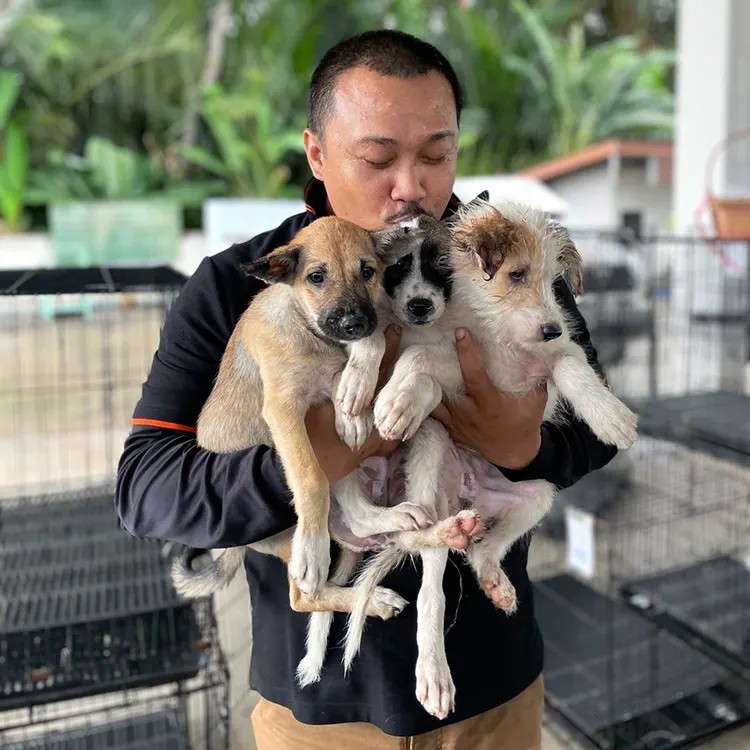
Twenty-seven dogs made a very long journey. They started on a large-scale breeding farm in South Korea, one of the operations that supplies the country’s dog meat trade, and they ended up on flights bound for the United States, where they would soon be up for adoption. Between those two points was a rescue of 200 dogs from a single farm, and a story that has only gotten more hopeful in the time since.
The rescue itself
Humane Society International pulled all 200 dogs out of that farm. Of those, 27 were healthy enough to make the trip overseas, ranging in age from about 10 months to three years old. Once removed, each was checked by a veterinarian and vaccinated so they could travel safely, then moved to HSI’s care and rehabilitation center. There they finally got the things the trade had denied them: soft beds, real food, toys and enrichment, medical care, and time to recover. HSI even gave them names to grow into, including Raspberry, Trudy, and Roxy.
The conditions they came from were grim. According to HSI, the roughly 200 dogs had been kept in barren metal cages in filthy surroundings, and many arrived malnourished and struggling with painful skin and eye problems. The organization noted that most of the 27 travelers were young enough that they likely wouldn’t carry the memory of the farm forward, which is its own small mercy. After rehabilitation, the dogs were placed with US shelters and rescues to find permanent homes.
The part that makes this rescue different
What sets this story apart from the many heartbreaking rescue reports out of the meat trade is what was happening around it. This wasn’t just a rescue of individual dogs. It was one moment inside the slow shutdown of an entire industry.
HSI’s work here runs through its Models for Change program, launched in 2015 to help dog farmers exit the business voluntarily and move to more humane and profitable work, such as growing chili peppers or parsley or running water-delivery routes. By the time of this rescue, the program had helped save more than 2,700 dogs, and the farmer involved was converting his land to grow vegetables. That’s the template: not just emptying cages, but giving the people who ran them a reason to stop.
What’s new since this rescue
The context has shifted dramatically, and in the right direction. In January 2024, South Korea’s National Assembly passed a landmark law banning the breeding, slaughter, and sale of dogs for meat, with a three-year grace period before full enforcement in 2027. Violations will carry prison terms of two to three years.
The wind-down has moved faster than the timeline required. By August 2025, roughly 70 percent of the country’s dog meat farms had already closed, and the government published a compensation plan to encourage farmers to shut down early, offering payments per dog that rise the sooner a farm closes, plus low-interest loans for those who pivot to other agricultural work. There has been friction, farmers have argued the per-dog compensation is too low, but the trajectory is unmistakable. An industry that seemed permanent is emptying out year by year.
That reframes what those 27 dogs represent. They weren’t just lucky survivors of a cruel practice. They were early arrivals from a system now being taken apart, and the farms that once held dogs like them are, one by one, becoming vegetable fields.
How to help
If you want to support this work, you can back organizations that rescue and rehabilitate dogs from the meat trade, or adopt one of the survivors making their way into shelters and rescues. Every one of those adoptions closes the loop on a journey that, for these 27 dogs, started in a metal cage and ended on somebody’s couch.
References
- Humane Society International. “South Korea Ends the Dog Meat Industry: A Model for Change.” Humane World for Animals. https://www.humaneworld.org/en/south-korea-dog-meat-report
- “South Korea Publishes Compensation Plan for Dog Meat Farmers Ahead of 2027 Ban.” VOA News, Feb. 2025. https://www.voanews.com/a/south-korea-publishes-compensation-plan-for-dog-meat-farmers-ahead-of-2027-ban/7800001.html
- “South Korea Passes Law Banning Dog Meat Trade.” NBC News, Jan. 2024. https://www.nbcnews.com/news/world/south-korea-passes-law-banning-dog-meat-trade-rcna132986
Leila Torres leads our Living coverage, from home life and travel to the products and rescue stories that come with sharing a life with animals. She edits and writes across the section, with a soft spot for pieces about the bond between people and their pets.
Meet our experts ↗Keep reading
 LivingBig Dogs Don't Lose Their Homes Over Behavior. They Lose Them Over Leases.Marcus Webb · 6 min
 LivingThe Rescue That Saved His Life Nearly Went Under Without HimJames Okafor · 9 min
 Living43 Arrests at a Texas Dogfight. Nearly All of Them Bonded Out.Dr. Amara Solis · 7 min
 LivingThe Brooklyn Rescue That Grew Slower on Purpose, and Survived the CrashNina Vasquez · 7 min
 LivingNobody Meant to Have 100 Dogs. That's How It Always Starts.Nina Vasquez · 5 min
 LivingItaly's Most Beloved Rescue Dog Was Poisoned. A New Law Now Carries His Name.Nina Vasquez · 4 min