


What Happens to a Lab Beagle After the Study Ends? For Decades, Nothing Good
The Beagle Freedom Project's real fight isn't the rescue van. It's a quiet legal gap, the moment a research dog is no longer needed, and the state-by-state campaign to make adoption the default instead of the exception.

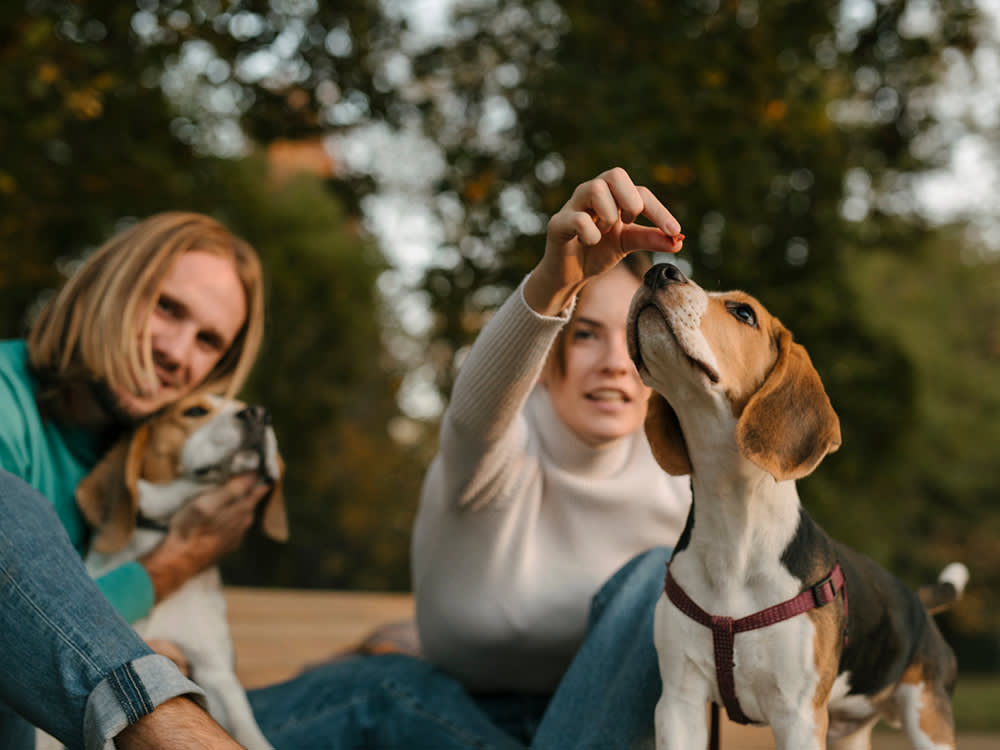
Picture the moment everyone agrees is moving: a kennel door swings open, and an adult Beagle who has spent his whole life on metal and concrete needs ten full minutes to put one paw on grass, then high-steps across the lawn like the ground might give way. It is a wonderful image. It is also, on its own, a slightly misleading one, because it makes the work look like rescue, a van, a leash, a happy ending, when the harder and more important part happens in legislative committee rooms, before any door opens at all.
The thing worth understanding about the Beagle Freedom Project is that it is less a rescue group than a law firm with a foster network attached. The dogs are the point, but the lever is a single sentence in state code, the one that decides what a research facility is allowed, or required, to do with a healthy dog the day it stops being useful. For most of modern history, that sentence did not exist, and the default answer was euthanasia. Changing the default, one statehouse at a time, is the actual mission.
The gap nobody had written a rule for
Animal research in the United States is heavily regulated while an animal is being used. There are care standards, inspections, and paperwork governing housing, feeding, and handling during a study. What there was almost never a rule for is the afterward, the regulatory blank space between “the experiment is over” and “the dog no longer exists.” A perfectly healthy, adoptable dog could fall into that gap and never come out.
The Beagle Freedom Project was founded in December 2010 by animal-rights attorney Shannon Keith, originally to rehome a specific group of Beagles she learned were about to be released with nowhere to go. (Keith also founded its parent organization, Animal Rescue Media Education.) What started as one rescue became a model, and the organization has since helped place or foster more than 2,000 lab dogs. But Keith’s training pointed the group toward the durable fix: not pulling dogs one batch at a time, but writing the missing sentence into law so that release for adoption becomes the expectation rather than a favor.
Beagles are at the center because the lab system is. More than 95 percent of dogs used in U.S. research are Beagles, and the reason is bleak: the same temperament that makes them beloved family dogs makes them convenient subjects.
“The cruel irony is that we breed Beagles for research precisely because they are gentle, trusting, and forgiving,” says Dr. Mara Chen. “A dog who keeps offering you its belly after a hard day is easy to house in numbers. The trait we love is the trait that put them in the cage.”
Closing the gap, one state at a time
The first win came in 2014, when Minnesota enacted a law requiring publicly funded research facilities in the state to offer their dogs and cats to nonprofit rescues once the animals were no longer needed. Modeled on the project’s “Beagle Freedom Bill,” it was deliberately modest, less a ban on research than a guarantee of an exit.
That template then spread. As of 2025, roughly a dozen states, including California, Connecticut, Delaware, Illinois, Maryland, Massachusetts, Nevada, New York, Oregon, Rhode Island, Virginia, and Washington, have passed versions of the law, and a federal effort, the Humane Retirement Act, would extend the same offer-for-adoption requirement to federally funded labs nationwide. The state count keeps climbing, which is the whole strategy: make the humane outcome the legal default in enough places that it stops being remarkable.
The bills are popular in the abstract and contentious in practice. Researchers and universities, the parties most affected, have historically been wary, chiefly over liability, what happens if an adopted former research dog later behaves unpredictably and someone gets hurt. The fix that has unlocked most of these laws is a liability shield: language protecting a facility from being sued over an adopted animal’s later behavior. It is an unglamorous clause, but it is the hinge the entire compromise turns on, the concession that lets a university say yes without fearing a lawsuit.
That tension is real, not rhetorical. Defenders of animal research point out, fairly, that the work has produced foundational medical advances, insulin for diabetics was developed through research on dogs, and most vaccines were tested on animals before reaching people. The Beagle Freedom laws do not resolve that debate, and were never meant to. They sidestep it, by addressing only the part almost everyone can agree on: a healthy dog who has finished a study should get the chance at a home rather than an automatic death.
The scale, in numbers worth keeping
It is easy to lose the magnitude in the warm anecdotes. Federal tallies in recent years have counted on the order of 60,000 dogs and nearly 20,000 cats in U.S. research, with Beagles making up the overwhelming majority of the dogs. Those figures sit inside a far larger universe of research animals, the Humane Society of the United States estimates around 25 million vertebrate animals are used annually in research, testing, or education, the vast majority of them mice, rats, and birds, with dogs and cats a small fraction at the bottom of the list.
The single event that made all of this concrete for the public came in 2022, and it had nothing to do with a finished study. After investigators documented more than 70 animal-welfare violations at a Cumberland, Virginia, breeding facility run by Envigo, a federal court approved the removal of roughly 4,000 Beagles, the largest animal seizure in the Humane Society of the United States’ history. Rescue partners across the country absorbed the dogs over two months. That case did two things at once: it showed the sheer volume of dogs flowing through the system, and it demonstrated that even with rescue infrastructure in place, the law often moves only after the harm is already done. The Beagle Freedom laws are an attempt to get ahead of the next Envigo, not just clean up after it.
What these dogs are actually like at home
A former research dog comes home as a kind of overgrown puppy, fully grown, with almost none of the experience a normal dog accumulates by adulthood. Because labs rarely disclose an animal’s actual history, adopters usually start blind. In practice, the project finds that many of its Beagles arrive not house-trained, wary of people and new situations, and prone to digestive upset, because laboratory diets are formulated to minimize waste, so the richer food companion dogs eat is a shock to their systems.
“These dogs have never climbed a stair, never felt a leash go taut, never seen the sky,” says Dr. Mara Chen. “Everything a normal dog learns in puppyhood, they learn as adults, all at once. Patience is not a nice-to-have with them. It is the entire job.”
And yet they place remarkably well. The organization has taken in dogs, plus cats and even a pig, from labs across the country, and reports an extraordinary record: it has never had an adoption returned, not even among a group of 40 Beagles flown in from Spain who arrived with serious health and anxiety problems. The “adult puppy” who needs months to learn the world tends, once landed, to stay landed.
Why the people who do this work keep doing it
The pull is hard to resist even for the organizers. One volunteer, having gone to a foster-recruitment event to find homes for ten former lab Beagles, left with the final dog still there, the one no one had been able to pick because no one had managed to catch him.
“He was terrified of everyone, so he kept slipping away, and the families gave up on him,” says Dr. Mara Chen. “I finally just sat on the floor and told him he was coming home with me. He decided I was safe, and after that he never tried to leave again. Now his entire ambition in life is his walk and a sunny spot on the floor.”
That is the arc the laws are really designed to make possible at scale: not the dramatic seizure, but the unremarkable ending, a dog who once flinched at a paper towel falling asleep in a patch of afternoon light, in a home that exists only because someone wrote the missing sentence into law.
References
- Beagle Freedom Project
- Map of Beagle Freedom Laws, Animal Legal and Historical Center, Michigan State University
- The Envigo Beagle Survivors, Humane World for Animals (HSUS)
- Envigo’s 4,000 Beagles Rescued in Record Humane Society Operation, The Washington Post
- Humane Retirement Act, Beagle Freedom Project
Leila Torres leads our Living coverage, from home life and travel to the products and rescue stories that come with sharing a life with animals. She edits and writes across the section, with a soft spot for pieces about the bond between people and their pets.
Meet our experts ↗Keep reading
 Product PicksSenior Dogs Don't Have a Pity Problem. They Have a Visibility Problem.Nina Vasquez · 7 min
 LivingA Bystander's Phone Was the Only Thing Between These Dogs and DeathNina Vasquez · 4 min
 LivingA Storm, a Deadline, and 200 Dogs: Inside a Frantic Mississippi RescueNina Vasquez · 4 min
 LivingThe Rescue That Saved His Life Nearly Went Under Without HimJames Okafor · 9 min
 LivingWhat It Actually Takes to Fly 29 Street Dogs to a New LifeLeila Torres · 5 min
 Living111 Doodles Got Rescued. The Reason Why Should Bother YouLeila Torres · 9 min