


111 Doodles Got Rescued. The Reason Why Should Bother You
An undercover rescue freed 111 Doodles from a Baja breeder's nightmare property. They found homes fast, because they were trendy designer dogs. The director who led it can't stop thinking about the dogs who wouldn't have.
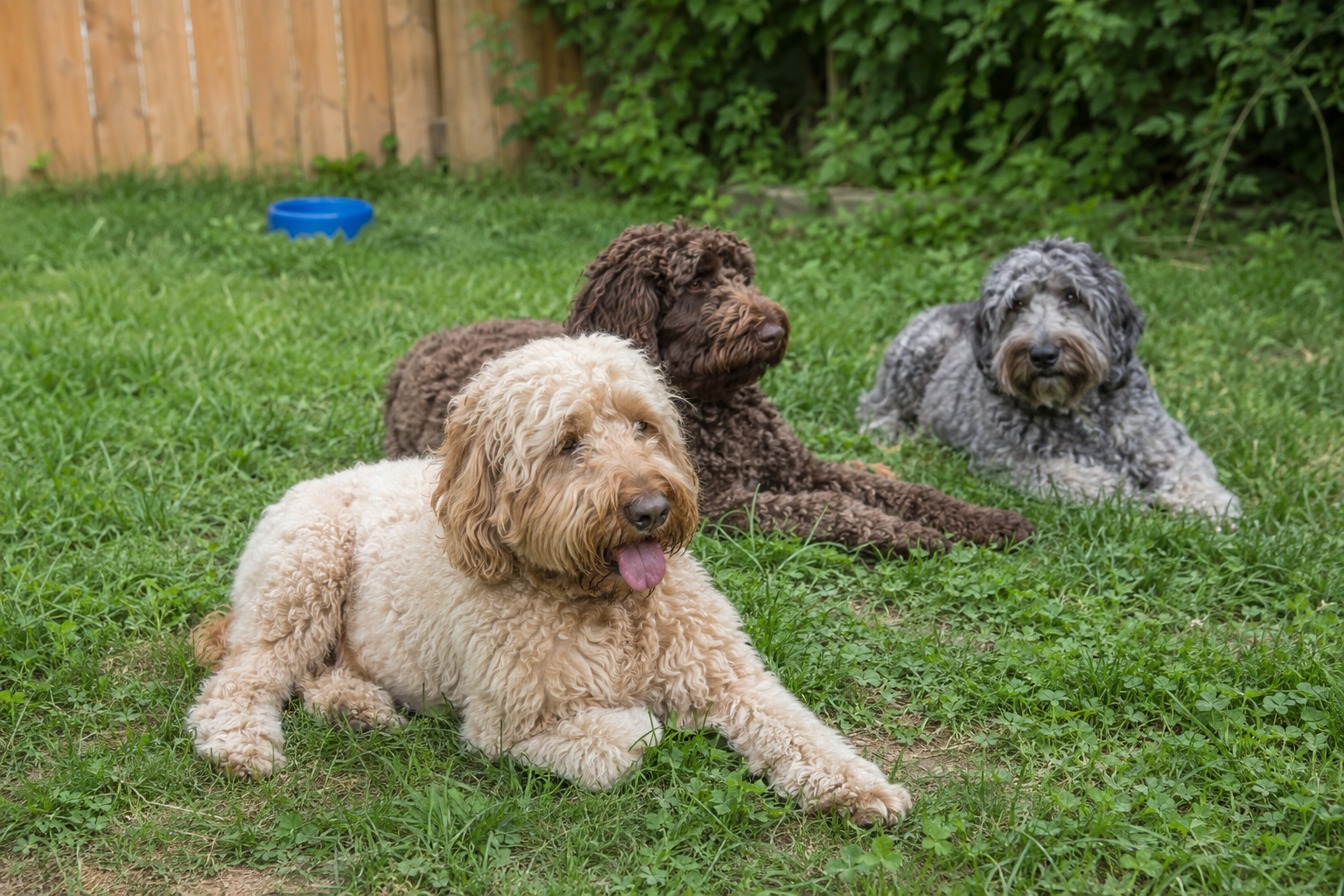
The happiest fact about this rescue is also the one that haunts the woman who led it. Of the 111 Doodles pulled from a single breeder’s property in Baja California, nearly all found homes almost immediately. They got that second chance for one reason: they were Doodles, the designer crossbreed everyone wants right now. Swap them for 111 ordinary mixed-breed dogs and the story very likely ends differently. Hold onto that as you read what follows, because the rescue itself is extraordinary, and the reason it worked is an indictment of how Americans shop for dogs.
It started with a Facebook message
“There’s a situation with a breeder of Doodles in the La Misión area,” read the message Lauren Botticelli, executive director of The Animal Pad, an all-breed nonprofit dog rescue based in San Diego, recalls receiving at the end of 2022.
It was an unusual one. The Animal Pad works with rescue groups across Baja California and regularly pulls dogs from Mexico, but those are almost always street dogs. Never before had the group been contacted about a breeder, let alone a breeder of designer dogs.
At first, Botticelli was kept in the dark. The rescue received two dogs from the breeder via a transporter, with instructions not to post anything publicly. The dogs were “severely shut down and under-socialized,” she says. “I just fixated on these dogs and what they must have gone through.” Working her network in Baja, she learned that local rescuers had been trying to get authorities to shut the breeder down, but none had managed to get onto the property to document conditions.
Then the breeder, inexplicably, let Botticelli in. “I still don’t know why she trusted us over anyone else,” Botticelli says. The breeder, who said she was open to rescuers taking dogs she did not think she could sell, invited Botticelli and a group of volunteers to visit.
What they found
It was a nightmare. The breeder had more than 150 dogs on the property. Large dogs were crammed into small yard spaces; puppies were piled in crates. The animals lived in filth, ungroomed and matted, some so badly they could not see. Left to fight over food and water, some had killed one another.
“It took everything in us to hold it together and know that, for the betterment of the dogs, we couldn’t say anything,” Botticelli says.
At first the breeder let volunteers take only the dogs she deemed “ugly” and “weirdos,” the ones she did not expect to sell. “We played along with that,” Botticelli says. “We took those dogs in and said we would continue to help her however we could. All the while, we’re behind the scenes trying every possible thing to figure out how we can help shut her down.” The team quietly documented the conditions for authorities. “It was kind of like an undercover operation.”
Over three days and two more visits, the breeder’s behavior grew more alarming. “She was taking slip leads and hitting the dogs with them and wondering why the dogs were shying away from her,” Botticelli recalls. “She was throwing buckets and things at dogs on the property and then breaking down sobbing.”
The break
When the team began catching dogs, the dogs panicked and ran. This terror “was all they had ever known, and this was a very scary situation for them,” Botticelli explains. The breeder screamed, “See, they don’t want to go with you! This is paradise,” and kept repeating it, a phrase that stuck with Botticelli “because I think she truly believed it.”
The rescuers took as many dogs as they could on those early trips. Later that week, the breeder was arrested, not for animal cruelty, though she had been charged with it before in the U.S., but for threatening authorities. Police had come to the property, found puppies living in her car without food or water, and confiscated them. The breeder chased the officers to the police station, got out of her car, and threatened everyone’s lives.
After the arrest, police and the breeder’s landlord authorized Botticelli’s team to remove every remaining dog. About 15 volunteers joined her, along with local rescuers including Los Adoptables.
“I wish we could have explained to them that us putting this leash around their neck is the best thing that’ll ever happen to them,” Botticelli says of the Doodles, who resisted out of fear. “It was so clear how abused they had been and how traumatizing this was. It broke my heart, it broke my team members’ hearts, to have to put them through this final trauma even though we knew this is what needed to happen.”
By dawn, the team had to leave behind 13 dogs who were “way too skittish, who had watched all of their friends captured.” They moved roughly 60 dogs to a local safehouse and got 30 across the border into the U.S. Rain then made the unpaved road to the property impassable for days. Eventually Los Adoptables volunteers saved the rest, many of whom had dug caves into the ground to hide. Two days later, two of those dogs gave birth, to litters of five and six.
Recovery
Back in the States, the dogs were boarded at The Animal Pad’s facility and a nearby kennel and given medical workups. Every one of them arrived with giardia, parasites, and ear infections. Then they were groomed, a process the team feared the traumatized dogs would resist. Instead, “most of them have fallen asleep on the grooming table,” Botticelli says. “It’s just relief, getting those mats out and just feeling like, ‘Oh my god, this feels so good.’”
The public response was overwhelming. Of the 111 dogs, just nine were still waiting for adoption or foster afterward. Which brings us back to the uncomfortable part. “The only reason we were able to do a rescue of this magnitude is because they were Doodles,” Botticelli said. “That makes me both so happy for these dogs and so sad for so many others that get overlooked.”
Why this keeps happening
The cruelty on that property was extreme, but the conditions that allowed it are ordinary. Two things let operations like this run.
The first is demand. The breeder specifically targeted buyers in San Diego and Orange County, and she found them, because people will pay a premium for a fashionable crossbreed and often do little checking first. Welfare experts are blunt about what separates a responsible breeder from this: a responsible breeder welcomes you onto the property to see where the dogs live and meet the puppy’s mother, health-tests the parents and shows you the certificates, doesn’t always have puppies ready to go, interviews you, and commits to take the dog back at any point in its life. A breeder who refuses a property visit is the single biggest red flag there is. Botticelli heard from one would-be customer who asked to pick up a dog at the property and was ghosted. “Anybody legitimate would be willing to show you where the breeding is taking place,” she says.
The second is law. Breeding regulation in the U.S. is full of holes. The federal Animal Welfare Act sets standards for breeders who sell wholesale or sight-unseen, but it largely exempts small-volume breeders who sell directly to the public, which is most of them. State licensing rules are inconsistent and thinly enforced, and a breeder shut down in one place can often relocate and start over. As far as Botticelli knows, this breeder is no longer in jail and could legally acquire more dogs. “We’re going to do everything we can to ensure that doesn’t happen,” she says. “Luckily, the part of Baja she lives in has eyes and ears everywhere.”
The hopeful part
The story does end well, and not only for the dogs. The Animal Pad heard from a number of San Diego–area buyers who had purchased Doodles from this same breeder, and many of them stepped up to foster or adopt the rescued ones.
“I keep telling people, I’m happy for their dogs, that their dogs got out and are loved and probably don’t even remember the horrors they came from,” Botticelli says. “I don’t want anyone to feel guilty for what they did, but instead, help. They’re learning you need to do your due diligence before you get an animal of any sort.”
That is the real takeaway, and it costs nothing. You do not have to go to a breeder to find the dog you want, and if your heart is set on a particular breed, breed-specific rescues exist for exactly that. The 111 Doodles got lucky because they were trendy. The way to make the next 111 dogs lucky is to stop letting trend do the choosing.
References
- The Animal Pad. https://www.theanimalpad.org/
- “Stopping Puppy Mills.” Humane World for Animals (formerly the Humane Society of the United States). https://www.humaneworld.org/en/issue/stopping-puppy-mills
- “Animal Welfare Act.” USDA Animal and Plant Health Inspection Service. https://www.aphis.usda.gov/animal-welfare/animal-welfare-act
- “How to Find a Responsible Breeder.” The Humane Society of the United States. https://www.humaneworld.org/en/resources/how-find-responsible-dog-breeder
Leila Torres leads our Living coverage, from home life and travel to the products and rescue stories that come with sharing a life with animals. She edits and writes across the section, with a soft spot for pieces about the bond between people and their pets.
Meet our experts ↗Keep reading
 Living'Stray' Filmed a Country That Protected Its Street Dogs. That Country Is Gone.Tom Hadley · 7 min
 LivingHe's Fostered Almost 40 Pit Bulls. The Stigma Is the Only Thing He Can't Rehome.Leila Torres · 8 min
 LivingThe Rescue-Chihuahua Coincidence That Built a Cult Leash BrandMarcus Webb · 5 min
 LivingHe Lost 90% of His Business. Then He Groomed 1,461 Dogs for Free.Marcus Webb · 5 min
 LivingThe ADA Has No Breed List. Your Landlord's Insurance Does.Dr. Priya Nair · 6 min
 LivingThe Pentagon Spent $1 Million Testing Drugs on Beagles. Congress Just Cut It Off.Marcus Webb · 4 min