


The Pentagon Spent $1 Million Testing Drugs on Beagles. Congress Just Cut It Off.
A watchdog group spent years exposing the Department of Defense's drug tests on beagle puppies. In December 2025, that campaign finally reached the one place it counted: the defense budget.

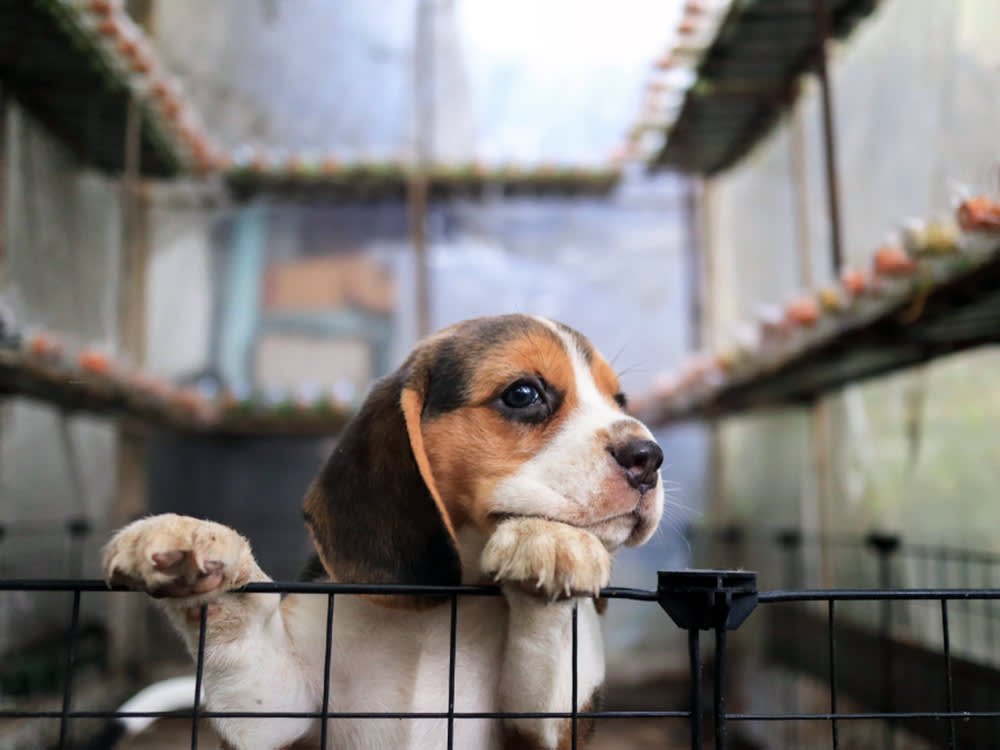
For most people, “the government tests drugs on dogs” sounds like something that surely can’t still be true. It was, and beagles were the ones paying for it. What makes this story worth telling now is not just that the tests happened. It’s that, after years of pressure, they finally hit a wall.
What the records showed
In May 2024, the White Coat Waste Project, a watchdog group focused on ending taxpayer-funded animal testing, published federal records showing the U.S. Army had commissioned an experiment costing $949,108 to test an experimental drug on dozens of beagles. The project had begun the year before and was scheduled to run into the following summer. The stated goal was to gather the animal data the Department of Defense believed it needed to win Food and Drug Administration approval for the drug.
Beagles end up in these programs for a bleak reason: they’re small, docile, and easy to handle, which is exactly why labs favor them. In this kind of testing, dogs are given escalating doses of a compound, often without pain relief, and are euthanized and dissected at the end.
There’s a grim irony buried in the justification. The DOD has banned using animals for wound, trauma, and weapons training since the 1980s. Other categories of drug experiments, though, remained technically permitted, which is the loophole this program lived in.
The government’s own doubts
The strongest argument against the tests came from inside the government. The Defense Advanced Research Projects Agency has acknowledged that “animal models have limited relevance to humans and poorly predict effects in humans.” The FDA’s own public position is that it does not require human drugs to be studied specifically in dogs. In other words, the agency the tests were meant to satisfy never demanded them in the first place. That gap, between what was legally required and what was actually being funded, became the center of the case against the program.
What’s new since this was reported
This is where the story has genuinely moved, and it moved in the direction animal advocates wanted.
In May 2025, the White Coat Waste Project reported it had helped cut a separate NIH-DOD contract funding a laboratory in China that was testing on roughly 300 beagles a week using U.S. money. Then came the bigger one. In December 2025, Congress passed the annual defense policy bill, the National Defense Authorization Act, with language defunding the Department of Defense’s painful experiments on dogs and cats, and President Trump signed it into law. According to the watchdog group and multiple news reports, it was the first federal measure ever to specifically defund the DOD’s dog and cat testing.
That doesn’t end every animal experiment across the entire government overnight, and reform work continues. But for the specific programs at the heart of this story, the funding tap that kept them running has been turned off, which is the outcome that years of records requests and public pressure were building toward.
The bill still in motion
The broader legislative effort hasn’t stopped at the defense budget. The Preventing Animal Abuse and Waste Act, reintroduced in the current Congress as H.R. 4698, would go further by barring the National Institutes of Health from conducting or funding research that causes significant pain or distress to dogs and cats. It has drawn bipartisan support, and advocacy groups continue to push constituents to contact their representatives about it.
For anyone who has ever adopted a former lab beagle, or simply looked at one and wondered how this was ever allowed, the throughline is worth holding onto. Public records, sustained pressure, and a single line in a must-pass budget bill did what outrage alone couldn’t.
References
- White Coat Waste Project. “WCW Exposes DOD’s Wasteful and Cruel $1M Beagle Testing.” blog.whitecoatwaste.org
- White Coat Waste Project. “Congress Cuts Funding for the Pentagon’s Painful Pet Experiments in Must-Pass Defense Bill.” blog.whitecoatwaste.org
- U.S. Congress. “H.R.4698 — PAAW Act, 119th Congress.” congress.gov
- DARPA. “Microphysiological Systems Program.” darpa.mil
Marcus Webb writes about the gear, gadgets, and everyday choices that make life with a pet easier. His coverage runs from product picks to training and the causes worth paying attention to, always with an eye on what actually earns a place in your home.
Meet our experts ↗Keep reading
 LivingHundreds of Thousands of Dogs Died Last Year. This Film Blames Us.Marcus Webb · 6 min
 Living93 Dogs Died in Her Care. A Year Later, the Case May Never See a JailMarcus Webb · 4 min
 Living43 Arrests at a Texas Dogfight. Nearly All of Them Bonded Out.Dr. Amara Solis · 7 min
 LivingA Drug Raid Opened a Door. Behind It: a Dogfighting Ring and a 9-Foot Alligator Fed on the EvidenceJames Okafor · 5 min
 LivingHe Lost 90% of His Business. Then He Groomed 1,461 Dogs for Free.Marcus Webb · 5 min
 Living190 Dogs, One Man: The Largest Federal Dogfighting Seizure Ever Ends in ConvictionNina Vasquez · 5 min