


The Dire Wolf Fantasy Is Filling Shelters With Real Huskies
First Game of Thrones, now a biotech company's 'de-extinct' wolves. Every time a wolfish dog goes viral, rescues brace for the surrenders. Here's what a Husky actually is, and who has no business getting one.

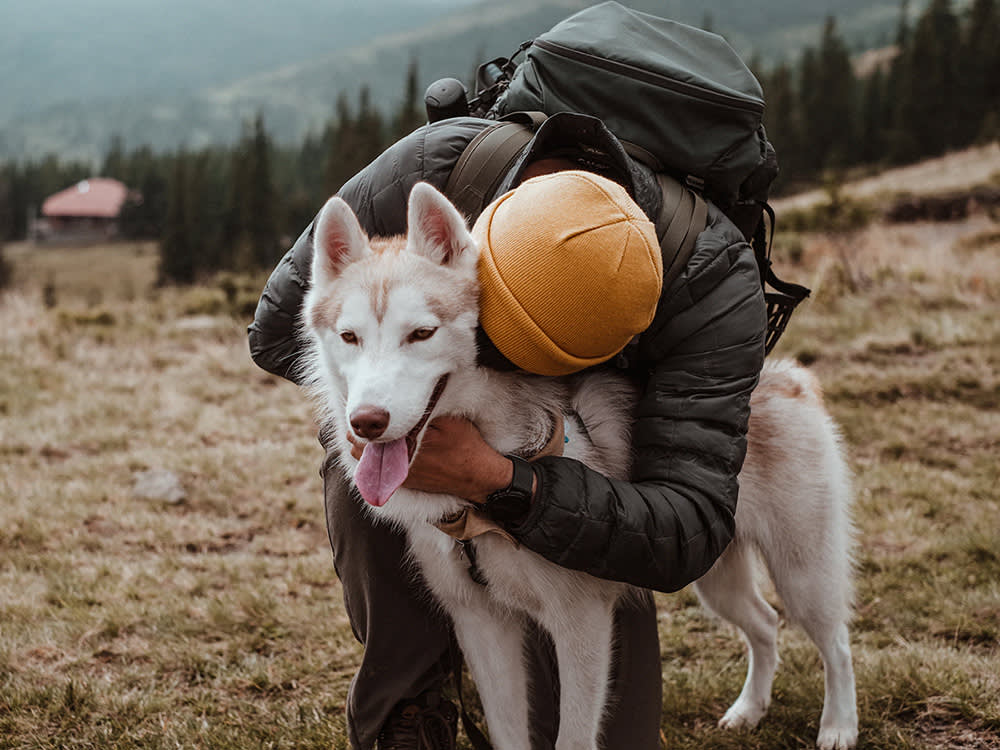
Northern-breed rescues can predict their own busy seasons by watching pop culture. Every few years a wolfish dog captures the public imagination, a wave of impulse buys follows, and roughly a year later the same dogs start arriving at shelters, surrendered by owners who were in over their heads before the novelty wore off. The breed that takes the hardest hit, over and over, is the Siberian Husky.
The thesis of this piece is simple and a little uncomfortable: the problem is almost never the dog. It’s the fantasy people project onto the dog. A Husky bought to be a stand-in for a mythical wolf is being set up to disappoint, because a Husky is not a decoration. It’s one of the most demanding companion dogs you can own, and mismatching that dog with the wrong home is how the surrender cycle keeps turning.
What a northern breed even is
Huskies belong to a family of dogs built for a specific, brutal job. People in the far north bred them to haul heavy sleds across enormous distances in punishing cold. The northern breeds (Huskies and Malamutes, Samoyeds, Akitas, the wider Spitz family) now spend their lives on sofas, but nobody removed the hardware. These are working animals wearing a companion-dog label, and the gap between what they were built to do and the average living room is exactly where the trouble starts.
The pattern, and the villain everyone names
Ask anyone in Husky rescue why their intake keeps climbing and you’ll hear the same answer: screens and streaming. When Game of Thrones was at its peak, its wolfish “direwolves,” played on screen by Northern Inuit dogs bred to look lupine, sent a generation of viewers hunting for the nearest real-world equivalent. The nearest equivalent was a Husky.
The numbers backed up the anecdotes. The U.K.’s largest dog-welfare charity reported that the number of Malamutes, Huskies, and Akitas in its care jumped several hundred percent over the show’s run, and North American rescues logged the same climb starting around the show’s 2011 debut. Dana Ramirez of Rancho Luna Lobos, a northern-breed rescue and rehabilitation center, has said the surrender conversation repeats itself: people buy a Husky, decide the dog is more work than they bargained for, and want out. She has also noted that a Seppala Husky breeder she knows watched puppy requests surge after the sled-dog movie Togo. The trigger changes; the outcome doesn’t.
And it isn’t new. The pattern has a long history, from Dalmatians after 101 Dalmatians to Chihuahuas after Legally Blonde. Researchers even put numbers to it. A widely cited study found that a popular dog movie can lift the featured breed’s popularity for up to a decade after release, which is plenty of time for a lot of poorly matched adoptions to happen and then unravel.
The new twist: manufactured “dire wolves”
Here’s the update the old warnings didn’t account for. In April 2025, the biotech company Colossal Biosciences unveiled three white, wolf-like pups it billed as “de-extincted” dire wolves, named Romulus, Remus, and Khaleesi. The announcement was everywhere.
The scientific reality is more modest than the headlines. Independent geneticists have been clear that these animals are gray wolves with a small number of targeted gene edits, not resurrected dire wolves, and the project drew sharp criticism for overselling what was actually accomplished. That distinction matters here for a very practical reason: a glossy “dire wolves are back” news cycle is precisely the kind of cultural moment that historically drives people toward the closest fluffy, wolf-adjacent dog they can actually buy. Rescues have learned to treat viral wolf imagery, real or engineered, as an early-warning siren for the surrenders that tend to follow. If you feel the pull toward a wolfish dog because of a story like this, that pull is worth examining before you act on it.
What a Husky will actually ask of you
Every breed generalization comes with asterisks, and Huskies generate more exceptions than most. But prospective owners keep getting blindsided by the same realities, so here they are, grouped by what they’ll cost you.
Your daily schedule. A Husky is a working animal first. Smart, curious, and easily bored, a dog denied a job will draft their own, usually one involving digging, climbing, or unauthorized travel. Lounging is not in the repertoire: these are the opposite of couch potatoes, and an under-exercised Husky converts boredom directly into demolition.
Your infrastructure. For this breed, running isn’t a habit, it’s the factory setting. An open gate, a sagging fence, one distracted moment is all it takes, and recall is not their strong suit. Prey drive ships in the same package, which puts cats, rabbits, and other small creatures at real risk. And a Husky confined to a small apartment, or left alone for long stretches, will unravel, loudly and expensively.
Your tolerance for mess and noise. The thick double coat sheds constantly and “blows” twice a year in indoor snowstorms, so frequent brushing is a lifestyle, not a chore. The voice is famous for a reason: the howling and “talking” charm some owners into filming it and drive others slowly mad. And that Arctic wardrobe means heat is a genuine welfare problem, not a mere inconvenience — hot climates and Huskies are a bad match.
Your ego. Huskies were bred to make trail decisions without human micromanagement, and they extend that policy to your living room. They can absolutely be trained, but they aren’t wired to please the way a Lab is, so budget patience by the barrel. They’re also friendly and affectionate with essentially everyone, intruders included: a Husky meets a break-in the way they meet everything else, as a chance to make a new friend. If you want a guard dog, look elsewhere.
So who should get one?
Someone who reads that list and feels excited rather than exhausted. Someone with the time, energy, space, and stubbornness to meet a Husky where it lives. If that’s you, skip the breeder chasing a fad and adopt. Northern-breed rescues are full of wonderful dogs surrendered by people who wanted the image without the reality, and those groups will work hard to match you with a dog who fits your actual life. Get the dog for what it is, not for what a TV show or a press release told you it could be.
References
- PLOS ONE — Dog Movie Stars and Dog Breed Popularity: A Case Study in Media Influence on Choice
- National Geographic — In Game of Thrones fans’ pursuit of dire wolves, huskies may pay the price
- MIT Technology Review — Game of clones: Colossal’s new wolves are cute but are they dire?
- Nature — This company claimed to ‘de-extinct’ dire wolves. Then the fighting started
Marcus Webb writes about the gear, gadgets, and everyday choices that make life with a pet easier. His coverage runs from product picks to training and the causes worth paying attention to, always with an eye on what actually earns a place in your home.
Meet our experts ↗Keep reading
 LivingThe ADA Has No Breed List. Your Landlord's Insurance Does.Dr. Priya Nair · 6 min
 Living'Will My Dog Ever Love Me?' Is the Wrong Question. Watch What They Choose.Dr. Priya Nair · 9 min
 LivingThe Shelter Dog Everyone Called 'Aggressive' Just Needed a PlaygroundDr. Mara Chen · 8 min
 LivingA 'Soul Dog' Isn't Magic. It's Fluency, and You Can Build It.Jordan Ellis · 8 min
 LivingShelter Temperament Tests Are Barely Better Than a Coin Flip. Good Dogs Die for It.Dr. Ravi Mehta · 7 min
 LivingRenaming Your Rescue Won't Confuse Her. Keeping a Poisoned Name Might.Dr. Amara Solis · 6 min