


A 'Soul Dog' Isn't Magic. It's Fluency, and You Can Build It.
People describe the bond like it's fate: you meet the one, you just know. The trainers who watch thousands of these relationships describe something much less mystical and far more encouraging, because it means the bond isn't given to you. It's earned.
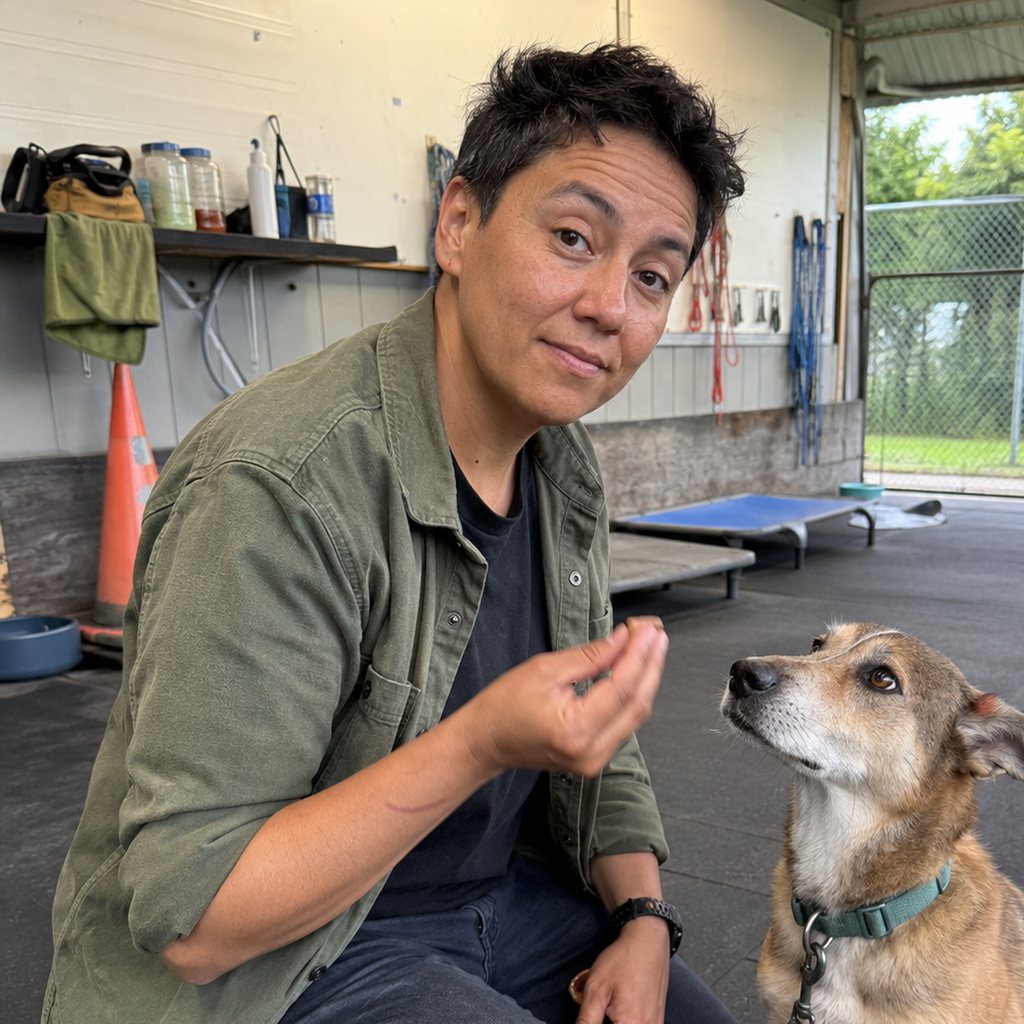
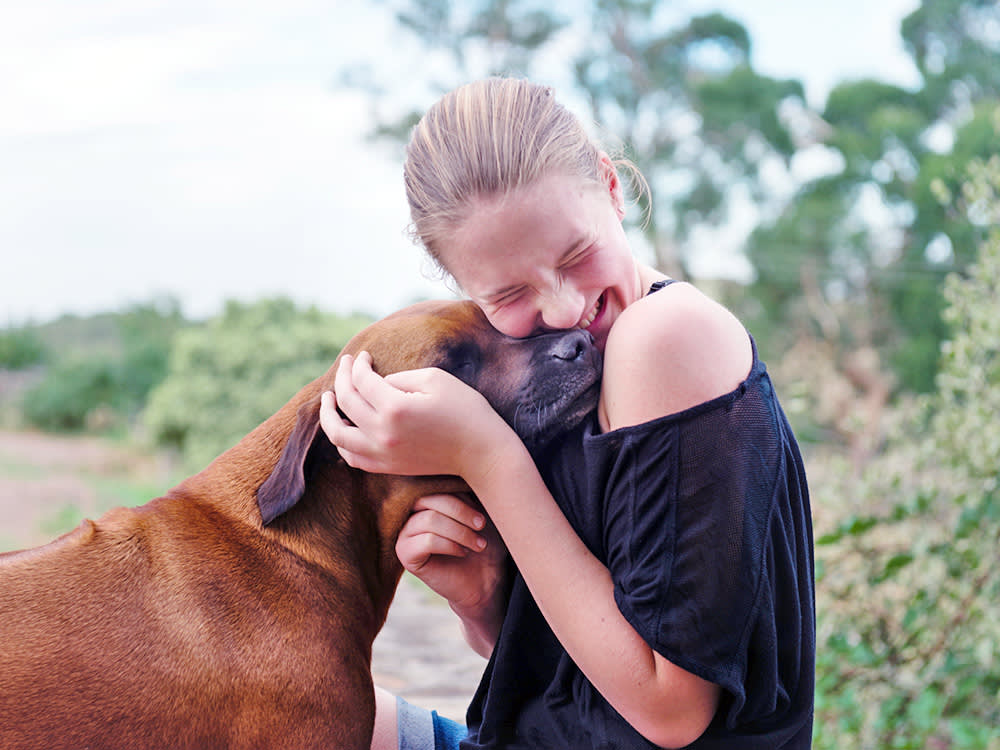
The way people talk about a soul dog makes it sound like weather. It happened to them. They walked into a shelter and knew. The bond arrived fully formed, delivered by the universe, and their job was simply to receive it.
I want to make a case against that, and the case is more hopeful than the myth it replaces.
Because when you ask the people who have actually watched thousands of these relationships form, the trainers and behavior consultants who see them from the outside, they do not describe magic. They describe something specific, learnable, and gradually constructed. They describe fluency: two animals who have spent enough time paying honest attention to one another that they can each read the other before anything is done.
That is not fate. That is a skill, and the difference matters enormously, because one of those things you can go and get.
What the trainers actually say it is
Kellie Stevens, a certified dog behavior consultant, has a definition that quietly refuses all the romance.
A soul dog, in her account, is one who reaches every part of you. Note what she rules out first: this has nothing to do with a dog performing well. Not the dog who adores every stranger. Not the dog who is funny on camera. What she describes instead is a pairing in which each one’s weaknesses are covered by the other’s strengths, in which the affection survives everything, and in which the two of them figure out, over time, how to operate as a unit. And she adds a fourth thing, which is the one that lands hardest: this is a dog who teaches you something you will carry for the rest of your life, long after theirs is over.
Read that list again and notice what is absent. There is no instant recognition. There is no chemistry. Every single item accrues over time: the covering of weaknesses, the affection that has been tested, the figuring out how to operate together. Those are outcomes of a long process.
The most telling word in the whole definition is “team.” A team is not a feeling. A team is a thing you become by practicing.
The signs, correctly understood
The usual list of soul-dog signs floats around the internet as though it were a horoscope. It is worth going through, because each one turns out to be evidence of the same underlying thing.
Intuitive communication. The sense that your dog grasps what you mean without you having to drill it into them. Training is hard. Getting a dog to comply reliably is famously hard. And yet this particular dog seems to just get it.
That is not telepathy. That is a shared vocabulary, built out of thousands of small, consistent, repeated interactions, most of which you have long since forgotten. What feels like intuition is compressed history.
Shared personality. Spend enough time together and the personalities start to interlock. If you are an introvert who would rather be home than at a party, you may notice your dog is not exactly the life of the dog park either.
Stevens’s take on this is sharper than the sentimental version: dogs, she says, have a way of mirroring our behaviors back at us, including the ones we do not know we have. So if we watch their behavior honestly, and then look inward at our own feelings and conduct, we can learn a great deal. That is not a description of two souls being alike. That is a description of a feedback loop, and it is an invitation to be a little uncomfortable.
Life-changing impact. Stevens waves this one away with a joke that is not really a joke. Is the animal in question a dog, and does it make you feel things? Then healing you is more or less its job description, and it is presumably getting on with it.
Which is either a punchline or the entire thesis, depending on how you read it. Possibly both.
The myth that costs people the most
Here is where the folk wisdom does actual damage.
There is a widespread assumption that the deep bond belongs to puppyhood, that you have to raise them from eight weeks to get the real thing, and that adopting an adult means settling for a lesser version of the relationship.
Stevens wants that belief dead, and she is emphatic. The notion that a puppy produces a deeper attachment than an adult dog is, to her, simply false. Given enough time, she argues, the adult is in some respects the easier animal to bond with, for two concrete reasons: their character has already finished forming, so there is a real person there to meet, and they can hold their focus on you long enough to actually connect.
Sit with that for a second, because it inverts everything.
A puppy is a blur. They are a project, an exhausting one, and much of the first year is spent on management, not connection. An adult dog, especially a rescue, is a finished person who can meet your eyes, hold a thought, and decide about you. And you get to decide about them, with actual information, because their personality is right there.
Which is why your soul dog is quite possibly sitting in a shelter right now. Not despite being an adult. Partly because of it.
And you get more than one
The other myth, and this one causes real grief, is that you get exactly one soul dog per lifetime. Which means that if you have found yours, you are already living inside the countdown, and when they are gone, that is it.
Dogs’ lives are painfully short. But the scarcity premise is false.
Stevens rejects the one-per-lifetime idea outright, and her own history is the evidence. The first dog changed and stretched her so thoroughly that he sent her into a career studying canine behavior; he read less like a dependent than like a colleague, and something of a bodyguard. The second, whom she took on at three years old, could hardly be less similar: an animal built out of cuddles, play, and naps, who would prefer to remain within about a yard of her at all times.
Two dogs. Two entirely different relationships. Both of them the real thing.
That is not a replacement, and nobody should feel that it is. It is a second, different fluency, learned by a person who already knows how to learn one.
What the bond costs you
The romantic version of the soul dog is all reward. The honest version has an obligation attached, and it is the heaviest one there is.
A bond nobody could substitute for comes with a duty attached, and the duty runs the entire length of the dog’s life. Including the last day of it.
Stevens tells a story about losing her first dog. Her vet said something to her that she still describes as among the most validating things she has ever been told: that the strength of the bond was visible from the outside, and that she would recognize the moment to let him go when it arrived.
And that, she says, is what a soul dog really is. The two of you have read each other down to the bone. You know the body language, the moods, the preferences, the dislikes. You can call what they are about to do before they do it.
Which brings the whole thing back around. The final proof of the bond is not that you loved them. It is that you could read them, well enough and honestly enough to make the last decision correctly, on their behalf, when they could not.
Fluency again. Right to the end.
How to actually build it
If the bond is learnable rather than given, then the practical question is what you do. Stevens’s advice is the least mystical thing in this article, and it is worth taking literally.
Start by recognizing what you have entered into. The other party is a different species. Not a small person, and not the uncannily competent dog you grew up watching on television. Nearly every rupture Stevens sees between a person and their dog traces back to the same error: the human expected the animal to think, feel, and behave like a human. Give that up, learn what a dog genuinely is, and only then can you start learning who yours is.
Give up on the perfect dog. No such animal exists, and the quirks are not defects to be sanded off.
Then do the boring work. Caring for a soul dog, on her account, looks identical to caring for any dog: read their communication and respect it, be clear about what you are asking of them, work out what this specific animal needs, and then deliver it, consistently, without drama.
And do not punish. This is the one absolute in her advice. Nothing, she says, corrodes a dog’s trust in their person faster.
Which is the tell, really. Every item on that list is a way of paying attention. That is all the magic is: sustained, honest, unglamorous attention, offered for years, in both directions, until you can read each other without trying.
You do not find a soul dog. You become fluent in one.
References
- Nagasawa, M. et al. “Oxytocin-gaze positive loop and the coevolution of human-dog bonds.” Science, 2015. https://www.science.org/doi/10.1126/science.1261022
- Payne, E., Bennett, P. C., & McGreevy, P. D. “Current perspectives on attachment and bonding in the dog-human dyad.” Psychology Research and Behavior Management, 2015. https://pmc.ncbi.nlm.nih.gov/articles/PMC4348122/
- Topál, J. et al. “Attachment behavior in dogs: a new application of Ainsworth’s Strange Situation Test.” Journal of Comparative Psychology. https://psycnet.apa.org/record/1998-11115-005
- American Veterinary Society of Animal Behavior. “Position Statement on Humane Dog Training.” https://avsab.org/resources/position-statements/
- ASPCA. “Adopting an adult dog.” https://www.aspca.org/adopt-pet/adoption-tips
Common questions
What's the difference between a heart dog and a soul dog?
Nothing meaningful. 'Heart dog' is the phrase that circulates on TikTok and in older dog communities; 'soul dog' is the newer one. Both describe the same thing: a dog you share a particular, unbreakable, two-way bond with. The terminology is folk vocabulary, not a category.
Do you only get one soul dog in a lifetime?
No, and the fear that you do causes a lot of unnecessary grief. Trainers who have worked with thousands of dogs are clear that people can and do form this bond more than once, and that each one is different rather than a replacement. A first dog often teaches you how to have the relationship at all. The next one benefits from everything you learned.
Can a rescue dog be a soul dog, or do you have to raise them from a puppy?
The puppy assumption is the most damaging myth here. Behavior consultants routinely argue it can be easier to bond deeply with an adult dog, because their personality is already formed and they have the attention span to actually connect with you. A puppy is a project. An adult dog is a person you can meet.
Jordan Ellis is a certified professional dog trainer with a decade of experience working with rescue organisations and private clients. They specialise in anxiety, reactivity, and positive reinforcement methods, and review all training and behaviour content at The Pet Times.
Meet our experts ↗Keep reading
 LivingThe Dire Wolf Fantasy Is Filling Shelters With Real HuskiesMarcus Webb · 6 min
 First DaysThe 3-3-3 Rule Is Two-Thirds Made UpDr. Mara Chen · 10 min
 LivingThe Shelter Dog Everyone Called 'Aggressive' Just Needed a PlaygroundDr. Mara Chen · 8 min
 LivingShelter Temperament Tests Are Barely Better Than a Coin Flip. Good Dogs Die for It.Dr. Ravi Mehta · 7 min
 Training5 Reasons Your Dog Follows You Into the Bathroom (One Is Worth Watching)Dr. Nina Kohl · 6 min
 TrainingAre You Hovering Over Your Dog? The Line Between Caring and Smothering.Dr. Lena Park · 7 min