


Shelter Temperament Tests Are Barely Better Than a Coin Flip. Good Dogs Die for It.
The behavior tests shelters use to predict aggression fail badly, flagging huge numbers of safe dogs as dangerous. The research, why the false positives are lethal, and what actually works instead.

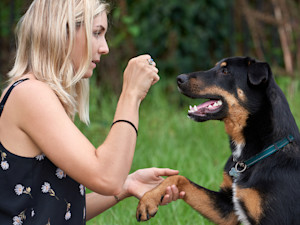
A shelter faces an impossible bind. It cannot knowingly send a dangerous dog into a family’s living room. But most of the time it has almost nothing to go on, no history, no idea how the dog behaves at home or anywhere that isn’t a concrete kennel. So an overworked, undertrained staffer spends less than an hour with a stranger of a dog and makes a call that decides its future. Get it wrong one way and someone gets bitten. Get it wrong the other way and a perfectly good dog never goes home, or is euthanized for a crime it would never have committed.
To bring some rigor to that call, shelters turned to standardized behavior tests. The uncomfortable finding from a decade-plus of research is that the tests don’t work, and the specific way they fail gets safe dogs killed.
The tests, and the number that should stop you cold
A behavioral assessment runs a dog through staged provocations meant to mimic home life: pinching a flank to imitate a grabby child, wheeling out a person in a strange hat to test tolerance for odd human shapes, presenting a fake dog to gauge aggression, or reaching toward the food bowl with a plastic hand. Reasonable-sounding, on paper.
Then researchers checked whether the results predicted anything. One study found the widely used Assess-a-Pet protocol wrongly branded 41 percent of non-aggressive dogs as aggressive. SAFER, another of the most common tools, performed even worse. Sit with that figure: a test used to decide whether a dog reaches the adoption floor was mislabeling something like four in ten friendly dogs as biters.
That is the heart of the problem, and it has a name. These assessments generate an avalanche of false positives, dogs who snap under staged harassment but would never do so in a home. A landmark mathematical analysis concluded the tests had no more predictive value for real-world aggression than flipping a coin. When a screening tool is that noisy and the penalty for a “fail” can be death, the tool isn’t neutral. It’s actively dangerous to the dogs it’s supposed to protect.
A test that’s right about as often as a coin toss isn’t a safety measure, it’s a lottery with a lethal losing ticket. And because the errors skew toward false alarms, the dogs paying the price are overwhelmingly the safe ones. That should bother anyone who cares about shelter animals.
Why a kennel is the worst possible testing room
Part of why these tests mislead is that they measure the wrong thing in the wrong place. A shelter is, for many dogs, close to a nightmare: a wall of barking, strange smells, isolating steel cages, and none of the routine dogs depend on. A dog buckling under that “kennel stress” may spin, pace, drool, stop eating, or charge the cage bars, all of which can read as aggression to a stressed human on a deadline. You are, in effect, testing a dog at the single worst moment of its life and treating the result as its permanent personality.
The food-bowl test is the cleanest example of the whole problem. Research found that dogs who guarded their bowls in the shelter frequently didn’t guard at all once home. In one striking study, of 96 dogs that “tested positive” for food aggression behind bars, only six showed it in their new homes. Even the researcher behind SAFER’s food test eventually walked away from it, noting that shelters which dropped the bowl test saw no rise in bites, in the building or in adoptive homes. The fake-dog test fares no better: dogs react more aggressively to a plastic decoy than to an actual dog, so it manufactures the very aggression it claims to detect.
The human variable makes it worse
Layer on who’s actually giving these tests. In crowded, under-resourced shelters, the assessor is often a staff member, not a behaviorist, asked to interpret a language they were never trained to read, the wiggling rears, lip-licks, ear positions, and tail carriage that make up canine body language. That interpretation turns subjective fast. In one documented case, a dog was harassed with a fake hand well past the point the sub-test should have ended, because staff already suspected he’d bite. He froze, growled, and finally delivered a bite so controlled it didn’t even break the skin, remarkable restraint under sustained provocation. He was labeled aggressive and euthanized anyway.
What actually helps
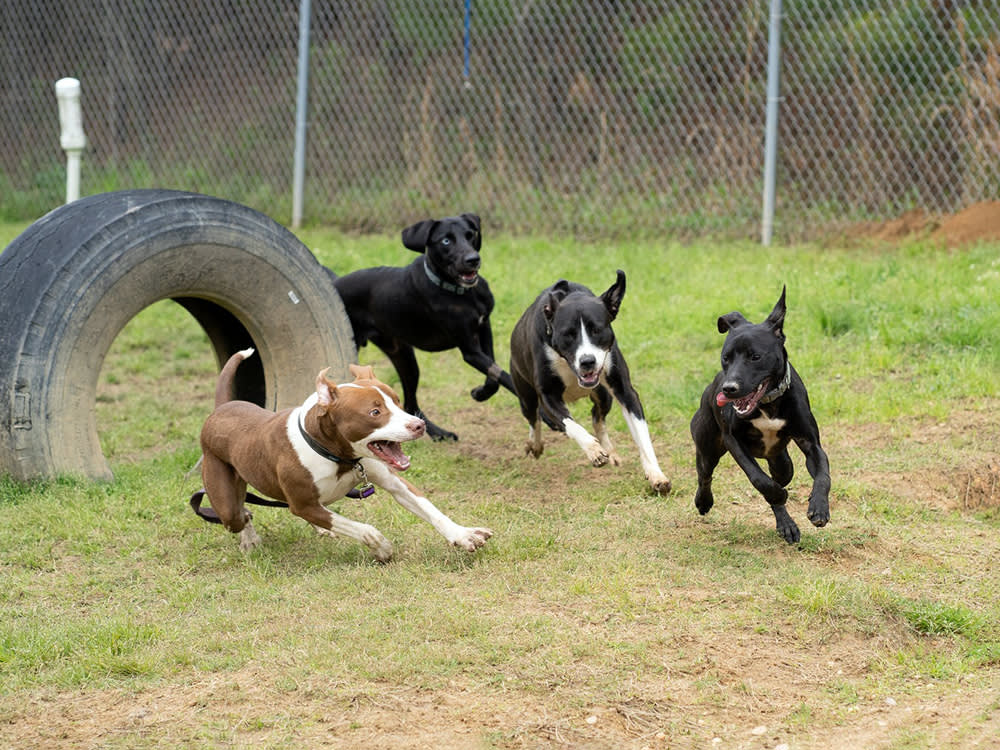
The reform is not a better test; it’s a different philosophy. If limited resources are going to be spent, the evidence says spend them on watching dogs live rather than staging ambushes: walking them, socializing them with people, running structured playgroups with other dogs, playing, training. You learn far more about a dog by seeing it do the ordinary things it’ll do once adopted than by seeing how it reacts to a person in a clown hat.
Programs built on this idea, like playgroup-based models that match dogs for supervised play, are spreading, and the outcomes are moving in the right direction: adoption rates up, euthanasia down. Play isn’t just kinder. It relieves the kennel stress that distorts a dog’s behavior in the first place, letting the real personality surface, which is exactly the information the staged tests were failing to capture.
It helps, too, to keep the baseline in perspective. The best analysis of the data suggests that dogs passing through shelters aren’t meaningfully more prone to problem behavior than pet dogs in general. The population walking into shelters is not a population of hidden biters that only a clever test can unmask.
How you can help
This is one of those issues where an ordinary adopter or volunteer can move the needle. Many shelters still run these assessments, often because “that’s how it’s always been done.” Sharing the research, gently, with your local shelter, that standardized behavior tests are poor predictors and that observation-and-playgroup models work better, is genuinely useful. You’d be surprised how many organizations haven’t yet caught up with what the science says, and how many good dogs a single conversation might eventually save.
What newer research and policy add
The debate has matured since the “coin flip” paper first landed. Rather than a clean win for either side, the current consensus is that formal, pass/fail behavior evaluations shouldn’t be used as the deciding factor in whether a dog lives, and major welfare organizations have adjusted accordingly. The ASPCA retired its own SAFER program and now frames any assessment as, at most, one input among many, explicitly warning against basing euthanasia decisions on a single test or moment. The field has largely pivoted from “which test is most accurate” to “how do we gather better information over time through normal interaction”, a quieter shift, but one that has almost certainly kept a lot of adoptable dogs off the euthanasia list.
References
- Patronek, G. J., and J. Bradley. “No Better Than Flipping a Coin: Reconsidering Canine Behavior Evaluations in Animal Shelters.” Journal of Veterinary Behavior, vol. 15, 2016, pp. 66-77.
- Mohan-Gibbons, H., et al. “Effect of Removing Food During a Feeding-Related Assessment in Shelter Dogs.” Journal of Applied Animal Behaviour Science.
- ASPCA. “Position Statement on Shelter Dog Behavior Assessments.”
Dr. Mehta is a board-certified veterinary nutritionist who evaluates pet food formulations, ingredient quality, and the science behind dietary trends. He writes and reviews all nutrition content at The Pet Times, including our food rankings and feeding guides.
Meet our experts ↗Keep reading
 Living'Will My Dog Ever Love Me?' Is the Wrong Question. Watch What They Choose.Dr. Priya Nair · 9 min
 First DaysThe 3-3-3 Rule Is Two-Thirds Made UpDr. Mara Chen · 10 min
 LivingA Dog With No Nostrils Became Philadelphia's Most Famous RescueLeila Torres · 6 min
 LivingThe Shelter Dog Everyone Called 'Aggressive' Just Needed a PlaygroundDr. Mara Chen · 8 min
 LivingA 'Soul Dog' Isn't Magic. It's Fluency, and You Can Build It.Jordan Ellis · 8 min
 TrainingYour Rescue Dog Isn't Being Difficult. They're Decompressing.Dr. Mara Chen · 8 min