


Scientists Found What Makes a 'Genius' Dog. You Can't Train It In.
A study of the rare dogs who memorize hundreds of toy names pinned the difference to three traits: curiosity, focus, and self-control. The catch for the rest of us? It looks less like something you teach and more like something a dog is simply born with.

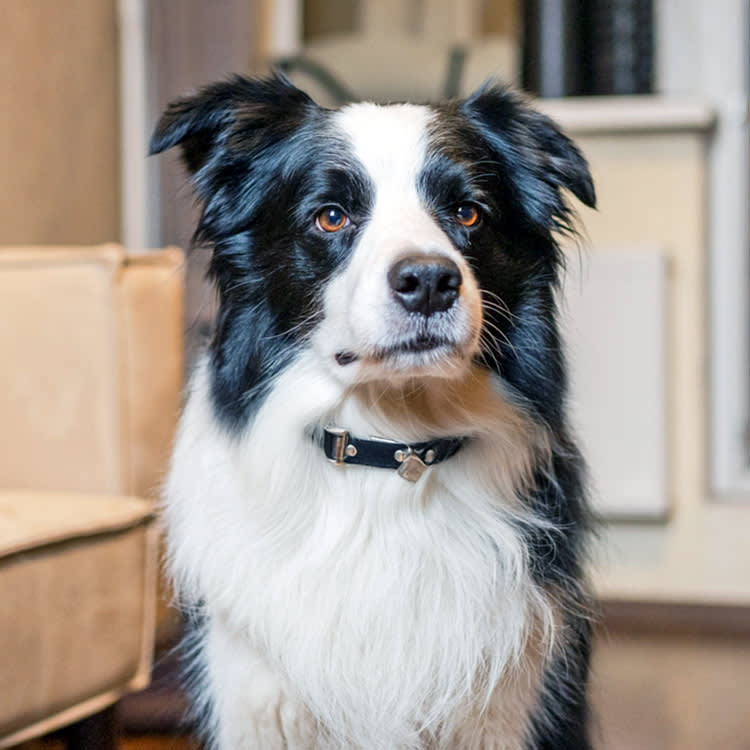
You are convinced your dog is the smartest one at the park. Maybe they are. But there is a specific, almost unbelievable kind of canine intelligence that only a handful of dogs on the planet possess, and scientists have finally started to explain what sets those dogs apart. The unsettling twist: it does not look like something you can coach into a dog. It looks like something they arrive with.
The dogs in question are “label learners,” the rare few who can recognize a huge number of objects by name alone, no pointing, no context, just the word. Ask for the purple hedgehog and they will pick it out of a pile. It is considered the gold standard of dog smarts, and it is vanishingly uncommon. A study published in late 2025 in the journal Scientific Reports set out to figure out what these canine prodigies have that ordinary dogs do not, and landed on three traits: curiosity, focus, and self-control.
A study built out of necessity
Label learners are so rare that the researchers, based at the University of Portsmouth in the U.K., could only assemble eleven of them, drawn from across the United Kingdom, the United States, Switzerland, the Netherlands, and Germany. The group was a genuine mix of breeds, from Border Collies and mixed breeds to Spanish Water Dogs and even a Pug, which is itself a useful clue: this is not a Border Collie party trick. Each dog first had to pass a screening test, retrieving named objects while their owner was out of sight so no accidental cueing could creep in.
Because the dogs were scattered across two continents, the team ran the whole thing as a citizen-science project, coaching the dogs’ own owners to administer a battery of cognitive tasks at home. Those tasks probed curiosity, problem-solving, learning, memory, and how the dogs read human communication, all benchmarked against a comparison set of everyday dogs with no special naming talent. The lead researchers were candid that eleven dogs is a small sample. What surprised them was how clearly the label learners still stood apart.
Curiosity, focus, and the ability to hold back
The differences were consistent. Compared with average dogs, the label learners spent noticeably longer investigating new objects and returned their attention to them more often, a signature of genuine curiosity about the unfamiliar. They also zeroed in on specific objects rather than interacting with everything at random, which the researchers read as sharper focus.
The most intriguing finding was about impulse control. The gifted dogs were simply better at holding themselves back. The researchers suggested this inhibition may be the hidden engine of the whole ability: to fetch the right named object, a dog has to override its urge to grab whatever it likes best. One researcher offered a relatable example, describing an ordinary dog so ball-obsessed it could not bring itself to fetch a different toy whenever a ball was in the room. The genius dogs can resist that pull. The rest cannot.
Meet Harvey
One of the eleven is Harvey, a Border Collie widely ranked among Britain’s cleverest canines, who can identify more than 220 different objects by name. His owner keeps him working at it all day, which leaves the house permanently strewn with toys. As she has described it, the naming game is essentially his job, and as a working breed he needs that kind of mental occupation to stay out of trouble, a reminder that even a canine genius still needs an outlet.
So can you train it into your dog?
This is where the study gets a little humbling. The researchers were careful to note that these traits appear to be an inherent, natural ability specific to certain dogs, not a skill most dogs could acquire with enough drilling. In other words, you probably cannot turn an average dog into a label learner through sheer effort. Genius, in dogs, seems more born than built.
“I think this quietly lets a lot of owners off the hook,” says Dr. Ravi Mehta. “If your dog isn’t memorizing fifty toy names, it doesn’t mean you failed at training, or that your dog is dull. It means they didn’t happen to draw this one rare cognitive hand. The good news is that the traits underneath it, curiosity and focus and impulse control, are exactly the things ordinary training and enrichment can strengthen in any dog, even if it never adds up to a 200-word vocabulary.”
That is the practical takeaway. You may not be able to manufacture a prodigy, but working on your dog’s focus and self-control, through games, puzzles, and patient practice, pays off for any dog, honors-student or not.
What newer research adds
The science of the canine mind has not slowed down. In 2025, a separate study in Current Biology reported that some of these word-savvy dogs can go a step further and extend a learned label to new objects based on what an object is for, grouping items by function rather than just memorizing each one individually, a flash of the kind of categorization we usually associate with young children.
The researchers behind the trait study have said they want to keep digging, in particular to learn whether curiosity, focus, and inhibition are fixed from puppyhood or can shift with experience. Their longer-term hope is a kind of “puppy IQ test” that could flag a young dog’s learning potential early, which could help identify dogs suited to demanding service roles. For now, the honest summary is this: the rarest dog geniuses are probably born, not made, but the ingredients of their gift are worth cultivating in every dog.
References
- Dror, Shany, et al. “A Citizen Science Model Turns Anecdotes Into Evidence by Revealing Similar Characteristics Among Gifted Word Learner Dogs.” Scientific Reports, 2023–2025.
- University of Portsmouth. “Study Suggests Curiosity and Focus Could Be Key Factors That Make Man’s Best Friend a ‘Genius.’” 2025.
- Fugazza, Claudia, et al. “Dogs Extend Verbal Labels for Functional Classification of Objects.” Current Biology, 2025.
Nina Vasquez writes about life at home with pets and the relationships at the heart of it. Her work covers day-to-day living, people-and-pet stories, and the products that fit into a real household, with a warm, grounded take on everyday pet ownership.
Meet our experts ↗Keep reading
 TrainingYour Dog Isn't Being Rude. He's Cornered.Dr. Amara Solis · 8 min
 TrainingTell Your Dog to 'Create,' and They Actually CanJordan Ellis · 6 min
 Health & WellnessA Quiet Dog Is Fine. A Newly Quiet Dog Is a Symptom.Dr. Ravi Mehta · 7 min
 TrainingYour Dog Isn't Reading Your Face. They're Reading Your Hand on the Leash.Dr. Lena Park · 8 min
 TrainingYour Dog Tolerates Your Hugs. That's Not the Same as Liking Them.Dr. Ravi Mehta · 7 min
 LivingYou Can't Make Your Partner's Dog Like You. So Ignore It.Dr. Ravi Mehta · 5 min