


A Quiet Dog Is Fine. A Newly Quiet Dog Is a Symptom.
Silence means nothing on its own. It means everything against a baseline. The one question to answer before you decide whether your non-barking dog needs a vet.

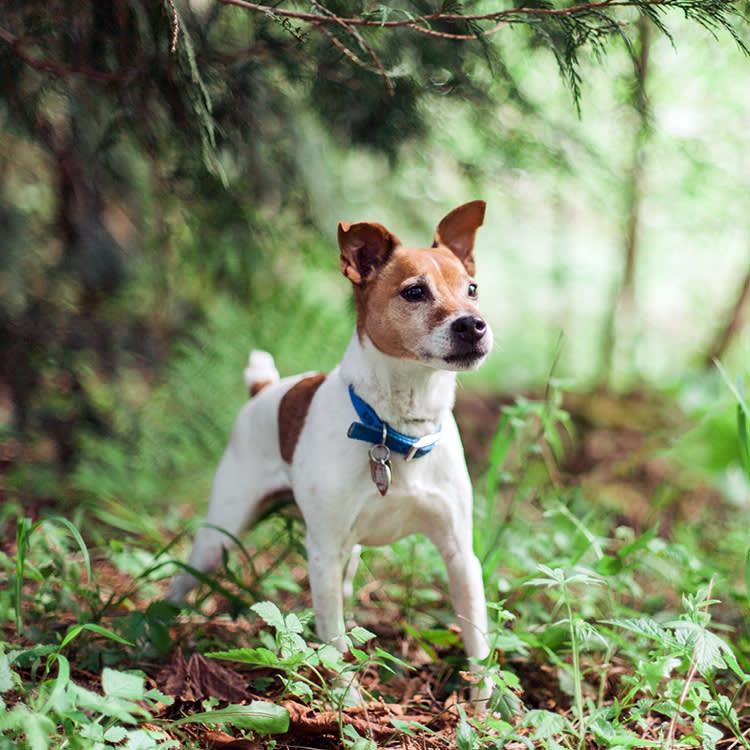
A dog who doesn’t bark seems like a stroke of luck. No 3 a.m. commentary on the ice maker. No outraged press conference every time the mail arrives. Just quiet.
And then, at some point, the quiet starts to feel less like luck and more like a question.
Here’s the thing that resolves it, and it takes one sentence. Silence carries no information on its own. It only means something against a baseline.
So answer this before anything else: Has your dog always been quiet, or did your dog get quiet?
Those are two completely different articles, and people keep reading the wrong one.
If your dog got quiet: treat it as medical until proven otherwise
A dog who used to bark and now doesn’t, or whose bark has changed in tone, has had something happen to the machinery. That’s a vet visit, not a training question.
Laryngeal paralysis is the one to know. The nerves that open the larynx stop doing their job, and the earliest sign is very often the voice: a bark that turns hoarse, weak, raspy, or disappears. Owners frequently report the voice change months before any obvious breathing trouble, which is a real gift if you act on it, because the later signs are much worse: noisy, raspy breathing on the inhale, panting that sounds harsh, poor tolerance for exercise and heat, and, in a crisis, an airway that cannot open. It’s most common in older large-breed dogs and often comes as part of a broader nerve disorder.
If your dog’s bark has gone hoarse and they also breathe noisily, tire fast, or struggle in warm weather, that is not a “mention it at the next visit” problem. Overheating in a dog with a compromised airway is an emergency.
Other causes of a lost or changed voice:
- Upper respiratory infection. Dogs get the canine equivalent of laryngitis, and it usually resolves.
- Throat trauma. Damage to the larynx can follow a choking episode, an operation in that area of the neck, or a hard yank against a collar. This is one of several good arguments for a harness.
- Hypothyroidism and other endocrine disease, which can change the voice along with the coat, the weight, and the energy.
- Neurological disease, including causes affecting the nerves that run to the larynx.
- Pain. A dog who hurts often goes quiet and withdrawn rather than loud.
A change in a dog’s voice is one of the few symptoms an owner can hear from another room, and it’s one of the earliest. I would much rather see a dog whose bark has gone raspy than the same dog three months later, in summer, in respiratory distress.
Go in the same week if the silence comes with lethargy, exercise intolerance, noisy breathing, coughing, gagging, difficulty swallowing, or any other change in behavior.
If your dog was always quiet: read the dog, not the silence
Plenty of dogs simply have very little to say.
Breed. Basenjis are the famous case, and their quiet is anatomy: the shape of the larynx means they don’t produce a conventional bark. They are not silent, though. They yodel, a sound owners call a “baroo,” and they’ll happily use it. Shiba Inus, Greyhounds, Whippets, Akitas, and Bulldogs also skew quiet, and every one of those breeds contains individuals who never got the memo.
Personality. Within any breed, some dogs are just low-volume. In a survey of nearly 14,000 Finnish pet dogs, anxiety-related traits varied enormously between individuals and between breeds, with noise sensitivity alone reported in about a third of dogs. Temperament is not evenly distributed, and a calm, secure dog often has less to announce.
Environment. Barking is a response to something. A dog in a quiet home, on a quiet street, with a predictable routine and no strangers coming and going, may simply have no triggers. Change the street and you may meet a different dog.
The settling-in period. This one catches new adopters constantly. A dog who has just moved is in observation mode: watching, assessing, working out whether it’s safe to have opinions here. Quiet for the first days or weeks is common, and it is not a personality reveal. It’s a survival strategy. Give it time, and one morning you’ll discover your silent dog has a great deal to say about a squirrel.
Learned silence. Two versions, and they feel very different. One is a dog who was trained thoughtfully and learned that quiet earns good things. The other is a dog who learned that barking earned yelling, isolation, or worse, and has suppressed it out of fear. If your dog is not just quiet but flinches when noise happens, that’s the second one, and the work is building confidence, not extracting a bark.
Age. Senior dogs often get quieter. Energy dips, hearing and vision fade, and the effort of announcing things stops feeling worth it. Watch for the other signs, though: disorientation, pacing, night waking, house soiling, staring at walls, or a loss of interest in people and toys can point to canine cognitive dysfunction, and there are things your vet can do about it.
The four questions to ask yourself
Before you decide whether to worry:
- Was my dog always this quiet, or did the quiet arrive?
- Has the sound of the bark changed: raspy, hoarse, strained, weaker?
- Are they eating, drinking, playing, and breathing normally?
- Is anything else different: sleeping more, less responsive, limping, panting harder, struggling in the heat?
Any combination of a vocal change plus a physical or behavioral change earns a vet visit. Expect them to look at the throat and chest, listen to the breathing, and possibly run bloodwork or imaging to rule out endocrine and neurological causes.
If nothing else is different and nothing ever was, you have a quiet dog. Enjoy the sleep.
Encouraging a voice, carefully
If your dog is healthy and you’d simply like a bark on cue (useful for some sports, some service work, and some very persuasive doorbell impressions), you can build one: catch a spontaneous bark, mark it, pay it, and put it on a “speak” cue.
Never force it. If pain, fear, or a punishment history is any part of the story, chasing the bark is the wrong project. Some dogs will never give you more than a sigh and a soft huff, and that is a complete dog.
What newer research adds
The most useful development for owners is how much earlier laryngeal paralysis can be caught. Specialty and referral centers now emphasize that the voice change comes first, sometimes by months, and that owners who report a hoarse bark early give their dog far better options than owners who arrive during a summer breathing crisis. Cornell’s canine health center and the American College of Veterinary Surgeons both describe the change in bark and the inspiratory noise as leading signs. If your older large-breed dog sounds different, that’s the moment.
The second is a reframe worth keeping: silence is a behavior, and behavior changes are data. The large Finnish behavioral surveys have made it very clear that fear, pain, and anxiety commonly show up as things a dog stops doing. We are trained to notice noise. The absence of it is easier to miss and just as informative.
References
- American College of Veterinary Surgeons. “Laryngeal Paralysis.” https://www.acvs.org/small-animal/laryngeal-paralysis/
- Cornell University College of Veterinary Medicine, Riney Canine Health Center. “Laryngeal Paralysis.” https://www.vet.cornell.edu/departments-centers-and-institutes/riney-canine-health-center/canine-health-topics/laryngeal-paralysis
- Salonen, Milla, et al. “Prevalence, Comorbidity, and Breed Differences in Canine Anxiety in 13,700 Finnish Pet Dogs.” Scientific Reports, vol. 10, 2020, article 2962. https://www.nature.com/articles/s41598-020-59837-z
- Cornell University College of Veterinary Medicine, Riney Canine Health Center. “Canine Cognitive Dysfunction.” https://www.vet.cornell.edu/departments-centers-and-institutes/riney-canine-health-center/canine-health-topics
Not a substitute for your vet. Our guidance is educational. For urgent symptoms, contact a vet or emergency clinic right away. Editorial standards
Dr. Mehta is a board-certified veterinary nutritionist who evaluates pet food formulations, ingredient quality, and the science behind dietary trends. He writes and reviews all nutrition content at The Pet Times, including our food rankings and feeding guides.
Meet our experts ↗Keep reading
 TrainingYour Dog Isn't Having a Seizure. Say Their Name.Dr. Ravi Mehta · 7 min
 Health & WellnessYour Dog's Sleep-Twitching Is Almost Always a Dream. Here's When It Isn't.Dr. Ravi Mehta · 6 min
 TrainingOne Dog Licking Another's Ears Is Usually Fine. Two Things Make It Not.Dr. Ravi Mehta · 7 min
 Health & WellnessYour Dog's Squint Isn't a Smile. Count the Eyes.Dr. Mara Chen · 7 min
 Health & WellnessFloor Licking Is a Stomach Symptom Until Proven OtherwiseDr. Mara Chen · 8 min
 Health & WellnessThat Cute Snorting Noise Has a Name. So Do the Two That Aren't Cute.Dr. Mara Chen · 7 min