


Tell Your Dog to 'Create,' and They Actually Can
A study showed dogs can invent a brand-new behavior on cue, putting them in rare company with dolphins. Here's what it means, and how to build the skill at home.
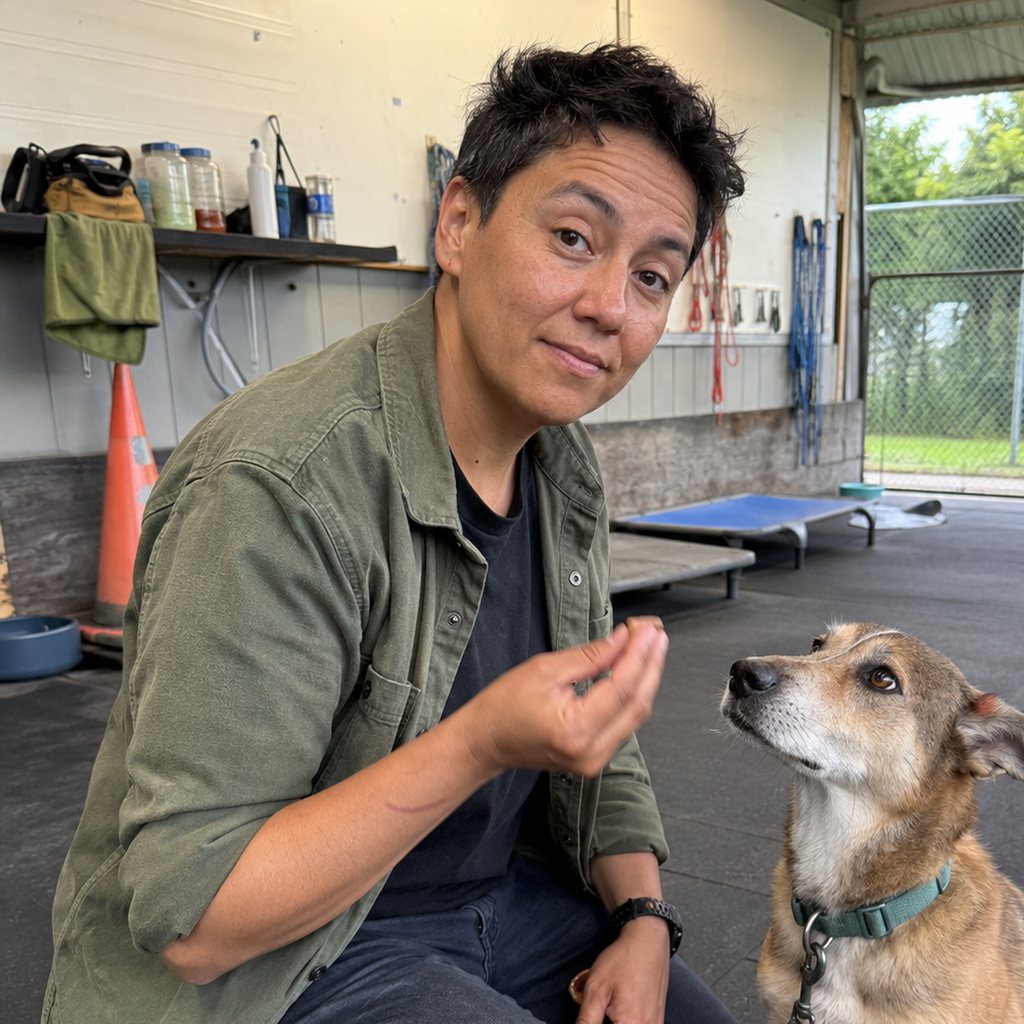
Here’s a claim that sounds like a stretch until you see the data behind it: your dog can be told to make something up, and do it. Not a trained trick on cue, but a genuinely new behavior, invented on the spot, because you asked for novelty itself. That’s a cognitive feat most animals can’t manage, and dogs are on the short list that can.
Before the science, one clarification, because it changes what the whole thing means. “Creative” here has nothing to do with painting or garden design (though we’d all pay to watch). In cognition research, creativity means flexibility: problem-solving, adapting, and generating something new instead of running a memorized script. That flexibility is exactly what a dog needs to cope with life’s curveballs, which is why this is more than a party trick. It’s a window into how your dog thinks.
What the study actually found
A 2024 study in the journal Animal Behavior and Cognition tested whether dogs could learn an abstract “create” cue, a signal that doesn’t mean “sit” or “spin” but “do something you haven’t done.” The researchers counted a behavior as new only if the dog hadn’t performed it earlier in that same session and it wasn’t already tied to its own cue. On each “create,” the dog had five seconds to produce something novel.
Think about what that demands. The dog has to generate a behavior and remember its own recent behaviors well enough not to repeat them. That’s working memory and self-monitoring layered on top of improvisation.
The dogs delivered. Across six test sessions, with 16 “create” prompts each, they came up with something new roughly three-quarters of the time, averaging close to 12 novel behaviors per session. The inventory was charming in its ordinariness: lifting a paw, scooting backward, hopping on the hind legs, shuffling the front paws, barking, pawing the trainer’s knee, stepping forward, dropping the head down. Simple moves, but produced on demand and without repeating, which is the hard part.
The headline comparison is the one worth sitting with: the dogs innovated at a level comparable to dolphins and porpoises, animals routinely ranked among the smartest on the planet. Your dog belongs in that conversation.
How to grow it at home
The good news is this is trainable, and the method is simple: make novelty the thing that pays. Reward your dog the moment they offer a new action, lifting a paw, walking on the hind legs if your vet is fine with it, resting their head in your lap, crawling under the coffee table or your outstretched leg, and don’t reward repeats. Once a dog grasps that new behavior earns the treat rather than getting ignored or discouraged, they start offering more of it. Innovation becomes a habit.
Problem-solving is the other half of creativity, so lean on puzzles too. Store-bought puzzle toys work, and so do homemade ones. A favorite: tuck a few treats into an old sock, stuff the sock inside a cardboard box, and let your dog work out how to reach the buried treasure. Letting a dog freestyle, the way the researchers did, is legitimate enrichment. It gives the brain a workout, and most dogs plainly have a blast doing it.
The thing that surprises people is that ‘make something up’ is a skill you can teach, and once a dog has it, training gets more fun for both of you. You stop drilling fixed cues and start having an actual back-and-forth.
Why it matters beyond the fun
Every time researchers look deeper into the canine mind, they come away more impressed, and studies like this are why. Measuring a dog’s creativity does two things at once: it shows us capacities we tended to underestimate, and it points toward better lives for dogs, because the same activities that reveal the flexibility also provide the mental stimulation dogs need to thrive. Teaching a dog to innovate isn’t just good research or a good time. It’s a concrete way to give them a richer, more engaged life.
What’s new since this was written
The broader current in dog science keeps running the same direction: toward crediting dogs with more sophisticated minds than we assumed. Work on canine cognition in recent years has explored everything from word learning in “gifted” dogs to problem-solving and memory, and the recurring finding is that dogs are more cognitively capable and more individually variable than old stereotypes allowed.
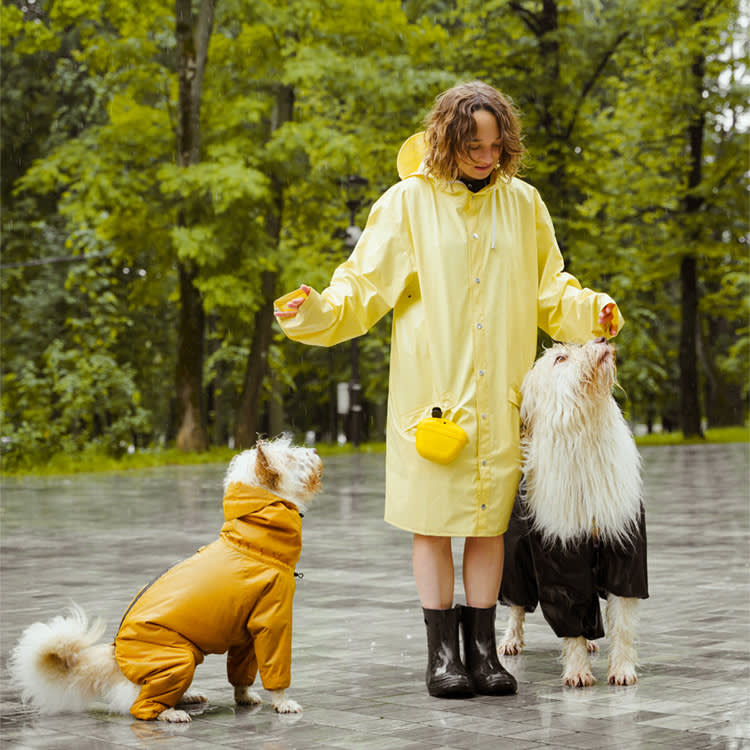
For you, the practical upshot outlasts any single study. Enrichment that asks a dog to think, whether it’s a “create” game, a puzzle feeder, or a new problem to crack, is increasingly understood as a core welfare need, not a luxury. A dog who gets to use their brain is a more satisfied dog. So the next rainy day, skip one repetition of “sit” and ask your dog to surprise you instead. The science says they’re good for it.
References
Common questions
Can dogs really be creative on command?
Yes. In a 2024 study, dogs trained on a 'create' cue produced a new behavior, one they hadn't done in that session, about three-quarters of the time, averaging nearly 12 novel behaviors across 16 tries per session. Inventing on demand is rare in the animal world, and dogs can do it.
What does 'creativity' mean for a dog?
Not art. It means cognitive flexibility: the ability to problem-solve, adapt, and produce something new rather than repeating a memorized routine. That flexibility is what helps a dog handle the unexpected.
How do I teach my dog to be creative?
Reward novelty. Give a treat whenever your dog offers a new action, a paw lift, a spin, crawling under your leg, and withhold it for repeats. Puzzle toys and DIY problem-solving games (like treats hidden in a sock inside a box) build the same muscle.
Is teaching my dog to innovate actually good for them?
It is. Letting a dog freestyle and solve problems is genuine mental enrichment. It exercises the brain, reduces boredom, and most dogs clearly enjoy it, which makes it one of the better ways to improve day-to-day quality of life.
Jordan Ellis is a certified professional dog trainer with a decade of experience working with rescue organisations and private clients. They specialise in anxiety, reactivity, and positive reinforcement methods, and review all training and behaviour content at The Pet Times.
Meet our experts ↗Keep reading
 LivingStuck Inside With a Wired Dog? 9 Ways to Wear Them Out Without a WalkJordan Ellis · 5 min
 LivingYour Dog Is Not Your TherapistDr. Ravi Mehta · 7 min
 TrainingYour Dog Sniffs You at the Door Because You're the Evening NewsLeila Torres · 5 min
 Health & WellnessDog Saliva Doesn't Heal Wounds. It Delivers Bacteria.Dr. Priya Nair · 8 min
 TrainingYour Dog Doesn't Just Smell Your Stress. They Catch ItDr. Mara Chen · 6 min
 TrainingYour Dog Doesn't Know It's 5 O'Clock. It Knows You.Dr. Mara Chen · 6 min