


The Flight Is the Easy Part of Flying With Your Dog
The plane ride rarely goes wrong. The day falls apart in the places nobody rehearses: the carrier your dog has never sat in, the health certificate with a ticking clock, and the terminal between check-in and takeoff.

Affiliate disclosure. This article contains affiliate links. We may earn a small commission if you buy through a link, at no extra cost to you. How we handle recommendations.
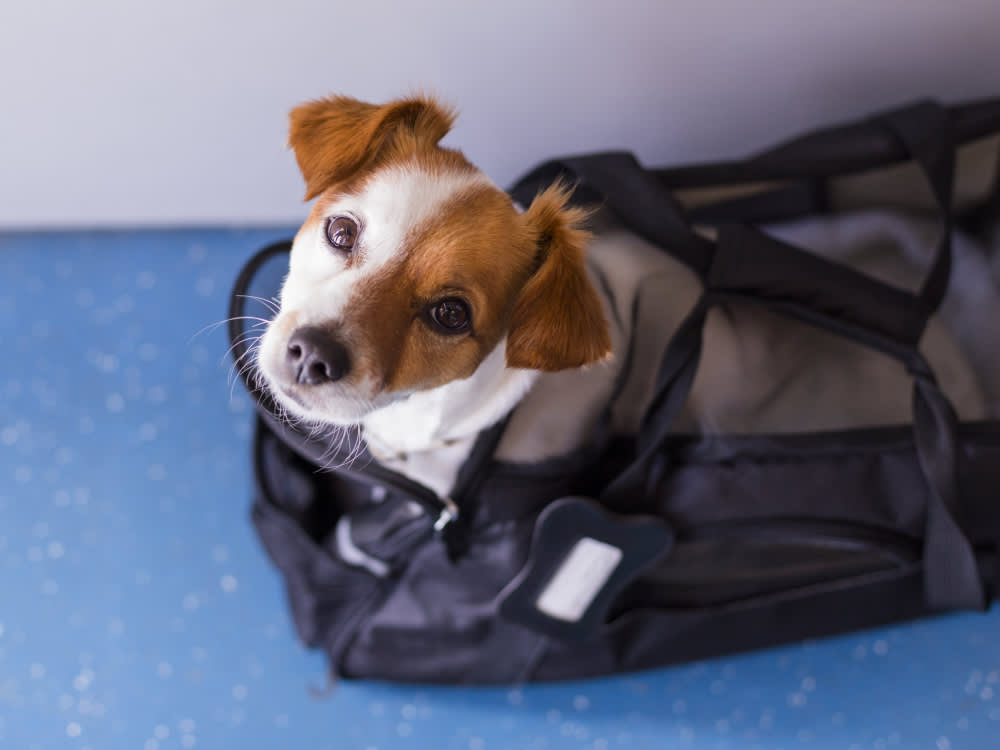
Here is the thing that surprises first-time flyers: the actual flight, the part everyone dreads, is usually the calmest hour of the whole trip. Your dog is zipped into a bag under the seat, the engine hum is oddly soothing, and most small dogs sleep through it. The trouble almost never happens at 36,000 feet. It happens on the ground, in the parts of the day you didn’t rehearse, which is exactly why we’re going to spend our time there instead of on the flight itself.
If your dog is small enough to travel in an under-seat carrier, roughly 20 pounds or less including the bag, cabin travel is very doable. It just rewards the person who prepped the boring stuff. Let’s walk the day backward from the gate.
Before you book: confirm your dog actually qualifies
Two facts to nail down before you buy a ticket. First, federal rules require a dog flying commercially to be at least eight weeks old and weaned for at least five days. Second, “small enough for the cabin” is not one number. Each airline publishes its own maximum carrier dimensions, and they have quietly gotten stricter. Some newer aircraft cut into the space: United, for example, caps the under-seat pet carrier at ten inches tall on its Boeing 737 MAX flights, while airlines like Southwest and Allegiant list soft-carrier maximums around 18 by 14 by 8 inches. Pull up your specific airline’s pet page and match the numbers to the exact plane, not a general rule of thumb.
The single most common mistake I see is people buying the carrier last, once the ticket’s booked and there’s no time to acclimate. Buy it first. Your dog needs weeks in that bag before they need an hour in it at altitude.
The health certificate has a clock on it
This is the deadline that catches people, so put it in your calendar the day you book. For interstate travel, airlines generally require a Certificate of Veterinary Inspection, and it must be issued by a USDA-accredited veterinarian within 10 days of your departure. Not any vet, an accredited one, so call ahead and confirm your clinic can do it. You will be asked to show it, plus proof of rabies vaccination, at check-in. States also set their own entry requirements, so if you’re crossing state lines, read the destination’s rules before you go rather than at the counter.
The week before: make the carrier boring
A carrier your dog first meets on travel day is a small fabric prison. A carrier they’ve been napping in for two weeks is just their bag. Start early and build up. If your dog isn’t already comfortable being confined, work from short, calm stretches toward the full duration of your trip, and remember to count the whole day, not just the flight: the drive to the airport, the wait in the terminal, boarding, taxiing, and the flight can easily double the time in the bag versus the flight time alone. City dwellers can practice on the subway; drivers can do laps in the car. The goal is a dog who finds the carrier unremarkable.
Pick a soft-sided carrier built and advertised for air travel. The mesh panels let your dog breathe and let you check on them, they slide under the seat more easily than a rigid crate, they wipe clean, and they collapse for storage. Tuck in a small folded blanket so your dog can settle.
The Sherpa Original Deluxe Airline-Approved Carrier is a dependable pick: a boxy shape gives your dog real room to shift position, top and side zip doors let them see you, and the zippers lock so there’s no surprise escape at the gate. If you want a more design-forward option that still meets airline limits, the Wild One Travel Carrier is a lighter, less bulky choice for genuinely tiny dogs.
Packing: the four things people forget
Your dog’s carrier usually counts as one of your two carry-ons, so plan the other bag around that. Beyond the obvious leash and poop bags, four items save the day.
A calming aid you have already tested. A treat with CBD or melatonin, like Zesty Paws Calming Bites, can take the edge off, but never debut it on travel day. Try it a week out so you know how your dog’s stomach and mood respond. A queasy dog is much easier to manage on the kitchen floor than at cruising altitude.
Any medication your dog takes, packed the night before. It’s easiest to forget the dose you’d normally give in the rushed morning of departure.
A collapsible food-and-water kit. A folding bowl and a small bag of your dog’s own kibble mean you can offer water in the terminal and a quick meal on landing without hunting for a store. Pack extra kibble if your total travel time runs past six hours or so.
A comfort layer for an anxious traveler. Some dogs settle in a snug onesie; the Shed Defender Original Dog Onesie gives gentle, swaddle-like pressure (and, as a bonus, keeps shed fur off the carrier and the person next to you).
At the airport and in the air
Find the pet relief area before you need it. Every major airport has one, quality varies, but it’s your dog’s last chance to stretch and pee before boarding. Keep the leash on the instant you unzip so nobody bolts.
Once you’re on the plane, your dog stays in the carrier for the duration; you’re generally not permitted to take them out in the cabin. You can still reach in to offer a treat, a scratch, and a familiar toy if it fits. Most well-prepped dogs do exactly what they trained to do in that bag over the past two weeks: they settle, and they sleep.
What’s new since this was written
Cabin pet rules keep tightening, so treat any carrier you already own as provisional. Newer narrow-body aircraft have smaller under-seat spaces than the planes many “airline-approved” bags were designed for, which is why a carrier can be compliant on one airline and rejected on another for the same trip. Before every flight, re-check your specific carrier’s maximum dimensions against the exact aircraft on your itinerary, and confirm the current health-certificate window with a USDA-accredited vet, since state and airline requirements are updated more often than most owners realize.
References
- U.S. Department of Transportation. Flying With a Pet.
- American Veterinary Medical Association. Traveling With Your Dog or Cat.
- U.S. Department of Agriculture, APHIS. Pet Travel: Traveling Within the United States.
Dr. Mehta is a board-certified veterinary nutritionist who evaluates pet food formulations, ingredient quality, and the science behind dietary trends. He writes and reviews all nutrition content at The Pet Times, including our food rankings and feeding guides.
Meet our experts ↗Keep reading
 Product PicksOnly One Piece of Dog Car Gear Actually Saves Their LifeMarcus Webb · 8 min
 Product PicksSenior Dogs Don't Have a Pity Problem. They Have a Visibility Problem.Nina Vasquez · 7 min
 Product PicksThe Right Travel Crate Depends on the Trip: 8 Picks, Sorted by How You TravelNina Vasquez · 12 min
 Product PicksThe $599 Dog Crate Isn't for Your Dog. It's for the Four Things Wire Crates Get Wrong.Marcus Webb · 5 min
 Product PicksBuy the Crate for the Dog You Have: 8 Picks by Behavior, Not LooksTom Hadley · 12 min
 Product PicksThe Hiking Harness Buyer's Guide: Fit First, Then the 9 We'd PackLeila Torres · 16 min